Buttercup Diamond Earrings: The Ultimate Buying Guide
Discover what to look for when buying buttercup diamond earrings. Our expert guide covers prong durability, metal grades, diamond specs, and pricing.

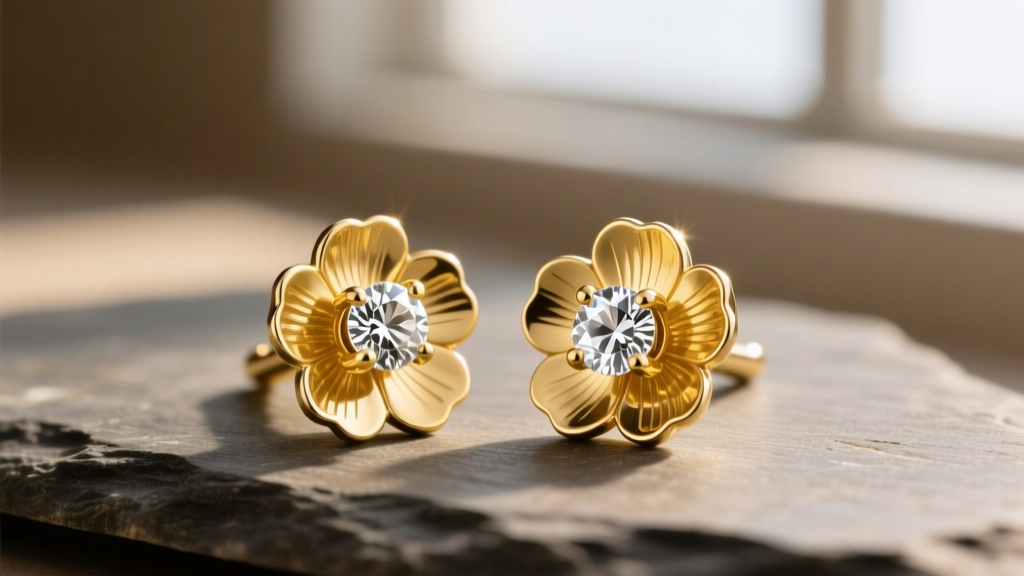
The buttercup setting is experiencing a massive resurgence in 2026, bridging the gap between antique Edwardian elegance and modern everyday wear. Characterized by its fluted, scalloped prongs that resemble the petals of a buttercup flower, this setting offers a distinct optical illusion that maximizes the visual spread of a gemstone. However, buying buttercup diamond earrings requires a nuanced understanding of metal durability, prong architecture, and diamond light performance. Unlike standard basket or martini settings, the intricate metalwork of a buttercup mount introduces specific failure modes and maintenance requirements that buyers must evaluate before investing.
Anatomy of the Buttercup Setting: Cast vs. Hand-Forged
The defining feature of buttercup diamond earrings is the gallery and prong structure. A true buttercup setting features six or eight prongs that are fused at the base and flare outward, with the tips scalloped or fluted to grip the diamond's girdle. This design creates a continuous metal halo effect, making a 0.50-carat diamond appear closer to 0.75 carats to the naked eye.
When evaluating craftsmanship, you must determine how the setting was manufactured:
- Cast Settings: The majority of commercial buttercup earrings are cast from wax molds. While cost-effective, cast gold or platinum can be slightly porous. The thin, scalloped tips of cast prongs are prone to micro-fractures and wear down faster over 5 to 10 years of daily wear.
- Die-Struck or Hand-Forged: Premium jewelers use die-struck heads or hand-forge the gallery wire. This compresses the metal's molecular structure, resulting in a denser, more durable prong that resists bending and snapping. Always ask the jeweler for the manufacturing method of the setting head.
Metal Alloys and Prong Durability
Because the buttercup design relies on exceptionally thin, petal-like prongs, the choice of metal is not merely aesthetic—it is a structural necessity. According to Jewelers of America, the tensile strength and memory of your chosen alloy will dictate the lifespan of your earrings.
Platinum 950 (Ruthenium Alloy)
Platinum is the undisputed champion for intricate prong work. Unlike gold, which loses microscopic layers of metal when scratched, platinum displaces. If a buttercup prong catches on a sweater, a platinum prong will bend and can be pushed back into place by a jeweler. A gold prong of the same thinness may snap entirely. For 2026 pricing, expect to pay a 30-40% premium for platinum over white gold, but the longevity for heirloom pieces justifies the cost.
18k vs. 14k White Gold
If you prefer white gold, opt for 18k over 14k. While 14k gold is harder due to higher alloy content, it is more brittle. The intricate fluting of a buttercup setting requires a metal with better malleability to prevent the scalloped edges from chipping off during the setting process. Be aware that white gold requires rhodium plating; as the plating wears off the intricate prongs, the yellowish alloy underneath will become visible, disrupting the seamless blend between the metal and the diamond.
Diamond Selection: Maximizing the Optical Illusion
The buttercup setting cups the pavilion (the bottom half) of the diamond more aggressively than a minimalist martini setting. This structural reality fundamentally changes how you should select your diamond specifications.
"When a setting cups the pavilion, it can restrict light entry from the sides and trap skin oils or lotions against the diamond. You must prioritize exceptional cut grades to ensure the stone's internal light return isn't suffocated by the metal gallery." — Master Gemologist Appraiser
Color and Clarity Considerations
Because the metal wraps tightly around the lower half of the stone, the buttercup setting will reflect its own color into the diamond. If you choose a yellow gold setting, a diamond in the J-K color range will face up whiter than it actually is, as the warm metal masks the faint yellow tint. Conversely, a platinum or white gold setting will amplify any warmth in the stone, meaning you should stick to D-G color grades. Regarding clarity, the fluted prongs and solid gallery wire are excellent at hiding inclusions located near the girdle or on the lower pavilion. You can safely downgrade to SI1 or even eye-clean SI2, redirecting that budget toward a higher cut grade. As noted by the Gemological Institute of America (GIA), cut quality remains the primary driver of brilliance, especially when the setting obstructs peripheral light paths.
Hardware: Post Gauges and Backing Mechanisms
A common failure point in high-end earrings is the hardware. The buttercup head is inherently heavier and wider than a standard basket, altering the center of gravity on the earlobe.
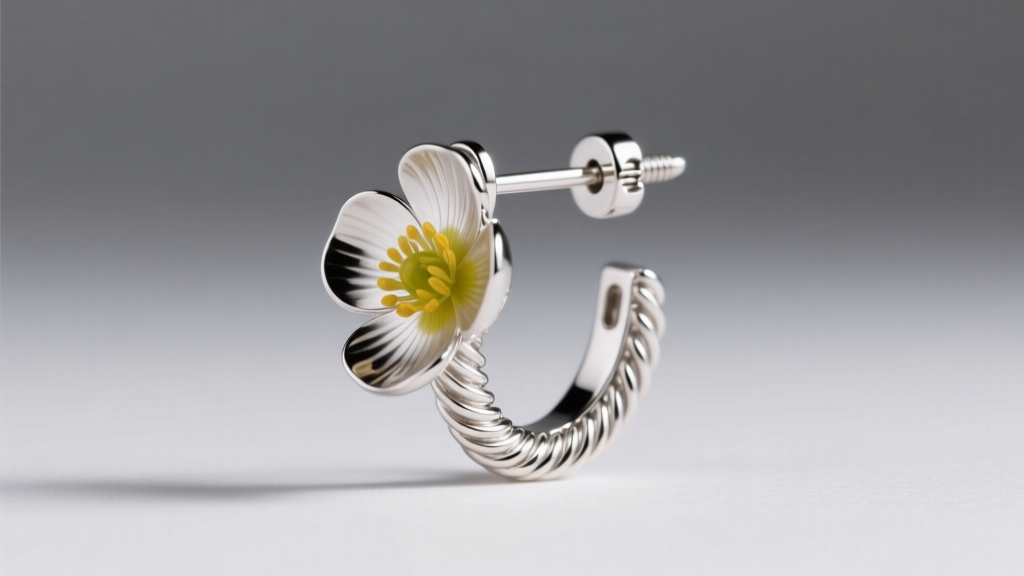
- Post Gauge: Avoid 20-gauge (0.81mm) posts for buttercup studs. The wider visual weight of the scalloped prongs will cause a thin post to droop, making the earring point downward. Insist on an 18-gauge (1.02mm) or even 16-gauge post for stones over 0.75 carats total weight to maintain a forward-facing profile.
- Backings: Standard friction backs (butterfly backs) are insufficient for the weight and value of buttercup diamond earrings. Upgrade to La Pousette backs (which use a mechanical spring-loaded click) or screw-backs. Screw-backs are highly secure but require careful threading to avoid cross-threading the precious metal post.
2026 Pricing Framework and Market Expectations
The price of buttercup diamond earrings is heavily influenced by the labor required to set the stone. The scalloped prongs must be filed, polished, and bent over the girdle with extreme precision to avoid chipping the diamond. This bench-jeweler labor adds a premium compared to cast basket settings.
| Total Carat Weight (TCW) | Metal Type | Diamond Quality (Color/Clarity) | Estimated 2026 Price Range |
|---|---|---|---|
| 0.50 ct (0.25ct each) | 14k Yellow Gold | G-H / VS2 | $850 - $1,200 |
| 1.00 ct (0.50ct each) | 18k White Gold | F-G / VS1 | $2,400 - $3,500 |
| 1.50 ct (0.75ct each) | Platinum 950 | E-F / VVS2 | $5,500 - $7,800 |
| 2.00 ct (1.00ct each) | Platinum 950 | D-E / IF | $11,000 - $16,000+ |
Long-Term Maintenance and Failure Modes
Owning buttercup diamond earrings requires a proactive maintenance routine. The very features that make them beautiful—the intricate fluting and tight metal cupping—are their greatest vulnerabilities.
The Snagging Hazard
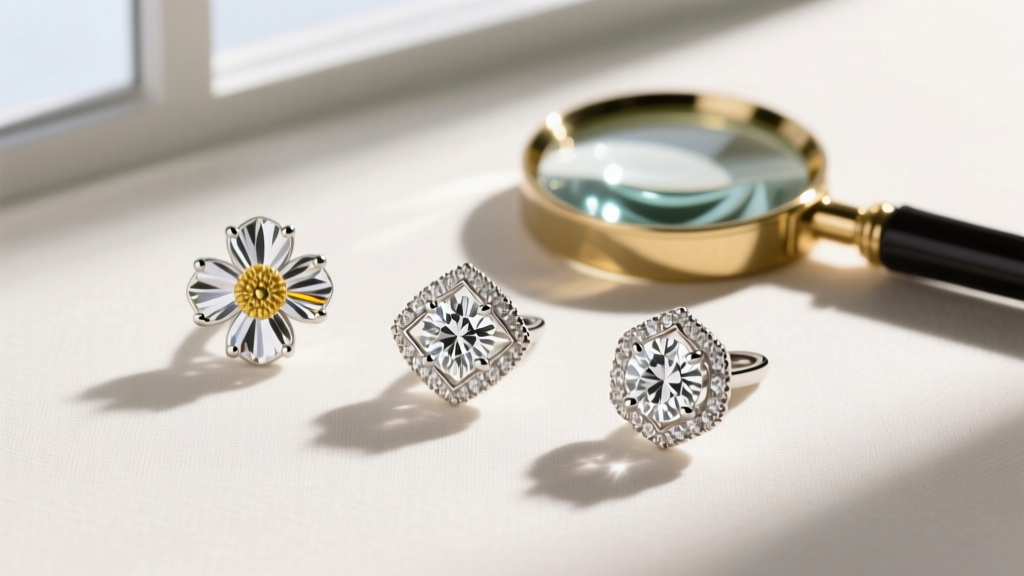
The scalloped edges of the prongs, while polished, present more surface area to catch on lace, silk, and hair. Over time, repetitive micro-snags will pull the prong tips away from the diamond's table. You must have a jeweler inspect the prong tension every 12 months using a 10x loupe.
Cleaning Protocols
Because the buttercup gallery cups the pavilion, it acts as a trap for hand soap, body lotions, and dead skin cells. This buildup creates a film that severely dulls the diamond's brilliance. Do not rely solely on ultrasonic cleaners. If a buttercup prong has experienced micro-fractures from snagging, the high-frequency vibrations of an ultrasonic bath can shatter the weakened prong tip, resulting in a lost stone. Instead, use a soft-bristled baby toothbrush with a degreasing solution (like a drop of mild dish soap in warm water) to gently scrub the underside of the gallery wire weekly. For deep cleaning, take the earrings to a professional jeweler who will inspect the structural integrity of the fluted prongs before placing them in an ultrasonic or steam cleaner.
By prioritizing dense metals, precise manufacturing methods, and rigorous maintenance, your buttercup diamond earrings will remain a secure, brilliant, and timeless fixture in your jewelry rotation for decades to come.


