How to Clean and Care for Delicate Teacup Earrings
Discover expert cleaning and maintenance tips for delicate teacup earrings. Learn how to protect ceramic, enamel, and resin charms from damage.

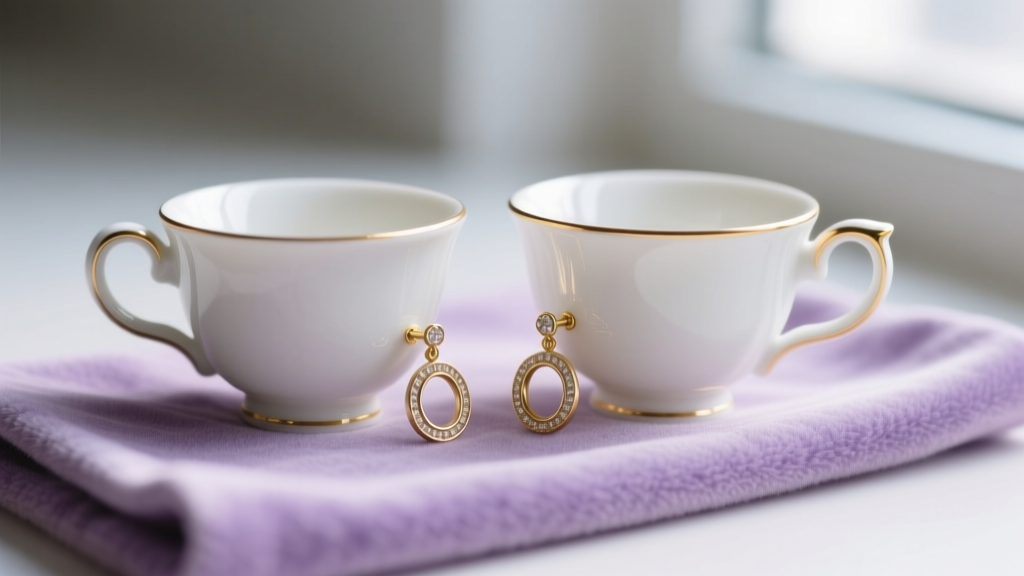
Teacup earrings have cemented their status as a beloved staple in whimsical and novelty jewelry collections. Whether crafted from hand-painted porcelain, vibrant enameled brass, or translucent UV resin, these miniature charms offer a unique aesthetic. However, their complex material compositions make them notoriously difficult to maintain. Treating a delicate ceramic teacup charm with the same harsh chemicals used for diamond studs is a guaranteed way to ruin the glaze, strip the paint, or shatter the piece entirely.
As a jewelry care specialist, I frequently see well-intentioned collectors destroy their favorite novelty pieces using ultrasonic cleaners and abrasive pastes. This comprehensive guide will walk you through the exact chemistry, mechanics, and protocols required to clean, maintain, and store your teacup earrings safely in 2026 and beyond.
Understanding Your Teacup Earring Materials
Before applying any cleaning solution, you must identify the primary material of the teacup charm and the metal findings. The Mohs hardness scale and chemical reactivity dictate your approach.
Ceramic and Porcelain
High-fired porcelain and glazed ceramics are relatively hard (Mohs 6-7) but extremely brittle. The painted floral motifs or gold-leaf rims often found on teacup earrings are usually applied as overglaze enamels or metallic lusters. These surface decorations are highly susceptible to chemical stripping and micro-abrasions. Furthermore, ceramic is porous if the glaze is cracked, meaning it can absorb dirty water and stain permanently.
Enameled Metal
Enamel is essentially pulverized glass fused to a metal base (usually copper or brass) at high temperatures. While the glass surface is smooth and non-porous, it is vulnerable to thermal shock. Sudden temperature changes can cause the enamel to craze (develop a network of fine cracks) or pop off the metal base entirely.
Resin and Polymer Clay
Modern teacup earrings often utilize UV-cured epoxy resin or baked polymer clay to achieve intricate, lightweight 3D shapes. These materials are soft (Mohs 2-3) and highly reactive to solvents. Alcohol-based cleaners will cause resin to cloud and turn white, while harsh detergents can leach the plasticizers out of polymer clay, making it brittle over time.
The Metal Findings and Jump Rings
The structural weak point of any dangle earring is the jump ring connecting the charm to the ear wire. Teacup charms are often suspended via a 20-gauge or 22-gauge jump ring. The dense weight of a ceramic teacup swinging against your neck can slowly pull a poorly closed jump ring open, leading to lost charms. Most ear wires are 20-gauge sterling silver or gold-plated brass, which require standard tarnish prevention but must be cleaned separately from the charm.
Step-by-Step Cleaning Protocols
Forget commercial jewelry dips. The safest and most effective cleaning agents for mixed-media novelty earrings are likely already in your kitchen.
The Ceramic and Porcelain Method
- Prepare the Solution: Mix three drops of pH-neutral liquid Castile soap or mild dish detergent (like Dawn) into a bowl of lukewarm distilled water. Avoid tap water, as heavy minerals can leave hard water spots on the ceramic glaze.
- The Agitation: Dip an extra-soft baby toothbrush into the solution. Gently tap the bristles against the ceramic surface to lift oils and skin cells. Never scrub the painted details or gold rims.
- The Rinse: Briefly pass the earring under a slow stream of distilled water. Do not soak the piece.
- The Dry: Immediately pat dry with a lint-free microfiber cloth and use a hair dryer on the 'cool' setting to evaporate moisture trapped in the jump ring crevices.
The Enamel Preservation Method
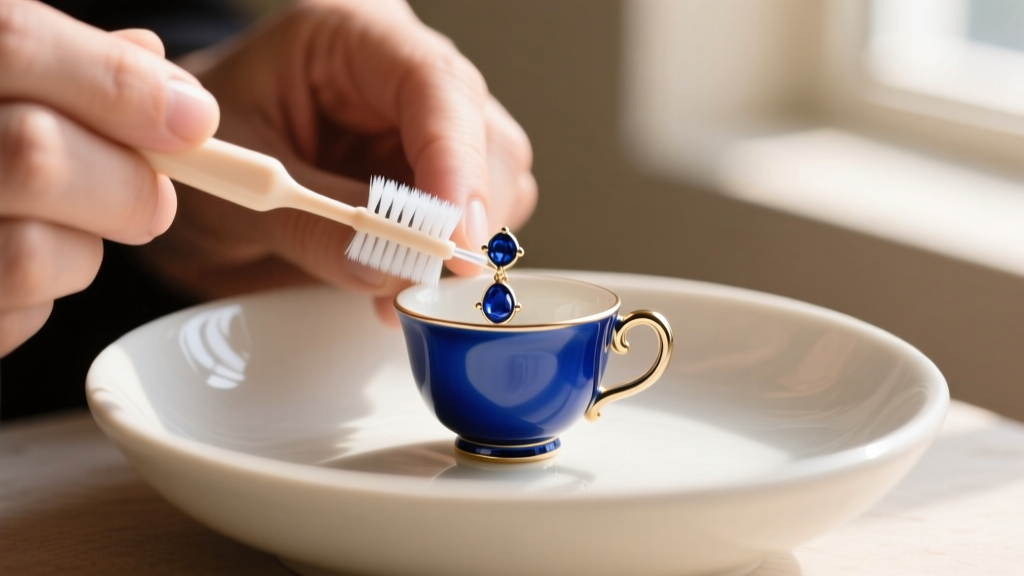
Water is the enemy of vintage or poorly sealed enamel. If moisture penetrates microscopic cracks in the glass, it will oxidize the copper base underneath, creating rust that pushes the enamel off from the inside.
- Use a dry, clean makeup blending brush to dust away dry debris.
- For smudges, slightly dampen a cotton swab with distilled water and roll it gently over the enamel surface.
- Buff immediately with a dry jeweler's polishing cloth.
The Resin Wipe-Down
Resin teacup earrings only require a gentle wipe with a slightly damp microfiber cloth. If the resin has become sticky due to humidity and skin oils, use a drop of mineral oil on the cloth to lift the grime, then buff it clean. Never use rubbing alcohol, hand sanitizer, or acetone near resin charms.
Chemical and Mechanical Dangers to Avoid
The most common way collectors ruin teacup earrings is by using tools designed for fine gemstone jewelry on novelty materials.
Warning: Never place ceramic, enamel, or resin earrings in an ultrasonic cleaner. The high-frequency acoustic cavitation bubbles will aggressively vibrate against the piece, shattering ceramic glazes, crazing enamel, and turning translucent resin completely opaque.
Additionally, avoid baking soda pastes. While baking soda is a popular DIY jewelry cleaner for silver, its angular crystalline structure (Mohs 2.5) will leave thousands of microscopic scratches on high-gloss enamel and resin, permanently dulling the finish of your teacup charms. Finally, avoid silver dip solutions containing thiourea; these toxic chemicals will strip hand-painted details off porcelain in seconds.
Proper Storage and Humidity Control
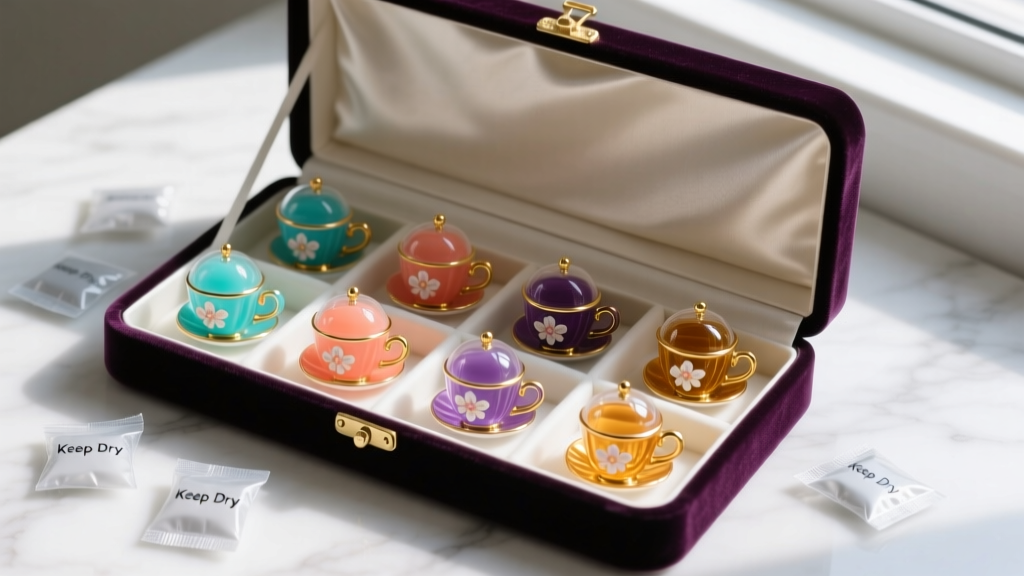
Because teacup earrings feature protruding elements (like handles, saucers, or tiny tea bag dangles), they are highly prone to mechanical damage in shared jewelry boxes.
- Individual Compartments: Store each pair in its own velvet-lined compartment or a soft organza pouch to prevent the handles from snapping off when tangled with other pieces.
- Humidity Control: Sterling silver hooks and brass jump rings tarnish rapidly in high humidity. Place a few silica gel packets and anti-tarnish strips (like 3M Silver Shield) in your storage drawer to absorb ambient moisture and neutralize sulfur gases.
- Hanging vs. Laying Flat: Heavy ceramic teacup earrings should be laid flat. Hanging them on a jewelry tree for months can cause gravity to slowly warp the 20-gauge ear wires or fatigue the jump rings.
Troubleshooting and Maintenance Table
Even with meticulous care, wear and tear occurs. Use this troubleshooting matrix to address common issues with teacup earrings without causing further damage.
| Issue | Root Cause | Expert Solution |
|---|---|---|
| Cloudy / White Resin Charm | Exposure to alcohol or hand sanitizer | Apply a micro-mesh plastic polishing compound (like Novus No. 2) and buff gently with a microfiber cloth to restore clarity. |
| Tarnished Sterling Hook | Sulfur exposure from skin oils and air | Use a dry silver polishing cloth on the hook only. Shield the teacup charm with your hand to prevent polishing compound transfer. |
| Loose / Gap in Jump Ring | Mechanical stress from the charm's weight | Use two pairs of flat-nose pliers to twist the jump ring laterally (side-to-side) to close it. Never pull it apart like a split ring. |
| Dull Enamel Glaze | Micro-abrasions from harsh clothing or cleaners | Enamel cannot be easily re-polished at home. Prevent further damage by storing separately and cleaning only with dry, soft brushes. |
Final Thoughts on Novelty Jewelry Care
Caring for teacup earrings requires a shift in mindset from traditional fine jewelry maintenance. By respecting the physical limitations of ceramics, enamels, and resins, and by relying on gentle, pH-neutral cleaning methods, you can ensure these whimsical pieces remain vibrant and structurally sound for decades. For more foundational knowledge on preserving mixed-media accessories, refer to the conservation guidelines provided by the Victoria and Albert Museum and the material science resources at the Gemological Institute of America (GIA).


