Hobby Lobby Earring Hooks: A Technical Alloy & Gauge Guide
An expert technical review of Hobby Lobby earring hooks, analyzing wire gauges, base metal alloys, plating durability, and hypersensitivity safety.

The Metallurgical Reality of Craft Store Findings
For DIY jewelry makers and hobbyists, the accessibility of mass-market craft suppliers is both a blessing and a metallurgical minefield. When evaluating Hobby Lobby earring hooks, it is crucial to look past the packaging terminology and examine the actual material science. In 2026, the global supply chain for mass-produced jewelry findings remains heavily reliant on overseas stamping and wire-drawing facilities that prioritize cost-efficiency over metallurgical purity. The term 'surgical steel' frequently printed on craft store packaging is a marketing colloquialism, not a recognized metallurgical certification. True implant-grade stainless steel must meet strict chemical composition standards, which mass-market craft hooks almost never fulfill.
Base Metals vs. Flash Plating: What Are You Actually Buying?
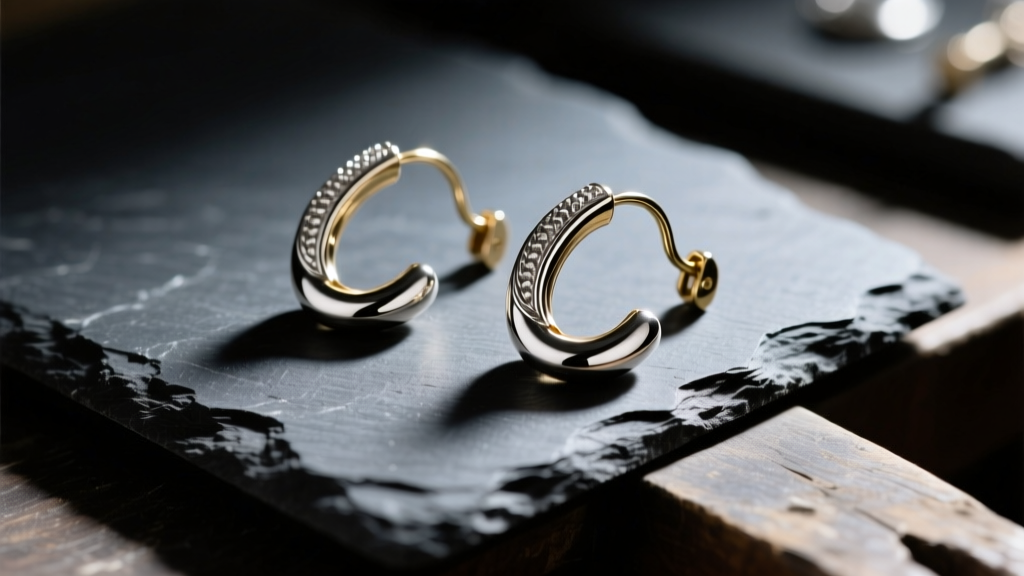
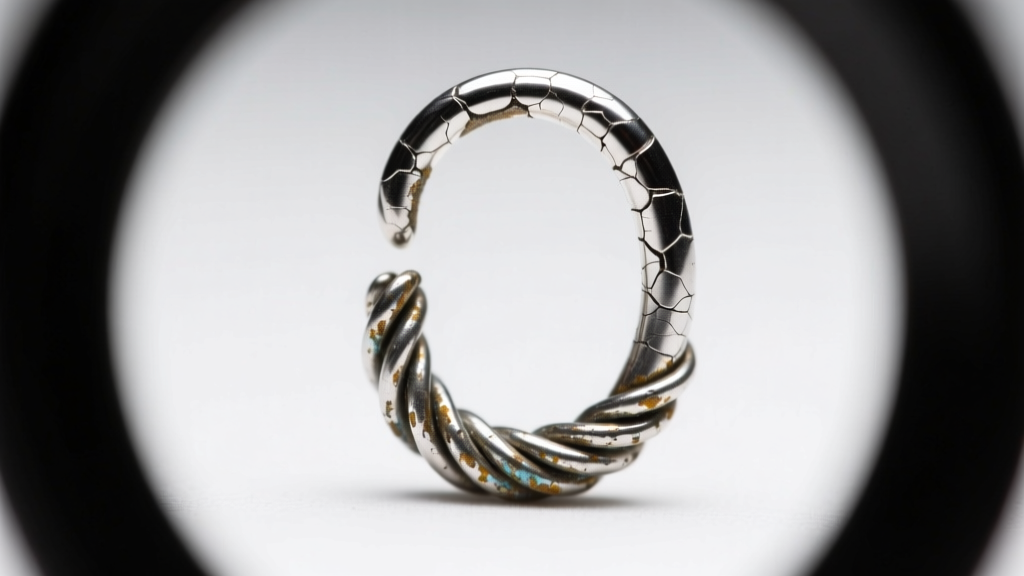
The vast majority of Hobby Lobby earring hooks are not solid precious metals. They are typically manufactured from a base metal core—most commonly cartridge brass (an alloy of roughly 70% copper and 30% zinc) or 'nickel silver.' Despite its name, nickel silver contains absolutely zero elemental silver; it is a copper-nickel-zinc alloy that naturally mimics the color of sterling silver. To achieve a bright finish, these base metals are subjected to flash plating. Flash plating is an electrochemical process that deposits a microscopically thin layer of silver, gold, or rhodium, usually measuring less than 0.5 microns (or 20 micro-inches) in thickness. According to the technical documentation provided by professional jewelry suppliers like Rio Grande, flash plating is sufficient for short-term display but lacks the structural durability to withstand the friction, sweat, and mechanical wear of daily use. Once this sub-micron layer wears away, the underlying brass or nickel-silver core is exposed to the elements and the wearer's skin.
Wire Gauge and Tensile Analysis
Understanding the wire gauge of your findings is critical for both structural integrity and wearer comfort. Hobby Lobby earring hooks are predominantly manufactured in two American Wire Gauge (AWG) sizes: 22-gauge and 20-gauge. The gauge dictates not only the thickness of the wire but also its tensile strength and flexibility.
| Gauge (AWG) | Diameter (mm) | Tensile Behavior | Best Application | Failure Risk |
|---|---|---|---|---|
| 22-Gauge | 0.64mm | Highly flexible, low yield strength | Lightweight seed beads, small pearls | High (bends under heavy glass/stone drops) |
| 20-Gauge | 0.81mm | Moderate stiffness, standard yield | Standard dangles, medium wire-wraps | Low (industry standard for most earlobes) |
| 18-Gauge | 1.02mm | Rigid, high yield strength | Heavy gemstones, cartilage hooks | Very Low (but may cause friction in standard lobe piercings) |
While 20-gauge is the industry standard for standard lobe piercings, many craft store hooks labeled as 20-gauge suffer from inconsistent wire drawing. This can result in slight ovality in the wire cross-section, creating weak points where the wire is marginally thinner than the stated 0.81mm. When designing heavy statement earrings, relying on 22-gauge craft hooks will inevitably lead to deformation, as the wire lacks the necessary yield strength to support loads exceeding 15 grams.
Structural Failure Points in Mass-Produced Hooks
When subjected to bench testing, the most common point of catastrophic failure in Hobby Lobby earring hooks is the bottom loop used to attach jump rings or headpins. In professional bench jewelry, loops are often formed using precision mandrels and carefully annealed to relieve internal stresses. In mass-manufactured craft findings, the wire is machine-stamped and tumbled in bulk. This aggressive tumbling work-hardens the metal unevenly.
The Loop Stress Fracture
Because the bottom loop is bent at a tight radius during high-speed machine forming, the outer edge of the wire experiences severe tensile stress while the inner edge experiences compression. Without proper annealing (heating the metal to a specific temperature to soften its crystalline structure), microscopic fissures develop along the outer edge of the loop. Over time, the simple act of opening and closing a jump ring, or the dynamic load of an earring swinging during walking, will propagate these micro-fissures into a clean snap.
Work Hardening and Annealing DIY Fixes
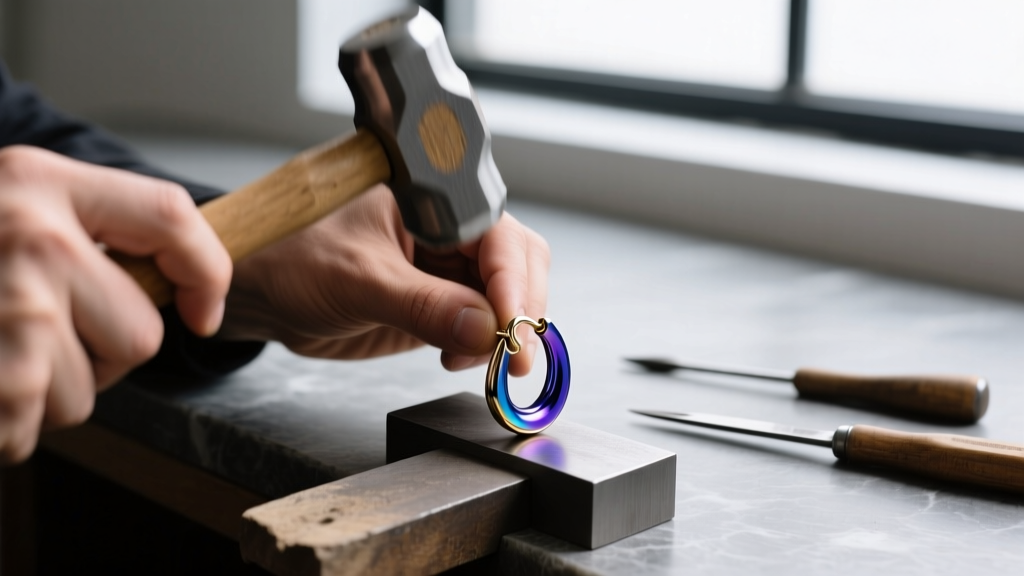
If you must use mass-market hooks for structural components, you can mitigate failure risks through manual work hardening. Using a rawhide mallet and a polished steel bench block, gently strike the straight wire portion of the hook. This compresses the metal's grain structure, increasing its stiffness and yield strength without altering its dimensions. Conversely, if the wire feels too brittle and is snapping during manipulation, it requires annealing. Passing a soft butane flame over the wire until it reaches a dull cherry red (for copper/brass alloys) and allowing it to air cool will reset the crystalline lattice, restoring ductility.
Hypoallergenic Claims vs. Nickel Sensitization
Perhaps the most critical technical consideration for any earring component is biocompatibility. Many Hobby Lobby earring hooks are marketed with 'hypoallergenic' stickers. However, in the United States, 'hypoallergenic' is an unregulated marketing term with no standardized medical or legal definition. It does not guarantee the absence of contact allergens.
The primary culprit for jewelry-induced contact dermatitis is nickel. True implant-grade stainless steel must conform to the ASTM F138 Standard, which strictly limits elemental composition to ensure biocompatibility. Mass-market 'surgical steel' findings frequently bypass these rigorous assays.
According to clinical data on contact dermatitis published by the NCBI, prolonged exposure to even trace amounts of nickel can trigger severe allergic contact dermatitis in sensitized individuals. Because craft store hooks often utilize nickel-silver cores or nickel-based undercoats to improve the adhesion of flash plating, they pose a significant risk to sensitive ears. Once the sub-micron plating wears through at the high-friction contact points (the ear wire curve and the bottom loop), the nickel ions are released directly into the epidermis via sweat and moisture.
Best Practices for Upgrading and Modifying
For jewelry designers operating on a budget or those who have already invested in bulk craft store findings, there are several technical workarounds to elevate the safety and durability of Hobby Lobby earring hooks:
- Apply a Polymer Barrier: Coat the entire ear wire in a specialized jewelry sealant like ProtectaClear or a high-quality polyurethane. This creates a physical, biocompatible barrier between the base metal and the skin, effectively neutralizing nickel sensitization risks and preventing flash plating oxidation.
- Swap the Ear Wire: Use the mass-produced hook solely as a decorative dangle component. Cut off the ear wire portion using flush cutters, and attach the decorative element to a professional, ASTM F136 compliant titanium or 14k nickel-free gold ear wire via a secure jump ring.
- Re-Tumble with Precision: If the hooks have sharp burrs from the machine stamping process, tumble them in a rotary tumbler with stainless steel shot and a mild burnishing compound for exactly 15 minutes. This will burnish the surface and close micro-fissures without stripping the delicate flash plating.
- Upgrade the Jump Rings: Never use the flimsy, split jump rings often included in craft store kits. The tensile failure of a poorly closed jump ring will ruin an earring faster than the hook itself. Always upgrade to 20-gauge dead-soft sterling silver or niobium closed jump rings, soldering them shut if the design permits.
Ultimately, while Hobby Lobby earring hooks serve a vital purpose for prototyping, practice, and low-cost costume jewelry, a deep understanding of their metallurgical limitations is essential. By recognizing the realities of flash plating, gauge inconsistencies, and unregulated hypoallergenic claims, bench jewelers and DIY artisans can make informed, technical decisions that protect both their designs and their clients.


