Puffy Heart Earrings: 2026 Buying Guide & Sizing Tips
Discover what to look for when buying puffy heart earrings in 2026. Compare hollow vs. solid metals, gauge sizes, and weight limits for stretched lobes.

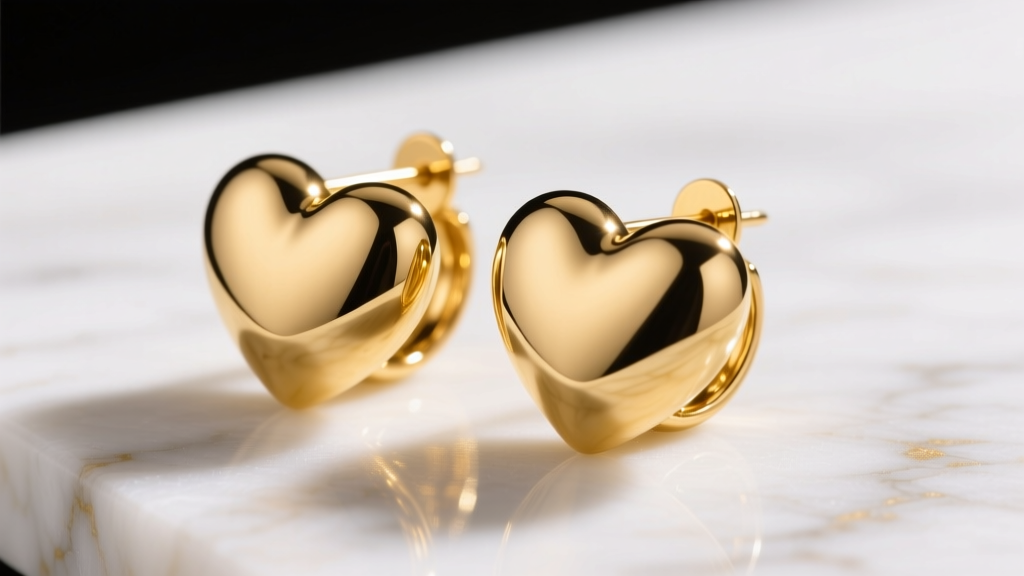
Puffy heart earrings—often referred to as inflated, bubble, or 3D hearts—have transitioned from a niche Y2K revival staple to a permanent fixture in fine jewelry collections. As we navigate the 2026 market, the demand for these voluminous, light-catching silhouettes has never been higher. However, their deceptive geometry creates unique structural challenges for both jewelers and wearers. A massive 25mm puffy heart can weigh a mere 3 grams or a lobe-stretching 16 grams, depending entirely on the manufacturing method.
This comprehensive buying guide cuts through the marketing fluff. We will examine the metallurgy, construction techniques, and hardware mechanics you must evaluate before investing in puffy heart earrings, ensuring you select a pair that balances dramatic volume with long-term wearability.
The Core Dilemma: Hollow Electroformed vs. Solid Cast
The most critical decision when buying puffy heart earrings is understanding how they were made. The "puffy" aesthetic requires a high volume of metal, which directly impacts the price and weight. Jewelers use two primary methods to achieve this look:
1. Hollow Electroforming
Electroforming is an electrolytic deposition process where gold is built up atom by atom over a conductive wax model. Once the gold shell reaches the desired thickness (usually 0.2mm to 0.4mm for structural integrity), the piece is heated, and the wax melts away through a tiny, laser-drilled pinhole.
- Pros: Extremely lightweight (2-5 grams). Allows for massive, statement-making sizes (20mm-35mm) without stretching the earlobe. More affordable due to lower gold weight.
- Cons: Highly susceptible to denting if dropped or squeezed. Cannot be easily resized or repaired if crushed.
2. Solid Casting
Traditional lost-wax casting results in a completely solid metal piece. While some casters will "core out" the back to reduce weight, a true solid puffy heart retains significant mass.
- Pros: Exceptional durability. Can withstand daily wear, impacts, and pressure without denting. Feels luxurious and substantial.
- Cons: Heavy (10-18+ grams per earring). Requires specialized earlobe support for all-day wear. Significantly higher price point due to raw material costs.
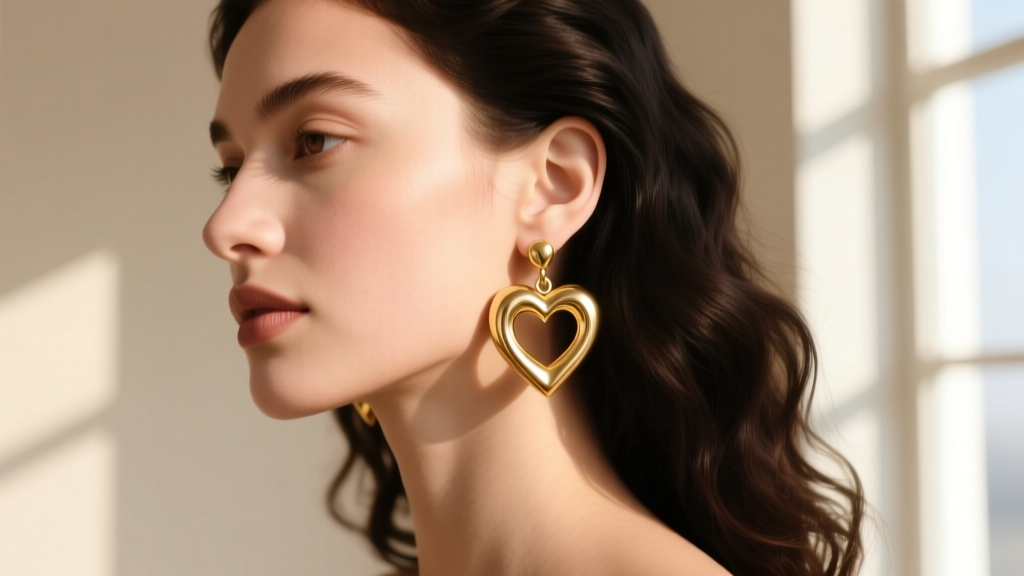
Material Grades: What the Labels Actually Mean
Because puffy hearts have a large surface area, the metal finish will show wear much faster than a delicate chain or small stud. Understanding material grades is non-negotiable.
Solid 14k vs. 18k Gold: According to the Gemological Institute of America (GIA), 14k gold contains 58.3% pure gold, while 18k contains 75%. For hollow puffy hearts, 14k is actually superior. The higher alloy content (copper, silver, zinc) makes 14k gold noticeably harder and more resistant to the denting that plagues hollow electroformed jewelry. Save 18k for solid, smaller studs.
Gold Vermeil vs. Standard Plating: The Federal Trade Commission (FTC) Jewelry Guidelines strictly regulate these terms. To be classified as "Vermeil," the base must be sterling silver, and the gold plating must be at least 2.5 microns thick. Standard "gold plated" earrings often use a brass base with a 0.5-micron flash plating. On a large, curved puffy heart, friction from hair and clothing will wear through a 0.5-micron layer in months, exposing the brass beneath, which can cause severe contact dermatitis.
Post Thickness (Gauge) and Hardware Mechanics
A common failure point in heavy statement earrings is the post bending under the weight of the design, leading to lost earrings or torn lobes.
Gauge Sizing
Standard earring posts are 20-gauge (0.81mm). If you are buying solid puffy hearts that weigh more than 8 grams per earring, a 20g post will eventually bend from the leverage of the heavy heart. You must look for 18-gauge (1.02mm) or 16-gauge (1.29mm) posts. If your piercings are currently stretched to accommodate thicker gauges, solid puffy hearts are an excellent choice; if not, you may need to gradually upsize your piercing or stick strictly to hollow electroformed styles.
Clasp and Backing Security
Standard friction "butterfly" backs are insufficient for heavy solid hearts. The constant downward pull will cause the backing to slide off the post notch. Look for:
- La Pousette (Locking) Backs: These feature a mechanical locking mechanism that clicks securely into a groove on the post.
- Screw Backs: Threaded posts that require you to twist the backing on, offering the highest security for heavy drops.
- Leverbacks: For drop-style puffy hearts, a secure leverback wire that clicks shut is essential to prevent the earring from slipping forward out of the lobe.
Sizing and Proportions for Face Shapes
The inflated geometry of puffy hearts reflects light from every angle, making them a focal point. Sizing them correctly to your face shape ensures they complement rather than overwhelm your features.
| Face Shape | Recommended Puffy Heart Style | Ideal Dimensions | Styling Rationale |
|---|---|---|---|
| Round | Elongated Puffy Heart Drops | 15mm - 25mm (Length) | Vertical drops create an illusion of length, balancing wider cheekbones. |
| Square | Medium Puffy Heart Studs | 10mm - 15mm (Width) | The soft, inflated curves of the heart soften a strong, angular jawline. |
| Heart | Puffy Heart Huggie Hoops | 8mm - 12mm (Charm) | Keeps the visual weight closer to the ear, preventing the chin area from looking too narrow. |
| Oval | Oversized Statement Studs | 18mm - 30mm (Width) | Oval faces can carry extreme volume and width without losing facial harmony. |
Real-World Troubleshooting: Dents and Lobe Stretching
Even with careful wear, accidents happen. Here is how to manage the two most common issues associated with puffy heart earrings.
Fixing Dents in Hollow Electroformed Gold
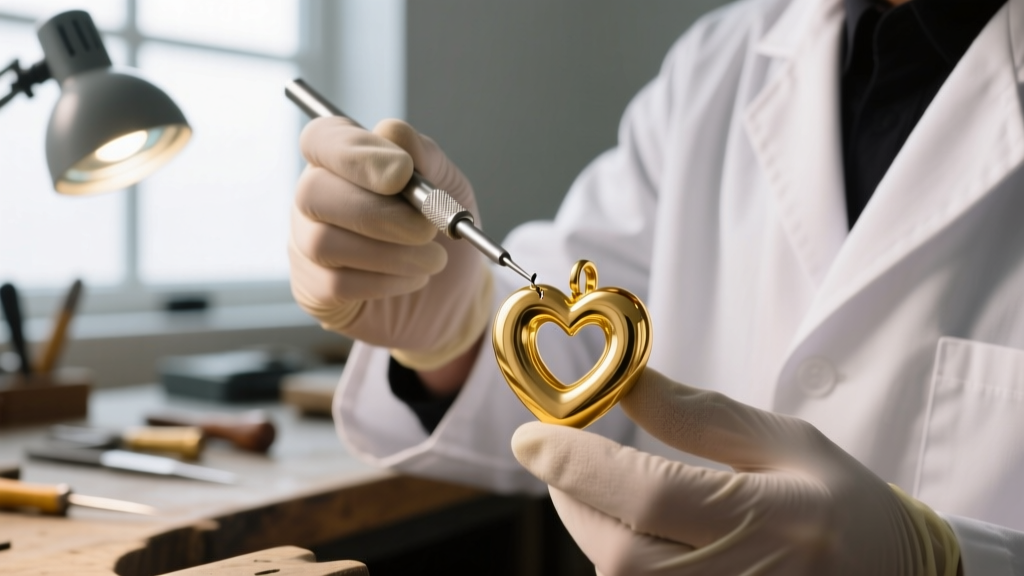
If you drop a hollow puffy heart and it dents, do not attempt to pop it out from the inside with a needle. The gold shell is too thin and will likely tear. Instead, take it to a professional jeweler who specializes in hollow-ware. They can use a specialized steel burnishing tool to gently massage the metal back into shape from the outside, or inject a jewelry-grade clear resin into the cavity to push the dent out and provide internal structural support for the future.
Managing Lobe Fatigue from Solid Hearts
If you prefer the durability of solid cast puffy hearts but suffer from lobe fatigue or micro-tearing, you must use external support. Silicone earlobe support patches (often sold under brand names like Lobe Wonder) distribute the 12-15 gram weight of a solid heart across a wider surface area of the ear. Apply the patch before inserting the earring, pushing the post directly through the reinforced adhesive pad. This prevents the "drooping" effect that occurs when heavy gold pulls the piercing channel downward over time.
Final Buying Checklist
Before you click checkout on your next pair of puffy heart earrings, verify these four data points:
- Construction: Is it hollow (electroformed) or solid (cast)? Does the weight match your lobe's tolerance?
- Material: Is it solid 14k/18k, or Vermeil (minimum 2.5 microns over sterling silver)? Avoid brass-base flash plating.
- Hardware: If solid and over 8g, does it have an 18g post and a locking/screw backing?
- Pinholes: If hollow, are the electroforming wax-drain pinholes smoothly finished so they don't catch on your hair?
By prioritizing structural integrity and precise metallurgy over mere aesthetics, you can invest in puffy heart earrings that deliver bold, light-catching volume for decades, rather than just a single season.


