Hologram Earrings: Material Science of Iridescent Jewelry
Explore the material science behind hologram earrings. We analyze dichroic glass, anodized titanium, and holographic resins for optimal wear.

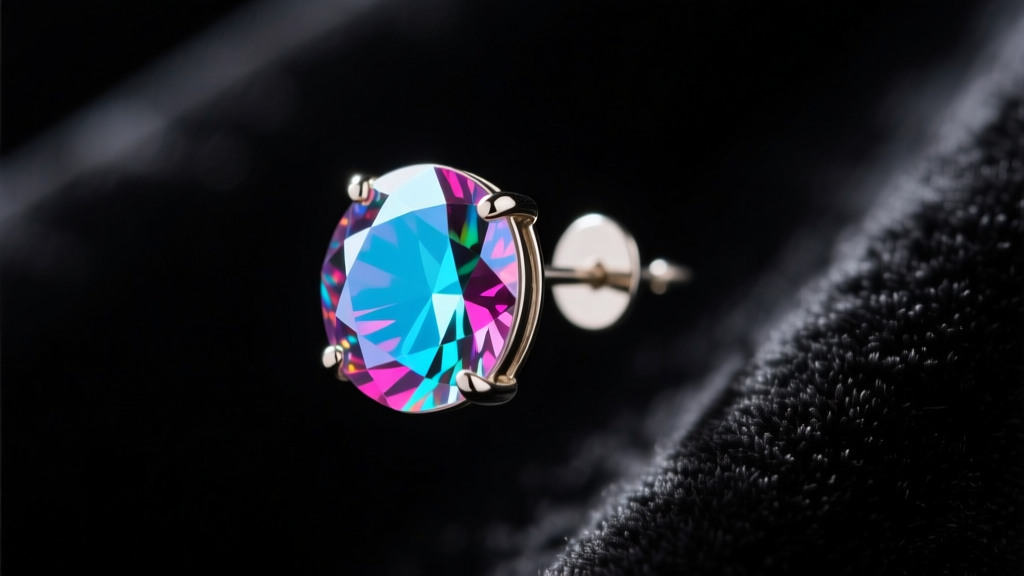
The Illusion of Holography in Jewelry Design
When consumers search for 'hologram earrings,' they are typically chasing a specific optical phenomenon: a dynamic, multi-dimensional color shift that mimics the depth and light-bending properties of a true holographic projection. While actual light-projecting micro-holograms remain in the realm of science fiction, the jewelry industry has mastered the illusion of holography through advanced material science. As of 2026, the market is saturated with cheap, stamped-plastic imitations, making it crucial for collectors and piercing enthusiasts to understand the physical mechanics behind genuine iridescent jewelry.
True holographic effects in fine and fashion jewelry rely on thin-film interference, micro-prismatic embossing, or voltage-induced oxide layers. Understanding these mechanisms is the only way to differentiate between a $15 polymer trend piece and a $150 masterwork of optical engineering. This deep dive explores the three primary materials used to create hologram earrings, their structural failure modes, and the precise hardware specifications required for safe, long-term wear.
The Physics of Thin-Film Interference
Before analyzing specific materials, it is vital to understand the physics that make 'holographic' jewelry possible. The vibrant, shifting colors are rarely caused by pigments or dyes. Instead, they are the result of thin-film interference. When light strikes a microscopically thin layer of material, some light waves reflect off the top surface, while others penetrate and reflect off the bottom surface. These overlapping waves either amplify each other (constructive interference) or cancel each other out (destructive interference) depending on the viewing angle and the exact thickness of the film, which is often measured in nanometers. According to optical research published by the Gemological Institute of America (GIA), this is the exact same phenomenon responsible for the play-of-color in precious opals and the iridescence of labradorite.
Material Matrix: How Holographic Effects Are Achieved
1. Dichroic Glass (The Premium Standard)
Dichroic glass is the gold standard for holographic jewelry. Originally developed by NASA for satellite mirrors and optical filters, this material is created through a vacuum deposition process. Quartz crystal and metal oxides (such as titanium, chromium, and aluminum) are vaporized using an electron beam and deposited onto a glass substrate in a vacuum chamber. The resulting metallic layers are incredibly thin—typically between 30 and 50 nanometers.
Because the coating is so thin, it transmits certain wavelengths of light while reflecting others. A single piece of dichroic glass used in a stud earring will display one dominant color when viewed straight-on (transmission) and a completely different, shifting color when viewed from an angle (reflection). High-end jewelry artisans kiln-fire these sheets, cutting them into precise geometric shapes that maximize the holographic shift.
2. Anodized Titanium (The Hypoallergenic Choice)
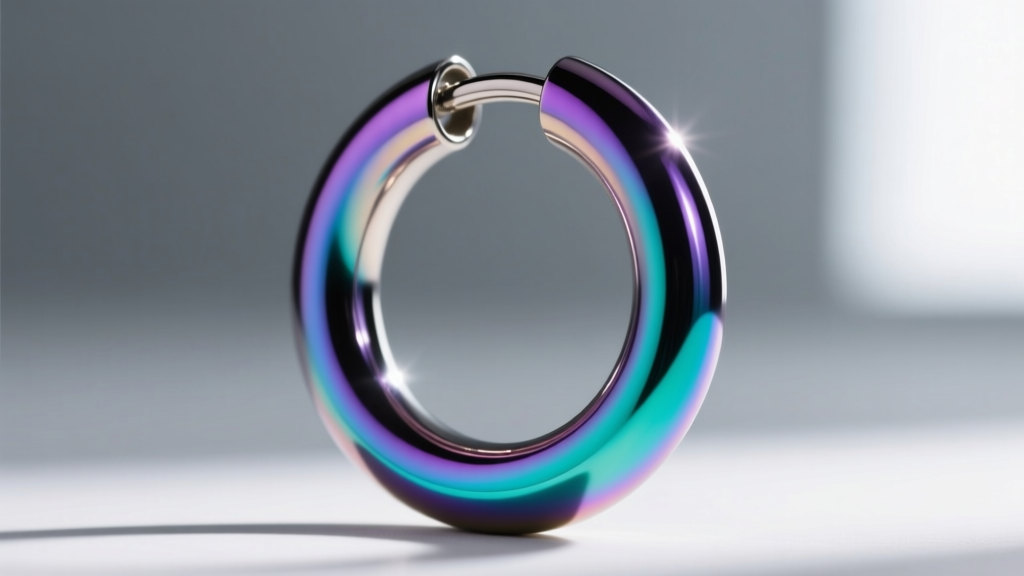
For cartilage piercings and sensitive lobes, anodized titanium offers a metallic holographic effect without the fragility of glass. Implant-grade titanium (specifically ASTM F136 Grade 23 Ti6Al4V ELI) is naturally silver-grey. However, when submerged in an electrolytic bath and subjected to a specific electrical voltage, a transparent titanium dioxide layer forms on the surface.
By precisely controlling the voltage, jewelers dictate the exact thickness of this oxide layer, thereby controlling the interference color. A voltage of 90 to 110 volts produces a stunning teal-to-magenta holographic shift. Because the color is a structural property of the oxide layer rather than a surface paint, it will not flake or peel under normal conditions. Suppliers like Rio Grande provide extensive technical data on how voltage variations dictate the final optical spectrum of anodized metals.
3. Holographic PET/TPU Films (The Trend-Driven Option)
The Y2K fashion revival popularized holographic polymers. These earrings are crafted from Polyethylene Terephthalate (PET) or Thermoplastic Polyurethane (TPU) films that have been mechanically embossed with micro-prismatic patterns. While visually striking, early 2020s iterations suffered from rapid UV degradation and yellowing. By 2026, reputable manufacturers have begun incorporating Hindered Amine Light Stabilizers (HALS) into the polymer matrix, significantly extending the lifespan of these pieces, though they remain fundamentally less durable than glass or metal.
Technical Comparison Chart
| Material | Optical Method | Mohs Hardness | Hypoallergenic Rating | Avg. Price Range |
|---|---|---|---|---|
| Dichroic Glass | Thin-Film Interference (Metal Oxides) | 5.5 - 6.5 | High (if capped & lead-free) | $45 - $150+ |
| Anodized Titanium | Voltage-Induced Oxide Layer | 6.0 | Exceptional (Implant Grade) | $30 - $90 |
| Holographic PET/TPU | Micro-Prismatic Embossing | 2.0 - 3.0 | Low to Moderate | $12 - $35 |
Structural Integrity & Failure Modes
Understanding how holographic earrings fail is critical for both jewelers and consumers. The optical layers are inherently delicate, and improper manufacturing leads to rapid degradation.
Delamination vs. Fused Capping in Glass
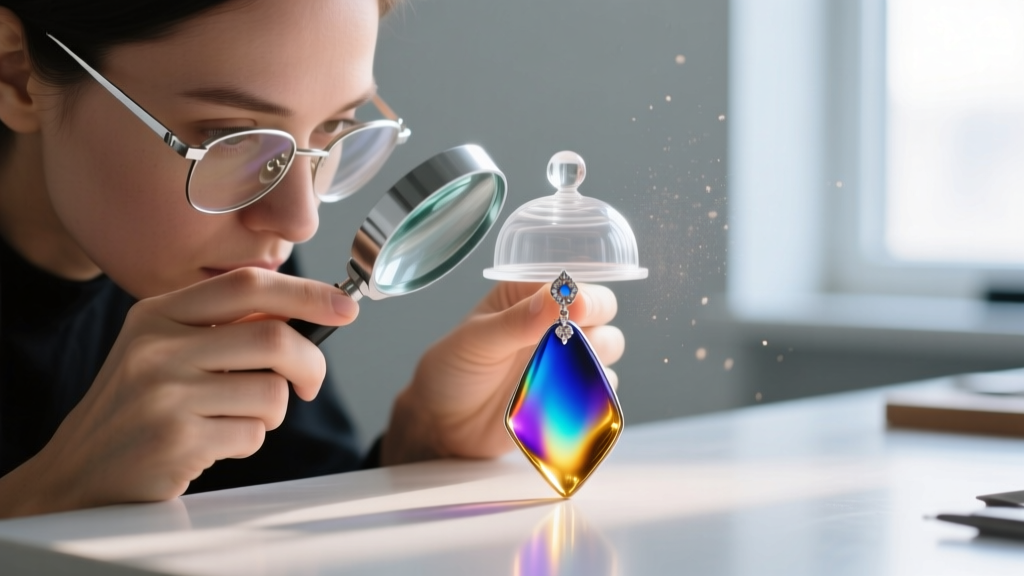
The most common failure mode in cheap dichroic glass earrings is coating abrasion. The metallic oxide layer is only 50 nanometers thick; a single drop onto a bathroom tile can scratch or flake the holographic coating. Premium manufacturers solve this via kiln-fused capping. A layer of clear, compatible glass (with a matching Coefficient of Expansion, typically COE 90) is placed over the dichroic sheet and fired in a kiln at approximately 1450°F (788°C). This melts the clear glass over the metallic layer, sealing it permanently. If you can feel the metallic texture with your fingernail, the glass is uncapped and will eventually degrade.
Voltage Shifts and Titanium Galling
While anodized titanium is incredibly durable, the anodized layer can be scratched by abrasive polishing compounds, revealing the raw silver metal beneath. Furthermore, titanium has a high coefficient of friction, making it prone to 'galling' (cold welding) when threaded. If you are purchasing internally threaded holographic titanium labrets, always apply a microscopic amount of synthetic jewelry wax to the threads to prevent the titanium from seizing and stripping the holographic oxide layer during insertion.
Piercing Gauge & Hardware Specifications
When integrating holographic elements into body jewelry, the underlying hardware must meet strict anatomical and safety standards. Here are the technical specifications you should demand:
- Standard Lobe Studs: 20G (0.81mm) or 18G (1.02mm) posts. For dichroic glass studs, ensure the post is soldered using lead-free silver solder, as the heat of soldering can shatter improperly annealed glass.
- Cartilage / Helix / Conch: 16G (1.29mm) or 14G (1.60mm) flat-back labrets. Flat backs are essential to prevent the 'helicopter effect' that can chip the edges of heavy glass or resin holographic tops.
- Threading Standards: For anodized titanium, strictly require internally threaded or threadless (push-pin) hardware. Externally threaded titanium will scrape off the holographic anodized layer every time it passes through the fistula (piercing channel), introducing microscopic metal debris into the healing tissue.
Care Protocols for Optical Coatings
Maintaining the refractive index and clarity of hologram earrings requires specific cleaning protocols. Never use ultrasonic cleaners on dichroic glass; the high-frequency cavitation can cause micro-fractures in the fused cap, leading to moisture ingress and eventual delamination of the metallic layers. Similarly, avoid isopropyl alcohol on holographic PET/TPU resins, as it breaks down the plasticizers and causes clouding.
The safest, most effective cleaning method for all holographic materials is a mild, phosphate-free surfactant (such as Dawn dish soap) mixed with distilled water. Use a lint-free microfiber cloth to gently wipe the surface, ensuring that no abrasive dust particles are ground into the optical layers. By respecting the material science behind these pieces, you ensure that the holographic shift remains vibrant for decades.


