Hook Earring Buying Guide: Wire Gauges, Security & Materials
Master the hook earring anatomy. Learn exact wire gauges, hypoallergenic metal grades, and security hacks to keep your drop earrings safe.

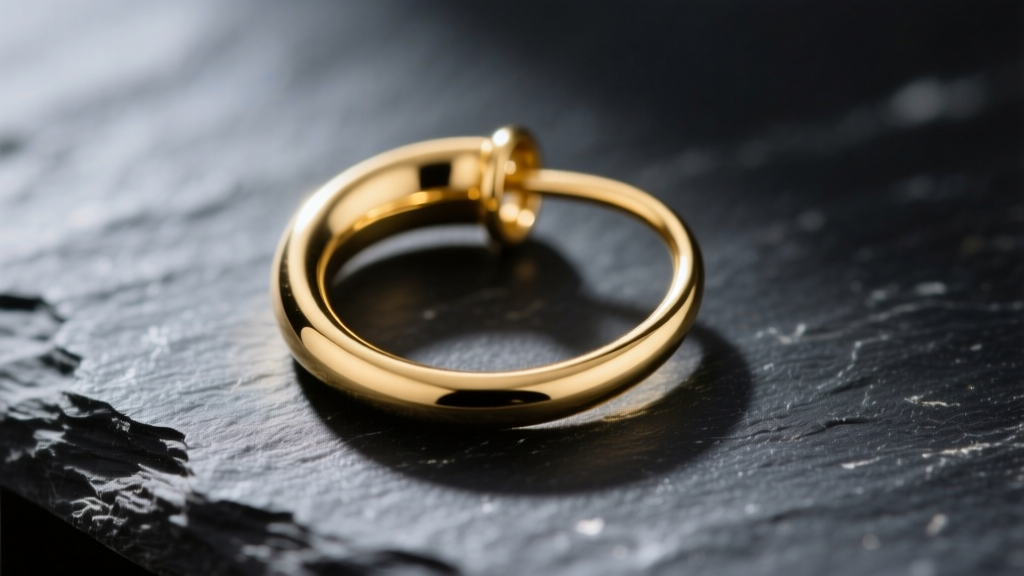
The Anatomy of a Hook Earring: Beyond the Basic Fishhook
When most shoppers search for a hook earring, they are usually picturing the classic French wire. However, in professional jewelry design and metallurgy, 'hook' encompasses three distinct structural categories, each with specific use cases, failure modes, and weight tolerances. Understanding these differences is the first step in building a secure, comfortable earring wardrobe that won't bend, tarnish, or slip out during daily wear.
French Wire vs. Shepherd’s Hook vs. Kidney Wire
The French wire is the industry standard for drop earrings. It features a gentle curve that passes through the earlobe, ending in a small indentation known as a tension notch. This notch is designed to catch a friction back, providing a baseline level of security. The shepherd’s hook is a more minimalist, continuous curve without a notch. It relies entirely on gravity and the precise angle of the wire's bend to stay in place, making it ideal for lightweight, minimalist threaders or delicate pearl drops. Finally, the kidney wire features a hinged clasp that snaps into a loop at the front of the wire, creating a closed circuit. This is the mandatory choice for heavy chandelier styles or valuable gemstone drops where loss is not an option.
Critical Sizing: Wire Gauge and Length Specifications
The most common point of failure for hook earrings is an incorrect wire gauge. The gauge determines the thickness of the metal passing through your piercing. If a wire is too thin for the weight of the earring's drop, it will bend out of shape. Worse, a thin wire supporting a heavy stone creates the 'cheese-cutter effect,' where the wire slowly migrates through the earlobe tissue due to concentrated downward pressure.
| Wire Gauge | Millimeter (mm) | Best Use Case | Weight Tolerance |
|---|---|---|---|
| 22-Gauge | 0.64mm | Ultra-lightweight sleepers, minimalist threaders | Under 2 grams |
| 20-Gauge | 0.81mm | Standard gemstone drops, medium-sized hoops | 2 to 5 grams |
| 18-Gauge | 1.02mm | Heavy cabochons, chandelier styles, thick lobes | 5 to 12+ grams |
Length is equally critical. A standard French wire measures 15mm to 18mm from the top of the curve to the bottom of the loop. If you have thicker earlobes (over 4mm thick) or multiple lobe piercings that sit close together, standard hooks will sit too tightly against the skin, trapping moisture and causing contact dermatitis. In these cases, seek out 'extended' or 'long' hook wires that offer a 22mm drop length to allow the earlobe to breathe.
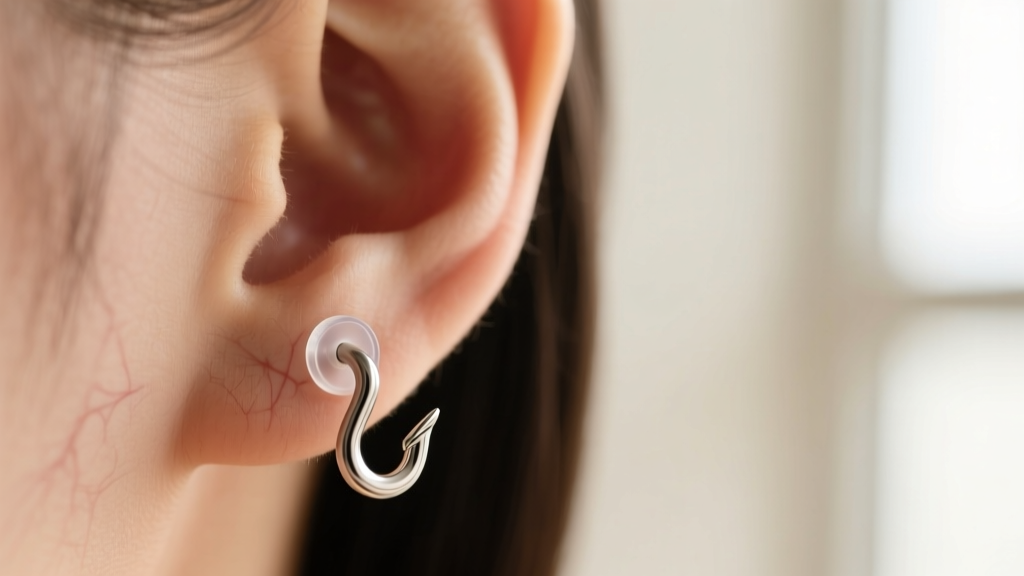
Material Grades: Navigating Hypoallergenic Claims
The term 'hypoallergenic' is largely unregulated in the jewelry industry. To avoid allergic contact dermatitis, you must look past marketing buzzwords and demand specific metallurgical grades. According to the American Academy of Dermatology, nickel is the primary culprit behind jewelry allergies, and it is frequently hidden in cheaper alloys.
- Implant-Grade Titanium (ASTM F136): The absolute gold standard for sensitive ears. This specific alloy (Ti6Al4V ELI) contains zero nickel and is the same metal used in medical joint replacements. It is lightweight, highly polished, and impervious to tarnish.
- Niobium: A highly malleable, reactive metal that contains no nickel. Jewelers love niobium because it can be anodized using electricity to produce vibrant, permanent colors without using paint or plating that could flake off into the piercing.
- 14k and 18k Solid Gold: Safe for most, provided it is alloyed with silver, copper, or zinc. Always verify with the jeweler that their gold is 'nickel-free,' as some white gold alloys still use nickel for bleaching.
Expert Warning: Avoid 'Surgical Steel' (often 316L stainless steel). Despite the medical-sounding name, 316L steel contains 8% to 10% nickel. While the nickel is usually bound within the crystal structure, the friction of a hook earring moving in and out of the earlobe can release enough nickel ions to trigger a severe reaction in sensitized individuals.
Security Failures: Why Hook Earrings Fall Out (And How to Fix It)
Losing a favorite drop earring to a sweater collar or a hairbrush is a universal frustration. The open nature of a hook earring is its greatest design flaw. Fortunately, modern jewelry accessories have solved this problem without sacrificing aesthetics.
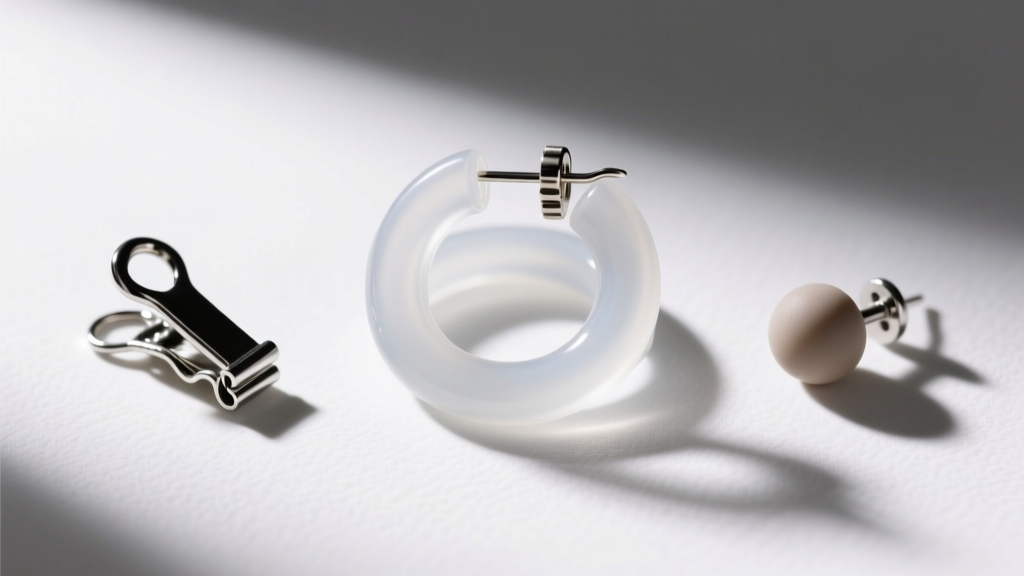
The Best Security Mechanisms for Open Wires
- Silicone O-Rings (1mm thickness): Far superior to the standard rubber bullet clutches that come with stud earrings. A 1mm silicone O-ring grips the wire via friction and flexes to accommodate the tension notch on a French wire. They are virtually invisible and cost less than $5 for a pack of 50.
- Hinged French Wire Clips: These are small, U-shaped metal clasps that snap over the wire and lock into the tension notch. They provide a satisfying 'click' and are ideal for high-end diamond or sapphire drops where silicone might look too casual.
- The Pinch-and-Bend Method: If you are wearing a shepherd's hook without a notch, use clean nylon-jaw pliers to gently pinch the back curve of the wire, creating a slight 10-degree inward angle. This creates a physical barrier that rests against the back of the earlobe, preventing forward slippage.
Pricing Tiers: What You Should Actually Pay in 2026
Understanding the fair market value of hook earrings prevents you from overpaying for plated metals or underpaying for suspicious 'solid gold' claims. Based on current precious metal markets and artisan labor rates, here is a realistic pricing framework.
- Tier 1: Titanium & Niobium ($15 - $45)
You are paying for the raw biocompatible metal and basic CNC machining or hand-forging. Anodized colors may push the price to the higher end of this bracket. - Tier 2: Gold Vermeil & Sterling Silver ($40 - $95)
Vermeil requires a thick layer of 14k or 18k gold (minimum 2.5 microns) over a sterling silver base. It is an excellent middle-ground for fashion jewelry, though the gold layer will eventually wear off the friction points of the hook after 1 to 2 years of daily use. - Tier 3: Solid 14k/18k Gold ($120 - $350+)
At this tier, you are buying heirloom-quality metallurgy. The price will scale heavily based on the alloy color (rose gold often requires more copper, while high-quality white gold requires rhodium plating) and the presence of ethically sourced gemstones. According to the Gemological Institute of America (GIA), always look for proper karat hallmarks (e.g., 585 for 14k, 750 for 18k) stamped near the base of the hook loop.
Final Verdict: Building a Secure Hook Earring Wardrobe
A well-chosen hook earring offers unparalleled versatility, allowing you to swap out drops and charms while maintaining a minimalist profile in the ear. By prioritizing 20-gauge or 18-gauge thicknesses, demanding ASTM F136 titanium or verified nickel-free gold, and investing a few dollars in silicone O-rings, you eliminate the structural and security flaws that plague mass-produced jewelry. Treat the wire not just as a hanger for your gemstones, but as a critical piece of engineering that protects both your investment and your earlobe health.


