The Ultimate Hoop Earring Holder Guide for Cleaning & Storage
Discover how the right hoop earring holder prevents tangles, tarnish, and hinge damage. Expert cleaning and storage tips for gold, silver, and pavé hoops.

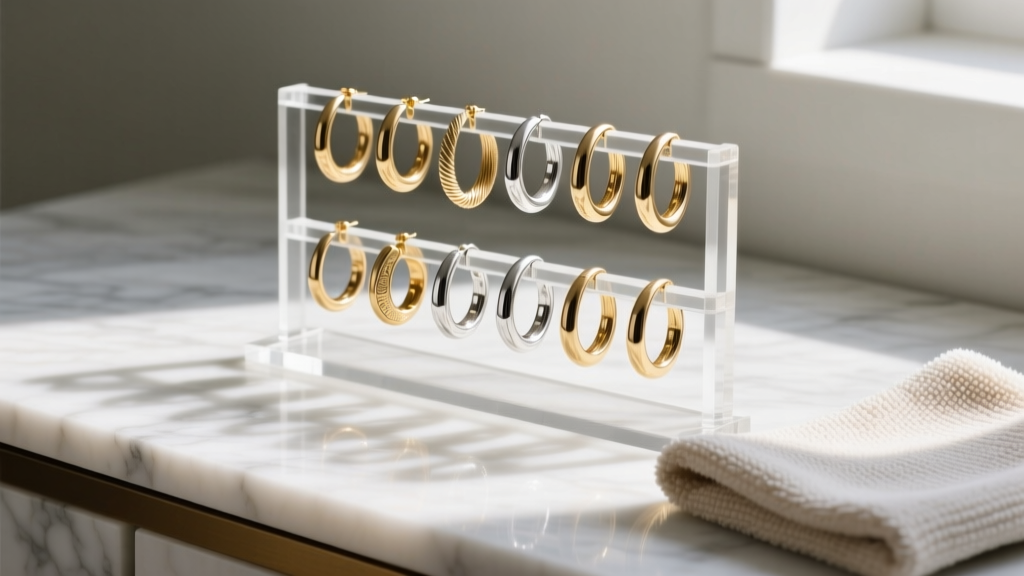
Hoop earrings are a timeless staple in any jewelry collection, but their continuous circular geometry makes them uniquely vulnerable to damage during storage. Unlike studs that sit flat or dangles that can be hooked, hoops easily tangle, bend, and suffer mechanical stress at their hinges when tossed into a generic jewelry box. For serious collectors and everyday wearers alike, investing in a dedicated hoop earring holder is not merely an aesthetic choice—it is a critical component of your jewelry care and maintenance routine.
Proper storage dictates the longevity of your earrings. When combined with a rigorous cleaning protocol, the right holder prevents galvanic corrosion, protects delicate pavé settings, and maintains the structural integrity of the wire gauge. In this comprehensive guide, we break down the material science of earring storage, provide a meticulous cleaning framework, and explain how to maintain the mechanical hinges of your favorite hoops.
The Hidden Maintenance Risks of Improper Hoop Storage
Most jewelry damage occurs not during wear, but during storage. The primary culprit for hoop earrings is wire deformation. Standard lightweight hoops are typically crafted from 20-gauge (0.81mm) or 18-gauge (1.02mm) wire. While these gauges provide an elegant, lightweight profile, they have a relatively low yield strength. When hoops are piled together in a drawer, the 20-gauge wire easily bends under the weight of heavier pieces, ruining the perfect circular geometry.
Furthermore, hollow tube hoops—a popular style for achieving a bold look without the heavy weight—are highly susceptible to denting. If a heavy pendant necklace shifts against a hollow hoop in a shared compartment, the thin metallic shell can easily crease. A specialized hoop earring holder suspends the earrings by their wire or through the center of the hoop, eliminating point-load pressure and preventing the metal from warping over time.
Another hidden risk is environmental tarnishing. Storing sterling silver hoops in open-air dishes or untreated wooden boxes exposes them to ambient sulfur and humidity, accelerating the formation of silver sulfide (tarnish). The right holder acts as a micro-environment, especially when paired with anti-tarnish technologies.
Choosing the Right Hoop Earring Holder by Material
Not all jewelry organizers are created equal. The material of your hoop earring holder can actively react with the metals of your earrings if you are not careful. According to metallurgical guidelines from Rio Grande, a leading jewelry supply authority, certain organic materials off-gas acidic vapors that rapidly degrade precious metals.
| Holder Material | Best Suited For | Avoid With | Maintenance Impact |
|---|---|---|---|
| Acid-Free Velvet | High-karat Gold, Platinum, Pavé | None | Prevents micro-scratches on soft 18k and 22k gold alloys. |
| Untreated Wood | Costume Jewelry, Plastics | Sterling Silver, Copper, Brass | Oak and pine off-gas acetic acid, causing rapid tarnishing and pitting. |
| Clear Acrylic | Everyday Wear, Titanium, Niobium | Pearls, Opals, Soft Gemstones | Hard acrylic edges can scratch delicate pearl nacre or opal surfaces. |
| Anti-Tarnish Cloth | 925 Silver, Oxidized Metals | None | Contains zinc/silver particles that absorb ambient sulfur before it reaches the earring. |
For a mixed-metal collection, a tiered acrylic hoop earring holder lined with anti-tarnish strips offers the best compromise between visibility and chemical protection. Never store sterling silver and 14k gold hoops touching each other on a metallic holder; in the presence of ambient humidity, this can trigger galvanic corrosion, permanently damaging the surface finish of the less noble metal.
Step-by-Step Cleaning Protocol Before Storage
Placing dirty hoops onto your holder traps sebum, dead skin cells, and cosmetic residues against the metal. This organic buildup holds moisture, creating a micro-climate that accelerates corrosion and dulls gemstones. Before placing your hoops on their holder, execute the appropriate cleaning protocol based on the earring's construction.
Solid Gold and Platinum Hoops (14k-18k)
Solid gold and platinum are highly durable but attract oils that obscure their luster. Prepare a solution of warm distilled water and a few drops of phosphate-free dish detergent. Soak the hoops for 15 minutes. Use an extra-soft baby toothbrush to gently sweep the inside of the hoop and the hinge mechanism, where lotion and skin cells accumulate. Rinse with distilled water (tap water contains chlorine and minerals that can leave spots) and dry completely with a lint-free microfiber cloth before hanging them on your holder.
Sterling Silver and the Tarnish Battle
Sterling silver (92.5% silver, 7.5% copper) tarnishes due to the copper alloy reacting with sulfur in the air. For light tarnish, use a dedicated silver polishing cloth infused with jeweler's rouge. For heavy, blackened tarnish, a thiourea-based silver dip can dissolve the silver sulfide layer in seconds. However, you must rinse the hoops thoroughly in a baking soda and water bath afterward to neutralize the acidic dip. If acidic residue is left on the earring and then placed in an enclosed holder, it will cause severe pitting over time.
Pavé and Hollow Tube Hoops (Ultrasonic Warnings)
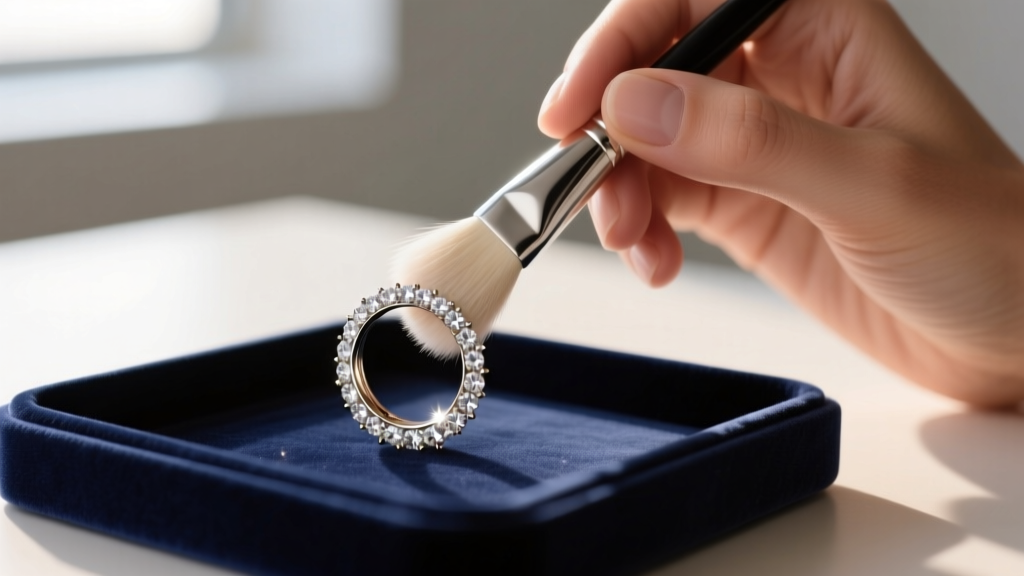
While ultrasonic cleaners are excellent for solid diamond solitaires, they are incredibly dangerous for pavé hoops and hollow tubes. The Gemological Institute of America (GIA) warns that the high-frequency vibrations (typically 40kHz) can shatter tension-set stones, loosen the adhesive used in micro-pavé settings, and compromise the laser-welded seams of hollow tube hoops. Furthermore, water can become permanently trapped inside hollow hoops through microscopic seams, leading to internal rust and structural failure. Always clean pavé and hollow hoops manually with a damp microfiber swab.
Mechanical Maintenance: Hinges, Latches, and Wire Gauges
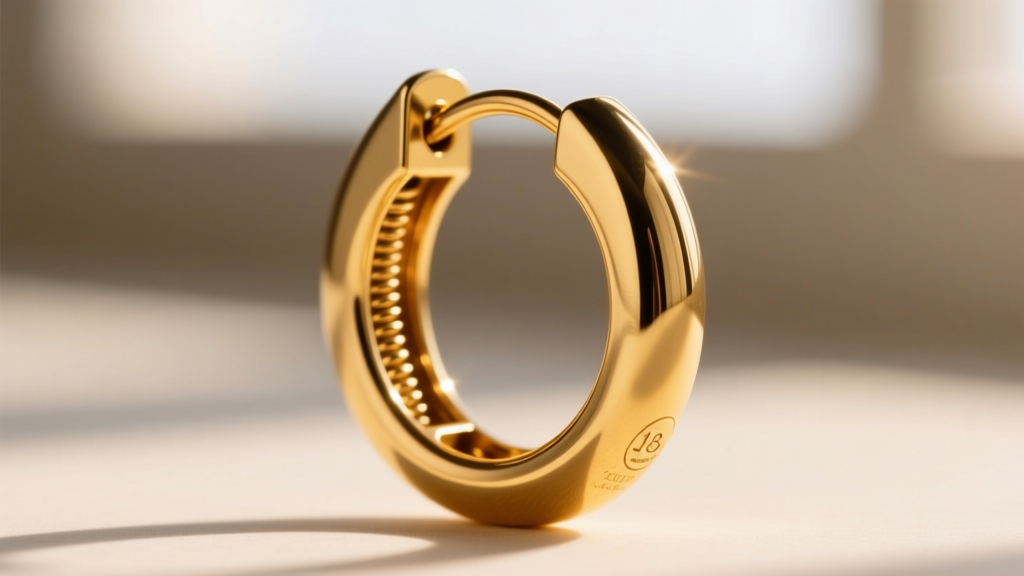
The most common point of failure on a hoop earring is the hinge and clasp mechanism. Over time, the satisfying 'click' of a snap closure can become mushy, or the hinged post may bend, preventing it from seating correctly into the catch.
- Hinge Tension: If your hinged hoop feels loose, the male post may be worn down, or the female socket may have stretched. Never attempt to bend the post with pliers to make it fit tighter; this work-hardens the metal and will eventually cause it to snap. Take it to a jeweler to have the socket gently compressed.
- Wire Alignment: For continuous hoop earrings (where the wire threads through the hollow tube of the hoop), the 20-gauge wire must be perfectly straight. If it bends, threading it through the ear piercing becomes painful and can tear the fistula. Store continuous hoops on a holder that supports the entire curve, preventing the wire from catching and bending.
- Clasp Lubrication: If a hinge squeaks or feels gritty, a microscopic drop of synthetic watch oil applied with a needle can restore smooth operation. Wipe away any excess oil immediately so it does not transfer to your skin or clothing.
Building a Long-Term Hoop Care Station
To maximize the lifespan of your collection, integrate your hoop earring holder into a dedicated care station. If you live in a high-humidity climate, place your holder inside a sealed acrylic display case or a zippered anti-tarnish pouch when not in active rotation. Include a small packet of silica gel desiccant to control ambient moisture, and replace 3M anti-tarnish strips every six months.
By treating your hoop earring holder as an active maintenance tool rather than a passive display stand, you protect the precise engineering of the hinges, preserve the mirror finish of the metal, and ensure your favorite hoops remain in pristine, wearable condition for decades.


