Hoop Earrings Heart Shapes: Technical Sizing & Metal Guide
Master the structural mechanics of hoop earrings heart shapes. Explore wire gauges, metal fatigue at the cleft, and clasp engineering for lasting wear.

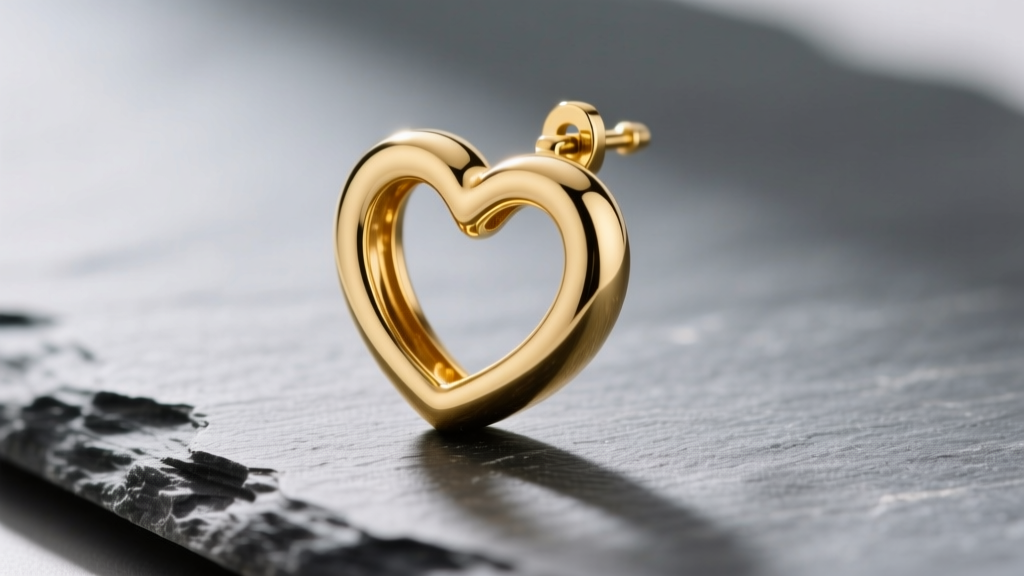
The Structural Engineering of Heart-Shaped Hoops
When evaluating hoop earrings heart designs, most consumers focus solely on the aesthetic silhouette. However, from a metallurgical and structural engineering perspective, transforming a continuous circular wire into a bilaterally symmetrical heart shape introduces severe mechanical vulnerabilities. Unlike a standard round hoop, which distributes kinetic energy and tensile stress evenly across its radius, a heart-shaped hoop features a sharp inward inversion at the superior cleft. This geometric anomaly creates a concentrated stress point that dictates the lifespan, material requirements, and manufacturing method of the earring.
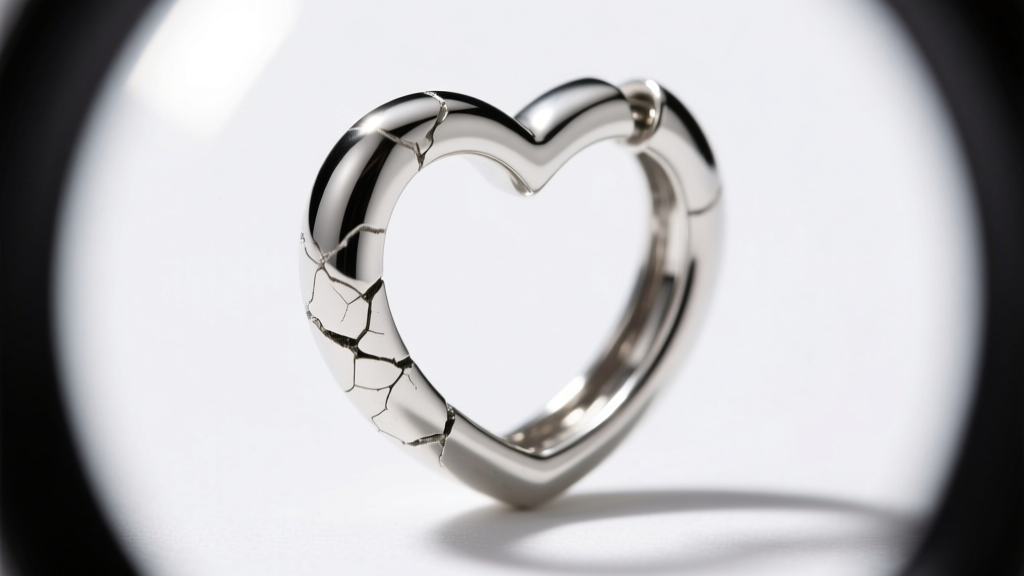
According to manufacturing guidelines from Rio Grande, bending precious metal wire into a sharp 'V' or cleft causes localized work hardening. If the metal is not properly annealed during the fabrication process, the crystalline structure at the cleft becomes brittle. Over time, the simple acts of putting the earring on, taking it off, or sleeping in it will induce metal fatigue, leading to a catastrophic snap precisely at the top center of the heart. Understanding these mechanics is crucial for selecting a pair that offers both visual impact and structural longevity.
Historically, the heart motif was reserved for cast pendants where 3D volume could support the shape. Translating this to a continuous wire hoop is a relatively modern manufacturing achievement, made possible by advanced CNC wire-bending and precision laser welding. When evaluating vintage or antique heart hoops, buyers should be exceptionally cautious, as early 20th-century soldering techniques often used low-temperature solders at the cleft, which degrade rapidly under modern environmental stressors.
Wire Gauges and the Cleft Vulnerability
The thickness of the metal wire—measured in gauges—is the primary defense against structural failure in heart hoops. While standard circular huggies and hoops frequently utilize 20-gauge (0.81mm) or 18-gauge (1.02mm) wire to maintain a lightweight profile, these dimensions are entirely insufficient for the top arch of a heart-shaped hoop.
Minimum Gauge Requirements
- 16-Gauge (1.29mm): The absolute minimum for wire-formed heart hoops. This thickness provides enough cross-sectional mass to resist bending when the clasp is engaged or disengaged.
- 14-Gauge (1.63mm): Ideal for larger, statement-sized heart hoops (over 25mm in width). The added mass prevents the earring from warping out of its symmetrical shape under its own weight.
- Cast Solid Bodies: For heart hoops thinner than 16-gauge visually, the piece must be cast as a solid or semi-solid 3D object rather than formed from a single drawn wire. Cast pieces distribute stress through volume rather than wire tension.
Material Grades and Tensile Strength Data
The choice of alloy directly impacts how well a heart hoop resists deformation and fatigue. Precious metals behave vastly differently under the compressive stress of the heart's cleft. Below is a technical comparison of common materials used in fine jewelry, referencing standards recognized by the Gemological Institute of America (GIA).
| Material Grade | Yield Strength | Malleability & Fatigue Resistance | Best Application |
|---|---|---|---|
| ASTM F136 Titanium | High (860 MPa) | Exceptional fatigue resistance; highly springy. | Clicker hoops, cartilage piercings, daily wear. |
| 14k Yellow/White Gold | Medium (400-500 MPa) | Good balance of hardness and malleability; resists bending. | Standard lobe hoops, hinged snap clasps. |
| 18k Yellow Gold | Low-Medium (250-300 MPa) | Highly malleable; prone to warping if gauge is too thin. | Cast solid hearts, luxury statement pieces. |
| Platinum 950 | Medium (500+ MPa) | Dense and durable; work-hardens slowly, resisting snaps. | Heirloom pieces, thick wire-formed hoops. |
| Sterling Silver (925) | Low (150-200 MPa) | Soft; highly susceptible to fatigue at the cleft. | Fashion jewelry, occasional wear only. |
"When working with 18k gold for asymmetrical shapes like hearts, jewelers must frequently anneal the wire during the bending process to relieve internal stresses, otherwise the cleft will micro-fracture before the piece is even polished." — Master Bench Jeweler Standards.
Clasp Mechanisms for Asymmetrical Silhouettes
Because a heart-shaped hoop is inherently bottom-heavy and directionally oriented, the clasp mechanism must prevent rotational twisting. If a standard round hoop twists, it remains a circle. If a heart hoop twists, it sits sideways against the cheek, ruining the silhouette and putting lateral torque on the ear piercing.
Hinged Snap vs. Seamless Clicker
For hoop earrings heart styles designed for the standard earlobe, a hinged snap clasp with a V-shaped notch is preferred. The V-notch locks into a corresponding groove on the post, preventing the hoop from rotating on the ear wire. For cartilage or helix placements where heart-shaped huggies are popular, a segment clicker is vastly superior. Clickers utilize a continuous tension hinge that snaps shut with an audible 'click', creating a nearly invisible seam that maintains the unbroken visual line of the heart's outer curve. According to ASTM International standards for body jewelry, titanium clickers also minimize allergic reactions while providing the necessary tensile snap for secure closure.

Dimensional Ratios and Facial Geometry
The aesthetic success of a heart hoop relies on strict adherence to geometric ratios. A mathematically pleasing heart shape maintains a width-to-drop ratio of approximately 1:1.15. When jewelers stretch the drop to achieve a 'dangle' effect (e.g., a 1:1.5 ratio), the shape devolves into a teardrop or a shield, losing the recognizable heart motif.
- Micro Huggies (8mm - 12mm): Best for secondary lobe piercings or helix placements. The small scale hides minor geometric imperfections.
- Standard Hoops (15mm - 22mm): The ideal size for primary lobe piercings. This scale allows the cleft and the dual upper arches to be distinctly visible from a conversational distance.
- Statement Drops (30mm+): Requires a flattened or beveled wire profile to reduce weight. A 30mm solid round wire heart hoop will cause earlobe sagging and stretching over time due to the concentrated mass at the bottom point of the heart.
Maintenance and Stress-Testing at Home
To ensure the longevity of your heart-shaped hoops, implement a bi-annual stress test and maintenance routine. Focus your inspection on the superior cleft and the inferior point (the bottom tip of the heart).
- The Flex Test: Gently apply lateral pressure to the left and right lobes of the heart. The metal should exhibit zero give. If you feel a slight 'spring' or hear a microscopic ticking sound, the wire has suffered structural fatigue and requires immediate soldering by a professional bench jeweler.
- Visual Loupe Inspection: Use a 10x jeweler's loupe to examine the inner curve of the top cleft. Look for horizontal striations or dull, grayish lines in the polished metal—these are micro-fractures preceding a break.
- Clasp Lubrication: For hinged heart hoops, apply a microscopic drop of synthetic watch oil to the hinge pin every 12 months to prevent friction wear, which can cause the post to thin and eventually snap inside the piercing.
Furthermore, avoid placing wire-formed heart hoops in ultrasonic cleaners. The high-frequency vibrations can exacerbate existing micro-fractures at the cleft, causing the earring to snap inside the cleaning tank. Instead, use a mild dish soap and a soft-bristled baby toothbrush to gently remove sebum and cosmetic buildup from the inner curves. By prioritizing structural engineering, appropriate wire gauges, and precise dimensional ratios over mere visual appeal, you can invest in hoop earrings heart designs that remain structurally sound and visually flawless for decades.


