Where Did Hoop Earrings Originate? A Technical & Historical Deep Dive
Discover where did hoop earrings originate, tracing ancient Sumerian metallurgy to modern 14k gold continuous hoop construction and gauge sizing.

The Sumerian Genesis: 2500 BCE Metallurgy
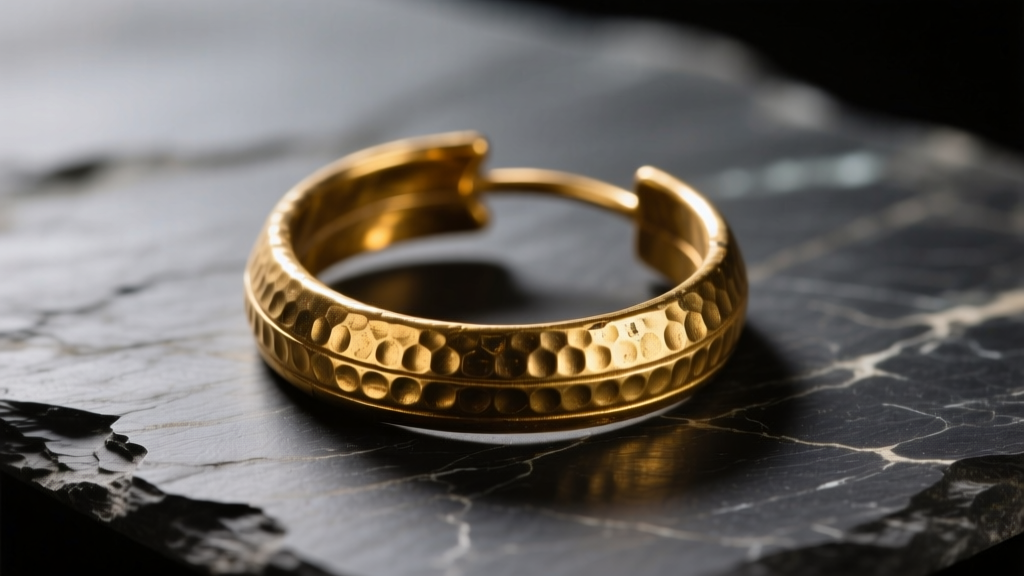
When jewelry historians and archaeologists ask where did hoop earrings originate, the consensus points unequivocally to ancient Mesopotamia. Specifically, the earliest definitive examples were unearthed in the Royal Cemetery of Ur (modern-day Iraq), dating back to approximately 2500 BCE. However, understanding these ancient artifacts requires looking past their aesthetic appeal and examining the remarkable metallurgical engineering that made them possible.
In the 3rd millennium BCE, Sumerian goldsmiths did not have access to modern wire-drawing dies. Instead, they utilized a labor-intensive technique known as "strip-twisting." Artisans would hammer native gold or electrum (a natural alloy of gold and silver) into extremely thin sheets, cut them into precise ribbons, and then twist them tightly to form a cylindrical wire. This wire was then shaped into the iconic crescent and circular hoop silhouettes. According to the Metropolitan Museum of Art, these early hoops were often thick, heavy, and secured through the earlobe via a simple tapered wire wrap, relying on the malleability of the gold to hold the tension.
The metallurgical purity of these ancient pieces varied wildly. Because refining techniques were primitive, early hoops often contained high levels of copper and silver inclusions, which inadvertently increased the tensile strength of the wire but made the metal highly susceptible to galvanic corrosion over millennia—a factor that explains the distinct pitting seen on surviving museum specimens today.
Evolution of the Clasp: From Wire Wraps to Modern Closures
The journey from Sumerian wire wraps to the precision-engineered clasps of 2026 represents a massive leap in mechanical jewelry design. The primary engineering challenge of a hoop earring is maintaining a secure closure that can withstand the lateral shear forces of daily wear without permanently deforming the metal.
Today, the market is dominated by four primary closure mechanisms, each with distinct metallurgical requirements and failure modes. The transition from ancient tapered wires to modern clickers and continuous hoops requires precise calibration of the metal's Vickers Hardness (HV).
| Closure Mechanism | Standard Gauge Range | Tensile Failure Point | Best Application |
|---|---|---|---|
| Continuous / Endless | 20g - 18g | Low (Wire bending) | Standard healed lobes |
| Hinged Saddle Clicker | 18g - 14g | High (Hinge shear) | Cartilage, Daith, Rook |
| Bead Captive Ring (BCR) | 16g - 10g | Medium (Bead ejection) | Septum, Helix, Stretched |
| Locking Hinged (Omega) | 16g - 12g | Very High (Mechanical lock) | Heavy statement hoops |
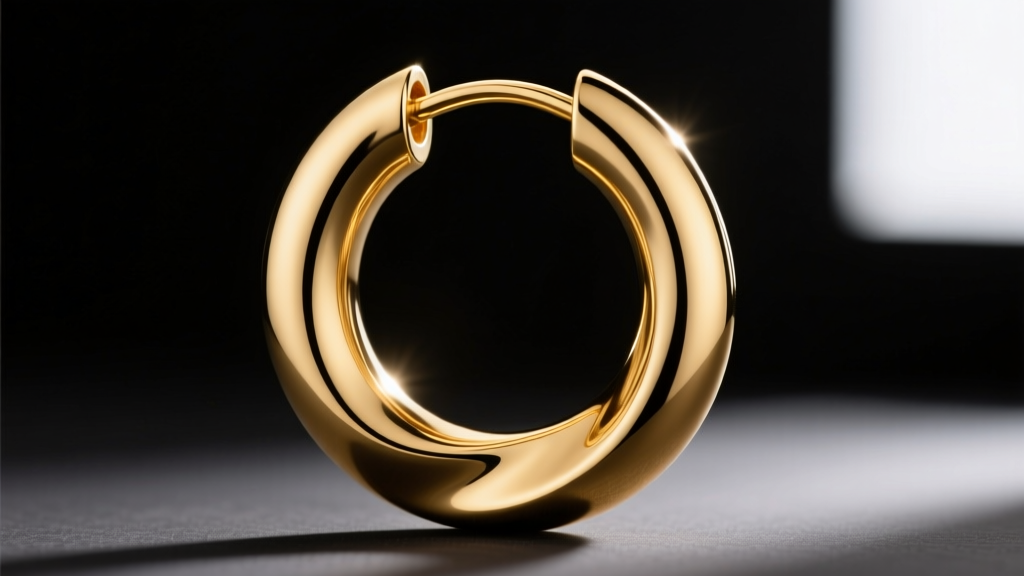
The hinged clicker, popularized in the late 2010s and perfected by brands like Maria Tash, utilizes a microscopic tension groove that produces an audible "click" when the internal post seats into the hollow tubing of the hoop. This requires the tubing to be annealed perfectly; if the gold or titanium is too hard, the clicker will crack upon snapping shut. If too soft, the hinge will loosen within months of wear.
Material Science: Ancient Alloys vs. Modern ASTM Standards
While the Sumerians relied on naturally occurring electrum, modern hoop manufacturing is governed by strict biocompatibility and structural standards. The Gemological Institute of America (GIA) notes that pure 24k gold is entirely unsuitable for hoop earrings due to its extreme softness (approx. 25 HV). A 24k hoop would deform under its own weight and fail to maintain clasp tension.
To solve this, modern jewelers use specific alloy mixtures. 14k gold (58.5% pure gold) typically exhibits a Vickers Hardness of around 140 HV when properly work-hardened, making it the superior choice for continuous and endless hoops that rely on the friction of overlapping wire ends. 18k gold (75% pure gold), while richer in color and hypoallergenic, sits at a softer 110 HV. Consequently, 18k gold is rarely used for thin, continuous hoops, as the overlapping wire end will easily bend out of alignment, leading to the earring falling out during sleep.
For cartilage piercings, where hoop rotation can cause severe irritation bumps, the industry standard has shifted away from gold entirely in favor of implant-grade materials. ASTM F138 (implant-grade stainless steel) and ASTM F67 (commercially pure titanium) are the baseline requirements for fresh or healing cartilage hoops. Titanium, specifically, offers an unparalleled strength-to-weight ratio and contains zero nickel, eliminating the risk of contact dermatitis that plagues cheaper, mass-market brass or copper-alloy hoops.
Biomechanics: Gauge, Diameter, and Lobe Migration
An often-overlooked aspect of hoop earring design is the biomechanical stress exerted on the piercing fistula. Unlike studs, which distribute weight evenly around the piercing channel, hoops introduce a "pendulum effect."
When a hoop with a large inner diameter (e.g., 50mm or greater) is worn, everyday movements like walking or turning the head cause the bottom mass of the hoop to swing. This kinetic energy transfers directly to the bottom of the piercing channel, creating localized shear stress. Over years of daily wear, heavy 18k gold large-diameter hoops can cause "lobe migration"—a gradual stretching and thinning of the tissue that eventually leads to a blown-out lobe or a complete tear.
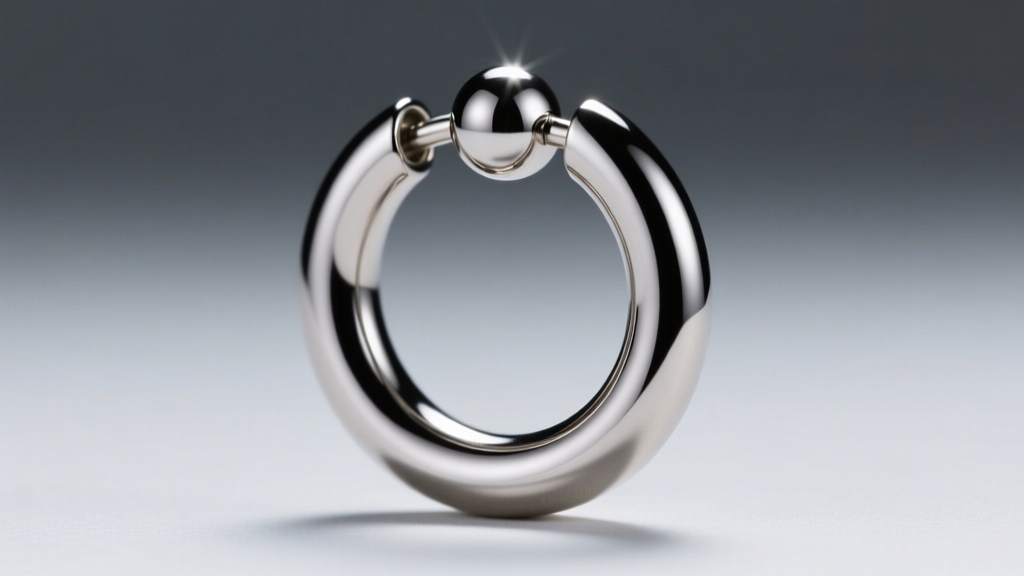
To mitigate this, expert piercers and jewelry designers adhere to strict diameter-to-weight ratios. For standard 20-gauge (0.8mm) or 18-gauge (1.0mm) lobe piercings, the inner diameter should rarely exceed 20mm unless the hoop is crafted from ultra-lightweight materials like hollow-tubing gold or anodized titanium. If a client desires a 40mm+ statement hoop, the gauge must be increased to 14-gauge (1.6mm) or 12-gauge (2.0mm) to provide a wider surface area inside the fistula, thereby dispersing the pendulum shear force and protecting the tissue from migration.
Sourcing Authentic Historical Reproductions Today
For collectors and enthusiasts looking to wear pieces that honor the ancient origins of the hoop while utilizing modern safety standards, the market offers several highly specialized avenues. Brands that focus on historical reproduction, such as those crafting Minoan and Sumerian-inspired pieces, often use the lost-wax casting method to replicate the hammered textures of 2500 BCE, but they cast them in modern, nickel-free 14k yellow gold.
When shopping for historically inspired hoops, verify the clasp mechanism. Authentic reproductions often feature a simple tapered wire tuck, which is historically accurate but prone to falling out in modern, active lifestyles. Look for artisans who offer "hidden modernization"—where the exterior features ancient strip-twisted textures and granulation, but the closure utilizes a discreet, modern hinged clicker or a secure locking saddle. Expect to pay a premium for this level of bespoke metallurgical engineering; high-quality, historically accurate 14k gold hoops typically start at $350 and can exceed $1,200 depending on the complexity of the granulation and the carat weight of any integrated lapis lazuli or carnelian cabochons, mirroring the exact gemstone preferences of ancient Mesopotamian royalty.
"The hoop earring is not merely a decorative afterthought; it is a continuous loop of human engineering, evolving from the hammered electrum of Ur to the precision-machined titanium of modern cartilage architecture."


