Skeleton Fish Earrings: A Beginner's Guide to Styling & Materials
Discover everything about skeleton fish earrings. Learn how to choose safe materials, pick the right gauge, and style this edgy marine aesthetic.

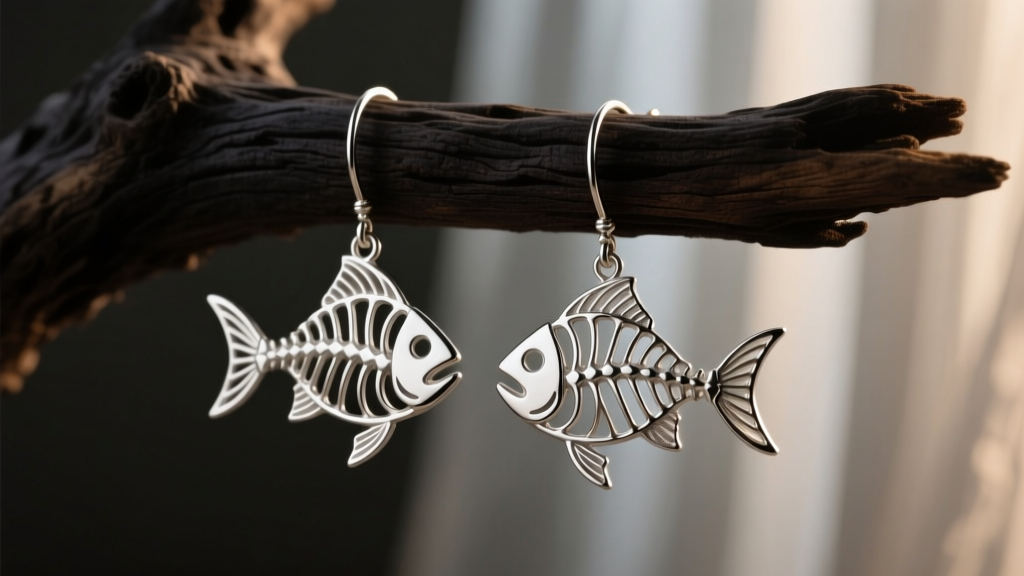
Skeleton fish earrings occupy a fascinating niche in the jewelry world, bridging the gap between marine biology fascination and alternative fashion. Whether you are drawn to the gothic undertones of an anglerfish skull or the delicate, lace-like bone structure of a koi skeleton, these pieces offer a striking departure from traditional studs and hoops. However, because skeletal designs rely on intricate, high-surface-area casting, they present unique challenges regarding material safety, weight distribution, and long-term maintenance.
If you are considering adding skeleton fish earrings to your collection, this beginner-friendly explainer will walk you through the exact metallurgy, gauge requirements, and styling frameworks you need to know before making your first purchase.
The Metallurgy of Marine Bones: Why Material Dictates Detail
When exploring skeleton fish earrings for the first time, the material is not just a matter of skin safety; it dictates how well the "bones" hold their shape. Intricate skeletal designs require metals that can capture microscopic details during the casting process.
925 Sterling Silver vs. White Bronze
The gold standard for artisan skeleton fish earrings is 925 sterling silver. Silver has excellent fluidity when molten, allowing it to fill the tiny crevices of a 3D-printed resin mold, resulting in sharp, distinct vertebrae and fin rays. However, pure silver is too soft, which is why it is alloyed with copper. For those with copper sensitivities, white bronze (an alloy of copper, tin, and zinc) is a popular alternative that mimics the look of oxidized bone without triggering nickel allergies.
The Danger of Pot Metal and Pewter
Mass-market skeleton fish earrings found on fast-fashion sites are often cast from pewter or zinc alloys (sometimes called "pot metal"). While cheap, these materials are highly porous. According to the Association of Professional Piercers (APP), porous metals can harbor bacteria and cause severe contact dermatitis, especially in cartilage piercings where healing is already notoriously slow. Always verify that the artisan uses solid cast metals rather than plated base metals, which will eventually chip and expose the reactive core.
Gauge Sizes and the "Cheese-Cutter" Effect
A common mistake beginners make is buying heavy skeleton fish dangles with incredibly thin wire hooks. A solid silver skeletal dangle can easily weigh between 4 and 8 grams. If this weight is suspended from a standard 22-gauge (0.64mm) ear wire, gravity and movement will cause the wire to slice through your earlobe over time—a phenomenon piercers call the "cheese-cutter effect."
| Piercing Placement | Standard Gauge | Recommended Skeleton Style | Max Safe Weight |
|---|---|---|---|
| Standard Lobe | 20G - 18G | Dangles, Drop Earrings | 6 grams per earring |
| Upper Lobe | 18G - 16G | Heavy Studs, Small Dangles | 4 grams per earring |
| Helix Cartilage | 16G | Flat-back Studs, Ear Cuffs | 2.5 grams per earring |
| Tragus | 16G | Micro Skeleton Studs | 1.5 grams per earring |
Note: If you find a pair of heavy skeleton fish dangles you love but they come on 22G wires, take them to a local jeweler to have the hooks swapped for 18G or 16G niobium or titanium wire before wearing them.
Anatomical Accuracy vs. Stylized Designs
As you browse artisan marketplaces, you will notice two distinct categories of skeleton fish earrings. Understanding the difference will help you align your jewelry with your personal aesthetic.
- Stylized / Gothic Designs: These pieces often blend fish anatomy with other motifs, such as serpent coils, floral elements, or exaggerated, spiky fin rays that lean into a dark fantasy or "deep sea goth" aesthetic. They are less about biological accuracy and more about dramatic silhouette.
- Anatomically Accurate Casts: Some specialized jewelers use actual micro-CT scans or meticulous biological references to recreate specific species. You might find earrings modeled after the bioluminescent lure of an Melanocetus johnsonii (anglerfish) or the dense, interlocking ribcage of a koi. These appeal heavily to marine biology enthusiasts and scientific illustrators.
How to Style Skeleton Fish Earrings for Everyday Wear
The primary concern for beginners is how to wear skeletal jewelry without looking like they are heading to a costume party. The key is contrast and restraint.
The "Subtle Marine" Approach
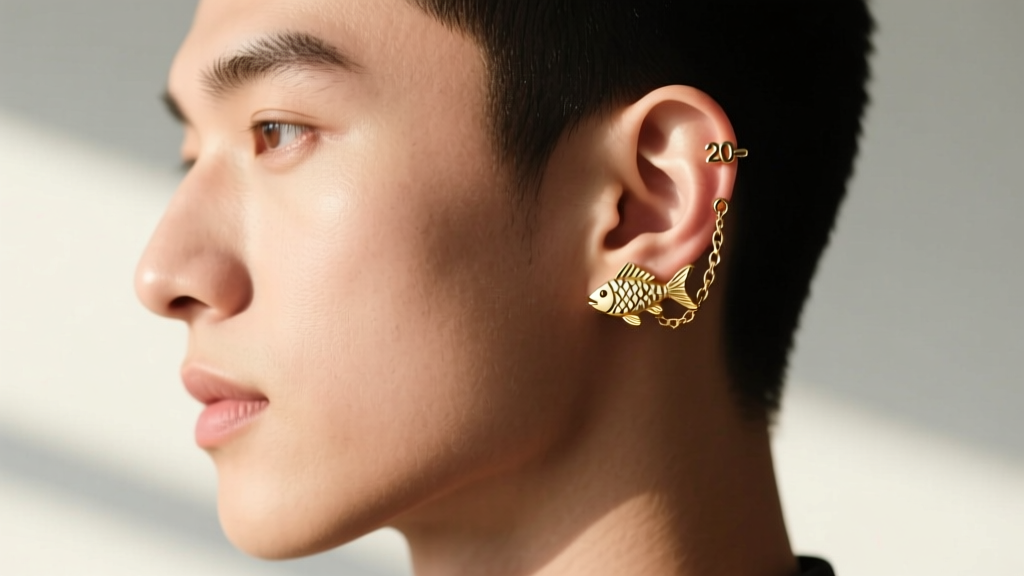
Opt for skeleton fish huggies or small, horizontal stud earrings that sit flush against the lobe. Pair these with minimalist, structured clothing—think crisp white button-downs, tailored blazers, or simple turtlenecks. The juxtaposition of a macabre, organic skeleton against clean, modern tailoring creates a sophisticated, high-fashion edge.
The "Curated Ear" Approach
If you have multiple piercings, use a skeleton fish ear cuff or a tiny 16G helix stud as an accent piece rather than the focal point. Let the skeletal piece sit in the mid-helix, surrounded by simple titanium or gold bead rings. This integrates the edgy motif into a curated, contemporary ear stack without overwhelming your profile.
Maintenance: Preserving the Oxidized Details
Skeleton fish earrings rely heavily on a technique called antiquing or oxidation. Jewelers use a chemical compound (often liver of sulfur) to turn the recessed areas of the metal black, while polishing the raised "bones" to a bright shine. This contrast is what makes the skeletal anatomy visible. If you clean these earrings incorrectly, you will ruin the design.
Warning: Never use liquid "silver dip" cleaners on skeleton fish earrings. These harsh chemical baths will strip the intentional oxidation from the crevices, leaving you with a flat, gray, featureless piece of metal.
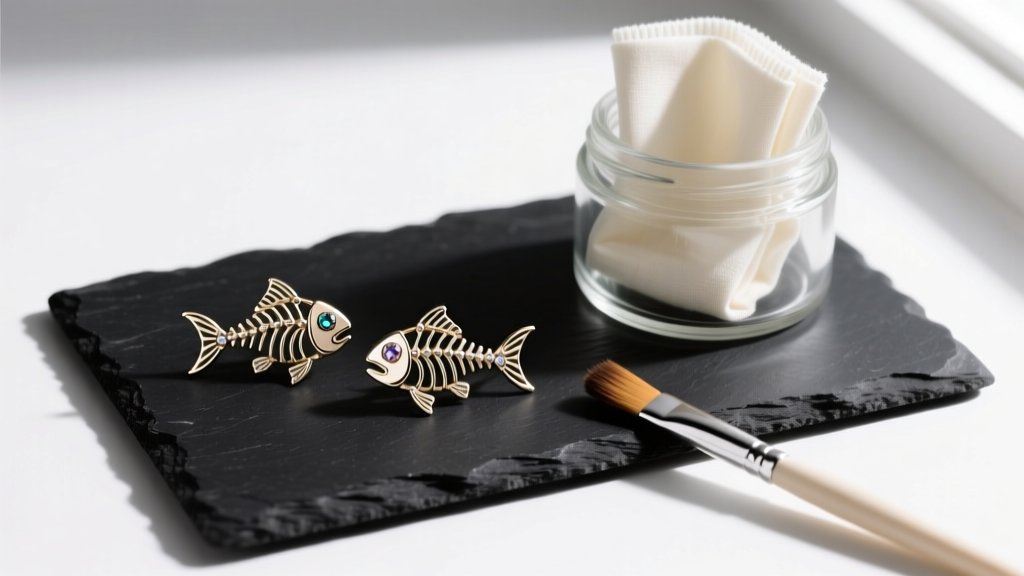
According to the Gemological Institute of America (GIA), the safest way to clean oxidized silver jewelry is with a mild, phosphate-free dish soap and warm water. Use a baby toothbrush with ultra-soft bristles to gently dislodge sebum and skin cells from between the tiny vertebrae. Dry thoroughly with a microfiber cloth, and use a specialized silver polishing cloth only on the raised, high-polish edges to maintain the contrast.
Where to Buy: Navigating the Market
Because of the niche appeal of skeleton fish earrings, you will rarely find high-quality versions in traditional mall jewelers. Your best avenues for purchase include:
- Independent Artisans (Etsy / Instagram): Expect to pay between $45 and $120 for solid 925 sterling silver pieces. Look for sellers who show photos of their casting process and clearly state their metal sourcing.
- Alternative Jewelry Brands: Brands specializing in gothic, anatomical, or taxidermy-inspired jewelry often carry rotating seasonal collections of marine skeletons. Prices usually range from $30 to $80.
- 3D Printing Resin Specialists: For those on a strict budget or with severe metal allergies, some artisans 3D print skeleton fish earrings using medical-grade, UV-cured resin. While less durable than metal, these are incredibly lightweight (under 1 gram), making them perfect for delicate cartilage piercings. Expect to pay $15 to $35.
By prioritizing safe materials, respecting the physics of heavy dangles, and maintaining the oxidized finishes, your skeleton fish earrings will remain a striking, conversation-starting staple in your jewelry collection for years to come.


