How Much Do Earrings Cost? The 2026 Beginner Pricing Guide
Discover how much earrings cost in 2026. We break down prices by material, style, and brand, from $10 surgical steel studs to fine gold hoops.

The Short Answer: Average Earring Costs in 2026
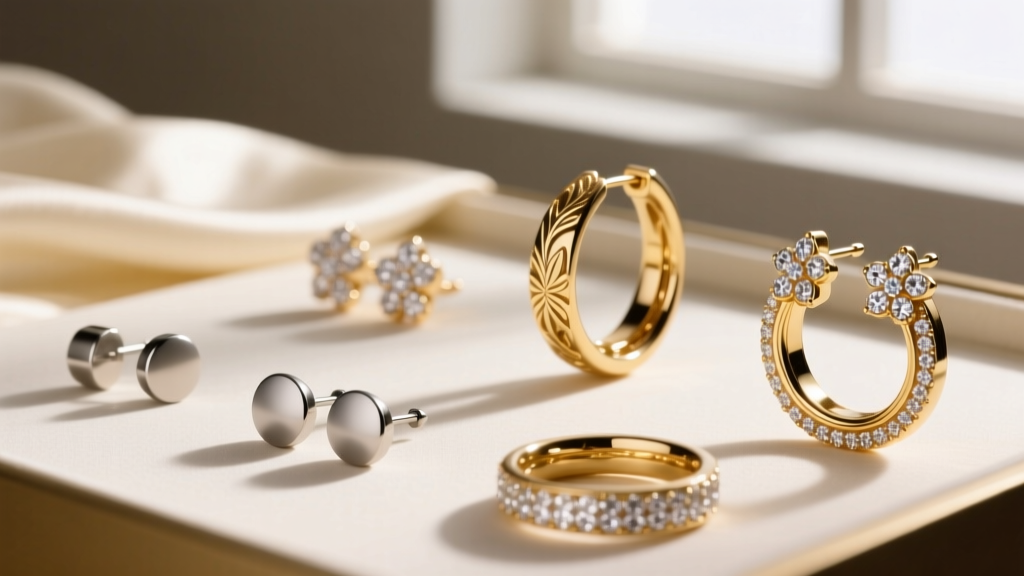
When beginners ask, "how much do earrings cost," the answer spans a massive spectrum—from $5 for basic fashion alloys to over $5,000 for high-jewelry diamond drops. However, for a beginner building a safe, stylish, and hypoallergenic everyday collection, the sweet spot lies between $25 and $250 per pair. In 2026, inflation and precious metal market shifts have slightly adjusted these baselines, but understanding the breakdown of materials, styles, and hidden fees will ensure you never overpay for subpar jewelry.
The cost of earrings is primarily driven by three factors: the base metal and its purity, the complexity of the design, and the brand's markup. Let us break down exactly what you are paying for.
Material Matters: How Metal Grades Dictate Price
The most critical mistake beginners make is buying cheap "hypoallergenic" earrings that still contain nickel, leading to contact dermatitis. According to the Association of Professional Piercers (APP), only specific grades of metal are safe for long-term wear, especially in fresh piercings.
Surgical Steel vs. Implant-Grade Titanium
Standard 316L surgical steel is the most common budget metal. You can expect to pay $10 to $25 for a pair of basic steel studs. However, 316L steel contains trace amounts of nickel. If you have metal sensitivities, you must upgrade to ASTM F136 implant-grade titanium. Titanium earrings typically cost between $35 and $75 for simple studs or huggies. While slightly more expensive, titanium is completely nickel-free, lightweight, and will not tarnish, making it the ultimate baseline for sensitive ears.
Gold Plated, Vermeil, and Solid Gold
Gold jewelry introduces significant price jumps based on how the gold is applied:
- Gold Plated (Brass or Copper Base): Costs $15 to $40. The gold layer is microscopic (often less than 0.5 microns). It will wear off within months, exposing the reactive base metal underneath.
- Gold Vermeil (Sterling Silver Base): Costs $45 to $120. By US standards, vermeil requires a sterling silver base and a minimum of 2.5 microns of gold plating (usually 14k or 18k). It is a great mid-tier option, though the gold will eventually wear down with daily friction.
- Solid Gold (14k or 18k): Costs $150 to $600+ for standard hoops or studs. As noted by the Gemological Institute of America (GIA), 14k gold (58.5% pure gold) offers the best balance of durability and rich color for everyday earrings. Solid gold is a lifetime investment that will never tarnish or cause allergic reactions.
Style and Complexity: Studs, Hoops, and Dangles
Beyond the metal, the physical style and gauge size of the earring impact manufacturing costs. Intricate casting, hinge mechanisms on hoops, and the labor required to set gemstones all add to the final retail price.
| Earring Style | Standard Gauge Size | Average Price Range (Titanium/14k Gold) | Cost Drivers |
|---|---|---|---|
| Threadless Studs | 18g or 16g | $35 - $250 | Precision machining, gemstone quality |
| Seamless Hoops | 20g or 18g | $40 - $300 | Metal weight, perfect circular tension |
| Hinged Huggies | 16g or 14g | $60 - $450 | Complex hinge and clasp mechanisms |
| Dangle / Drop | 22g to 18g | $50 - $800+ | Chain links, multiple stone settings |
Notice that standard earlobe piercings usually accommodate 20-gauge (0.8mm) or 18-gauge (1.0mm) posts, while cartilage piercings (like the helix or tragus) are typically pierced at 16-gauge (1.2mm). Buying the correct gauge is essential; forcing a 16g earring into an 18g hole will cause micro-tears and scar tissue, while a 20g earring in a 16g hole will cause the "cheese-cutter effect," where the thin wire slowly migrates through the tissue.
Gemstones and Embellishments: The Price of Sparkle
When evaluating how much earrings cost, the presence and quality of gemstones introduce another layer of pricing complexity. Beginners are often overwhelmed by the terminology used to describe stones.
Simulated vs. Lab-Created vs. Natural
- Simulated Stones (CZ, Crystal): Cubic zirconia and Swarovski crystals are mass-produced and cost mere cents per carat. Earrings featuring these stones usually range from $20 to $60. They offer excellent initial sparkle but can become cloudy over time due to micro-scratches and lotion buildup.
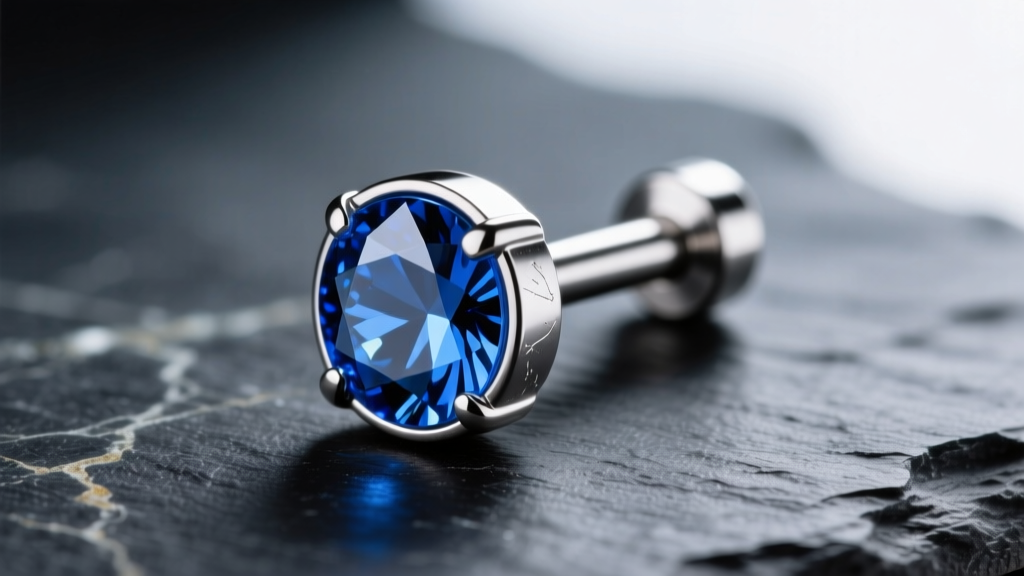
- Lab-Created Gemstones: These are chemically and optically identical to mined stones but are grown in controlled environments. Lab-grown sapphires, emeralds, and diamonds typically add $50 to $200 to the base price of an earring. They are an exceptional choice for beginners who want genuine gemstone durability without the luxury markup.
- Natural Mined Gemstones: Natural diamonds and precious gems carry a massive premium based on the 4 Cs (Cut, Color, Clarity, Carat). A pair of simple 14k gold studs with natural, ethically sourced diamonds will easily start at $400 and climb into the thousands.
Pro Tip: If you are buying gemstone earrings for a fresh cartilage piercing, avoid porous stones like turquoise or opal. These stones can trap bacteria and moisture, increasing the risk of infection during the healing phase. Stick to non-porous, bezel-set diamonds or sapphires.
The Hidden Costs: Piercing Fees, Aftercare, and Upgrades
When calculating how much earrings cost, beginners often forget the ancillary expenses required to wear them safely and comfortably.

Professional Piercing Fees
If you are getting a new piercing to accommodate your earrings, never use a mall piercing gun. Guns cause blunt force trauma and cannot be properly sterilized. A professional needle piercing at a reputable studio typically costs between $40 and $80 for the service fee, plus the cost of the initial jewelry (usually a flat-back labret stud). Always budget at least $100 for a safe, professional lobe or cartilage piercing.
Aftercare and Maintenance
Proper aftercare requires sterile saline wound wash (around $8 to $15). For long-term maintenance, ultrasonic jewelry cleaners ($30 to $60) are highly recommended for solid gold and diamond earrings to remove sebum and lotion buildup that dulls the metal and stones.
Where to Buy: Big Box vs. Independent Jewelers
The retail environment heavily influences the price tag. Fast-fashion retailers and mall kiosks offer the lowest upfront costs, but their earrings frequently suffer from poor clasp tension, thin plating, and undisclosed nickel content.
Conversely, independent body jewelry brands and specialized online jewelers charge a premium—often $80 to $300 for a single high-end cartilage stud. However, this cost guarantees ASTM-certified metals, precision-cut gemstones, and lifetime warranties on threading and clasps. For beginners, a hybrid approach works best: buy your foundational, everyday hoops and studs from reputable mid-tier brands specializing in solid 14k gold or implant-grade titanium, and save the high-end independent jewelers for statement pieces once your collection is established.
Conclusion: Building Your First Collection on a Budget
Ultimately, understanding how much earrings cost empowers you to make informed investments. Skip the $10 mystery-metal fashion earrings that will turn your ears green and cause infections. Instead, allocate a budget of $100 to $200 to acquire two high-quality pairs—such as a set of 14k gold seamless hoops and a pair of ASTM F136 titanium flat-back studs. These foundational pieces will safely heal your piercings, withstand daily wear, and outlast fleeting trends, proving that true value in jewelry is measured in longevity, not just the initial price tag.


