Troubleshooting Labradorite Earrings Silver: Fix Tarnish & Dullness
Silver tarnishing or labradorite losing its flash? Discover expert troubleshooting for labradorite earrings silver, from cleaning to stone repair.

The Unique Vulnerabilities of Labradorite and Sterling Silver
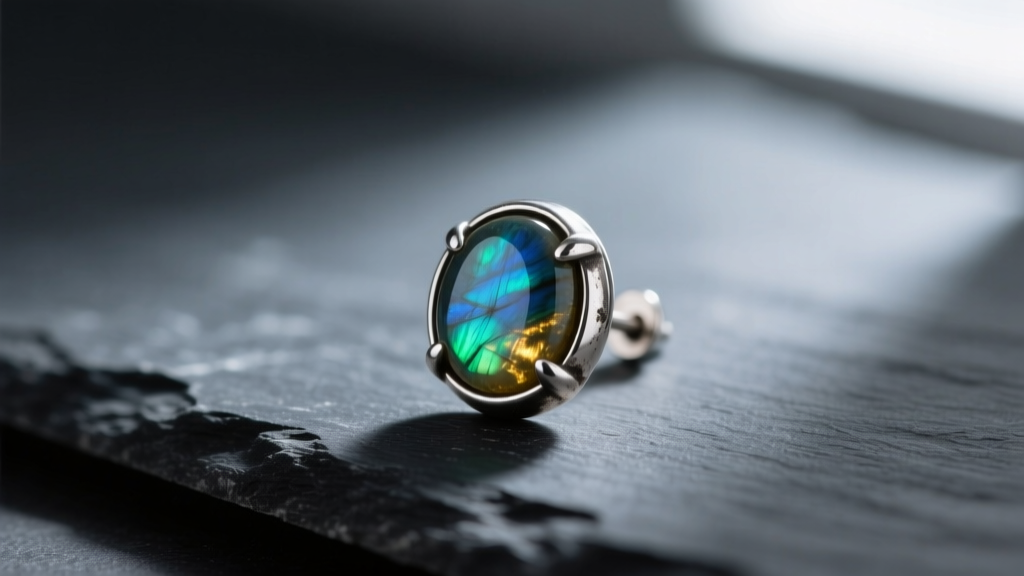
Labradorite earrings set in silver are a staple of bohemian and artisan jewelry, prized for their mesmerizing labradorescence and the cool, reflective contrast of sterling metal. However, this specific material pairing presents a unique set of gemological and metallurgical challenges. To effectively troubleshoot issues with your labradorite earrings silver settings, you must first understand the physical limitations of both materials.
Labradorite is a feldspar mineral with a Mohs hardness of 6 to 6.5, making it softer than quartz and highly susceptible to scratching. More critically, it possesses perfect cleavage in one direction. This means that a single, sharp impact along its cleavage plane can cause the stone to split or chip cleanly. Sterling silver (.925), while durable, is an alloy composed of 92.5% pure silver and 7.5% copper. It is this copper content that reacts with atmospheric sulfur and moisture to form silver sulfide (Ag2S), resulting in the black tarnish that plagues unworn jewelry.
Troubleshooting Lost Labradorescence (The "Dull Stone" Problem)
The most common complaint among owners of labradorite earrings silver is that the stones have "lost their flash." Labradorescence is not a pigment; it is an optical phenomenon caused by light refracting through microscopic, alternating layers of sodium and calcium feldspar (lamellar twinning). When the surface of the cabochon becomes coated in sebum, dead skin cells, lotion, or soap scum, light scatters before it can penetrate the stone, effectively killing the flash.
Step-by-Step Deep Cleaning for Maximum Flash
Never use ultrasonic cleaners or steamers on labradorite. The high-frequency cavitation bubbles in an ultrasonic bath will exploit the stone's perfect cleavage, causing internal fracturing or outright shattering. Instead, follow this safe, manual restoration protocol:
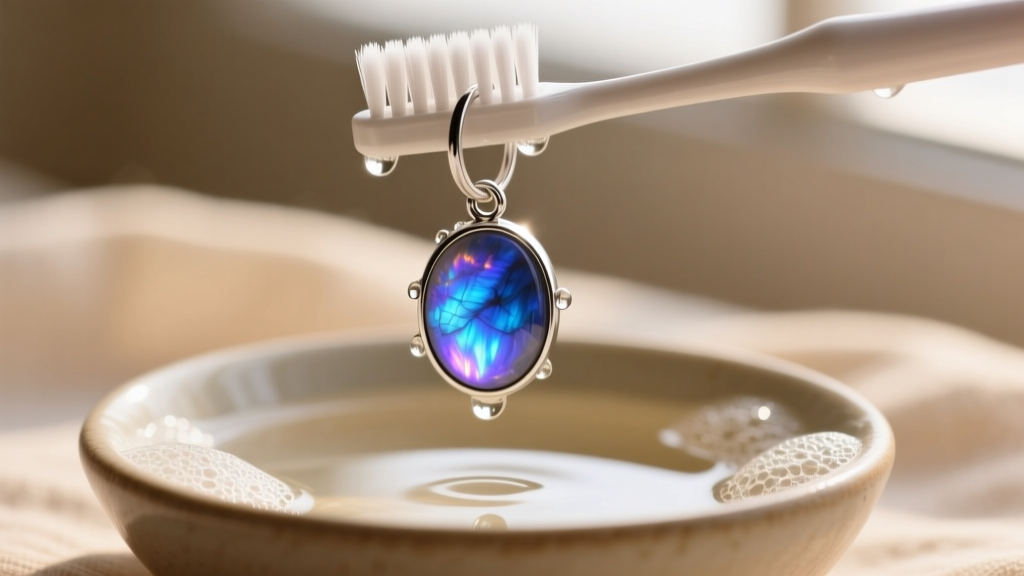
- Prepare a Lukewarm Bath: Mix a few drops of pH-neutral dish soap (like Dawn) into a bowl of lukewarm water. Avoid hot water, as thermal shock can fracture internal inclusions.
- Soak Briefly: Submerge the earrings for exactly 3 to 5 minutes to loosen oils. Do not exceed this, as prolonged water exposure can degrade the epoxy used in some glued bezel settings.
- Agitate Gently: Use a brand-new, extra-soft baby toothbrush to gently sweep the surface of the labradorite and the crevices of the silver setting. Brush in a single direction rather than in circles to minimize micro-scratching.
- Rinse and Dry: Rinse under a gentle stream of distilled water (tap water contains minerals that can leave spots). Pat dry immediately with a lint-free microfiber cloth.
Solving Silver Tarnish Without Damaging the Stone
Removing silver sulfide from the setting without harming the labradorite cabochon requires precision. Many commercial silver dips contain thiourea, a toxic chemical that can strip the polish off a labradorite stone and leave a permanent, cloudy white residue in the microscopic pores of the gem.
Tarnish Removal Methods: Safe vs. Unsafe
| Method | Mechanism | Safety for Labradorite | Safety for Silver |
|---|---|---|---|
| Sunshine Polishing Cloth | Mild abrasive & chemical polish | Unsafe (scratches stone) | Excellent |
| Aluminum Foil & Baking Soda | Electrochemical reduction | Moderate (risk of trapped alkaline residue) | Excellent |
| Commercial Silver Dip | Thiourea-based chemical stripping | Highly Unsafe (ruins polish) | Good (but harsh) |
| Q-Tip with Silver Polish | Targeted mechanical abrasion | Safe (if carefully applied) | Good |
The Expert Fix: The safest method for intricate silver jewelry care involving porous gems is targeted polishing. Wrap a small piece of a treated silver polishing cloth around the tip of a wooden toothpick or a Q-tip. Carefully trace the silver bezel or prongs, applying zero pressure to the labradorite itself. If using the aluminum foil and baking soda ion-exchange method, ensure you rinse the earrings thoroughly with distilled water afterward to prevent alkaline corrosion of the stone's surface.
Addressing Physical Damage: Chips, Scratches, and Loose Settings
Because labradorite is relatively soft and cleaves easily, physical damage is a frequent troubleshooting scenario. If your earring has suffered an impact, you must assess both the stone and the metal setting.
Bezel vs. Prong Failures
The type of setting dictates the failure mode. Bezel settings offer superior protection for the girdle (edge) of the labradorite, but they are prone to trapping moisture and soap against the back of the stone, which can dull the flash over time. If the silver bezel wall is pushed away from the stone, use a wooden skewer to gently press the silver back against the gem. Never use metal tweezers, as steel (Mohs 7-8) will instantly scratch the silver and potentially chip the labradorite.
Prong settings maximize light entry and labradorescence but leave the stone exposed to lateral impacts. If a prong catches on a sweater and lifts, the labradorite is at immediate risk of falling out. According to the Gemological Institute of America (GIA), feldspar gems require secure, protective settings due to their cleavage. If a prong is lifted, stop wearing the earring immediately and place it in a sealed plastic bag until a jeweler can re-tip the prong with a laser welder or soldering iron.
Can You Polish Out a Scratched Labradorite?
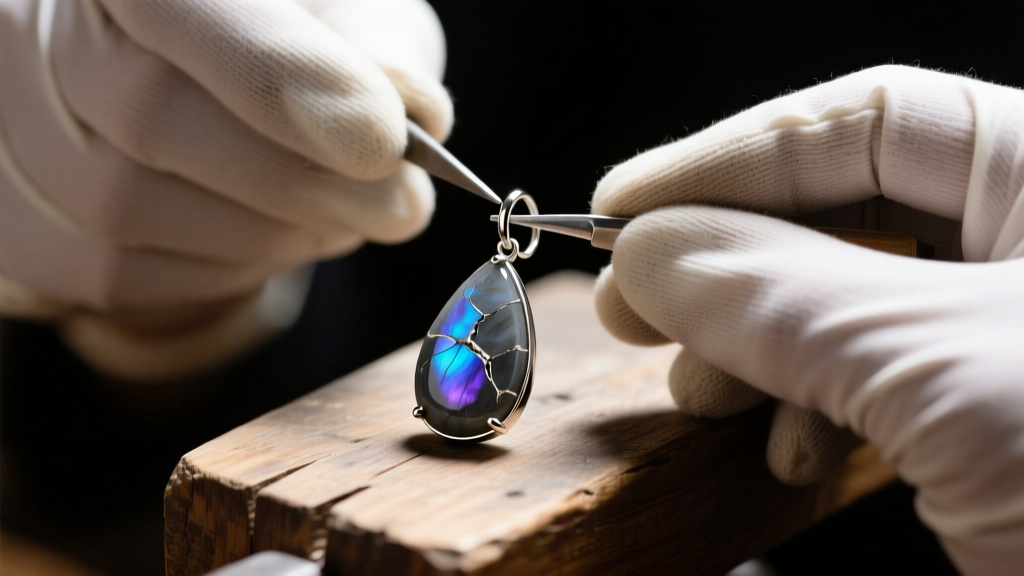
Unlike silver, which can be polished at home, labradorite requires lapidary equipment to restore its finish. Surface scratches disrupt the light entering the stone, creating dead zones where the flash is invisible. A professional lapidary must remove the stone from the silver setting, mount it on a dop stick, and re-polish it using a cerium oxide compound on a felt wheel. Attempting to buff a scratched labradorite with household abrasives like toothpaste will only result in a cloudy, ruined surface.
Preventative Maintenance & Storage Framework
Troubleshooting is unnecessary if you implement a rigorous preventative storage protocol. The primary enemies of labradorite earrings silver are sulfur, moisture, and harder gemstones.
- Isolate Your Earrings: Never store labradorite in a communal jewelry box. Diamonds, sapphires, and even quartz dust will scratch the labradorite and the silver setting. Store them in individual anti-tarnish flannel pouches.
- Use 3M Anti-Tarnish Strips: Place a 3M Silver Protector strip inside your jewelry box or pouch. These strips absorb airborne sulfur compounds before they can react with the copper in your sterling silver, extending the time between required polishes by up to 12 months.
- Control Humidity: If you live in a high-humidity environment, store your earrings in an airtight acrylic container with a rechargeable silica gel desiccant canister. Moisture accelerates both silver tarnishing and the degradation of jewelry adhesives.
"The key to preserving labradorescence is treating the stone as an optical lens. Any residue, scratch, or chemical film on the surface acts as a barrier to the internal light play that makes the gem valuable." — Lapidary & Gemological Best Practices
When to See a Professional Jeweler
While home troubleshooting can resolve dullness and mild tarnish, certain issues require professional intervention. Seek a certified bench jeweler if you notice:
- Audible Rattling: If the labradorite clicks when you gently tap the silver setting, the stone is loose. Continued wear will cause the silver to act as a file against the stone's girdle, eventually chipping it.
- Deep Pitting in the Silver: If tarnish has progressed to deep, black pitting that a polishing cloth cannot remove, the jeweler must use a magnetic tumbler or a motorized buffing wheel with red rouge to restore the silver.
- Stone Fractures: If a chip or crack appears, a jeweler can sometimes re-cab the stone (cutting away the damaged portion and re-polishing) and then custom-rebuild the silver bezel to fit the new, slightly smaller dimensions.
By understanding the exact material science behind your labradorite earrings silver pieces, you can transition from reactive repairs to proactive preservation, ensuring your jewelry retains its optical brilliance and structural integrity for decades.


