How to Select and Authenticate Purple Sapphire Earrings
Learn how to select, authenticate, and care for purple sapphire earrings with our step-by-step guide on gem grading, metal pairings, and piercing types.

The Allure of Purple Corundum: An Expert’s Introduction
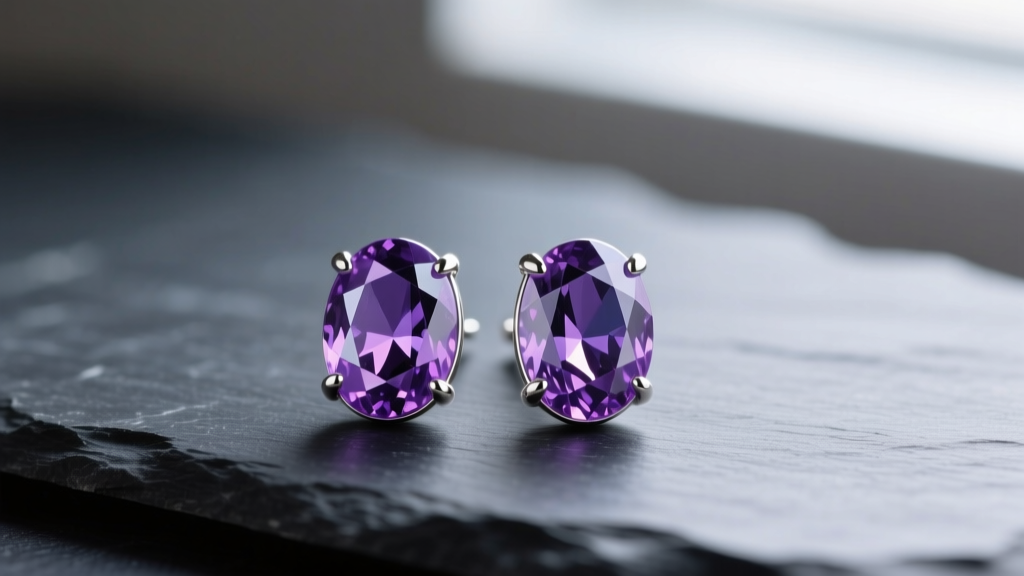
Purple sapphires occupy a rare and captivating middle ground in the gemological world. Belonging to the corundum family, their striking hues range from soft lavender to deep, velvety violet, driven by trace amounts of iron, titanium, chromium, and vanadium. Unlike blue sapphires, which dominate the market, natural purple sapphires are exceptionally scarce, making them a highly sought-after choice for bespoke jewelry. However, this rarity also invites a flood of synthetics, simulants, and heavily treated stones into the 2026 market. Whether you are looking for classic lobe studs or an edgy cartilage huggie, purchasing these gems requires a strategic approach. This step-by-step guide will equip you with the technical knowledge to evaluate, authenticate, and maintain purple sapphire earrings like a seasoned gemologist.
Step 1: Decode the Color, Clarity, and Pricing Tiers
When evaluating colored gemstones, the traditional diamond "4Cs" are adapted, with color taking absolute precedence. Purple sapphires exhibit strong pleochroism, meaning they can show different colors (like violet-blue and purplish-pink) when viewed from different crystal angles. A master cutter will orient the stone to maximize the most desirable purple hue.
Color Grading and Market Value
The most valuable purple sapphires possess a "vivid" saturation with a medium-dark tone. Stones that are too light read as amethyst, while those too dark appear blackish in low light. According to the Gemological Institute of America (GIA), untreated purple sapphires with exceptional color command massive premiums. Here is the current pricing framework per carat:
- Untreated Natural: $1,200 to $4,500+ per carat. (Expect visible inclusions; flawless untreated stones are museum-grade).
- Heat-Treated Natural: $400 to $1,200 per carat. (Standard industry practice to improve clarity and color).
- Lab-Created (Flux-Grown): $80 to $250 per carat. (Chemically identical to natural, but lacks natural inclusions).
- Simulants (Glass/CZ): Under $20. (No intrinsic gemological value).
Clarity Expectations
Sapphires are classified as Type II gems, meaning they typically form with visible inclusions. Do not demand a completely "eye-clean" natural purple sapphire unless it comes with a hefty price tag and a reputable lab report. Look for "silk" (fine rutile needles) which can actually enhance the stone's brilliance and prove its natural origin.
Step 2: Authenticate Natural vs. Lab-Created Sapphires
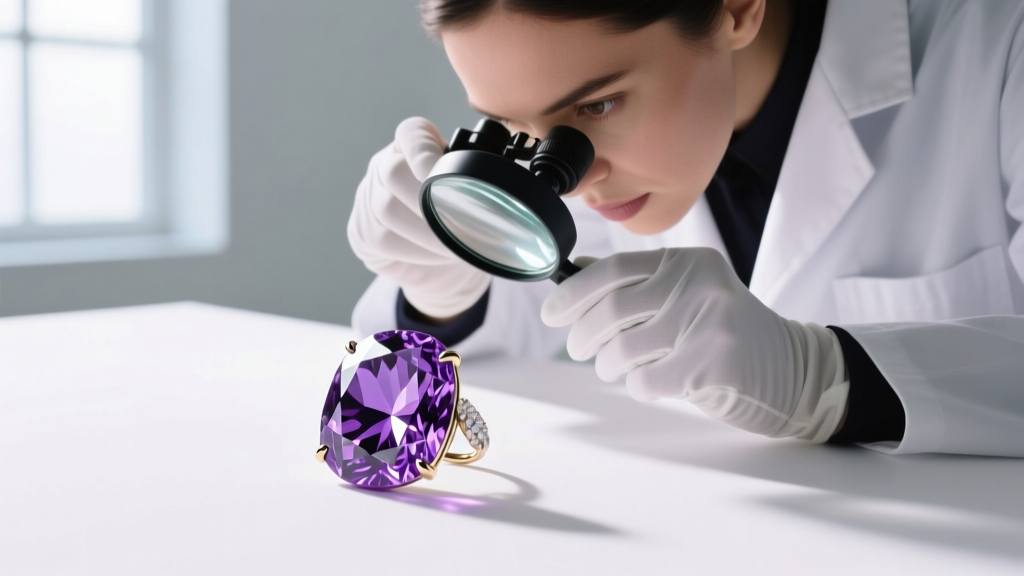
As lab-grown corundum technology advances, visual identification by the naked eye is nearly impossible. Here is how to protect your investment:
The Loupe Test
Using a 10x triplet loupe, examine the stone's interior. Natural sapphires will often feature "fingerprints" (healed fractures that look like tiny lace patterns), angular color zoning, or intersecting silk needles. Conversely, lab-created sapphires grown via the Verneuil (flame fusion) process often exhibit curved striae (curved growth lines) and tiny gas bubbles—dead giveaways of a synthetic origin.
Demand Independent Certification
Never purchase natural purple sapphire earrings over $500 without an independent lab report. The International Gem Society strongly recommends reports from GIA, AGL, or Gübelin. The report must explicitly state whether the stone is "Natural" and detail any "Heating" or "Lattice Diffusion" treatments. If the report mentions "fracture filled" or "lead glass filled," walk away; these stones are highly unstable and worth a fraction of the price.
Step 3: Select the Ideal Metal and Setting for Your Lifestyle
The metal you choose drastically alters the visual temperature of a purple sapphire. Furthermore, the setting dictates the earring's longevity, especially for daily wear.
| Metal Choice | Aesthetic Impact | Durability & Maintenance |
|---|---|---|
| Platinum (950) | Enhances cool, icy violet undertones. Provides a stark, modern contrast. | Highest durability. Prongs rarely wear down. Hypoallergenic. |
| 18K White Gold | Similar to platinum but requires rhodium plating every 1-2 years to prevent yellowing. | Hard alloy, but rhodium plating adds maintenance costs. |
| 14K Rose Gold | Amplifies the pinkish-red pleochroic flashes within the purple sapphire. Warm and romantic. | Copper content makes it very durable, but may cause reactions for highly sensitive skin. |
Setting Architecture: Prong vs. Bezel
For active lifestyles, a bezel setting is vastly superior. It encases the gemstone's girdle in a metal rim, protecting the vulnerable edges from chipping if the earring is bumped. If you prefer the maximum light return of a prong setting, ensure the jeweler uses a 6-prong design for stones over 1.00 carat, and insist on V-prongs if the sapphire is cut in a pear or marquise shape to protect the pointed tips.
Step 4: Match the Earring Style to Your Piercing Gauge
A common failure mode in buying fine earrings is ignoring the physical dimensions of the piercing. Cartilage and lobe piercings require entirely different structural specifications.
Standard Lobe Piercings (20G to 18G)
Most standard lobe piercings are done at 20-gauge (0.8mm) or 18-gauge (1.0mm). When buying purple sapphire studs or drop earrings for lobes, ensure the post thickness does not exceed 1.0mm. Forcing a thick 16G post into an 18G lobe piercing will cause micro-tearing and scar tissue buildup.
Cartilage, Helix, and Tragus (16G to 14G)
Cartilage piercings are typically thicker, usually 16-gauge (1.2mm) or 14-gauge (1.6mm). If you are buying purple sapphire huggies, clickers, or ear cuffs for the helix, you must verify the gauge. Furthermore, cartilage jewelry requires specific wear depths (the length of the post or the inner diameter of a hoop). A standard 6mm post might be too short for a swollen or thicker helix ridge; always measure your current jewelry's wearable length before ordering bespoke cartilage pieces.
Step 5: Implement a Safe Cleaning and Storage Routine
Sapphires rank a 9 on the Mohs hardness scale, making them incredibly resistant to scratching. However, improper cleaning can destroy the stone or the setting.
The Ultrasonic Cleaner Warning
Never put purple sapphires in an ultrasonic cleaner unless you are 100% certain they are untreated and free of fractures. High-frequency vibrations can cause naturally included stones to shatter along internal fault lines. Furthermore, if the stone has been fracture-filled with glass or resin (a common treatment for lower-grade stones), the ultrasonic waves will melt or dislodge the filler, ruining the gem.
The Expert’s Step-by-Step Wash
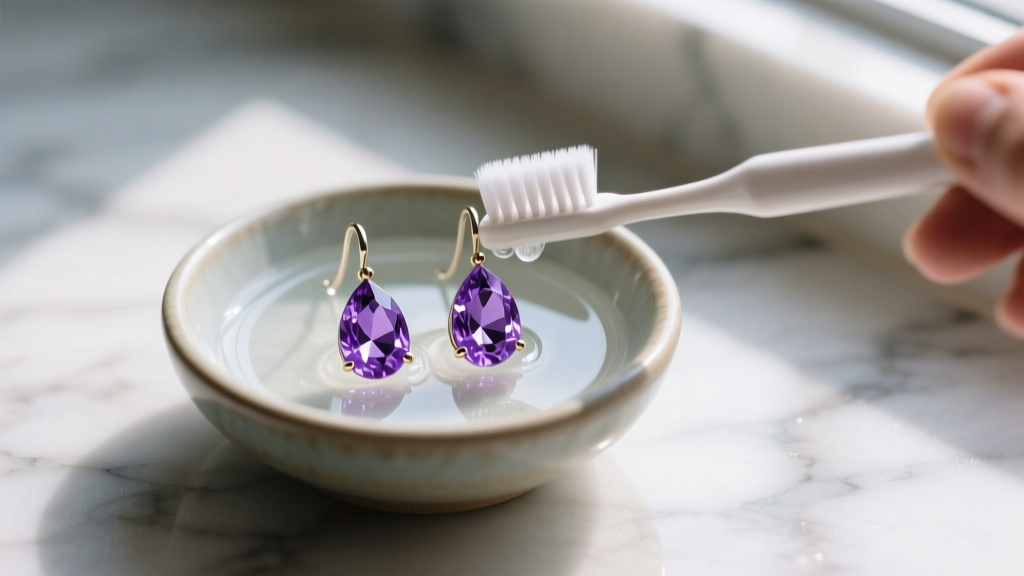
- Prepare the Solution: Mix a few drops of mild, phosphate-free dish soap (like Dawn) into a bowl of lukewarm distilled water. Avoid hot water, which can shock certain inclusions.
- Soak: Let the earrings sit in the solution for 10 to 15 minutes to loosen sebum, lotion, and environmental dust.
- Agitate Gently: Use a brand-new, ultra-soft baby toothbrush to gently sweep the back of the setting (the pavilion) where grime accumulates and blocks light return.
- Rinse and Dry: Rinse under a gentle stream of lukewarm water (ensure the drain is plugged!). Pat dry with a lint-free microfiber cloth. Do not use paper towels, as the wood fibers can leave microscopic scratches on the metal setting.
Pro-Tip for Storage: Because sapphires are harder than almost all other gems (except diamonds), storing purple sapphire earrings loose in a jewelry box will result in them scratching your gold, silver, and softer gemstone pieces. Always store them in individual soft velvet pouches or dedicated fabric-lined compartments.
By following these meticulous steps, you ensure that your purple sapphire earrings remain a vibrant, secure, and breathtaking addition to your collection for decades to come.