How to Measure Hoop Earrings: A Complete Sizing Guide
Learn how to measure hoop earrings accurately before buying. Our guide covers inner diameter, gauge thickness, and face-shape styling tips.

Why Accurate Hoop Sizing Matters
Buying hoop earrings online often feels like a gamble. A pair described as 'medium hoops' might hang elegantly on one person but look like oversized hula hoops on another. The discrepancy usually comes down to a fundamental misunderstanding of jewelry measurements. Whether you are shopping for delicate huggies, classic everyday hoops, or statement cartilage rings, knowing exactly how to measure hoop earrings is the most critical skill you can develop as a jewelry buyer.
At Jewel Style Radar, we see countless returns and styling mishaps stemming from confusing outer diameter with inner diameter, or ignoring the wire gauge entirely. This comprehensive buying guide will demystify the metrics, teach you how to measure your existing favorites, and help you select the perfect size for your specific piercing placement and face shape.
The Core Metrics: Inner Diameter vs. Outer Diameter
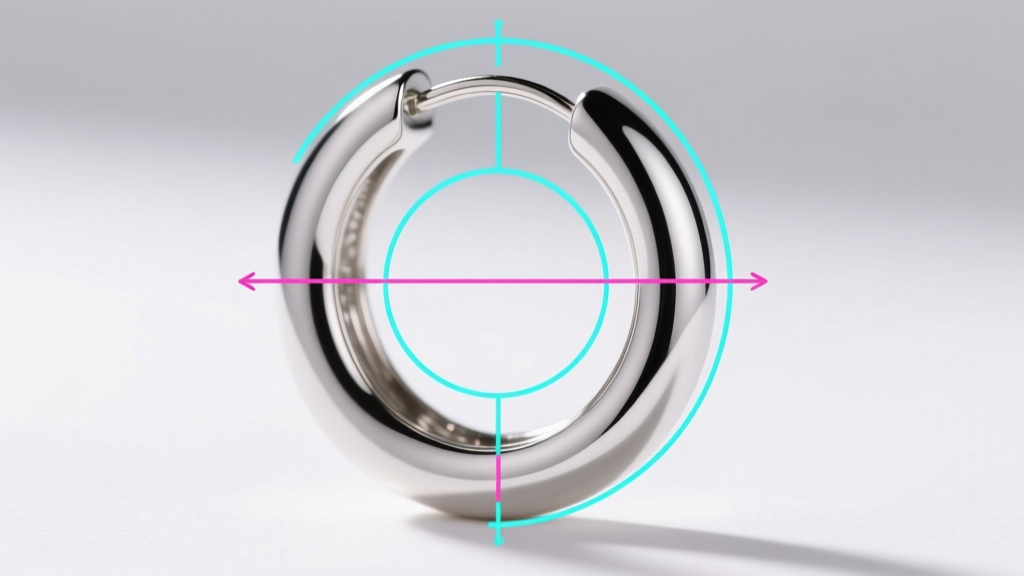
The most common mistake buyers make is looking only at the total width of the earring. In professional jewelry manufacturing, hoop sizing is dictated by two distinct measurements: Inner Diameter (ID) and Outer Diameter (OD).
Inner Diameter (ID)
The Inner Diameter is the distance across the empty space inside the hoop. This is the most crucial metric because it determines how the earring will actually fit against your ear. If you have a cartilage piercing that sits close to the edge of your ear, a hoop with a small ID will hug the tissue tightly, while a larger ID will dangle freely.
Outer Diameter (OD)
The Outer Diameter measures the entire earring from the outside edge to the opposite outside edge. The formula is simple: OD = ID + (2 x wire thickness). A chunky, 5mm thick tube hoop with a 15mm ID will have an OD of 25mm. If a retailer only lists the OD, you must subtract the wire thickness to find the actual functional size.
How to Measure Hoop Earrings You Already Own
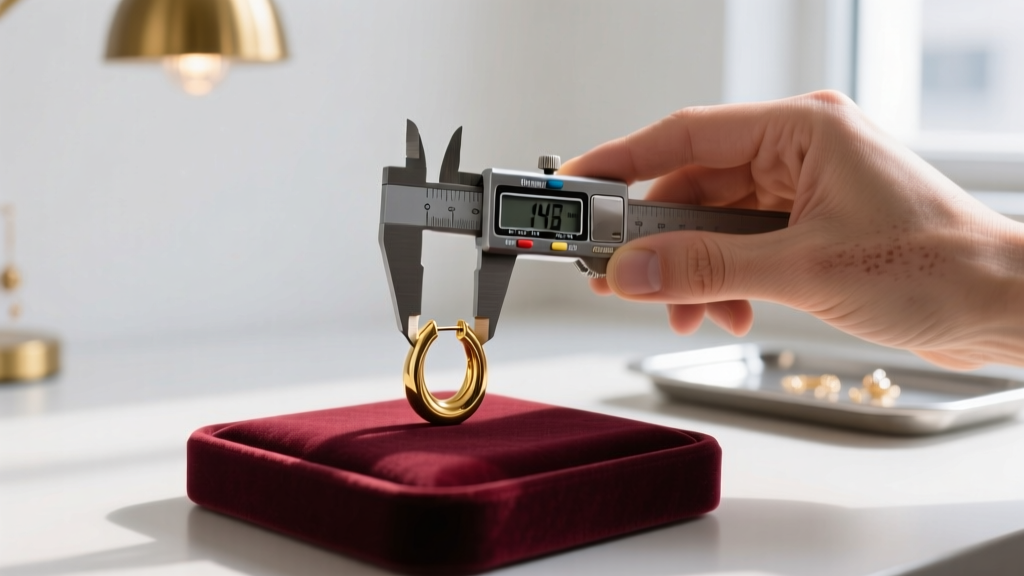
The best way to understand your ideal sizing is to measure a pair of hoops you already love. Put away the standard school ruler; its margin of error is too high for precision jewelry.
- Invest in Digital Calipers: A basic set of digital calipers costs under $15 and measures down to the 0.01mm. This is the industry standard for body jewelry.
- Measure the ID: Close the caliper jaws inside the hoop, ensuring you are measuring the widest point across the center.
- Measure the Gauge: Clamp the calipers gently on the wire itself to determine its thickness. This will help you match the gauge when buying replacements.
- Account for the Clasp: If your hoop has a hinged closure or a clicker segment, remember that the mechanism takes up a fraction of a millimeter of the inner space.
Understanding Wire Gauge and Thickness
Gauge refers to the thickness of the wire that passes through your piercing. In the jewelry industry, the gauge system is inverse: the higher the number, the thinner the wire. According to the Association of Professional Piercers (APP), wearing the correct gauge is vital for preventing the 'cheese-cutter effect,' where a wire that is too thin slowly migrates through the tissue.
| Gauge (G) | Millimeters (mm) | Best Use Case |
|---|---|---|
| 20G | 0.81mm | Standard earlobe piercings, lightweight delicate hoops. |
| 18G | 1.02mm | Standard lobes, some upper lobes, and delicate cartilage hoops. |
| 16G | 1.29mm | Standard cartilage (helix, tragus, conch), snug huggies. |
| 14G | 1.60mm | Healed daith, rook, and thicker statement lobe hoops. |
Pro Tip: If you are buying hoops for a fresh or healing piercing, always opt for ASTM F136 implant-grade titanium in a 16G or 14G thickness to minimize irritation and rejection risks. For established piercings, 14k or 18k solid gold is perfectly safe and offers superior aesthetic longevity.
Sizing by Piercing Placement: Lobe, Helix, and Tragus
Knowing how to measure hoop earrings is only half the battle; you must also apply those measurements to your unique anatomy. A 12mm hoop will look drastically different in a standard lobe piercing compared to a flat helix.
Standard Earlobe
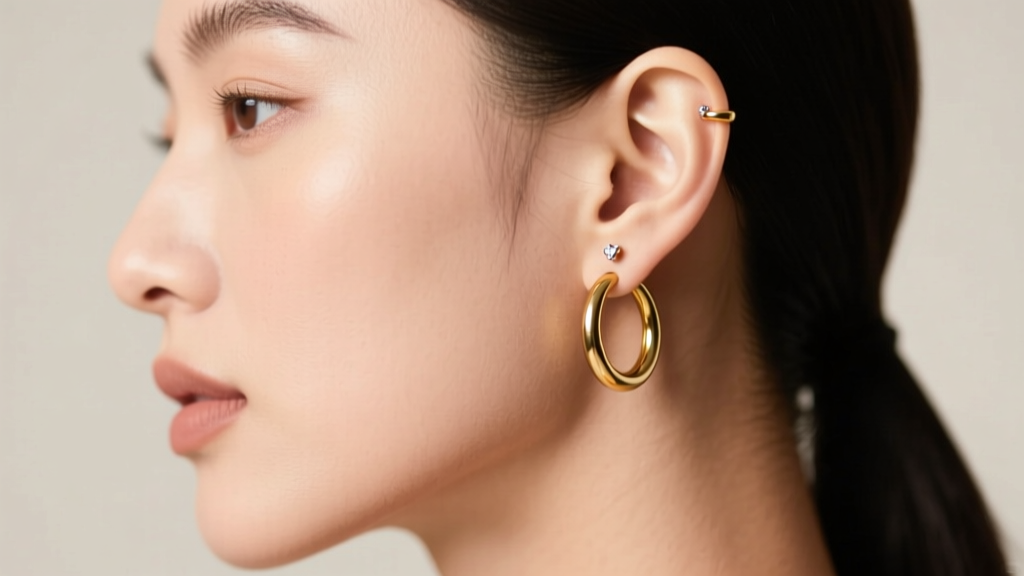
For a standard lobe piercing, the distance from the hole to the edge of the ear is usually between 5mm and 10mm. 8mm to 10mm ID: Creates a 'huggie' effect, wrapping snugly around the earlobe. 12mm to 15mm ID: A classic small hoop that allows the earlobe to sit comfortably inside the ring with a bit of breathing room. 20mm+ ID: Dangles below the earlobe, creating a traditional hoop silhouette.
Helix and Cartilage
Cartilage piercings sit higher on the ear, and the tissue folds can restrict movement. 6mm to 8mm ID: Ideal for a snug cartilage ring that follows the curve of the helix without catching on hair. 10mm ID: The most versatile size for mid-helix piercings, offering a slight drop without pulling on the tissue.
Daith and Rook
These inner-ear piercings require highly specific sizing. A standard daith piercing usually requires an 8mm to 10mm ID clicker ring. Anything larger will protrude awkwardly into the conch bowl, while anything smaller will make cleaning difficult.
Proportions and Face Shape Considerations
Beyond the anatomy of the ear, the visual weight of a hoop earring interacts directly with your facial proportions. The Gemological Institute of America (GIA) notes that the scale of jewelry should balance, rather than overwhelm, the wearer's features.
- Round Faces: Opt for elongated drop hoops or oval-shaped hoops (e.g., 25mm x 40mm) to create vertical lines that lengthen the face. Avoid perfectly circular, wide statement hoops that mimic the face's natural curvature.
- Square Faces: Soften strong jawlines with medium-sized, rounded hoops (15mm to 25mm ID). Hoops with curved, organic textures or rounded gemstone settings work beautifully here.
- Heart-Shaped Faces: Teardrop-shaped hoops or huggies with bottom-heavy charms help balance a narrower chin and wider forehead.
- Oval Faces: The most versatile shape. You can comfortably pull off everything from micro-huggies to oversized 50mm statement hoops.
Common Buying Mistakes to Avoid
Even armed with the right knowledge, buyers frequently fall into a few predictable traps when shopping for hoops online. Avoid these pitfalls to ensure a perfect fit:
1. Ignoring the Clasp Mechanism: A continuous hoop (endless hoop) requires you to bend the wire to insert it, meaning the functional ID remains constant. A hinged hoop, however, has a thicker clasp segment that slightly reduces the usable inner space. If you are on the fence between a 9mm and 10mm hinged huggie, size up.
2. Assuming 'One Size Fits All' for Cartilage: Unlike standard lobes, cartilage thickness varies wildly from person to person. A 16G hoop might slide through a helix piercing effortlessly, but the same gauge might require professional tapering for a thicker daith.
3. Overlooking Metal Weight: A 40mm hoop made of hollow-tube 14k gold will weigh significantly less than a 40mm hoop made of solid surgical steel. If you are buying large-diameter hoops, always check the gram weight to ensure your lobes won't experience fatigue or stretching over time.
By mastering these measurement techniques and understanding the interplay between gauge, diameter, and anatomy, you can shop for hoop earrings online with absolute confidence. Whether you are curating a stack of intricate huggies or selecting a single, bold cartilage clicker, precise sizing is the foundation of effortless style.


