How to Open Hinged Hoop Earrings Based on Material
Learn how to open hinged hoop earrings safely. We compare hinge mechanics, tensile strength, and care across titanium, gold, and steel metals.

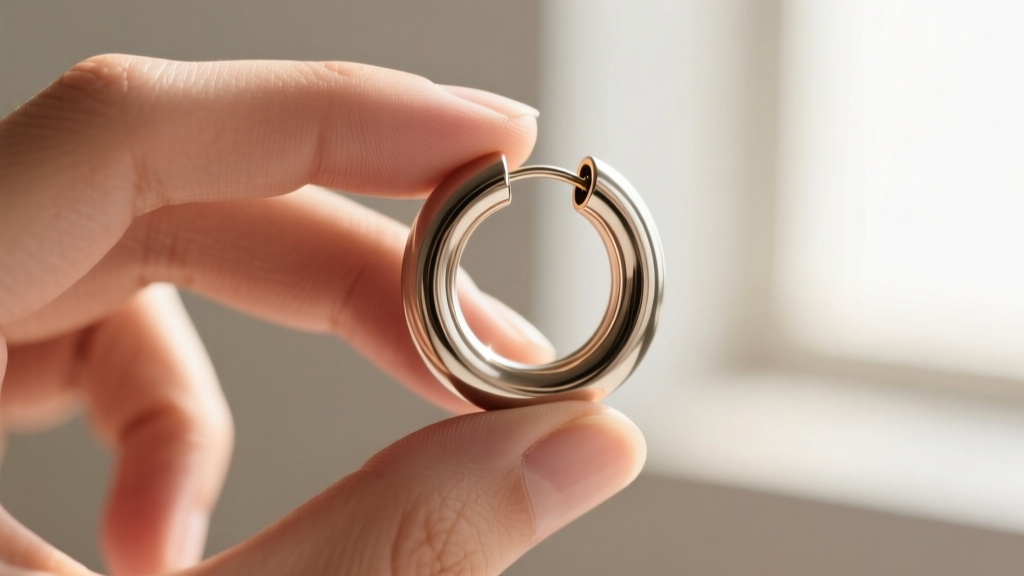
Hinged hoop earrings are a staple in modern jewelry, offering a seamless look that mimics continuous rings while providing the ease of a clicker or latch. However, the mechanics of these hinges vary wildly depending on the metal used. If you have ever struggled with a stuck latch or bent a delicate post, you already know that figuring out how to open hinged hoop earrings is not a one-size-fits-all process. The tensile strength, malleability, and friction coefficients of the metal dictate exactly how much force you can safely apply.
In this comprehensive guide, we break down the material science behind hinged hoops, providing you with a precise, metallurgy-backed framework for opening, closing, and maintaining your earrings without damaging the hinge mechanism.
The Mechanics of Hinged Hoops: Why Material Matters
Before applying pressure to any hinge, you must understand the physical properties of the alloy. A hinge is essentially a microscopic mechanical joint. When you open a hinged hoop, you are stressing a metal pin (the post) and a receiving tube (the catch).
According to the Association of Professional Piercers (APP), the most common body-safe metals include implant-grade titanium, 316L surgical steel, and high-karat gold. Each of these metals reacts differently to mechanical stress:
- Implant-Grade Titanium (ASTM F136): Highly rigid with a high tensile strength (~900 MPa). It will not bend easily, but if forced, the hinge pin can shear or the threads can strip.
- 316L Surgical Steel: Durable but slightly more malleable than titanium (~500-700 MPa). It tolerates minor misalignments better but can suffer from fatigue over time.
- 14k and 18k Gold: Softer and more malleable (~400-500 MPa). Gold hinges rely on precision threading or friction snaps. Applying lateral force will permanently bend the post.
Step-by-Step: How to Open Hinged Hoop Earrings Safely
The technique for opening your earrings must be adapted to the specific closure type and metal. Always wash your hands and work over a soft surface or a towel to prevent losing the earring if it slips.
The Tension Snap (Titanium & Steel Clickers)
Tension snaps rely on the elastic memory of the metal. The post features a small ridge that clicks into a groove inside the receiving tube.
- Grip: Hold the main body of the hoop with your non-dominant hand. Pinch the post (the straight wire part) with your dominant thumb and index finger.
- Apply Lateral Pressure: Do not pull the post straight out. Instead, gently push the post laterally (sideways) away from the hinge. The elastic memory of the titanium or steel will allow the post to flex just enough to clear the ridge.
- Release: Once the ridge clears the tube, the hoop will swing open freely on the hinge pin.
The Threaded Hinge (Gold & Platinum)
Precious metals lack the elastic memory required for tension snaps, so high-end hinged hoops use micro-threading. The post screws directly into the receiving tube.
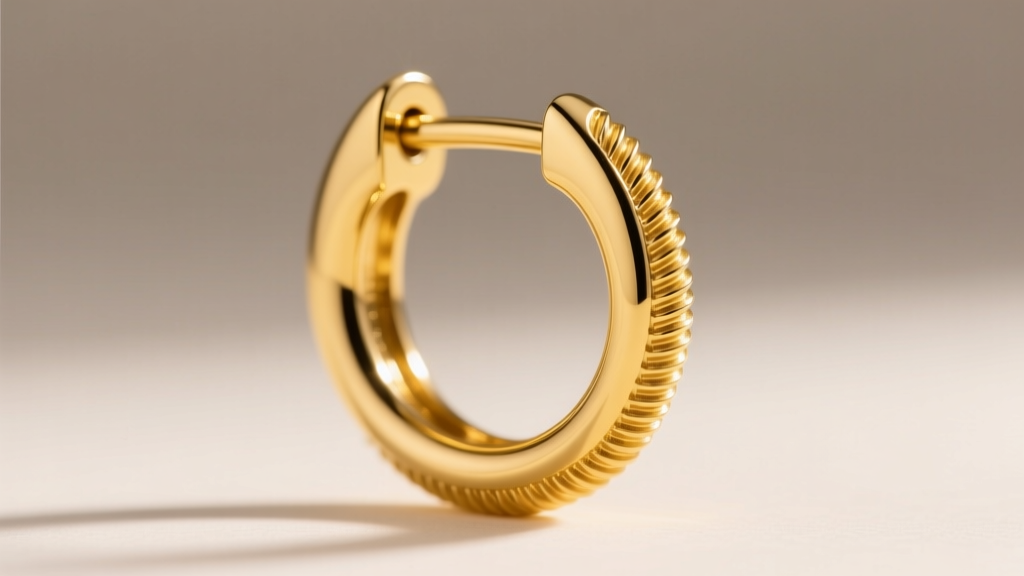
- Grip: Hold the hoop body securely. Pinch the post near the base, close to the hinge.
- Rotate: Apply gentle counter-clockwise pressure (lefty-loosey). Because gold is soft, avoid squeezing the post too hard, as you can warp the circular cross-section into an oval, jamming the threads.
- Swing: Once unscrewed, the post will swing open on the hinge.
Material Comparison Chart: Hinge Durability & Tensile Strength
Understanding the metallurgical limits of your jewelry prevents catastrophic failure. The Gemological Institute of America (GIA) notes that alloy composition drastically alters the working properties of jewelry metals. Use the table below to understand your earring's limits.
| Material | Alloy Standard | Tensile Strength | Hinge Type | Common Failure Mode |
|---|---|---|---|---|
| Titanium | ASTM F136 (Ti6Al4V ELI) | ~895 MPa | Tension Snap / Internal Thread | Post shearing, cold-welding (galling) |
| Surgical Steel | 316L | ~580 MPa | Tension Snap / External Thread | Thread stripping, hinge pin bending |
| 14k Gold | Ni-Free Alloy | ~450 MPa | Micro-Threaded / Friction Latch | Post bending, thread cross-threading |
| 18k Gold | Ni-Free Alloy | ~350 MPa | Micro-Threaded | Severe post warping, clasp fatigue |
| Sterling Silver | 925 | ~300 MPa | Friction Latch / Wire Wrap | Oxidation seizing the hinge, snapping |
Troubleshooting Stuck Hinges by Metal Type
When a hinge refuses to open, brute force is the enemy. The solution depends entirely on the chemical and physical properties of the metal.
Dealing with Oxidation in Sterling Silver and Brass
Sterling silver (925) and brass are highly reactive. Over time, sulfur in the air and oils from your skin create a layer of tarnish (silver sulfide or copper oxide). In the microscopic tolerances of a hinge, this tarnish acts like cement, seizing the joint.
The Fix: Do not force it. Submerge the hinge area in a commercial silver dip or a mild ultrasonic cleaner for 30 to 60 seconds. The chemical reaction will dissolve the sulfide layer. Rinse with distilled water, dry thoroughly, and apply a microscopic drop of mineral oil to the hinge pin before attempting to open it again.
Fixing Misaligned Titanium and Steel Hinges (Galling)
Titanium is notorious for a phenomenon called galling (cold welding). When two pieces of titanium rub together under pressure without lubrication, the friction generates enough heat to fuse the metals at a microscopic level. If your titanium clicker feels "stuck" or "gritty," it is likely galling.
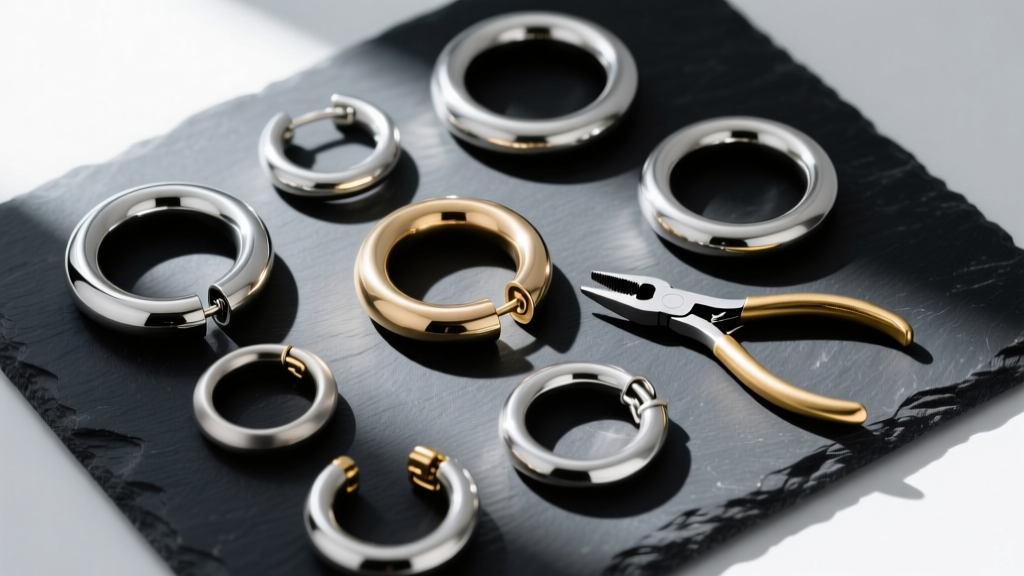
"Never use pliers on a titanium hinged hoop. The rigidity of the metal means the force will bypass the hinge and transfer directly to the thinnest point—the post—resulting in an immediate, unrepairable shear." — Master Bench Jeweler
The Fix: Apply a drop of sterile saline or jojoba oil to the seam. Let it sit for five minutes to penetrate the micro-fissures. Grip the post with a piece of textured nitrile glove (for enhanced grip without metal-on-metal scratching) and apply a gentle, wiggling lateral motion rather than a hard pull.
Gauge Size and Hinge Integrity
The gauge (thickness) of the earring wire directly impacts the structural integrity of the hinge. The standard thicknesses for hinged hoops are:
- 18-Gauge (1.0mm): Common for standard earlobe piercings and delicate cartilage hoops. The hinge pin is incredibly thin. In softer metals like 14k gold, an 18G hinge pin can bend if you pull the post at an angle rather than unscrewing it straight.
- 16-Gauge (1.2mm): The standard for cartilage, helix, and septum clickers. Offers a robust balance of tensile strength and hinge durability. Most titanium tension snaps are manufactured in this gauge.
- 14-Gauge (1.6mm): Used for daith, conch, and industrial hoops. The thicker post requires more lateral force to clear a tension snap. If you are struggling with a 14G steel clicker, ensure you are pushing the post laterally, not pulling it vertically.
Final Thoughts on Metal Maintenance
Knowing how to open hinged hoop earrings is only half the battle; proper maintenance ensures the hinge survives for years. Always store your hinged hoops in a dry, lined jewelry box to prevent environmental oxidation. For threaded gold hinges, use a soft-bristled toothbrush and mild dish soap weekly to clear dead skin and sebum from the micro-threads, which can otherwise cause the post to jam during insertion. By respecting the metallurgical properties of your jewelry, you ensure a seamless, frustration-free experience every time you wear them.


