How to Spell Earrings & Clean Every Type of Ear Jewelry Properly
Learn how to spell earrings correctly and master expert cleaning routines for gold, silver, and gemstone ear jewelry to prevent tarnish and infection.

How to Spell Earrings (And Why It Matters for Your Jewelry Care)
Every month, thousands of people open their search engines and type how to spell earrings. Is it "earings" with one 'r'? Is it "ear rings" as two separate words? The correct spelling is earrings—a single, closed compound word with a double 'r'. The etymology traces back to Old English earhring, combining eare (ear) and hring (ring or ornament).
However, knowing the correct spelling is only the first step in your jewelry journey. The physical reality of an earring—its intricate anatomy, the specific metal alloys used, and the delicate gemstones it holds—requires a highly specialized approach to care and maintenance. Whether you are wearing a simple 20-gauge titanium stud in your lobe or a complex 14k gold daith clicker, improper cleaning can lead to severe tarnish, metal fatigue, or even localized ear infections. In this comprehensive guide, we move past the dictionary definition and dive deep into the professional maintenance protocols required to keep your ear jewelry pristine.
The Anatomy of an Earring: Where Bacteria and Tarnish Hide
To clean an earring properly, you must understand its architecture. The average friction-back stud consists of a post, a head (or gallery), and a clutch (the backing). The most neglected area is the gallery—the hollow space beneath the gemstone setting. This gap is a magnet for sebum, dead epidermal cells, and cosmetic residues like foundation and hairspray.
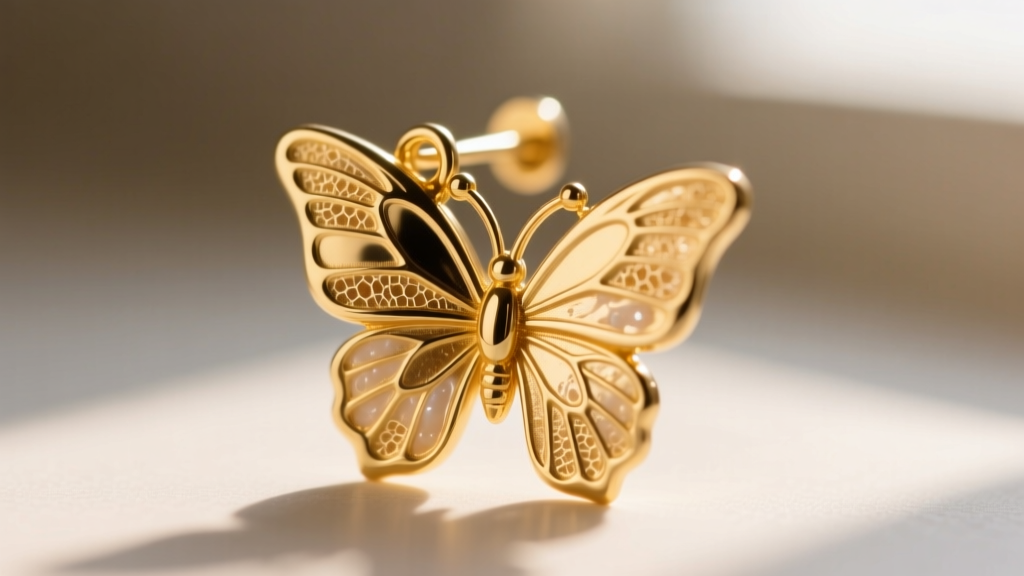
Furthermore, the grooves inside a standard "butterfly" clutch harbor immense amounts of bacteria. When you push the clutch onto a 20-gauge (0.81mm) or 18-gauge (1.02mm) post, you create a dark, moist environment perfect for microbial growth. Professional jewelers recommend replacing standard friction backs with La Poussière or silicone O-ring backs, which lack the deep metallic crevices that trap debris. If you must use butterfly backs, they require weekly ultrasonic cleaning or rigorous scrubbing with an interdental brush.
Material-Specific Cleaning Protocols
Not all metals react to cleaning agents equally. Using the wrong chemical can cause irreversible stress corrosion cracking or strip protective rhodium plating. Below is a professional matrix for cleaning the most common earring materials.
| Material Grade | Ideal Cleaning Agent | Recommended Tool | Critical Warnings |
|---|---|---|---|
| 14k / 18k Solid Gold | Mild, phosphate-free dish soap & warm distilled water | Extra-soft baby toothbrush | Never expose to chlorine (pools/hot tubs); it causes stress corrosion cracking in copper alloys. |
| Sterling Silver (.925) | Specialized silver dip or baking soda & aluminum foil bath | Impregnated jeweler's rouge cloth | Avoid toothpaste; its high RDA (Relative Dentin Abrasivity) value will micro-scratch the silver. |
| Implant-Grade Titanium (ASTM F-136) | Sterile saline solution (0.9% sodium chloride) | Lint-free cotton swabs | Do not use harsh chemicals on anodized titanium, as it can strip the vibrant oxide color layer. |
| Platinum (Pt950) | Commercial platinum jewelry cleaner | Soft microfiber cloth | Platinum develops a natural 'patina' over time; polishing too frequently will wear down the metal. |
| Organic Gems (Pearls, Coral) | Damp cloth with pure water only | Untreated cotton pad | Never submerge. Acidic sweat and perfumes will dissolve the nacre. Read GIA's Pearl Care Guide. |
Ultrasonic vs. Steam Cleaners: The Hidden Dangers
Many consumers purchase at-home ultrasonic cleaners, assuming they are a universal solution for all ear jewelry. Ultrasonic cleaners work via cavitation—generating high-frequency sound waves (typically 40,000 Hz) that create microscopic vacuum bubbles in the liquid. When these bubbles collapse against the metal, they blast away microscopic debris.
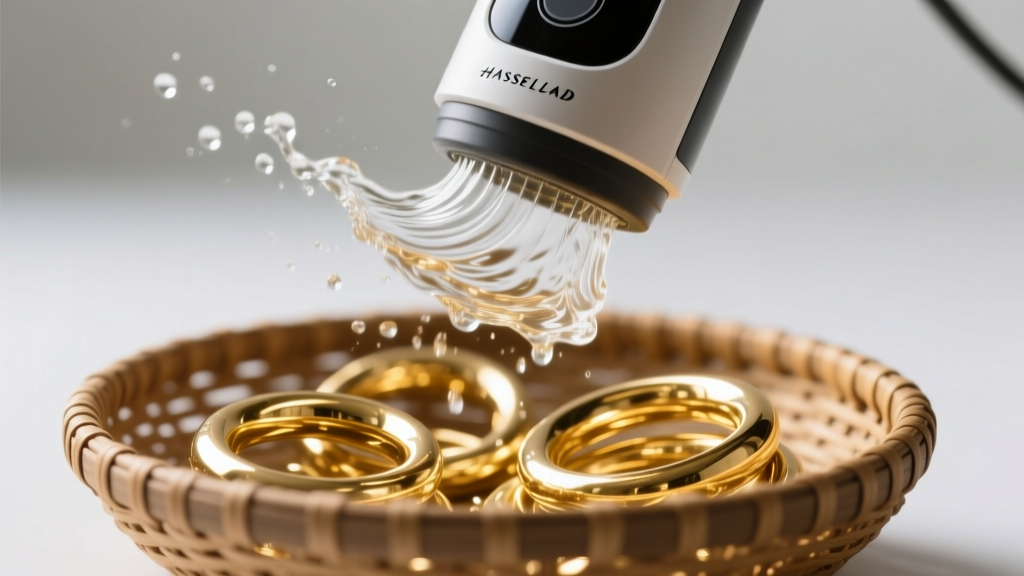
While miraculous for plain gold hoops and diamond solitaires, ultrasonic waves are highly destructive to certain materials:
- Opals and Emeralds: Opals contain up to 20% water; ultrasonic vibrations can cause them to craze or shatter. Emeralds are almost always fracture-filled with cedar oil or resin, which the cavitation process will violently expel, leaving the stone looking cloudy and fractured.
- Plated Jewelry: Gold vermeil or rhodium-plated brass earrings will experience rapid delamination in an ultrasonic bath, peeling the precious metal layer right off the base metal.
- Tension Settings: The vibrations can loosen the microscopic tolerances holding a diamond in a tension-set earring, leading to stone loss.
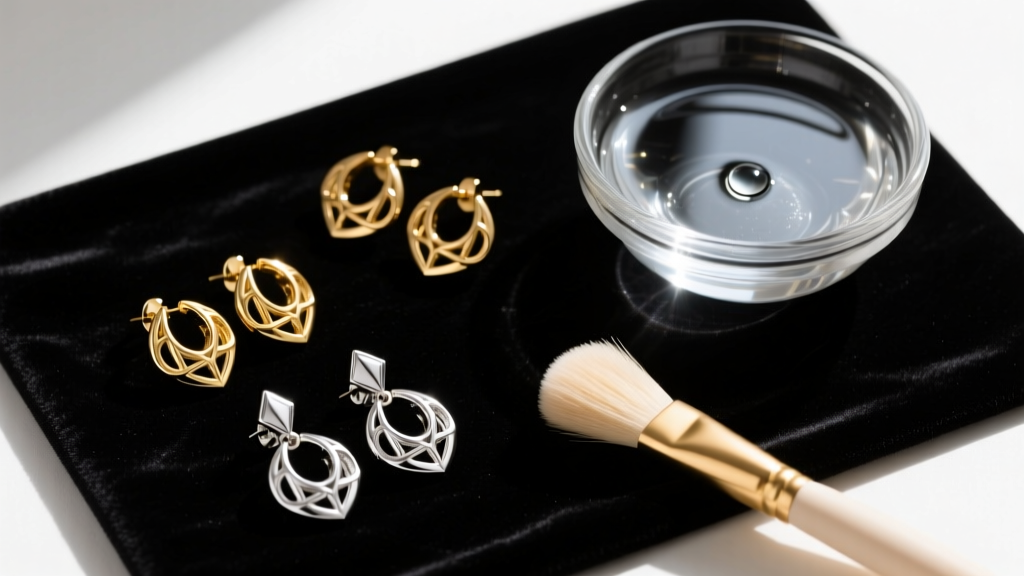
Pro Tip: If you are unsure of your gemstone's Mohs hardness or fracture status, stick to the "bowl and brush" method. A few drops of Dawn dish soap in warm water and a soft-bristled brush will safely clean 90% of your fine jewelry without the risk of catastrophic damage.
Cartilage vs. Lobe: Adjusting Your Maintenance Routine
The placement of the piercing dictates the environmental hazards the earring faces. Lobe earrings are frequently exposed to aerosolized cosmetics, perfumes, and hair products. A quick wipe-down with an alcohol prep pad is usually sufficient for solid gold lobe studs, though alcohol should never be used on porous gemstones or pearls.
Cartilage jewelry (such as helix hoops, tragus studs, or rook barbells) faces a different challenge. Cartilage piercings are prone to irritation bumps and localized infections. The Association of Professional Piercers (APP) strongly advises against using rubbing alcohol or hydrogen peroxide on healing or sensitive cartilage piercings, as these agents destroy healthy granulation tissue. Instead, use a sterile, preservative-free 0.9% saline wound wash. For the jewelry itself, titanium flat-back labrets should be removed periodically (once fully healed) to clean the internal threading with a soft brush, ensuring no sebum buildup causes the decorative end to unscrew and fall out.
Long-Term Storage and Tarnish Prevention
Proper care does not end when you take your earrings off. Sterling silver and low-karat gold alloys contain copper and zinc, which react with sulfur compounds in the ambient air to form silver sulfide (tarnish).
To prevent this, abandon the habit of tossing your earrings into a communal jewelry box. Store each pair in an individual, airtight polyethylene ziplock bag. Inside each bag, place a small strip of 3M Anti-Tarnish Paper or a silica gel desiccant packet. These materials actively absorb atmospheric sulfur and moisture, effectively pausing the oxidation process. By combining correct terminology, anatomical awareness, and material science, you can ensure your earrings remain as brilliant as the day they were crafted.


