How to Style and Care for Gold Diamond Huggie Earrings
Master the art of styling and cleaning gold diamond huggie earrings. Our step-by-step guide covers gauge sizing, curations, and prong care.

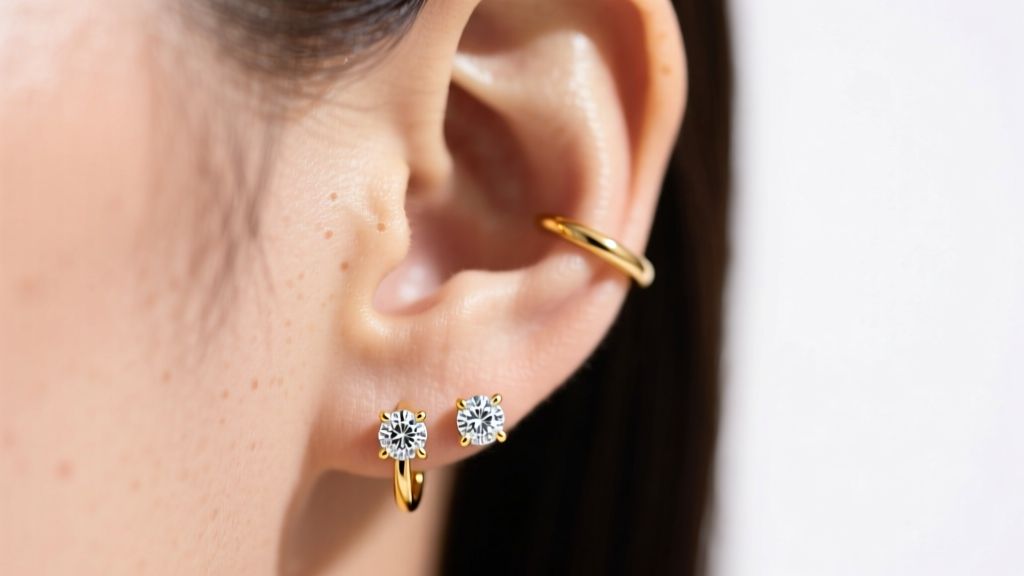
Gold diamond huggie earrings have cemented their status as a non-negotiable staple in fine jewelry collections. Unlike traditional hoops that dangle and catch, huggies feature a secure snap or clicker closure that 'hugs' the earlobe or cartilage. When you introduce the brilliance of pavé or prong-set melee diamonds into the mix, you get a versatile piece that transitions seamlessly from boardroom meetings to evening galas. However, achieving the perfect fit and maintaining the sparkle of these intricate pieces requires specific knowledge. In this comprehensive guide, we break down exactly how to size, style, and care for your gold diamond huggie earrings to ensure they last a lifetime.
Step 1: Decoding Gauge Sizes and Inner Diameters
The most common mistake buyers make is ignoring the wire gauge and inner diameter (ID). A huggie that is too tight will cause migration or irritation, while one that is too loose defeats the purpose of the 'hug' silhouette.
Wire Gauge (Thickness)
Standard earlobe piercings are typically done at 20-gauge (0.81mm) or 18-gauge (1.0mm). Most fine jewelry huggies are manufactured with an 18-gauge or 16-gauge (1.2mm) wire. If you are transitioning from standard butterfly-back studs to huggies for the first time, an 18-gauge wire will slide in effortlessly. For cartilage piercings like the helix or forward helix, 16-gauge is the industry standard. Always verify your piercing gauge before purchasing, as forcing a 16-gauge huggie into a tight 20-gauge lobe piercing can cause micro-tears.
Inner Diameter (ID) Sizing
The inner diameter dictates how closely the earring hugs your tissue. According to guidelines from the Association of Professional Piercers, jewelry must allow for natural tissue movement and slight swelling. Here is the definitive sizing framework:
- 8mm - 9mm ID: Ideal for a snug, second-hole lobe piercing or a tight helix hug.
- 10mm ID: The universal standard for primary lobe piercings, offering a comfortable gap between the metal and the earlobe.
- 12mm - 14mm ID: Best for thicker earlobes, rook piercings, or those who prefer a slightly looser, mini-hoop aesthetic.
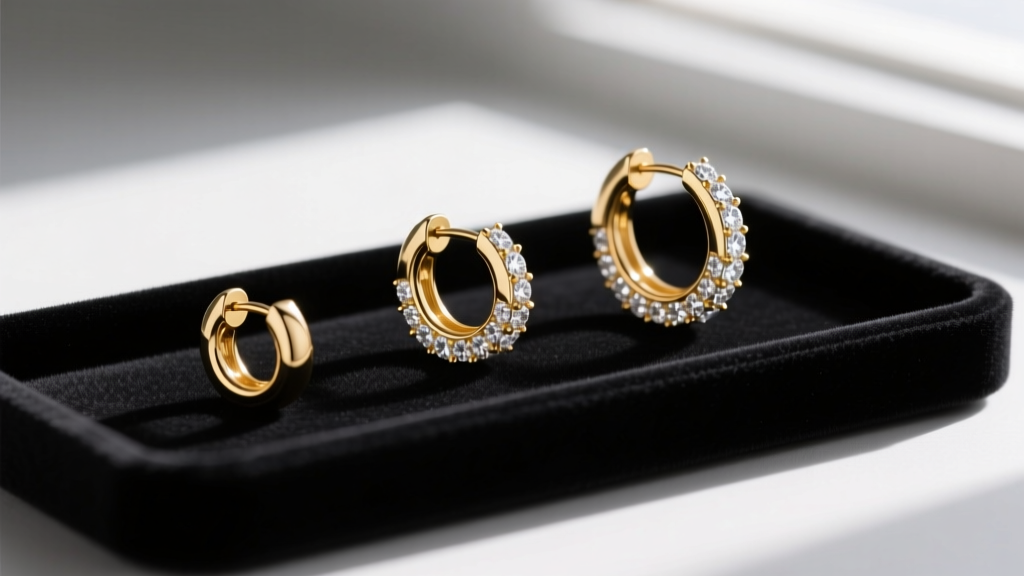
Step 2: Curating the Perfect Ear Stack
As we navigate the jewelry trends of 2026, the 'curated ear' has evolved from a chaotic mix of mismatched pieces to a highly intentional, balanced composition. Gold diamond huggie earrings serve as the structural anchor for these stacks. The key to a professional-looking curation is varying the scale and diamond carat total weight (CTW) as you move up the ear.
The Golden Ratio of Ear Curation
Start with the heaviest, most brilliant piece at the bottom (the primary lobe piercing) and gradually decrease the visual weight as you move upward. This draws the eye naturally along the jawline and cheekbone.
| Piercing Placement | Recommended Huggie Size | Diamond Setting Style | Estimated CTW |
|---|---|---|---|
| First Hole (Lobe) | 10mm - 12mm ID | Prong-Set Round Brilliant | 0.50 - 0.75 CTW |
| Second Hole (Upper Lobe) | 8mm - 10mm ID | Pavé or Bezel Set | 0.20 - 0.35 CTW |
| Third Hole (High Lobe) | 7mm - 8mm ID | Single Solitaire Diamond | 0.05 - 0.10 CTW |
| Helix (Cartilage) | 9mm - 10mm ID | Channel-Set Baguettes | 0.15 - 0.25 CTW |
Pro Tip: Stick to a single gold color (e.g., 14k yellow gold) for your huggies to maintain visual cohesion, but feel free to mix diamond cuts (round, baguette, marquise) to add textural interest without breaking the color palette.
Step 3: The Ultimate Step-by-Step Cleaning Routine
Diamonds are lipophilic, meaning they attract and hold onto oils from your skin, hair products, and lotions. A buildup of sebum on the pavilion (the bottom half of the diamond) will immediately dull the stone's refractive index, making your gold diamond huggie earrings look cloudy and lifeless. To restore maximum light return, follow this deep-cleaning protocol bi-weekly.
Materials Needed
- A small glass bowl (never use metal or plastic, which can scratch gold)
- Warm, filtered water
- Mild, ammonia-free dish soap (avoid harsh degreasers or bleach)
- An extra-soft, baby-bristle toothbrush
- A lint-free microfiber cloth
The Cleaning Process
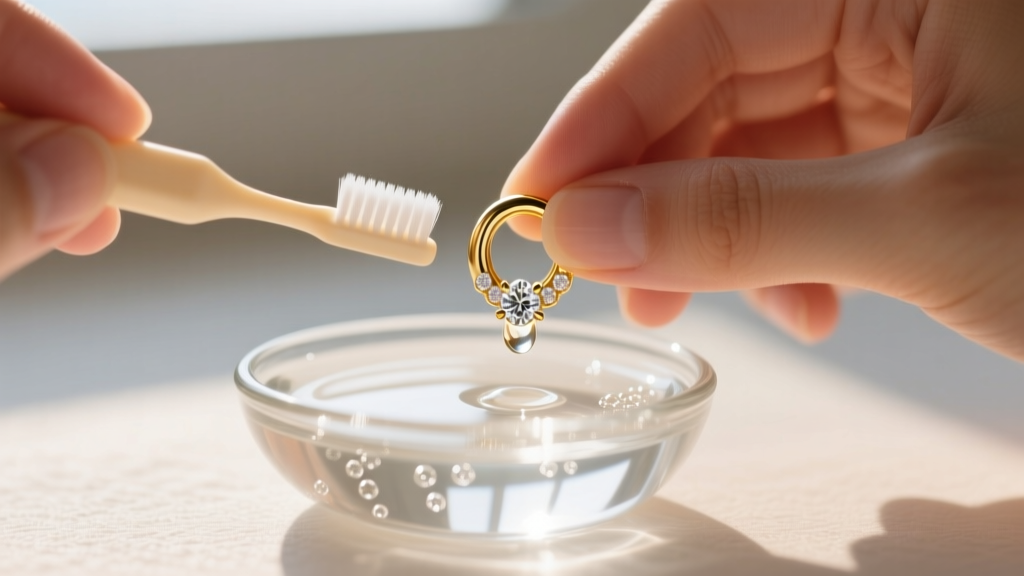
- Soak: Mix a few drops of dish soap into the warm water. Submerge your huggies and let them soak for 15 to 20 minutes. This loosens hardened lotion and sebum trapped beneath the diamond settings.
- Agitate: Gently brush the earring, paying special attention to the underside of the diamonds and the hinge mechanism. Use light, circular motions. Never use stiff-bristled brushes, as they can scratch the gold alloy and bend delicate prongs.
- Rinse: Rinse thoroughly under a gentle stream of lukewarm water. Crucial: Always plug the drain or use a strainer bowl to prevent accidental loss.
- Dry: Pat dry with a microfiber cloth. Avoid paper towels, as the wood fibers can leave micro-scratches on high-polish gold.
A Note on Ultrasonic Cleaners
While ultrasonic cleaners are excellent for solid gold and untreated diamonds, they pose severe risks if your huggies feature fracture-filled diamonds, clarity-enhanced stones, or secondary gemstones like opals or emeralds. Furthermore, the high-frequency vibrations can occasionally loosen the snap closure on poorly manufactured hinges. For routine home care, the manual soak-and-brush method recommended by the Gemological Institute of America (GIA) remains the safest and most effective approach.
Step 4: Hinge Maintenance and Prong Inspections
The structural integrity of a huggie relies entirely on its hinge and clasp mechanism. Unlike continuous hoops, huggies feature a moving joint that is susceptible to wear and tear. Here is how to troubleshoot and maintain the hardware.
Metallurgy Matters: 14k vs. 18k Gold
When purchasing gold diamond huggie earrings, the karatage affects more than just color; it dictates durability. 18k gold (75% pure gold) offers a richer, deeper yellow hue but is inherently softer. Over time, the posts on 18k huggies can bend, and the hinges may warp if you sleep in them. 14k gold (58.5% pure gold) is alloyed with stronger metals like zinc and copper, making it significantly more rigid. For everyday wear huggies that you plan to sleep in or wear to the gym, 14k gold is the superior metallurgical choice for the hinge mechanism.
How to Fix a Loose Snap Closure
If your huggie no longer 'clicks' securely and feels loose, the tension pin inside the female end of the hinge may have compressed. Do not force it. Instead, take a pair of nylon-jaw jewelry pliers and apply the gentlest pressure to slightly bend the post outward by a fraction of a millimeter. If you are uncomfortable doing this, any local bench jeweler can tighten the tension pin in under five minutes.
Bi-Annual Prong Checks
Because huggies sit flush against the neck and jaw, they experience constant friction from hair and clothing. This friction can wear down the microscopic prongs holding your melee diamonds in place. Every six months, inspect your earrings under a 10x jeweler's loupe. If you notice any prongs that appear flat, lifted, or asymmetrical, stop wearing the earrings immediately and take them to a professional for re-tipping. Losing a 0.02-carat melee diamond is a minor repair; losing the center stone of a graduated huggie is a costly mistake.
Final Thoughts on Huggie Longevity
Gold diamond huggie earrings are an investment in your daily confidence and personal style. By respecting the anatomical requirements of your piercings, strategically curating your ear stack, and adhering to a meticulous cleaning and maintenance routine, you ensure that your fine jewelry remains as brilliant as the day you unboxed it. Treat your huggies with the precision they demand, and they will reward you with a lifetime of effortless elegance.


