How to Size, Style, and Clean White Gold Hoops Earrings
Learn how to select the perfect white gold hoops earrings, master gauge sizing for cartilage, and follow our step-by-step rhodium cleaning guide.

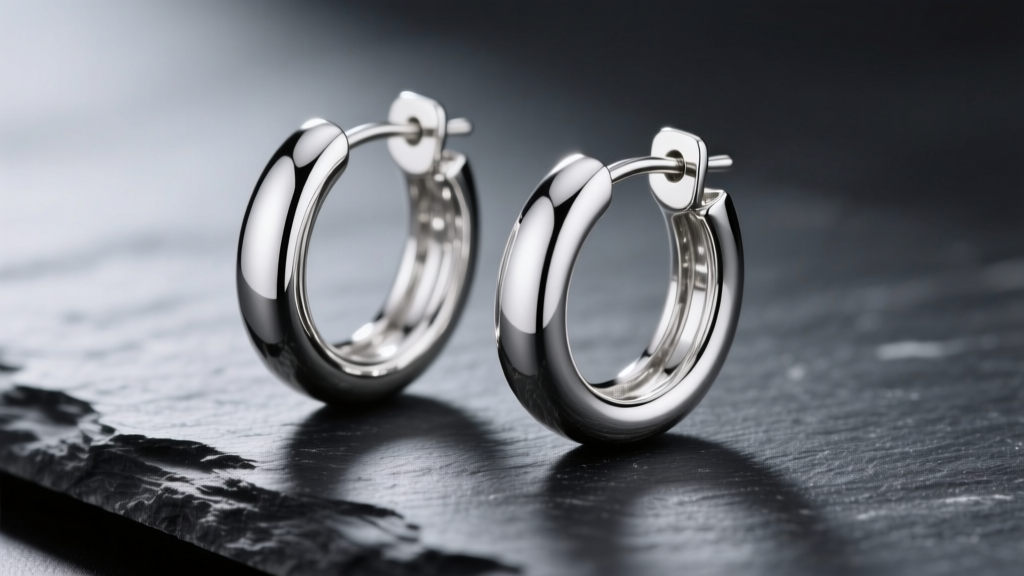
White gold hoops earrings are a cornerstone of modern jewelry wardrobes, offering a sleek, reflective alternative to traditional yellow gold. However, buying and maintaining them requires a deeper understanding of metallurgy, piercing gauges, and rhodium plating than most consumers realize. Whether you are upgrading your standard lobe hoops or sourcing a durable clicker for a healed cartilage piercing, this step-by-step guide will ensure your investment remains pristine and comfortable for years to come.
The Metallurgy of White Gold: 14k vs. 18k Alloys
Pure gold is inherently yellow. To create white gold, jewelers alloy pure gold with white metals like nickel, palladium, zinc, or silver. The karat weight dictates not only the price but the structural integrity and allergenic potential of your white gold hoops earrings.
- 14k White Gold (58.5% Pure Gold): Typically alloyed with nickel and zinc. This creates a highly durable, scratch-resistant metal ideal for thin wire hoops and intricate hinges. However, the nickel content can trigger contact dermatitis in roughly 15% of the population.
- 18k White Gold (75% Pure Gold): Usually alloyed with palladium instead of nickel, making it entirely hypoallergenic. It possesses a richer, heavier feel and a naturally whiter base color, but it is softer and more prone to micro-scratches and warping if subjected to heavy impact.
"The most common mistake consumers make with white gold hoops earrings is assuming the color is natural. White gold is inherently yellowish-gray; the brilliant white finish is entirely dependent on rhodium plating, which requires a specific maintenance cycle."
— Master Bench Jeweler
According to the Gemological Institute of America (GIA), nearly all white gold jewelry is electroplated with rhodium—a platinum-group metal—to achieve its mirror-like finish. This plating is typically only 0.75 to 1.0 microns thick and will eventually wear away, revealing the warmer alloy beneath.
Step-by-Step Sizing: Inner Diameter and Wire Gauge
Sizing hoops involves two critical measurements: the wire gauge (thickness) and the inner diameter (ID). Selecting the wrong gauge can lead to the dreaded "cheese cutter effect," where a wire that is too thin slowly migrates through the piercing tissue due to the weight of the hoop.
| Piercing Location | Recommended Gauge | Ideal Inner Diameter (ID) | Best Closure Type |
|---|---|---|---|
| Standard Lobe | 20G - 18G | 10mm - 15mm | Hinged Snap-Back |
| Cartilage (Helix) | 16G - 14G | 8mm - 10mm | Clicker / Segment |
| Conch | 16G - 14G | 12mm - 16mm | Continuous / Clicker |
| Tragus | 18G - 16G | 6mm - 8mm | Small Clicker |
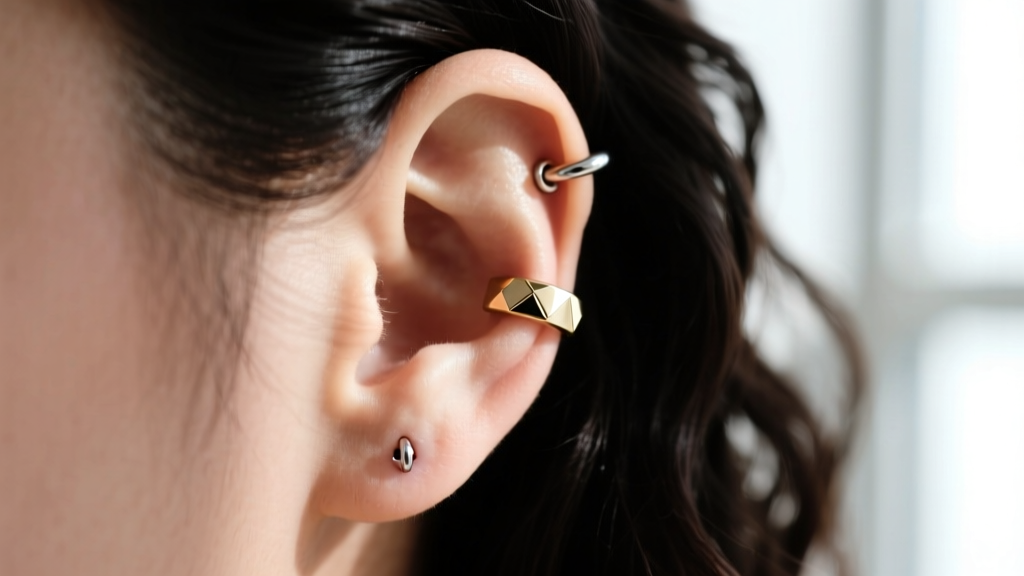
When measuring for cartilage, always refer to the inner diameter, not the outer diameter. A 10mm outer diameter hoop with a thick 14-gauge wire will yield an inner diameter of only 8.2mm, which may be too tight for a swollen or newly healed helix piercing. The Association of Professional Piercers (APP) strongly recommends 16G or 14G titanium or high-karat gold for cartilage to prevent migration and irritation.
Evaluating Closure Mechanisms and Failure Modes
The longevity of white gold hoops earrings is often dictated by their closure mechanism. Understanding how these work will save you from losing a precious piece of jewelry.
Hinged Snap-Backs
Common in lobe hoops, these feature a thin post that clicks into a hollow catch. Failure Mode: Forcing the post into the catch when misaligned will bend the thin white gold wire, rendering the closure useless. Always align the post perfectly before applying pressure.
Clickers (Segment Rings)
A hinged segment that snaps shut with an audible "click." These are the gold standard for cartilage and daith piercings. Failure Mode: Prying the segment open with your fingernails can warp the hinge pin. Use specialized ring-opening pliers to gently expand the gap.
Continuous Hoops
A seamless wire that twists and tucks into a hollow receiving tube. Failure Mode: Repeatedly twisting the wire back and forth causes metal fatigue, eventually snapping the white gold wire near the hinge point.
Step-by-Step Guide to Cleaning and Rhodium Care
Because white gold relies on a microscopic layer of rhodium, aggressive cleaning methods can strip the plating prematurely. Follow this exact protocol to maintain your white gold hoops earrings.
- The Soak: Fill a small glass bowl with warm (not hot) water and add three drops of mild, lotion-free dish soap (like original Dawn). Submerge the hoops for exactly 10 minutes to loosen sebum and dead skin cells.
- The Agitation: Remove the hoops and gently brush them with an extra-soft baby toothbrush. Pay special attention to the inside of the hinge and the closure catch, where debris accumulates and harbors bacteria.
- The Rinse: Rinse thoroughly under lukewarm distilled water. Avoid tap water if you live in a hard-water area, as mineral deposits can leave a cloudy film on the rhodium.
- The Dry: Pat dry with a lint-free microfiber cloth. Never use paper towels, as the wood pulp fibers can leave micro-scratches on the polished metal.
Ultrasonic Cleaner Warning: Never place white gold hoops earrings in an ultrasonic cleaner if they feature fracture-filled diamonds, opals, emeralds, or tension-set stones. The high-frequency vibrations can shatter soft gems or loosen tension settings.
Troubleshooting Common Issues
The "Cheese Cutter" Effect
If your white gold hoops earrings are slowly migrating downward through your lobe or cartilage, the wire gauge is too thin for the tissue. The immediate solution is to remove the jewelry and allow the piercing to heal, then switch to a thicker gauge (e.g., moving from 20G to 16G) or a flat-back labret stud to redistribute the weight.
Yellowing and Tarnishing
If your hoops begin to take on a warm, yellowish tint, the rhodium plating has worn away, exposing the underlying gold alloy. This is not a defect but a natural lifecycle of white gold. To restore the brilliant white finish, take the earrings to a local bench jeweler for a professional polish and rhodium electroplating. As of 2026, professional replating typically costs between $40 and $75 per pair and should be done every 12 to 24 months depending on your skin's pH and friction exposure.
Allergic Reactions
If you experience itching, redness, or flaking specifically where the white gold post enters the piercing, you are likely reacting to the nickel in a 14k alloy. The only permanent fix is to upgrade to 18k palladium-alloyed white gold or switch to implant-grade titanium (ASTM F136), which contains zero nickel.


