How to Style, Fit, and Care for Heart Huggie Earrings
Master the art of wearing heart huggie earrings. Learn step-by-step styling, exact gauge sizing, cartilage placement, and metal care tips.

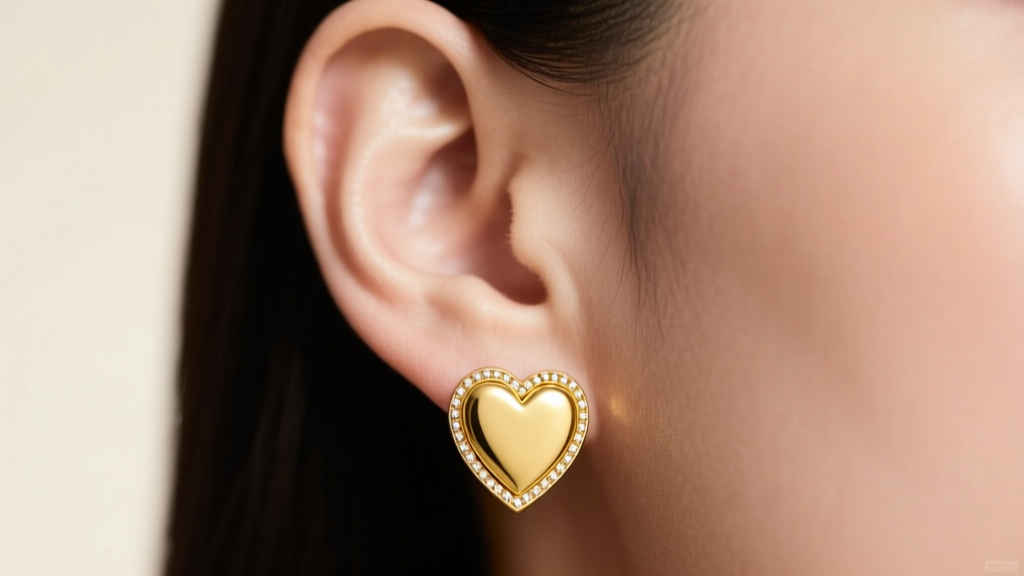
The Anatomy of the Perfect Heart Huggie
When it comes to curating a timeless, romantic ear stack, heart huggie earrings occupy a unique space between the classic hoop and the statement stud. Unlike traditional dangle earrings, huggies are designed to 'hug' the earlobe or cartilage, providing a secure, snag-free fit that is ideal for both everyday wear and active lifestyles. The addition of a heart motif—whether subtly integrated into the hinge, dangling as a small charm, or forming the entire structural curve of the hoop—adds a layer of sentimentality and visual weight that requires precise styling.
However, the compact nature of huggies means that fit, gauge, and hinge mechanics are unforgiving. A millimeter off in diameter can mean the difference between a comfortable hug and a painful pinch. In this comprehensive step-by-step guide, we will break down exactly how to select, place, handle, and maintain your heart huggie earrings to ensure they last a lifetime while perfectly complementing your unique anatomy.
Step 1: Selecting the Right Gauge and Inner Diameter
The most common mistake consumers make when purchasing huggies is ignoring the inner diameter (ID) and wire gauge. Because heart huggie earrings often feature intricate metalwork or pave gemstones, the structural integrity of the wire is paramount. According to the Association of Professional Piercers, wearing an incorrect gauge can lead to the 'cheese-cutter effect,' where a wire that is too thin slowly migrates through the piercing tissue.
Sizing Framework for Huggies
To find your ideal fit, you must measure the thickness of your ear tissue and the distance from your piercing hole to the edge of your ear. Use the following data table as your definitive sizing guide:
| Gauge Size | Wire Thickness | Best Placement | Fit Notes & Warnings |
|---|---|---|---|
| 20G | 0.81mm | Standard Lobe (Fashion) | Too thin for fresh piercings or cartilage. High risk of tissue migration. |
| 18G | 1.02mm | Lobe & Helix | The industry standard for most fine jewelry huggies. Safe for healed piercings. |
| 16G | 1.29mm | Helix, Tragus, Conch | Provides necessary structural support for cartilage. Ideal for heavy heart charms. |
| 14G | 1.63mm | Daith, Rook, Thick Lobes | Rare for standard huggies; usually reserved for heavy-duty clickers. |
Inner Diameter (ID) Rules: For a standard earlobe, a 10mm to 12mm ID provides a perfect 'hug' without choking the tissue. For the tragus or a tight helix, opt for an 8mm ID. If you have a thicker lobe or are placing the heart huggie in a rook piercing, you will need a 12mm to 14mm ID to accommodate the tissue swelling and curvature.
Step 2: Lobe vs. Cartilage Placement Guide
The orientation of the heart motif changes drastically depending on where the earring is placed. Because gravity and ear anatomy dictate how a huggie sits, you must consider the visual flow of the heart shape.
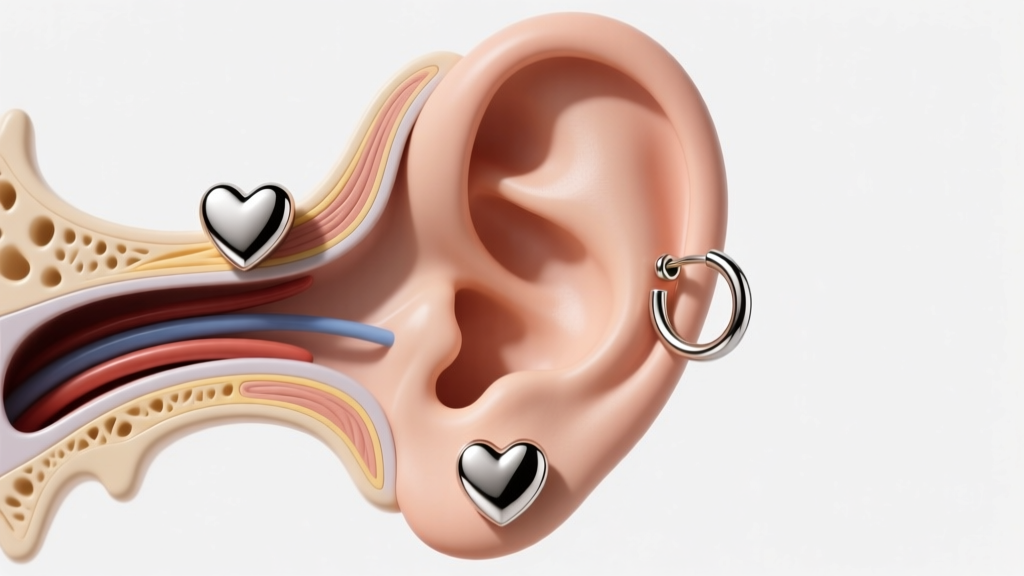
The Lobe Placement
When worn on the earlobe, the heart motif typically dangles at the bottom center of the hoop. This draws the eye downward, elongating the neck. If your heart huggie features a continuous heart-shaped wire (where the hoop itself forms the top curves of the heart), ensure the seam sits at the very bottom or back of the lobe to prevent the shape from warping when you sleep.
The Helix and Tragus Placement
Cartilage piercings require specialized hardware. If you are wearing heart huggie earrings in a helix piercing, the heart charm will naturally swing outward or forward depending on the angle of your piercing channel. For the tragus, an 8mm huggie with a forward-facing heart charm is ideal, as it sits flush against the cheekbone and avoids catching on hair or phone receivers. Always ensure your cartilage jewelry is made of implant-grade titanium (ASTM F136) or 14k solid gold to prevent allergic contact dermatitis, a common issue in cartilage tissue.
Step 3: How to Safely Open and Close Hinged Huggies
The hinge mechanism is the most vulnerable point of any huggie earring. The 'snap' or 'clicker' hinge relies on precise tension. If you open the earring incorrectly, you will permanently bend the post, resulting in a huggie that refuses to stay closed. Follow these exact mechanical steps to preserve the hardware:
- The Grip: Hold the huggie with both hands. Place your thumbs on the bottom curve of the hoop and your index fingers on the top curve, right next to the hinge seam.
- The Vertical Twist: Never pull the post side-to-side (horizontally). Instead, apply gentle pressure up and down (vertically). The post should pop out of the catch with a slight snap.
- Insertion: Thread the post through the piercing from the back to the front (for lobes) to ensure the heart motif faces outward correctly.
- The Closure: Align the post with the catch. You should hear and feel a distinct 'click' as the internal tension wire locks into the groove. If it feels loose, do not force it.
Pro Jeweler Tip: If your huggie post becomes slightly bent and won't click, do not use standard metal pliers, which will mar the gold or silver finish. Instead, use nylon-jaw jewelry pliers to gently squeeze the post back into perfect alignment. This restores the tension required for a secure snap.
Step 4: Styling Heart Huggies for Your Face Shape
While huggies are small, the visual weight of a heart motif can subtly influence facial balance. Here is how to style them based on your facial geometry:
- Round Faces: Opt for heart huggie earrings with an elongated, teardrop-style heart charm that dangles slightly below the hoop. This creates a vertical line that visually lengthens the face and sharpens the jawline.
- Square Faces: Choose huggies with soft, rounded heart motifs or pave-set diamonds. The brilliance and curved lines soften strong, angular jawlines and prominent cheekbones.
- Oval Faces: You have the versatility to wear any style. A chunky, solid gold heart huggie that sits tight against the lobe adds a touch of modern edge without disrupting your natural facial harmony.
- Heart-Shaped Faces: Balance a wider forehead and narrow chin by wearing heart huggies on the lobe paired with a simple, small stud on the upper helix. This draws the eye outward and upward, creating width at the lower half of the ear.
Step 5: Cleaning and Maintenance Routine
Because huggies sit tightly against the skin, they are highly susceptible to trapping sebum, dead skin cells, and hair products. Over time, this buildup can dull the metal and cause localized skin irritation. The Gemological Institute of America (GIA) recommends regular, gentle cleaning to maintain the luster of precious metals and the brilliance of gemstones.
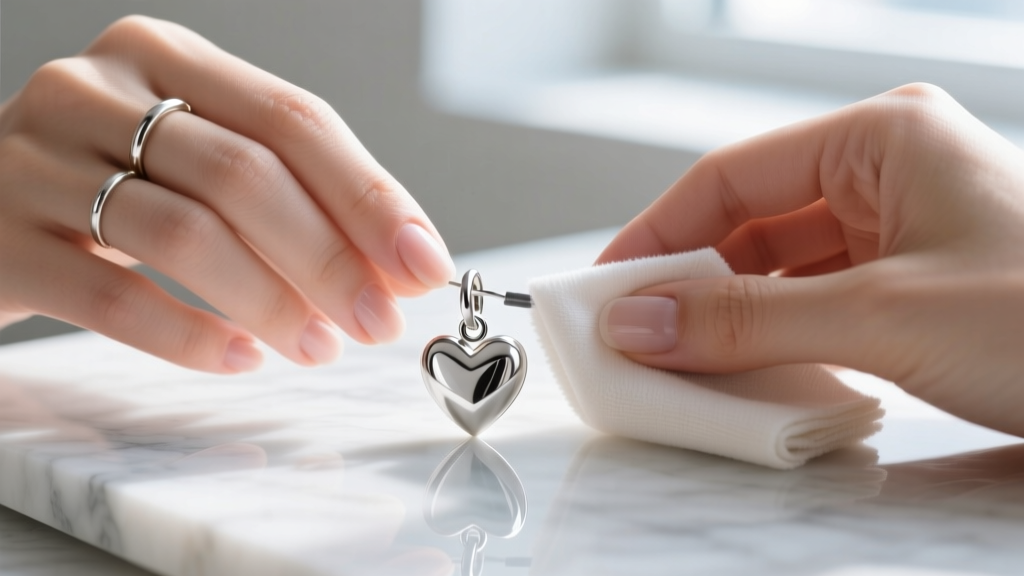
The Weekly Deep Clean
- Prepare the Solution: Mix a few drops of mild, phosphate-free dish soap (like Dawn) into a bowl of warm—not hot—water.
- Soak: Drop your heart huggie earrings into the solution and let them soak for 5 to 10 minutes. This softens hardened sebum around the hinge and clasp.
- Agitate: Use a brand-new, ultra-soft baby toothbrush to gently brush the crevices of the heart motif and the inside of the hinge. Never use hard-bristled brushes, as they will scratch high-polish gold and silver.
- Rinse and Dry: Rinse thoroughly under lukewarm running water. Pat dry with a lint-free microfiber cloth. Ensure the hinge is completely dry before storing to prevent internal rusting on non-solid metals.
Crucial Warning for Pave Settings: If your heart huggies feature pave-set diamonds or cubic zirconia, never use an ultrasonic jewelry cleaner. The high-frequency vibrations can easily shake the tiny stones loose from their micro-prongs, resulting in lost gems.
Troubleshooting Common Huggie Issues
Even high-quality fine jewelry can experience mechanical wear. Here is how to troubleshoot the most common issues associated with heart huggie earrings:
The Hinge Feels Stiff or Stuck
This is almost always caused by microscopic debris lodged in the hinge barrel. Do not force it open. Apply a single drop of mineral oil or specialized jewelry lubricant to the seam. Let it sit for an hour, then attempt the vertical twist method. Once open, clean the post with rubbing alcohol to remove the oil and debris.
The Gold Plating is Wearing Off the Heart Charm
If you purchased gold vermeil or gold-plated huggies, friction from the earlobe and exposure to sweat will eventually wear away the gold layer, revealing the sterling silver or brass base. To prevent this, always remove your huggies before exercising or swimming. Once the plating is gone, take the earrings to a local jeweler for a professional electroplating service to restore the original 2.5-micron gold layer.
The Heart Charm Flips Upside Down
If the charm on your huggie constantly flips, the jump ring connecting the heart to the hoop is too large. A jeweler can easily swap the jump ring for a smaller, tighter oval ring, or solder the charm directly to the hoop for a fixed, permanent orientation.
Final Thoughts on Building Your Ear Stack
Heart huggie earrings are more than just a passing trend; they are a versatile staple that bridges the gap between delicate sentimentality and structural durability. By paying strict attention to gauge sizing, respecting the mechanics of the hinge, and committing to a proper maintenance routine, you ensure that your jewelry remains as vibrant and secure as the day you first clicked it into place. Whether you are adorning a fresh helix piercing or curating a multi-layered lobe stack, the perfect heart huggie is an investment in both your personal style and your anatomical comfort.


