How to Take Out Stud Earrings: A Budget & Value Preservation Guide
Learn how to take out stud earrings safely without damaging your jewelry or earlobes. A budget guide to preserving value and avoiding costly repairs.

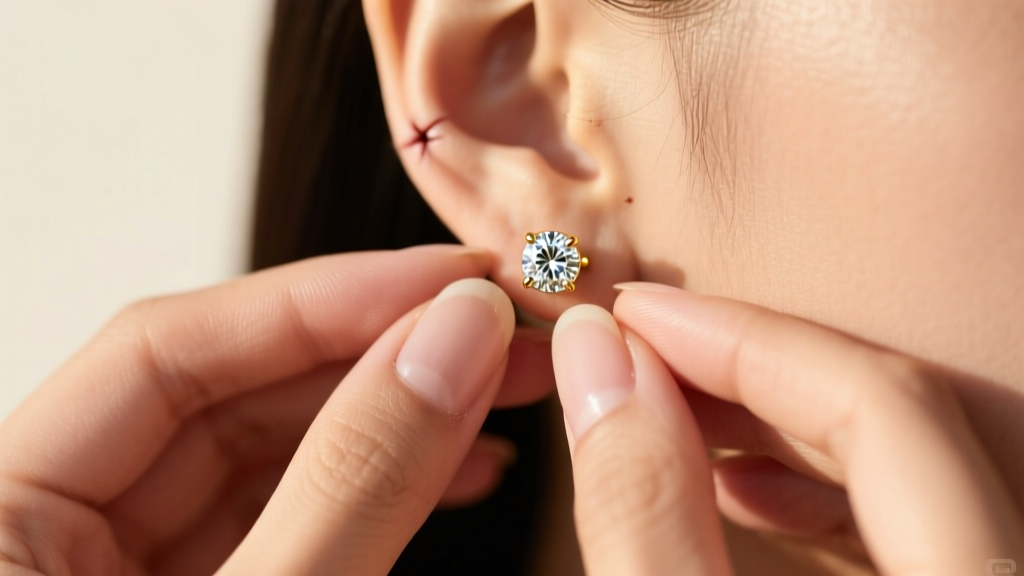
When a favorite stud earring gets stuck, panic often leads to poor financial decisions. Yanking, twisting, or using household tools to force a stubborn earring out can result in bent precious metal posts, lost gemstones, or severe tissue damage. From a budget and value assessment perspective, learning how to take out stud earrings properly is not just about comfort—it is about protecting your financial investment in your jewelry and avoiding unexpected medical or repair bills. Whether you are dealing with a high-end diamond stud or a budget-friendly titanium flat-back, understanding the mechanics of earring removal is essential for long-term value preservation.
The True Cost of Forced Earring Removal
Before attempting to remove a stuck stud, it is crucial to understand the hidden costs of improper technique. Many consumers view earrings as simple accessories, but the structural integrity of fine jewelry is delicate. Standard lobe studs are typically crafted in 20-gauge (0.81mm) or 18-gauge (1.02mm) wire. These thin posts are highly susceptible to bending.
- Bent Posts and Soldering Fees: If you use pliers or excessive force, a 14k gold or platinum post will easily bend. Straightening it at home often leads to metal fatigue and snapping. A professional jeweler will charge between $35 and $85 to re-tension, straighten, or re-solder a damaged post.
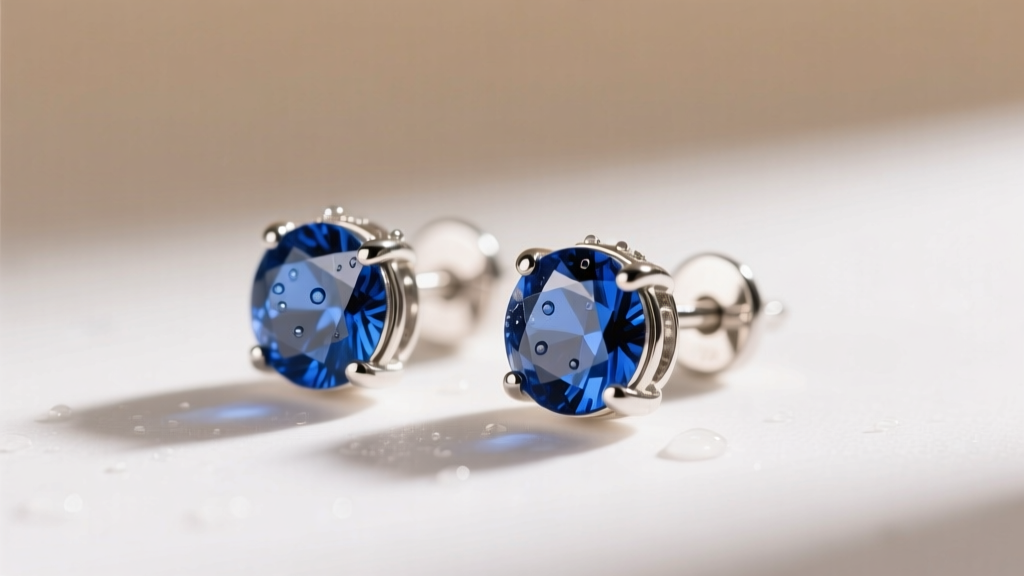
- Lost Gemstones: Prong settings on diamond or sapphire studs are calibrated to hold the stone securely under normal wear, not lateral torque. Twisting a stuck earring can warp the basket setting, causing a $500+ gemstone to fall out and be lost forever.
- Medical Interventions: Forcing an earring through swollen or infected tissue can cause a lobe tear. A surgical lobuloplasty (earlobe repair) typically costs between $300 and $800 per ear, entirely negating the value of the jewelry itself.
Step-by-Step: How to Take Out Stud Earrings Without Damaging Them
Preserving the resale and wearable value of your earrings requires patience and the right technique. The American Academy of Dermatology (AAD) recommends gentle handling of all piercing sites to prevent micro-tears and scarring, which can complicate future jewelry wear.
Preparation and Lubrication
Never attempt removal with dry hands or dry skin. Wash your hands thoroughly with antibacterial soap. Apply a warm, damp compress to the earlobe for three to five minutes. This softens any hardened sebum, dead skin cells, or dried saline that may be acting as a biological glue around the post. If the earring is still resistant, apply a tiny drop of sterile saline or pure jojoba oil to the front and back of the post to reduce friction.
The Butterfly Clutch Method
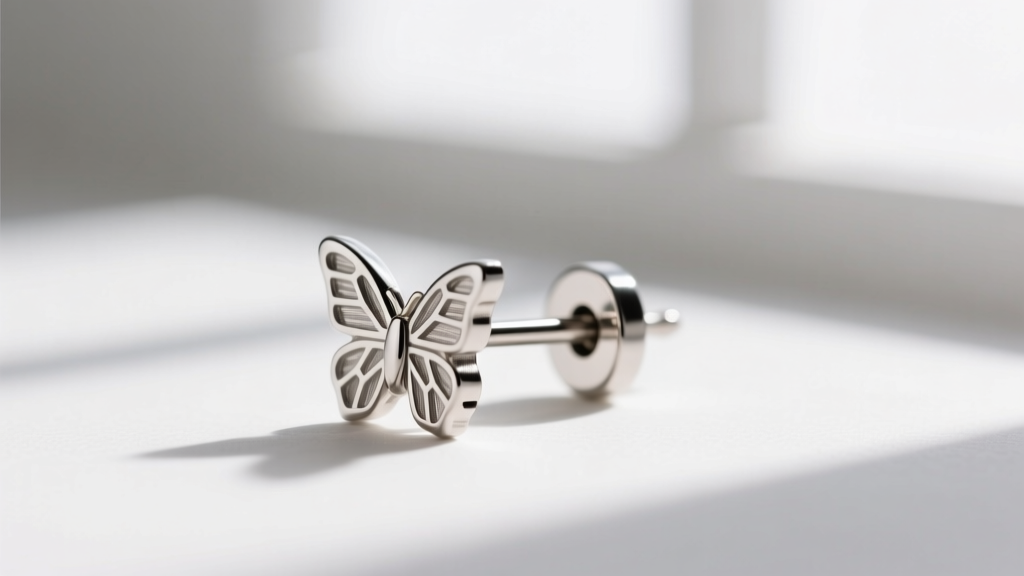
Butterfly clutches (friction backs) rely on a small groove in the post to stay in place. The most common mistake is twisting the back, which can strip the groove or warp the metal wings. Instead, place your index finger and thumb on the front of the stud to stabilize it. With your other hand, pinch the edges of the butterfly clutch and pull straight back along the axis of the post. Do not wiggle it side-to-side, as this will bend a 20G post.
Screw-Back and Threaded Protocols
Screw-back earrings offer superior security but are prone to cross-threading. Always turn the backing counter-clockwise. If the threads feel stuck, do not force them. External threading (where the threads are on the post) is particularly vulnerable to stripping. If your earring features internal threading (threads inside the decorative end), you must unscrew the front of the earring, not the back. Forcing external threads through the piercing channel can cause micro-lacerations inside the fistula, leading to hypertrophic scarring.
Material Grades and the 'Stuck' Factor: A Value Analysis
The metallurgical composition of your stud earring heavily dictates how likely it is to get stuck, which directly impacts its long-term value and maintenance costs. Cheaper alloys often corrode or cause allergic reactions that swell the tissue, effectively trapping the jewelry.
| Material Grade | Corrosion / Tarnish Risk | Swelling / Allergy Risk | Avg. Replacement / Repair Cost |
|---|---|---|---|
| Sterling Silver (925) | High (Silver sulfide buildup locks clutches) | High (Copper/nickel alloys cause contact dermatitis) | $25 - $150 |
| 316L Surgical Steel | Low | Moderate (Contains 8-12% nickel) | $15 - $80 |
| ASTM F136 Titanium | None (Highly biocompatible) | None (Nickel-free, ideal for sensitive tissue) | $30 - $120 |
| 14k / 18k Solid Gold | Very Low | Low (Ensure nickel-free white gold) | $150 - $1,500+ |
As noted by the Association of Professional Piercers (APP), implant-grade titanium (ASTM F136) is the gold standard for body jewelry. While the upfront cost is slightly higher than surgical steel, titanium eliminates the risk of nickel-induced swelling that traps the earring in the ear, saving you from the budget-draining cycle of treating allergic reactions and replacing ruined jewelry.
When to Call a Professional: Budgeting for Safe Intervention
There is a distinct tipping point where DIY removal becomes a financial liability. If you have applied warm compresses, used lubrication, and gently attempted removal for more than 10 minutes, stop. The cost of a professional intervention is a fraction of the cost of emergency room visits or jewelry repair.
Visiting an APP-Certified Piercer
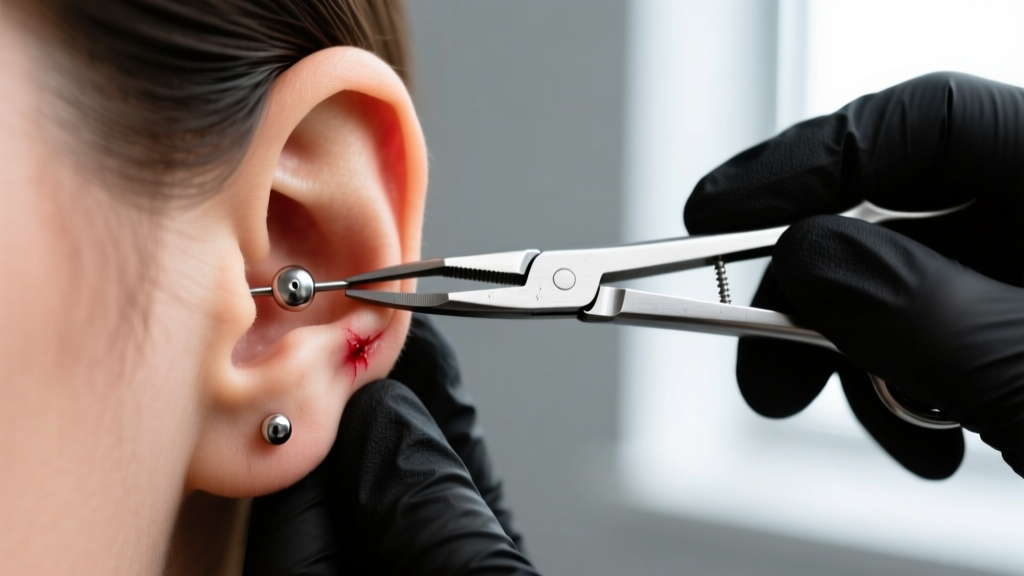
Professional piercers possess specialized tools like sterile hemostats, taper pins, and jewelry-specific lubricants. Most reputable studios charge a nominal 'bench fee' or removal fee, typically ranging from $15 to $35. This is an exceptional value when compared to the cost of replacing a ruined threading system or treating a cartilage infection.
When to See a Dermatologist or Doctor
If the earlobe is hot to the touch, oozing purulent discharge, or if the earring back is entirely embedded in the swelling tissue, you must seek medical attention. Urgent care clinics or dermatologists can safely excise the tissue or cut the post using sterile medical wire cutters. Budget $100 to $250 for a standard urgent care copay or visit fee. While this is an unbudgeted expense, it prevents systemic infection and permanent disfigurement, preserving the structural integrity of your earlobe for future jewelry wear.
"Never use household needle-nose pliers to remove stuck jewelry. The serrated teeth will permanently gouge precious metals, destroying the polish and structural integrity of the post, rendering the earring unsellable and unwearable."
Long-Term Value: Maintenance Routines to Prevent Stuck Studs
The most budget-friendly approach to earring removal is ensuring they never get stuck in the first place. Implementing a strict maintenance routine preserves both the financial and sentimental value of your collection.
- Weekly Cleansing: Remove your studs at least once a week to clean the posts with rubbing alcohol or a specialized jewelry cleaning solution. This prevents the buildup of sebum and hard water deposits that act like cement on butterfly clutches.
- Upgrade Your Backs: If you frequently struggle with standard butterfly backs, invest in silicone O-rings or specialized locking backs (like La Poussiere or secure lock systems). They cost about $10 to $20 for a multi-pack and drastically reduce the risk of losing high-value diamond studs while preventing the metal-on-metal friction that causes sticking.
- Proper Storage: When not in use, store stud earrings in a dry, anti-tarnish environment. Humidity accelerates the oxidation of lower-karat golds and sterling silver, which can cause the clutch to fuse to the post over time.
Summary Checklist for Earring Preservation
Understanding how to take out stud earrings safely is a critical skill for any jewelry owner. By prioritizing gentle techniques, understanding your jewelry's metallurgical grade, and knowing when to outsource the removal to a professional for a minor fee, you protect your budget from unnecessary repair and medical costs. Treat your earrings as precision-crafted investments, and they will retain their beauty, structural integrity, and financial value for a lifetime.