How to Wear Big Circle Earrings Without Stretching Lobes
Learn how to wear big circle earrings without stretching your lobes. Expert guide on gauge sizes, support hacks, and lightweight materials.

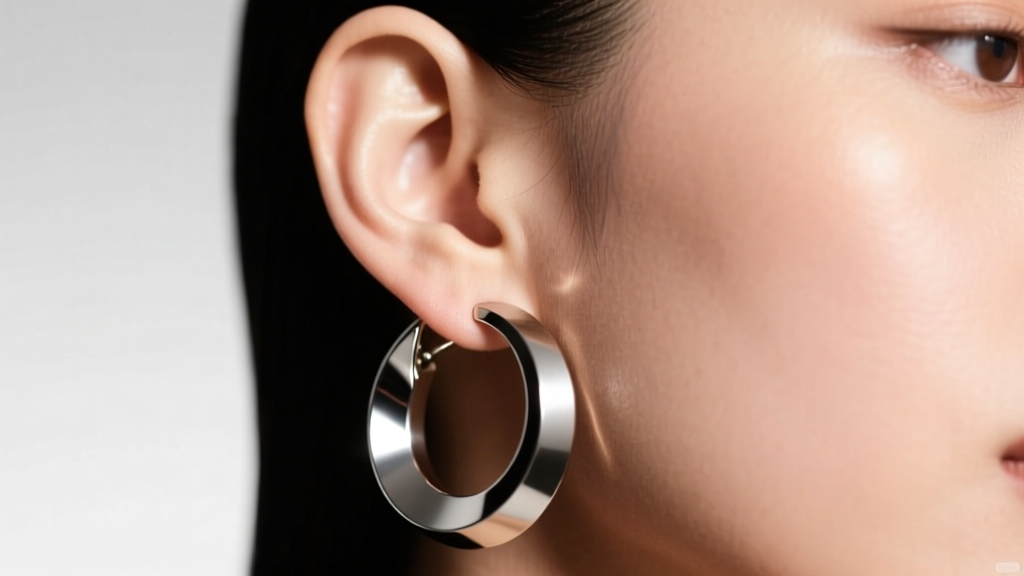
Big circle earrings are a timeless, bold statement piece that can instantly elevate any look. However, the reality of wearing oversized hoops often comes with a painful price tag: stretched earlobes, micro-tearing, and chronic soreness. The laws of physics are unforgiving when gravity pulls on a large diameter of metal suspended through a tiny hole of delicate tissue. As a senior style guide at Jewel Style Radar, I have consulted with professional piercers and dermatologists to bring you this definitive, step-by-step guide on how to wear heavy, oversized hoops safely.
The Physics of the 'Cheese-Cutter' Effect
Before diving into styling and support hacks, it is crucial to understand why big circle earrings cause tissue damage. The issue boils down to surface area and tension. A standard earring post or thin hoop wire is typically 20-gauge (0.81mm thick). When a heavy, oversized circle swings, the entire kinetic force and resting weight of the metal is concentrated onto that microscopic 0.81mm edge pressing against the bottom of your piercing fistula.
This creates the 'cheese-cutter effect.' Over time, the thin wire slowly slices through the collagen and elastin fibers in your earlobe. According to guidelines from the Association of Professional Piercers (APP), prolonged wear of heavy jewelry on thin gauges leads to irreversible tissue thinning and permanent lobe drooping. To wear big circles safely, we must manipulate the gauge, the weight, and the support structure.
Step-by-Step: Prepping Your Lobes for Heavy Circles
Do not simply wake up and thread a heavy, 50mm solid gold hoop through your ear. Preparation is key to maintaining lobe integrity.
Step 1: The Tissue Pinch Test
Gently pinch the bottom of your earlobe where the piercing sits. If the tissue feels paper-thin or you can visibly see the outline of your current jewelry through the skin, your lobes are already compromised. Stick to hollow tubing or ultra-lightweight materials until the tissue plumps back up.
Step 2: Cleanse and Lubricate
Wipe the earring wire and your earlobe with a saline solution. Apply a microscopic dab of pure, unrefined jojoba oil to the wire. This reduces friction and prevents the metal from dragging and catching on the delicate fistula lining during insertion.
Step 3: Apply a Support Barrier
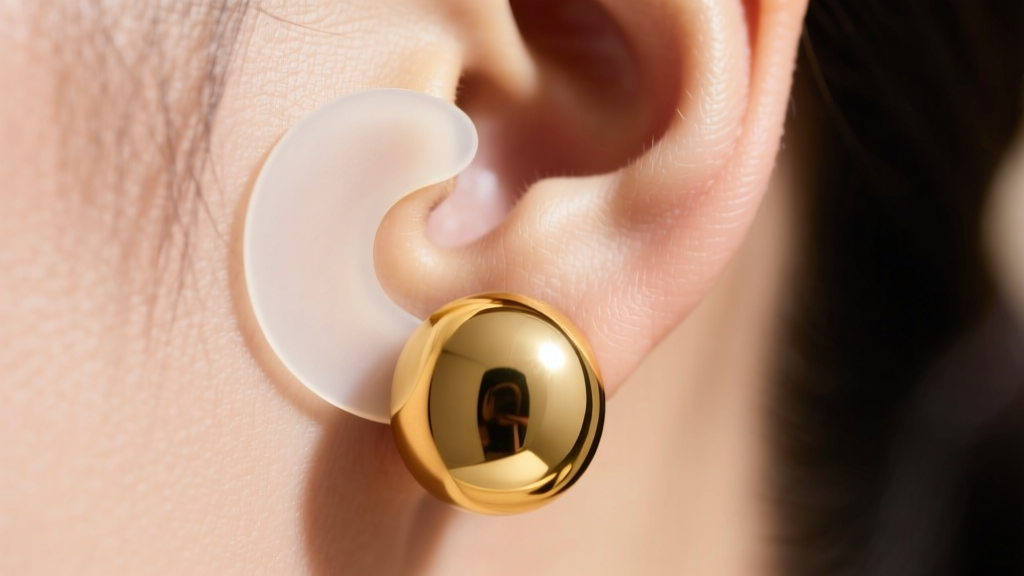
Before securing the clasp, apply your chosen earlobe support patch (detailed in the matrix below). This must be done before the weight of the earring pulls the lobe downward.
Material & Gauge Matrix: Choosing the Right Hoops
Not all big circle earrings are created equal. The material density and the wire thickness (gauge) dictate how long you can safely wear them. Below is a decision matrix to help you choose or commission the right pair.
| Material | Weight Profile | Minimum Safe Gauge | Best Use Case |
|---|---|---|---|
| Grade 23 Titanium (Ti6Al4V) | Ultra-Light | 18G (1.0mm) | All-day wear, sensitive skin, massive diameters (70mm+) |
| 14k / 18k Solid Gold | Heavy | 14G (1.6mm) or Hollow Tube | Short-term events, luxury styling (max 4 hours) |
| Sterling Silver (925) | Medium | 16G (1.2mm) | Everyday wear, mid-size circles (40mm-50mm) |
| Brass / Bronze Alloys | Medium-Heavy | 14G (1.6mm) | Bold streetwear (Note: High risk of contact dermatitis if unsealed) |
Pro-Tip on Construction: If you love the look of thick, chunky gold circles but want to avoid the weight, seek out hollow tubing designs. These are crafted by wrapping a thin sheet of gold into a tube, offering the visual thickness of a 10-gauge wire with the actual weight of a 20-gauge wire.
The 'Earlobe Support' Hack: Commercial vs. DIY
When you must wear a heavy pair of big circle earrings that feature a thin wire, you need to artificially increase the surface area distributing the weight. Here is how to do it:
- Commercial Silicone Patches (e.g., BlingDots): These are medical-grade, hypoallergenic silicone stickers with a pre-punched hole. They adhere to the back of the lobe, providing a thick, rubbery cushion that absorbs the downward drag of the hoop.
- Plastic Earring Lifters: These are rigid, flower-shaped plastic discs that slide onto the earring post or wire. They are excellent for preventing the earring from drooping forward, but they do not prevent the wire from cutting into the bottom of the hole if the hoop swings.
- The Moleskin DIY Hack: Buy a sheet of adhesive moleskin padding from a pharmacy. Cut a small 1cm square, punch a hole through it with a sterilized needle, and apply it behind the lobe. It is breathable, cheap, and highly effective for distributing weight.
Step-by-Step Lobe Recovery After a Long Day
Wearing big circle earrings is essentially a workout for your earlobes. Post-wear recovery is non-negotiable if you want to maintain tight, healthy piercings.
- Immediate Cold Therapy: The moment you take the heavy hoops off, wrap an ice cube in a clean paper towel and hold it against the bottom of the lobe for 60 seconds. This constricts the blood vessels and reduces immediate inflammation and micro-swelling.
- Collagen Massage: Apply a drop of Vitamin E oil or pure squalane. Using your thumb and index finger, gently massage the lobe in a circular motion for 30 seconds. This promotes blood flow and encourages tissue repair.
- The 48-Hour Rest Rule: Never wear heavy, oversized circles two days in a row. Give your fibroblasts (the cells responsible for producing collagen) at least 48 hours to rebuild the tissue matrix. Wear lightweight, flat-back titanium studs during the recovery window.

Proportion & Face Shape: Styling Oversized Circles
Beyond the physical mechanics, styling big circle earrings requires an understanding of facial geometry. The diameter of the circle will draw a literal frame around your lower face.
- Square Jawlines: Opt for perfectly round, large-diameter hoops (50mm+). The continuous curve softens sharp mandibular angles and creates a harmonious balance.
- Round Faces: Avoid perfectly circular, thick hoops that end exactly at the chin, as this emphasizes roundness. Instead, choose slightly oval-shaped big circles, or large hoops that feature a geometric drop element to elongate the face vertically.
- Heart-Shaped Faces: Look for big circle earrings that are 'bottom-heavy'—such as teardrop-shaped circles or hoops with intricate wire-wrapping at the base. This adds visual width to the narrower lower half of the face.
'Tissue memory is real. Once an earlobe is stretched by the repetitive dragging of heavy, thin-gauge jewelry, the elastin fibers snap. No topical cream will tighten a mechanically stretched fistula; prevention via proper gauge sizing and support patches is your only defense.'
— Senior Piercer, Association of Professional Piercers (APP) Member
Final Thoughts on Heavy Hoops
Big circle earrings should be a source of joy and confidence, not a source of chronic pain or tissue anxiety. By upgrading to thicker gauges, investing in hollow-tube constructions, utilizing silicone support patches, and committing to a strict post-wear recovery routine, you can rock massive, statement-making circles while keeping your earlobes perfectly intact. Style boldly, but always respect the physics of your anatomy.


