How to Choose and Wear Earrings Large Enough to Make a Statement
Learn how to comfortably wear and style oversized statement jewelry. Our step-by-step guide covers weight distribution, gauge sizes, and face mapping.


The Architecture of Oversized Ear Adornments
When searching for earrings large enough to command attention and frame the face, the line between high fashion and physical discomfort is remarkably thin. Oversized earrings—ranging from shoulder-grazing dangles to massive sculptural hoops—are a staple of bold personal style. However, wearing substantial pieces requires an understanding of earlobe anatomy, material density, and structural support. In 2026, the trend has shifted heavily toward 'lightweight volume,' where designers use advanced metallurgy and architectural voids to create massive silhouettes without the dragging weight.
This step-by-step guide will teach you how to select, support, and style oversized earrings while protecting your piercings from micro-tears, contact dermatitis, and long-term lobe stretching.
Step 1: Assessing Earlobe Integrity and Gauge Limits
Before inserting any oversized piece, you must evaluate the physical limits of your fistula (the piercing channel). Standard earlobe piercings are typically done at 20-gauge (0.81mm) or 18-gauge (1.02mm). The danger with heavy, large-scale earrings is that they often utilize thicker 16-gauge (1.29mm) wires for structural integrity. Forcing a 16G wire into a 20G hole causes immediate micro-trauma.
The 14-Gram Threshold
According to dermatological guidelines on body modifications, an average, healthy earlobe can comfortably support approximately 10 to 14 grams of weight per ear before experiencing fatigue, dragging, or downward migration of the piercing hole (Mayo Clinic). If your chosen earrings exceed 15 grams, you must bypass standard friction backs entirely and move to auxiliary support systems.
Step 2: Engineering Weight Distribution (The Hardware)
The earring backing is the unsung hero of oversized jewelry. A standard butterfly clutch is entirely insufficient for large earrings, as it concentrates all the leverage and weight onto a single millimeter of the earlobe's rear tissue. To distribute the load, upgrade your hardware using the following matrix:
| Support Mechanism | Best For | Weight Capacity | Pros & Cons |
|---|---|---|---|
| Omega Clip Backs | Heavy, large hoops and drops | Up to 25g | Pros: Hugs the entire lobe. Cons: Can pinch if improperly tensioned. |
| Leverback with Silicone Disc | Dangles and chandeliers | Up to 18g | Pros: Secure closure, wide surface area. Cons: Adds slight bulk behind the ear. |
| Ear Cuff Stabilizers | Top-heavy avant-garde pieces | Unlimited (bypasses lobe) | Pros: Zero lobe strain. Cons: Requires precise cartilage fitting. |
| French Wire with Chain | Delicate but long linear drops | Up to 10g | Pros: Elegant movement. Cons: Offers zero structural support for wide pieces. |
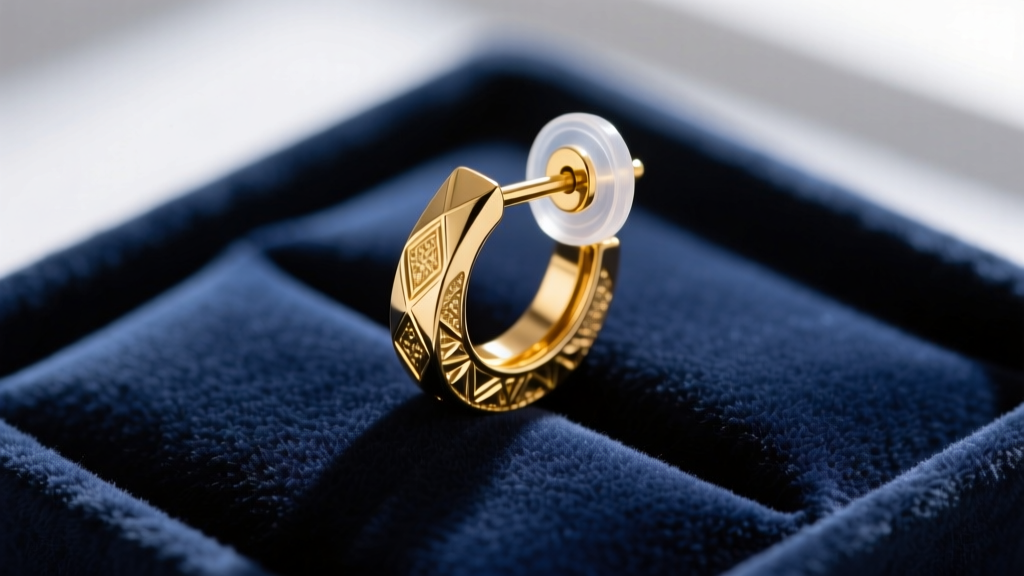
Step 3: Material Selection for Lightweight Volume
If you want earrings large in scale but feather-light in wear, material science is your best ally. Avoid solid brass or thick sterling silver for massive silhouettes, as their density will inevitably drag the lobe downward.
- Electroformed 14k Gold: This process deposits gold over a wax or resin model, which is later melted away, leaving a hollow but structurally rigid shell. It reduces the weight of large gold earrings by up to 60% compared to cast alternatives.
- Grade 5 Titanium (Ti-6Al-4V): Frequently used in aerospace, this alloy is incredibly strong and roughly 45% lighter than stainless steel. It is also highly biocompatible, virtually eliminating the risk of nickel-induced contact dermatitis (American Academy of Dermatology).
- Cellulose Acetate & Lucite: For massive, colorful, block-style earrings, high-grade acrylics and plant-based acetates offer immense volume with a fraction of the density of glass or stone.
Step 4: Architectural Mapping for Face Shapes
Wearing oversized earrings is an exercise in geometric balance. The goal is to use the earring's silhouette to complement, rather than overwhelm, your natural bone structure.
'The larger the earring, the more intentional the geometry must be. A massive round hoop on a round face creates a continuous echo, whereas an angular, shoulder-grazing drop introduces necessary architectural contrast.'
Face Shape Pairing Guide
- Round Faces: Opt for large, angular, linear drops or elongated rectangular hoops. Avoid massive circular hoops or wide button studs, which emphasize facial width.
- Square Faces: Choose large, curved silhouettes like oversized rounded hoops or teardrop chandeliers. The soft curves will offset a strong, angular jawline.
- Heart-Shaped Faces: Look for large earrings that are wider at the bottom than the top, such as inverted triangles or bottom-heavy chandeliers, to balance a narrower chin.
- Oval Faces: You possess the most versatile canvas. You can confidently wear massive geometric blocks, oversized shields, or dramatic shoulder-dusters without throwing off your natural proportions.
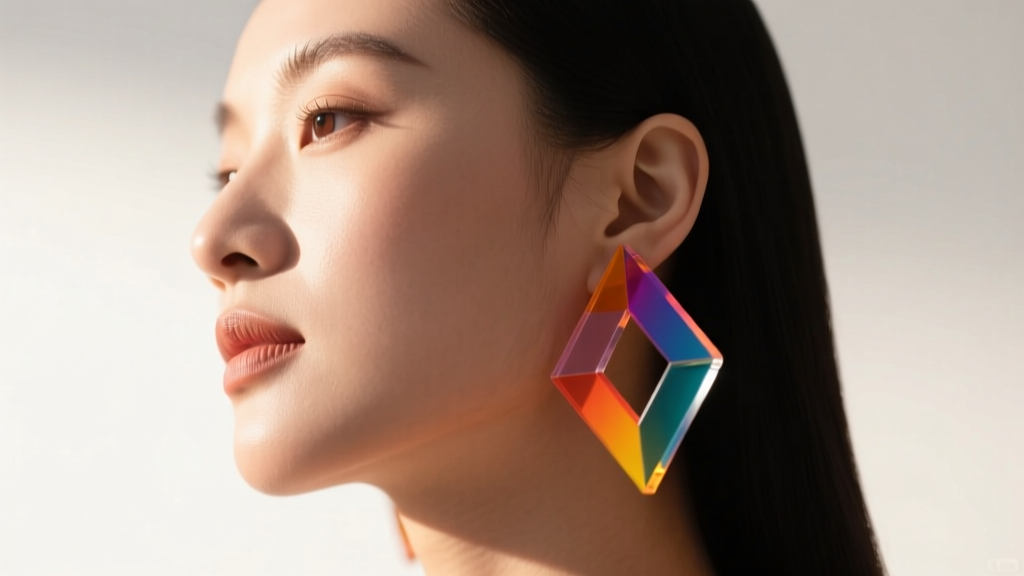
Step 5: The 'Invisible Support' Application Method
Even with the right backing, top-heavy large earrings can cause the earlobe to fold forward, ruining the drape of the jewelry and causing tissue fatigue. Here is the professional stylist's step-by-step method for stabilizing heavy pieces using earring support patches and fashion tape.
- Prep the Skin: Cleanse the front and back of the earlobe with a mild astringent or rubbing alcohol to remove natural sebum. Allow it to dry completely; adhesive will not bond to oily skin.
- Apply the Support Patch: Take a self-adhesive, invisible silicone earring support patch (often sold as 'earring lifters'). Peel the backing and slide the earring post through the center hole before securing the butterfly back or screw-back clutch. The wide silicone base distributes the forward-leaning weight across a 15mm radius of the rear lobe.
- The Fashion Tape Trick for Shields: If you are wearing large, flat 'ear shields' or wide geometric studs that tend to droop, apply a 5mm strip of double-sided medical-grade fashion tape to the upper-back edge of the earring. Press it gently against the side of your face or the upper earlobe. This creates a secondary anchor point, keeping the large earring perfectly flush and upright without pulling on the piercing hole.
- Final Alignment Check: Look straight into a mirror. The bottom of the earring should hang perfectly perpendicular to the floor. If it tilts forward, add a thicker silicone disc behind the lobe to counterbalance the front-facing weight.
Maintenance and Tissue Recovery
Wearing earrings large enough to make a statement should be a temporary, event-driven choice rather than a 24/7 lifestyle. After removing heavy earrings, gently massage the earlobe with a drop of pure jojoba or squalane oil to stimulate blood flow and encourage tissue elasticity. If you notice the piercing hole appearing elongated or feel a persistent dull ache, give your lobes a minimum 72-hour rest period, wearing only lightweight 20G titanium studs to allow the fistula to contract and heal. By respecting the physical limits of your anatomy and leveraging modern support mechanics, you can wear the most dramatic, oversized earrings with absolute comfort and confidence.


