Huge Clip On Earrings: Budget & Value Assessment Guide
Discover if huge clip on earrings are worth the investment. We assess pricing tiers, weight distribution, mechanisms, and material value.

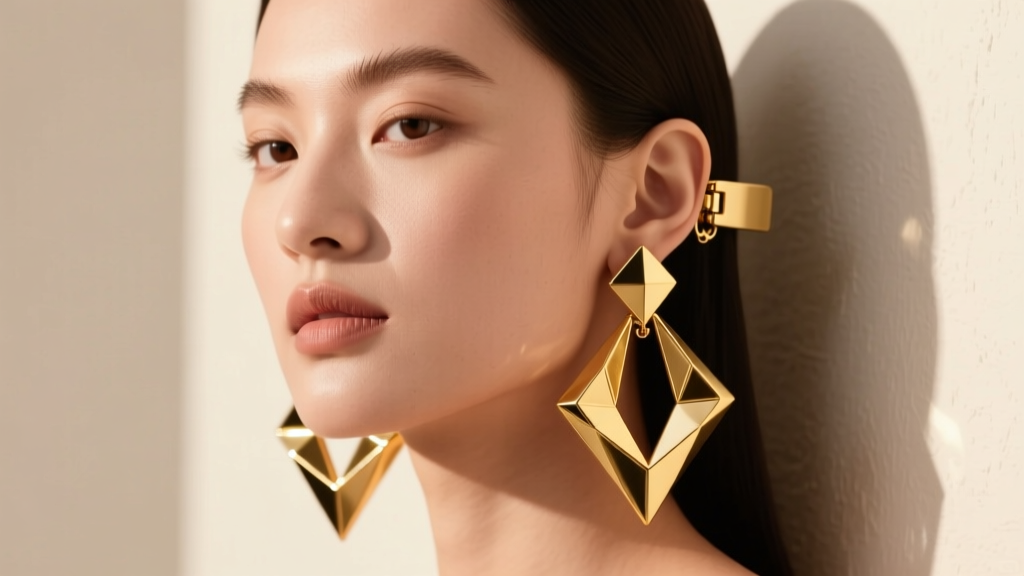
When building a dramatic jewelry collection without pierced ears, huge clip on earrings are the ultimate statement piece. However, scaling up the size of an earring introduces complex structural and physiological challenges. A budget-friendly price tag often masks severe engineering compromises that lead to earlobe fatigue, hardware failure, and skin irritation. In this comprehensive budget and value assessment, we break down the exact mechanisms, material grades, and pricing tiers to help you determine which oversized clip-ons are genuinely worth your investment.
The Physics of Torque and Earlobe Ischemia
To understand value in the oversized earring market, you must first understand the physics of torque. Any earring exceeding 3 inches in length or 2.5 inches in width acts as a lever. The further the center of mass extends from the earlobe, the greater the rotational force (torque) applied to the clip's hinge and your skin.
Cheap manufacturers often ignore this physics equation, resulting in heavy earrings that constantly slip forward. To counteract the slip, budget brands increase the spring tension on the clip. This leads to ischemia—the restriction of blood flow to the earlobe tissue. Within 45 minutes, the lack of circulation causes a deep, throbbing pain that forces you to remove the earrings. True value in huge clip on earrings is found in designs that maximize visual volume while minimizing physical mass, thereby requiring less clamping force to stay secure.
Mechanism Breakdown: Which Hardware Justifies the Price?
The hinge and closure mechanism account for roughly 30% of the manufacturing cost of a quality non-pierced earring. Here is how the standard mechanisms perform under the stress of oversized designs.
1. Spring-Loaded Paddles (The Workhorse)
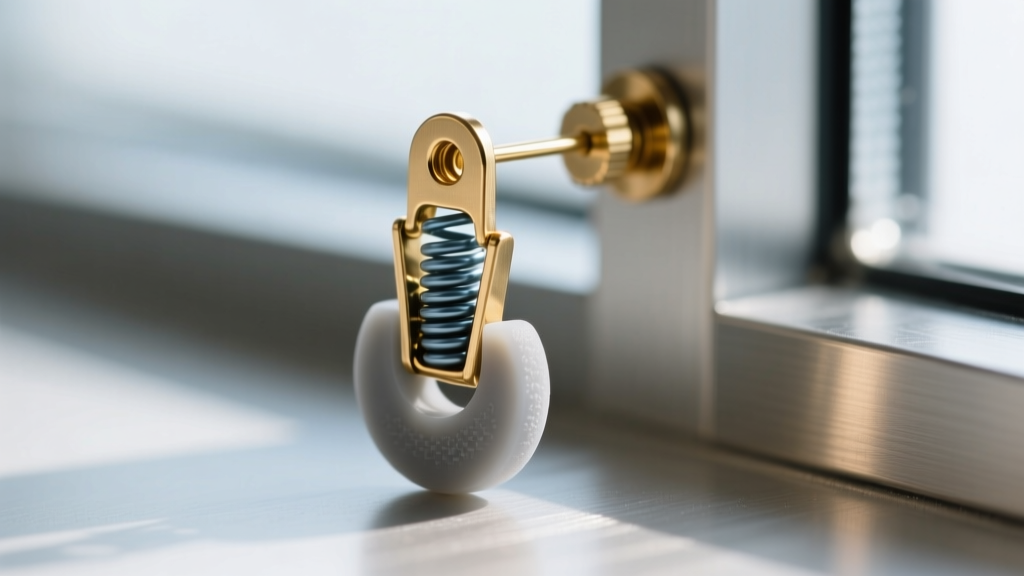
The classic spring clip uses a tiny steel coil inside a brass or alloy housing. For huge earrings, a high-quality spring clip must feature a padded silicone or rubber insert to distribute pressure. Budget versions (under $15) use bare metal paddles that pinch the skin and suffer from hinge fatigue, where the soldered joint snaps after repeated use. Expect to pay $35–$80 for a reliable, padded spring mechanism.
2. Magnetic Closures (The Modern Contender)
Magnetic clip-ons utilize neodymium magnets. However, not all magnets are equal. Budget brands use N35 grade magnets, which lack the pull force to support a large, heavy earring, causing it to slide off when you turn your head. Premium brands use N52 grade neodymium—the strongest commercially available grade. While N52 magnetic huge clip on earrings offer a painless experience, they are strictly limited to lightweight materials. If a magnetic earring feels heavy, it is a poor value regardless of the price.
3. Invisible U-Clips and Screw-Backs
Screw-backs are exceptional for studs but catastrophic for huge earrings; the downward leverage easily strips the tiny threads or bends the screw post. Invisible U-clips rely on the natural curve of the earlobe cartilage. While comfortable, they lack the structural grip required for oversized statement pieces, making them a poor investment for anything weighing over 10 grams.
Material Value: Why Weight Dictates Cost
The material choice directly dictates both the weight and the price of huge clip on earrings. Fast fashion brands rely on solid zinc alloys, which are dense, heavy, and notoriously high in nickel. According to the American Academy of Dermatology, nickel allergy is one of the most common causes of contact dermatitis, meaning cheap alloy earrings can literally make your ears bleed or blister under the friction of a heavy clip.
| Material | Average Weight (per earring) | Typical Price Range | Durability & Value Assessment |
|---|---|---|---|
| Solid Brass / Bronze | 25g - 45g | $40 - $120 | Durable but heavy; requires high-tension clips that cause pain. |
| Electroformed Brass | 8g - 15g | $60 - $150 | Best Value. Hollow, rigid, ultra-lightweight, and hypoallergenic when plated. |
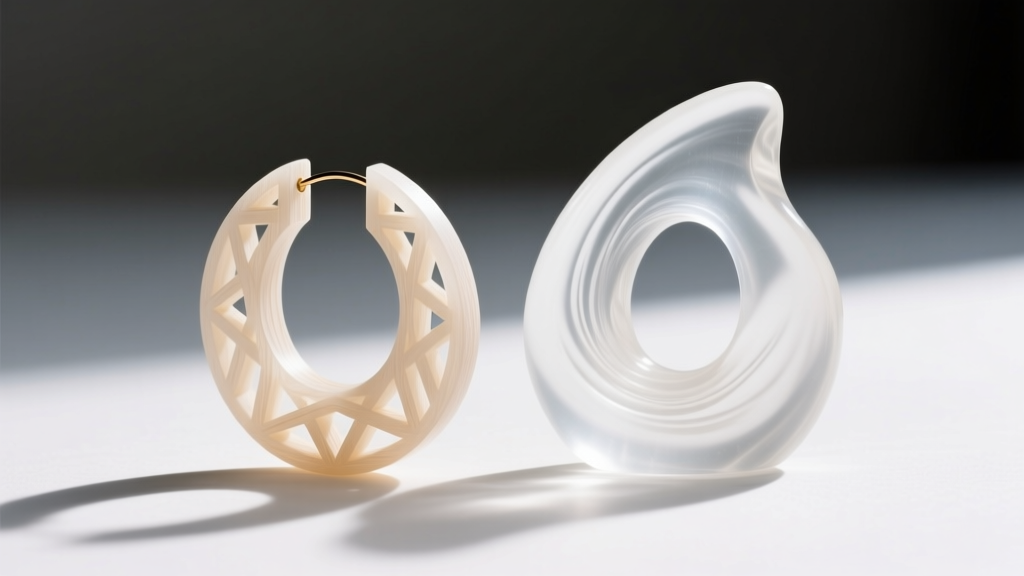
| Cellulose Acetate | 5g - 12g | $25 - $85 | Excellent. Plant-based, lightweight, can be carved into massive volumes. |
| Cheap Zinc Alloy | 20g - 40g | $5 - $18 | Poor. High allergy risk, heavy, prone to hinge snapping. |
For the highest value, seek out electroformed brass. This manufacturing process involves coating a wax mold in conductive paint and bathing it in a metal solution, creating a hollow but structurally rigid shell. It allows designers to create massive, voluminous huge clip on earrings that weigh less than a standard pair of small hoop earrings. As noted by the Gemological Institute of America (GIA), understanding material composition and manufacturing techniques is vital for assessing the true intrinsic value of any jewelry piece, especially when visual size deceives the actual metal content.
Vintage vs. Modern Fast Fashion
When assessing budget, the vintage market offers a compelling alternative to modern fast fashion. Oversized clip-on earrings were incredibly popular in the 1980s and early 1990s. Brands like Monet, Trifari, and Anne Klein engineered their clip-ons with heavy-duty steel springs and thick gold plating over brass bases. You can frequently find these vintage huge clip on earrings on resale platforms for $20 to $45. While they may require a quick cleaning and a replacement silicone comfort pad (available in bulk online for pennies), the underlying hardware quality vastly outperforms a $15 pair of brand-new, mass-produced alloy earrings from a mall retailer.
The Value Assessment Checklist for Buyers
Before purchasing huge clip on earrings, run them through this rapid value-assessment checklist to ensure you are paying for engineering, not just aesthetics:
- The 15-Gram Rule: If the earring is over 3 inches long and the seller cannot confirm it weighs under 15 grams per piece, avoid it unless it has an adjustable tension screw.
- Hinge Inspection: Look closely at product photos. Is the hinge a separate piece of metal soldered to the back, or is it a continuous fold of the base metal? Continuous folds (often seen in higher-end brass pieces) are less prone to snapping.
- Padding Presence: Never buy a large spring-clip earring without a silicone or rubber comfort pad. Bare metal on a heavy lever is a recipe for lobe bruising.
- Magnet Grade Verification: If buying magnetic, check the description for 'N52' or 'rare-earth neodymium'. Unspecified magnets are usually weak ceramic discs that will fail.
Final Verdict: Where to Allocate Your Budget
Are huge clip on earrings worth the investment? Absolutely, provided you shift your budget away from 'solid metal' marketing myths and toward advanced lightweight materials and superior hinge engineering. Spending $65 on a pair of hollow electroformed brass statement pieces or $35 on a meticulously carved cellulose acetate pair will yield years of painless, dramatic wear. Conversely, spending $12 on heavy, nickel-laden zinc alloys will result in a painful experience and a broken hinge within a month. True value in non-pierced jewelry is defined by the harmony of volume, weight, and mechanical grip.


