How to Wear Huge Pearl Earrings Without Earlobe Damage
Discover the technical jewelry engineering and biomechanical hacks required to wear huge pearl earrings comfortably without stretching your earlobes.

The Physics of Heavy Pearls: Understanding Weight Distribution
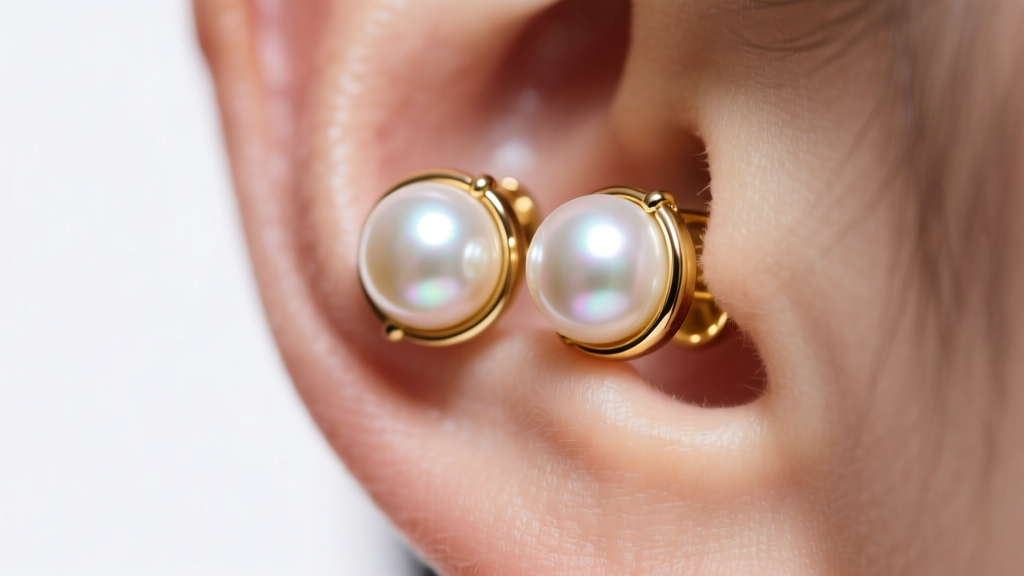
As we navigate the 2026 fine jewelry landscape, oversized nacreous gems have dominated editorial spreads and red carpets alike. However, the allure of huge pearl earrings—particularly South Sea and Tahitian varieties exceeding 14mm in diameter—introduces severe biomechanical challenges for the human earlobe. To wear these statement pieces sustainably, one must understand the physics of weight distribution and the structural limits of ear tissue.
Nacre has an average specific gravity (density) of roughly 2.7 g/cm³. When a pearl grows to 16mm in diameter, its volume reaches approximately 2.14 cm³, resulting in a base weight of nearly 5.8 grams. Once you factor in a solid 18k gold setting, a single earring can easily approach 9 to 12 grams. According to dermatological studies on earlobe morphology, the standard fistula tract (the piercing hole) is not designed to support sustained shear forces exceeding 3 to 4 grams without experiencing micro-tears. Over time, this continuous downward drag leads to the dreaded "cheese-cutter effect," where the earring post slowly slices through the posterior lobe, necessitating surgical reconstruction as documented in the Plastic and Reconstructive Surgery journal.
Pearl Diameter vs. Estimated Lobe Strain
| Pearl Diameter | Estimated Volume | Pearl Weight (Only) | Total Earring Weight (w/ 18k Setting) | Lobe Strain Risk |
|---|---|---|---|---|
| 10mm - 12mm | 0.52 - 0.90 cm³ | 1.4g - 2.4g | 3.5g - 5.0g | Low to Moderate |
| 13mm - 15mm | 1.15 - 1.76 cm³ | 3.1g - 4.7g | 5.5g - 8.0g | Moderate to High |
| 16mm - 20mm+ | 2.14 - 4.18+ cm³ | 5.8g - 11.3g+ | 9.0g - 15.0g+ | Extreme (Tearing Risk) |
Engineering the Perfect Post: Gauge, Length, and Metallurgy
The majority of commercial fine jewelry is manufactured with 20-gauge (0.81mm) or 18-gauge (1.02mm) posts. While sufficient for diamond studs weighing under 2 grams, a 20-gauge post will physically bend under the cantilevered weight of a 15mm South Sea pearl. When the post bends, the pearl tilts forward, shifting the center of gravity and exacerbating the downward pull on the front of the fistula.
Optimal Alloys for High-Stress Posts
For huge pearl earrings, the post must be engineered to a minimum of 16-gauge (1.29mm) thickness. However, gauge is only half the equation; metallurgy dictates rigidity. Pure 24k gold is far too soft. Standard 18k yellow gold has a Vickers hardness rating of approximately 130 HV, which can still warp under a 10-gram dynamic load (such as when walking or nodding). Expert jewelers recommend utilizing 14k gold (approx. 160 HV) or, ideally, Grade 5 Titanium (Ti-6Al-4V), which boasts a Vickers hardness of 340 HV and is completely hypoallergenic. If a platinum post is preferred for its prestige, it must be alloyed with iridium or ruthenium to increase its yield strength and prevent permanent deformation.
Advanced Backing Systems for Heavy Loads
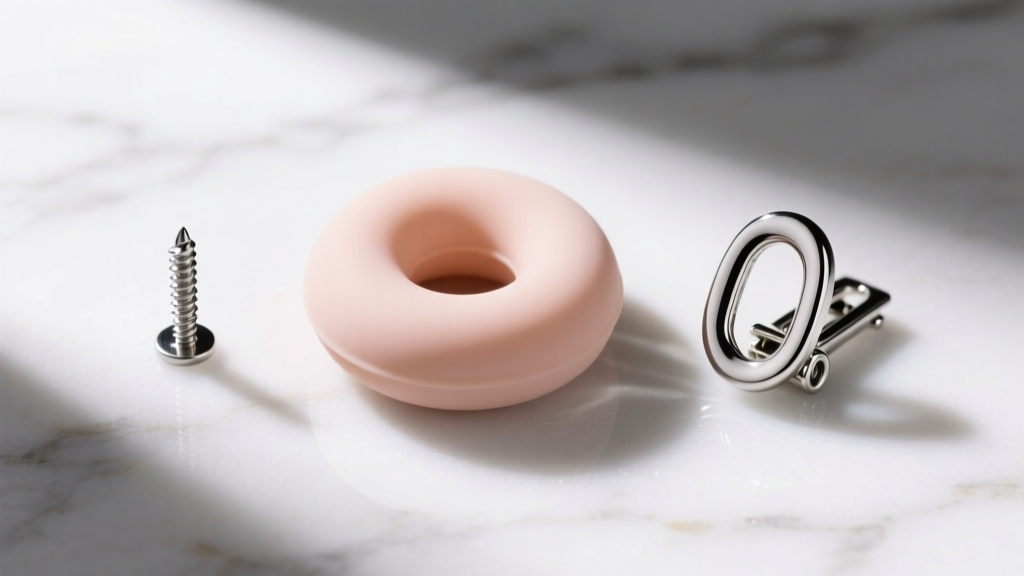
The earring backing is responsible for distributing the sheer force across the posterior surface area of the earlobe. A standard "butterfly" friction back concentrates a 10-gram load onto a 2mm pinpoint, resulting in severe localized pressure (high PSI) that causes pain and tissue necrosis. To safely wear heavy pearls, you must upgrade your backing architecture.
- Jumbo Silicone Friction Pads (10mm - 12mm): These medical-grade silicone discs increase the surface area of the backing by over 2500%. By spreading the 10-gram load across a 12mm disc, the pressure on the skin drops to negligible levels, eliminating the "cheese-cutter" drag.
- Omega Clip-Backs: For drop-style huge pearl earrings, an omega clip provides a structural clamp that hugs the earlobe. The hinged wire acts as a secondary anchor point, transferring a significant portion of the earring's weight to the cartilage ridge of the ear rather than relying solely on the fistula tract.
- Locking Screw-Backs: While threaded posts and screw-backs (such as those engineered by LaPourelle) are exceptional for preventing the loss of expensive gems, they do not inherently solve the issue of lobe sagging. They must be paired with a wide silicone flange to provide true biomechanical support.
Biomechanical Hacks: Preventing Lobe Elongation
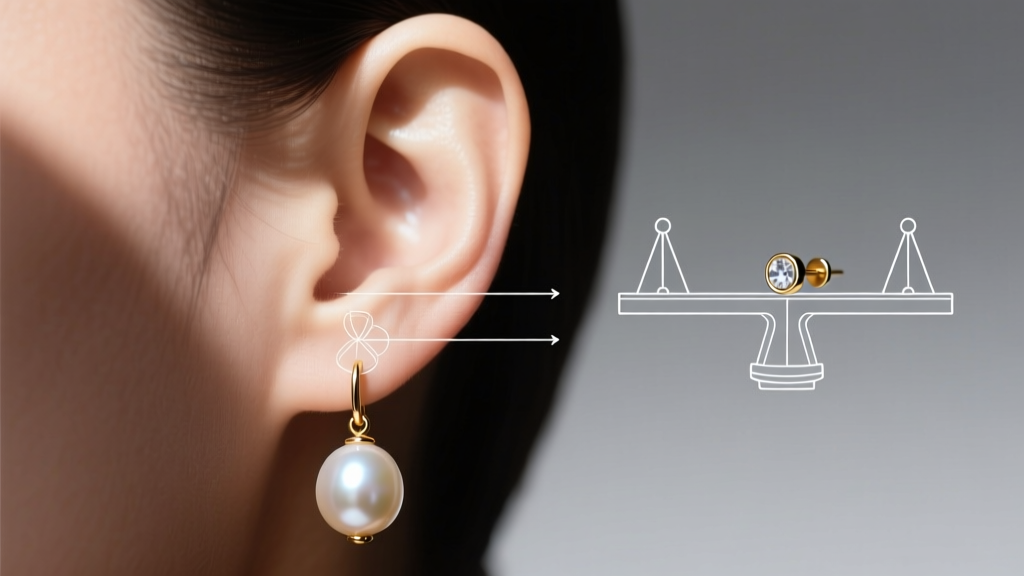
Even with perfectly engineered posts and wide backings, the sheer mass of 18mm+ pearls will cause the earlobe to droop forward, making the earring appear as though it is falling out. To counteract this, jewelry stylists and dermatologists recommend the use of adhesive earlobe support patches.
Products like LobeWonder or BlingDots are constructed from invisible, medical-grade polyurethane. Applied to the posterior lobe before inserting the earring, these patches act as an external splint. The polyurethane possesses a high tensile strength that absorbs the kinetic energy and downward drag of the pearl, anchoring the weight to a broader, unpierced section of the earlobe and the side of the neck. This simple intervention allows the wearer to maintain a perfectly perpendicular, forward-facing pearl orientation for hours without fatigue.
Sourcing and Setting: Securing the Nacreous Gem
The structural integrity of huge pearl earrings also depends heavily on how the pearl is attached to the metal. Large pearls are rarely set in traditional prongs; instead, they utilize a "post-and-peg" setting, where the pearl is half-drilled and glued onto a metal pin.
According to the Gemological Institute of America (GIA), the nacre thickness of high-quality South Sea pearls can range from 2mm to over 6mm. To prevent the pearl from snapping off the peg under its own weight, the metal peg must be at least 1.0mm thick and penetrate a minimum of 4mm into the pearl's nucleus. Furthermore, the adhesive used is critical. Mass-market manufacturers often use cyanoacrylate (Super Glue), which cures brittle and degrades rapidly when exposed to the natural oils and acids of human skin. Expert bench jewelers exclusively use two-part structural epoxies, such as Epoxy 330, which cures with a slight flexibility, absorbing micro-shocks and ensuring the heavy pearl remains permanently bonded to the gold setting.
Expert Verdict: Building a Sustainable Rotation
Investing in huge pearl earrings is an investment in wearable art, but it requires a commitment to structural jewelry engineering. By demanding 16-gauge posts, utilizing high-durometer silicone or omega backings, and incorporating polyurethane support patches, you can safely enjoy the dramatic presence of oversized pearls. Always consult with a master bench jeweler to retrofit standard posts to heavy-duty specifications before wearing pieces exceeding 8 grams, ensuring your earlobes remain intact and your pearls sit perfectly flush for decades to come.


