The painting lady with pearl earring: A Guide to Teardrop Drops
Discover the secrets behind the famous painting lady with pearl earring and learn how to choose, style, and care for modern teardrop pearl drops.


When art enthusiasts and jewelry historians discuss the famous painting lady with pearl earring, they are usually referring to Johannes Vermeer’s 1665 masterpiece, Girl with a Pearl Earring. While the subject's enigmatic gaze captures the imagination, it is the massive, luminous teardrop pearl resting against her jawline that has inspired centuries of jewelry design. The teardrop pearl earring remains one of the most elegant, timeless, and universally flattering silhouettes in fine jewelry.
However, translating this historical masterpiece into a modern, wearable piece of jewelry requires an understanding of pearl grading, structural hardware, and facial proportions. This beginner-friendly explainer will decode the secrets of the iconic teardrop silhouette, helping you navigate the modern market to find a pair of pearl drops that rival the muse of the Dutch Golden Age.
Decoding the Masterpiece: What Kind of Pearl Did She Wear?
To understand the appeal of the teardrop drop, we must first look at the historical context of the artwork. The Mauritshuis museum in The Hague, where the painting resides, notes that the earring depicted is exceptionally large—likely exceeding 20 millimeters in length. In the 17th century, natural saltwater pearls of this size and perfect teardrop symmetry were astronomically rare and reserved exclusively for royalty.
Art historians widely speculate that Vermeer may have actually painted a glass imitation, a common accessory for the Dutch middle class at the time, or perhaps a highly polished tin or silver drop coated in a pearlescent glaze. Regardless of its true material, Vermeer captured the optical phenomenon of luster—the way light penetrates the translucent layers of nacre and reflects back to the eye. Today, thanks to modern culturing techniques, you do not need to be royalty (or rely on glass imitations) to own a breathtaking teardrop pearl.
The Modern Buyer’s Guide to Teardrop Pearl Drops
When shopping for teardrop pearl earrings, the Gemological Institute of America (GIA) recommends evaluating pearls based on seven distinct value factors: size, shape, color, luster, surface quality, nacre thickness, and matching. For teardrops, the "shape" category is classified as symmetrical rather than spherical. A perfectly balanced teardrop, where the left and right halves mirror each other flawlessly, commands a significant premium over slightly asymmetrical or "baroque" drops.
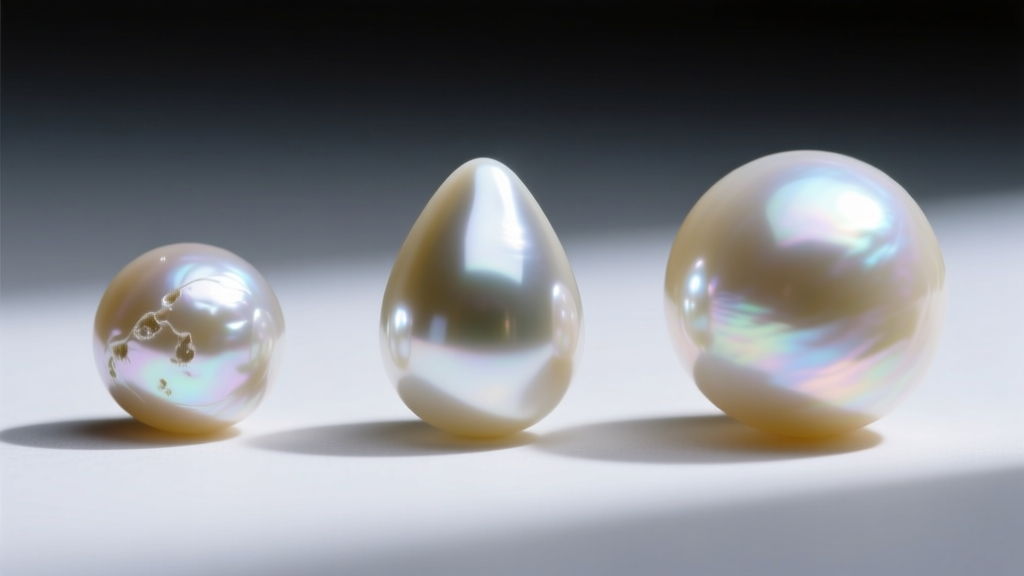
Here is a breakdown of the three primary pearl types used for teardrop earrings, including their typical size ranges and market pricing for a matched pair set in 14k or 18k gold:
| Pearl Type | Typical Size Range | Luster Profile | Estimated Price Range (Pair) |
|---|---|---|---|
| Freshwater | 7mm – 12mm | Soft, satiny, pastel overtones | $80 – $350 |
| Akoya | 6mm – 9mm | Sharp, mirror-like, high contrast | $250 – $900 |
| White South Sea | 9mm – 16mm+ | Deep, glowing, luxurious satin | $800 – $4,500+ |
Why South Sea Pearls Dominate the Teardrop Market
While Akoya pearls are famous for their mirror-like luster, they rarely grow large enough to form dramatic teardrops. The Pinctada maxima oyster, which produces White South Sea pearls, can accommodate larger bead nuclei and longer cultivation periods (2 to 4 years). This results in the heavy, substantial teardrops that most closely mimic the dramatic proportions seen in classical portraiture. If you want the true "Vermeer" look, a 12mm to 14mm White South Sea teardrop is your ideal target.
Hardware and Gravity: The Engineering of Drop Earrings
A common mistake beginners make when buying pearl drops is ignoring the hardware. A teardrop pearl is inherently bottom-heavy. Its center of gravity sits below the earlobe. If the earring post is too thin or the backing is too weak, the earring will droop forward, causing the pearl to point awkwardly toward the floor rather than hanging elegantly against the neck.
- Post Gauge: Standard earrings use a 20-gauge (0.8mm) post. However, for South Sea teardrops over 10mm, insist on an 18-gauge (1.0mm) or even 16-gauge (1.2mm) post to provide the necessary structural rigidity.
- The Cup Setting: Ensure the pearl is mounted on a deep, well-fitted cup (the metal cap that glues to the pearl). A shallow cup will cause the pearl to snap off the post if bumped.
- Secure Backings: Standard friction backs (butterfly backs) are insufficient for heavy drops. Upgrade to La Pousette backs (which lock into a groove on the post with a tiny internal spring) or screw-backs to prevent the earring from slipping off the lobe.
Proportions and Face Shapes: Styling Your Drops
The beauty of the teardrop silhouette lies in its vertical elongation. Because the eye naturally follows the downward point of the pearl, teardrop earrings are powerful tools for balancing facial proportions.
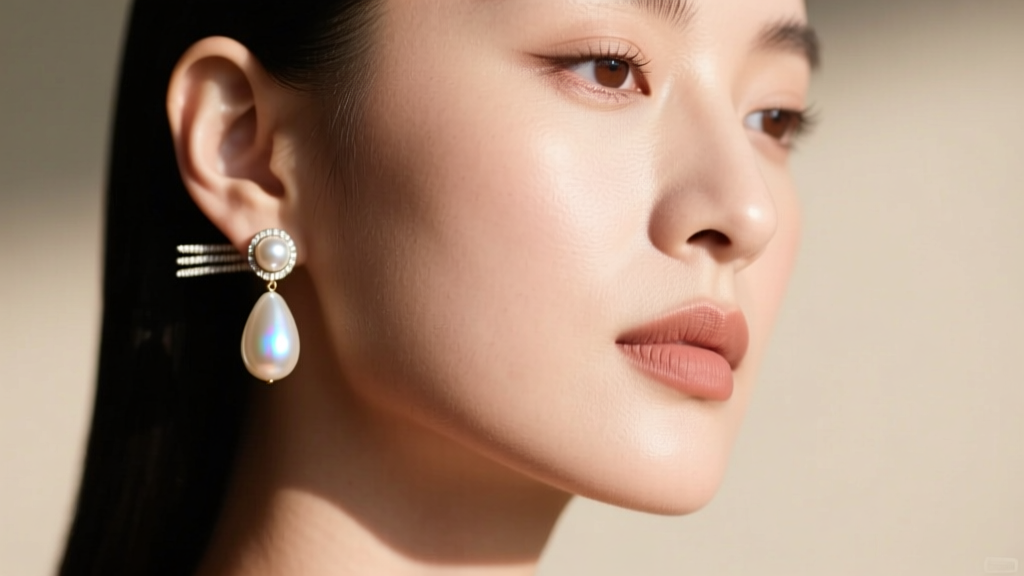
Matching Drops to Your Face Shape
Round Faces: Teardrops are the ultimate choice for round faces. The vertical line draws the eye downward, creating the illusion of a longer, more oval facial structure. Opt for longer drops (12mm+) to maximize the elongating effect.
Square Faces: A strong jawline benefits from the soft, curved lines of a teardrop pearl. The organic, rounded top of the pearl contrasts beautifully with angular features, while the tapered bottom softens the jaw. Avoid geometric or rigid metal drop earrings; stick to smooth, unblemished nacre.
Heart-Shaped Faces: Because heart-shaped faces are wider at the forehead and narrow at the chin, you want to add visual weight to the lower half of the face. A medium-sized teardrop (9mm–11mm) resting just below the earlobe adds perfect balance without overwhelming the delicate chin.
Oval Faces: Oval faces are highly versatile and can pull off almost any size of teardrop. For a subtle, everyday look, choose an 8mm Akoya drop. For evening wear, mimic the painting lady with pearl earring by opting for a dramatic 15mm South Sea drop.
Caring for Organic Gemstones
Pearls are organic gemstones composed of calcium carbonate and conchiolin. They rank a mere 2.5 to 3.0 on the Mohs scale of hardness, making them highly susceptible to scratching and chemical degradation. To ensure your teardrop earrings last a lifetime, follow the golden rule of pearl wear: last on, first off.
Never apply perfume, hairspray, or cosmetics while wearing pearl earrings. The alcohol and acids in these products will eat away at the nacre over time, dulling the luster that makes the teardrop shape so captivating.
After wearing, gently wipe the pearls with a soft, lint-free microfiber cloth to remove natural skin oils and sweat. Store them in a soft silk pouch separate from harder gemstones like diamonds or sapphires, which will easily scratch the pearl's surface. Never store pearls in an airtight plastic bag or a dry safe; they require a slight amount of ambient moisture to prevent the nacre from cracking or crazing.
Final Thoughts on a Timeless Silhouette
The enduring legacy of the painting lady with pearl earring proves that true elegance does not require excessive ornamentation. A single, perfectly matched teardrop pearl captures the light, frames the face, and projects an aura of quiet sophistication. By understanding the nuances of pearl cultivation, selecting the proper structural hardware, and matching the proportions to your unique features, you can invest in a pair of teardrop drops that will remain a staple in your jewelry wardrobe for decades to come.


