Huggie and H Earrings: The 2026 Budget & Value Guide
Discover the true cost-per-wear of huggie and H initial earrings in 2026. We break down material grades, gauge sizes, and budget tiers for smart buyers.

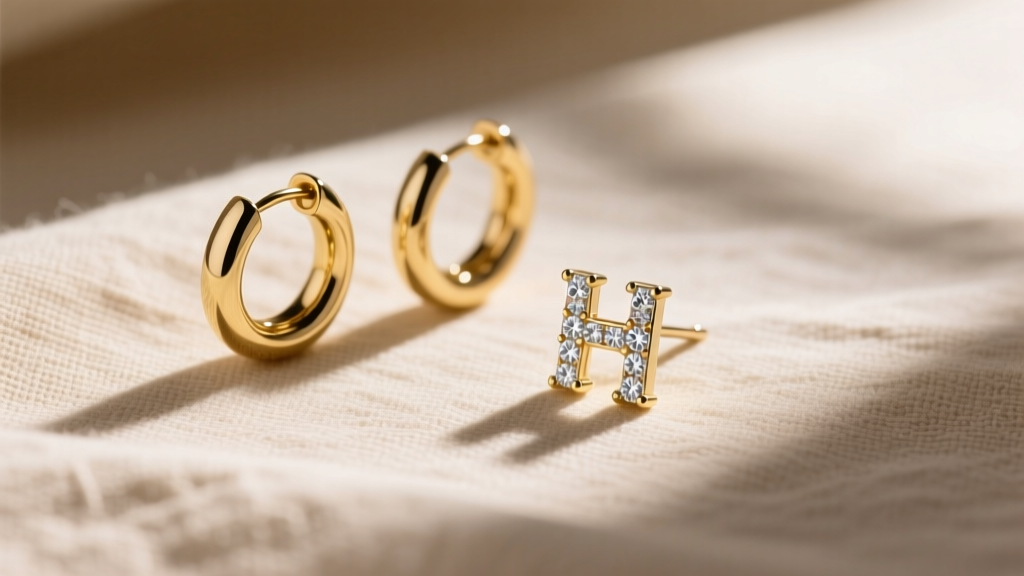
The "H Earrings" Search Trend: Huggies vs. Letter H
When analyzing 2026 jewelry search data, the query "h earrings" frequently spikes across global trend radars. While a segment of buyers are actively hunting for monogrammed letter H studs or initial pendants, the vast majority of consumers are actually using shorthand for huggie earrings—the small, hoop-like staples designed to tightly "hug" the earlobe or cartilage. Because both styles dominate the minimalist and curated-ear movements, assessing their true market value requires looking past the initial price tag.
In this comprehensive 2026 budget and value assessment, we break down the exact material grades, gauge specifications, and cost-per-wear (CPW) metrics for both huggie hoops and initial H earrings. Whether you are allocating $50 or $500, understanding the metallurgy and structural integrity of these pieces is the only way to ensure your jewelry investment holds its value over time.
Material Breakdown: Where Your Money Actually Goes
The price disparity in the earring market is almost entirely dictated by base metals, plating thickness, and alloy purity. Here is the 2026 material hierarchy, ranked from lowest to highest long-term value.
1. 316L Surgical Steel (The Budget Trap)
Often deceptively marketed as "hypoallergenic," 316L stainless steel contains 8-10% nickel. While the nickel is usually bound within the alloy, prolonged exposure to sweat and friction can cause leaching, leading to contact dermatitis.
- Price Range: $15 – $35
- Value Verdict: Low. Suitable only for those with zero metal sensitivities and a strict micro-budget.
2. Gold Vermeil (The Mid-Tier Standard)
True vermeil requires a sterling silver (925) base plated with a minimum of 2.5 microns of gold. This is the sweet spot for fashion-forward buyers who want the look of solid gold without the heirloom price tag. Brands like Mejuri and Gorjana dominate this space. However, daily wear will eventually wear down the plating, requiring professional re-dipping every 1 to 3 years.
- Price Range: $45 – $95
- Value Verdict: Moderate. Excellent cost-per-wear if you commit to proper maintenance and remove them before showering.
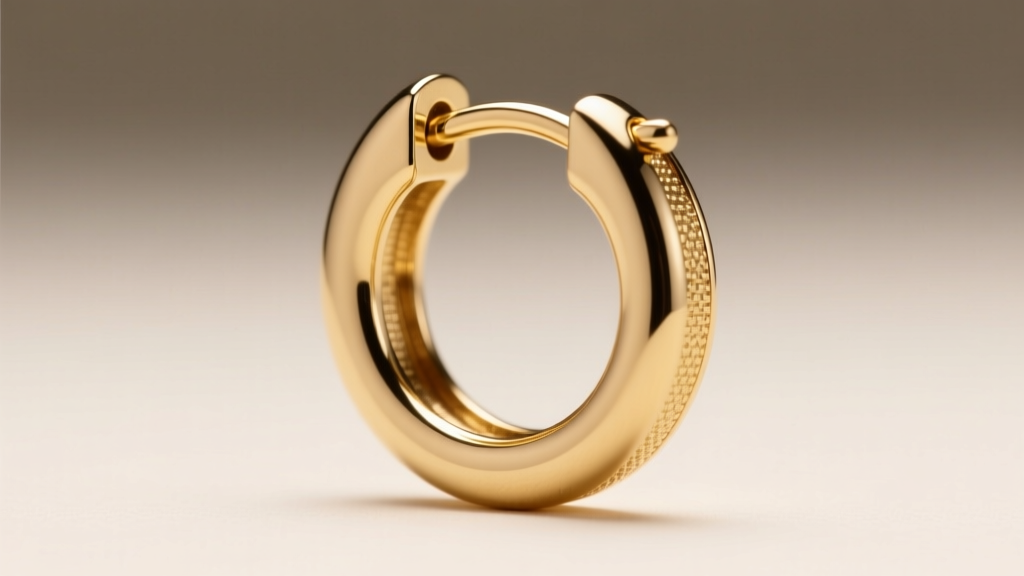
3. Implant-Grade Titanium (ASTM F136)
For cartilage piercings (helix, tragus, conch) or highly sensitive lobes, ASTM F136 implant-grade titanium is the undisputed champion. It contains zero nickel and is highly biocompatible. According to the Association of Professional Piercers (APP), this is the only metal recommended for healing or easily irritated piercings.
- Price Range: $40 – $85
- Value Verdict: Exceptionally High. It will never tarnish, rust, or cause allergic reactions, offering infinite longevity at a mid-tier price.
4. Solid 14k and 18k Gold (The Heirloom Investment)
Solid gold retains intrinsic melt value and never requires replating. The Gemological Institute of America (GIA) notes that 14k gold (58.5% pure gold) is actually superior to 18k (75% pure gold) for huggie earrings, as the higher alloy content provides better scratch resistance for daily-wear hinges and clickers.
- Price Range: $250 – $750+
- Value Verdict: Premium. High upfront cost, but the lowest lifetime cost-per-wear and potential for generational hand-me-downs.
The Cost-Per-Wear (CPW) Matrix
To accurately assess budget versus value, professional stylists use the Cost-Per-Wear formula: Total Cost ÷ Estimated Number of Wears. Huggies are uniquely positioned as "sleeper" earrings, meaning they can be worn 24/7, drastically lowering their CPW compared to statement drop earrings.
| Material Tier | Avg. Upfront Cost | Expected Lifespan (Daily Wear) | Estimated CPW |
|---|---|---|---|
| Surgical Steel | $25 | 6 Months (Tarnish/Irritation) | $0.13 / wear |
| Gold Vermeil | $70 | 2 Years (Before Replating) | $0.09 / wear |
| ASTM F136 Titanium | $60 | Lifetime (20+ Years) | $0.008 / wear |
| Solid 14k Gold | $350 | Lifetime (50+ Years) | $0.019 / wear |
Note: The CPW for solid gold and titanium approaches zero over a lifetime, making them the most financially sound choices for buyers who never take their huggies off.
Sizing & Gauge: Avoiding the "Cheap Fit" Trap
A common mistake budget buyers make is ignoring gauge thickness and inner diameter (ID), resulting in earrings that pinch, migrate, or look disproportionate. Mass-market retailers often sell ultra-thin 20-gauge (0.8mm) huggies to save on metal weight and costs. This is a critical failure point for cartilage.
The Gauge Rulebook
- 20g (0.8mm): Too thin for long-term wear. Prone to bending and can cause the "cheese-cutter effect" (migrating through the piercing hole).
- 18g (1.0mm): The standard for earlobe huggies. Provides enough structural integrity for a secure clicker hinge.
- 16g (1.2mm): The mandatory standard for helix, tragus, and conch huggies. Always verify your piercing gauge before purchasing cartilage hoops.
Inner Diameter (ID) Selection
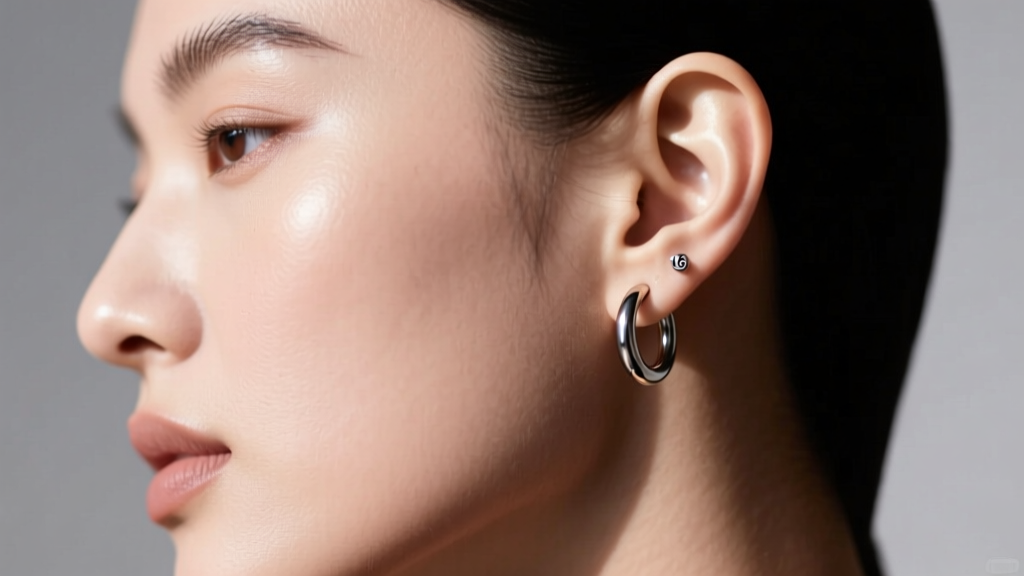
The "hug" factor is dictated by the ID. An 8mm ID provides a tight, seamless look ideal for upper lobes or helixes. A 10mm ID is the universal standard for standard earlobe piercings, allowing a slight drop. A 12mm ID crosses into "drop huggie" territory, offering more movement but risking snagging on hair and clothing.
The Monogram Factor: Valuing "Letter H" Studs
If your search for "h earrings" was specifically targeting initial jewelry, the value assessment shifts from structural mechanics to gemstone and setting quality. Letter H studs are highly sentimental, making them frequent gifts, but their resale and longevity value depend entirely on the setting.
Enamel vs. Diamond vs. Solid Metal: Enamel initial studs ($30-$60) are trendy but prone to chipping within a year of daily wear. Solid gold cut-out letters ($80-$150) offer great durability but lack sparkle. The highest value tier is the bezel-set diamond initial ($250-$500). A bezel setting protects the diamond's girdle from impacts, ensuring the stone remains secure for decades. When buying diamond initials, prioritize the cut quality over carat weight; a well-cut 0.10ct diamond will outshine a poorly cut 0.20ct stone, offering better visual value for your budget.
"In 2026, the smartest jewelry budgets prioritize biocompatibility and structural thickness over brand names. A $50 titanium huggie from a specialized piercer will outlast and outperform a $120 designer-plated hoop every single time."
2026 Verdict: How to Allocate Your Budget
When navigating the market for huggie and H earrings, your budget should be dictated by your piercing location and wear habits. If you are outfitting a fresh or easily irritated cartilage piercing, bypass gold vermeil entirely and invest $50-$80 in 16-gauge ASTM F136 titanium. The value of avoiding a localized infection or allergic reaction far outweighs the aesthetic appeal of yellow gold. If you are building a curated lobe stack for daily, never-remove wear, pool your budget toward a single pair of solid 14k gold 10mm huggies ($250-$350). The cost-per-wear will plummet over the years, and you will never have to worry about the clicker hinge snapping or the gold rubbing off onto your neck. Finally, for gifting or occasional wear, gold vermeil initial H studs remain a highly acceptable, budget-friendly choice, provided the recipient understands the care requirements to maintain the 2.5-micron gold layer. By matching the metallurgy to the use-case, you ensure every dollar spent on your ear curation delivers maximum long-term value.


