Technical Guide to Authentic Indian Silver Hoop Earrings & Alloys
Discover the metallurgy, hallmarks, and traditional crafting techniques behind authentic Indian silver hoop earrings in this expert guide.

The Metallurgy of Indian Silver: 925 vs. Tribal Alloys
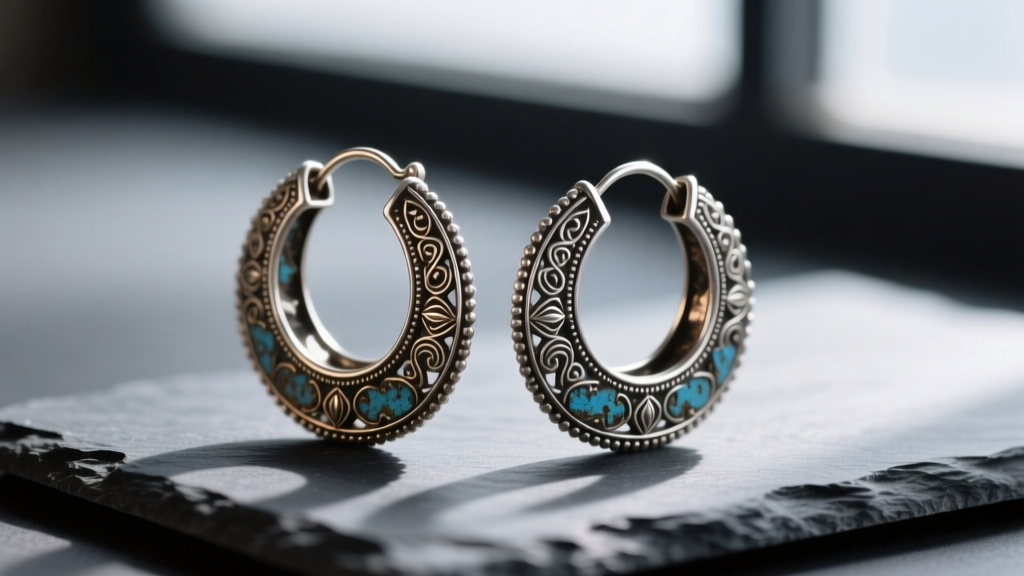
When evaluating Indian silver hoop earrings, understanding the underlying metallurgy is critical for both collectors and everyday wearers. While the global standard for sterling silver is 925 (92.5% silver, 7.5% copper), traditional Indian jewelry, particularly rural or tribal pieces from regions like Rajasthan and Gujarat, frequently utilizes 900 coin silver or even 800-grade alloys. According to the Gemological Institute of America (GIA), the higher copper content in these lower-grade alloys increases the metal's hardness and tensile strength, which is necessary for surviving the aggressive hammering and repoussé techniques used in traditional craftsmanship. However, this elevated copper ratio also accelerates oxidation, resulting in the deep, dark patina highly prized in antique Banjara hoops.
For modern exports and contemporary Indian designers, 925 sterling silver is the baseline. The addition of 7.5% copper provides the necessary structural rigidity for hoop earrings to maintain their circular geometry without warping under the weight of attached dangles or gemstones. Some high-end manufacturers in 2026 are now experimenting with argentium silver (93.5% or 96% silver alloyed with germanium) to create Indian-inspired hoops that resist tarnish while maintaining the bright white luster required for intricate Meenakari (enameling) work.
Decoding the BIS Hallmark and HUID System
Authenticity in the Indian market is governed by the Bureau of Indian Standards (BIS). As of the mid-2020s, the Bureau of Indian Standards (BIS) has strictly enforced the 6-digit HUID (Hallmark Unique Identification) system. When sourcing authentic Indian silver hoop earrings, you must look for three distinct laser-engraved marks on the hoop's post or inner band: the BIS logo, the purity grade (e.g., 925), and the 6-digit alphanumeric HUID code. This code is unique to that specific piece and can be verified via the official BIS Care app, effectively eliminating the legacy loopholes that previously allowed counterfeit alloys to flood the tourist and export markets.
Traditional Craftsmanship Techniques in Hoop Design
The structural integrity of Indian silver hoop earrings is heavily dictated by the decorative techniques applied to them. Two primary methods dominate the high-end artisanal space:
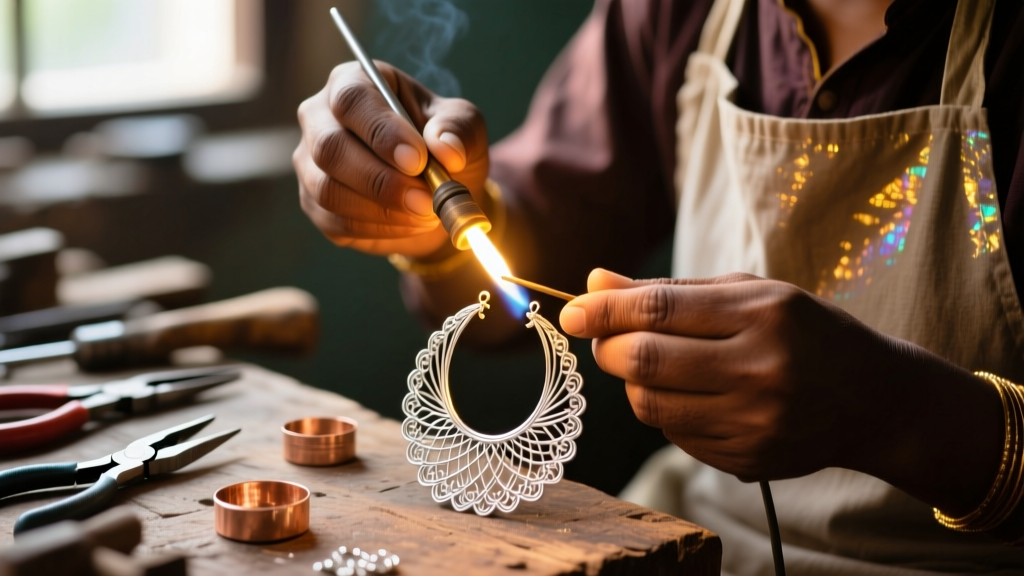
- Tarkashi (Filigree): Originating primarily in Cuttack, Odisha, and Karimnagar, Telangana, Tarkashi involves drawing silver down to ultra-fine wires (often 0.15mm to 0.2mm in diameter). These wires are twisted, curled, and soldered into lace-like patterns within a structural hoop frame. Because the internal filigree lacks inherent load-bearing strength, the outer rim of the hoop must be forged from a thicker, solid 18-gauge wire to prevent collapse.
- Meenakari (Enameling): Often applied to the inner bands or reverse sides of hoops, this technique involves fusing vitreous enamel to the silver. The technical challenge here is thermal expansion; silver and the enamel must have matching coefficients of thermal expansion to prevent the glass from crazing or cracking when the earring is exposed to temperature fluctuations during wear.
Hardware and Hinge Mechanics: Preventing Hoop Failure
The most common point of catastrophic failure in heavy Indian silver hoop earrings is the clasp mechanism. Traditional Jhumka-hoops (hybrid hoops with attached bell-dangles) can easily exceed 25 grams per ear, placing immense shear stress on the hardware. Below is a technical breakdown of clasp mechanisms and their tensile ratings.
| Clasp Mechanism | Tensile Rating | Best Application | Primary Failure Mode |
|---|---|---|---|
| French Wire (Hook) | Low (<10g) | Lightweight Tarkashi hoops | Wire deformation, accidental snags on textiles |
| Hinge & Snap Bar | Medium (10-20g) | Standard 925 Sterling hoops | Hinge pin wear, snap bar metal fatigue over time |
| Threaded Screw | High (>20g) | Heavy Jhumka-hoops, Bridal sets | Thread stripping, cross-threading by user error |
| Omega Clip with Post | Very High | Thick cartilage or heavy lobe hoops | Spring tension loss in the Omega wire |
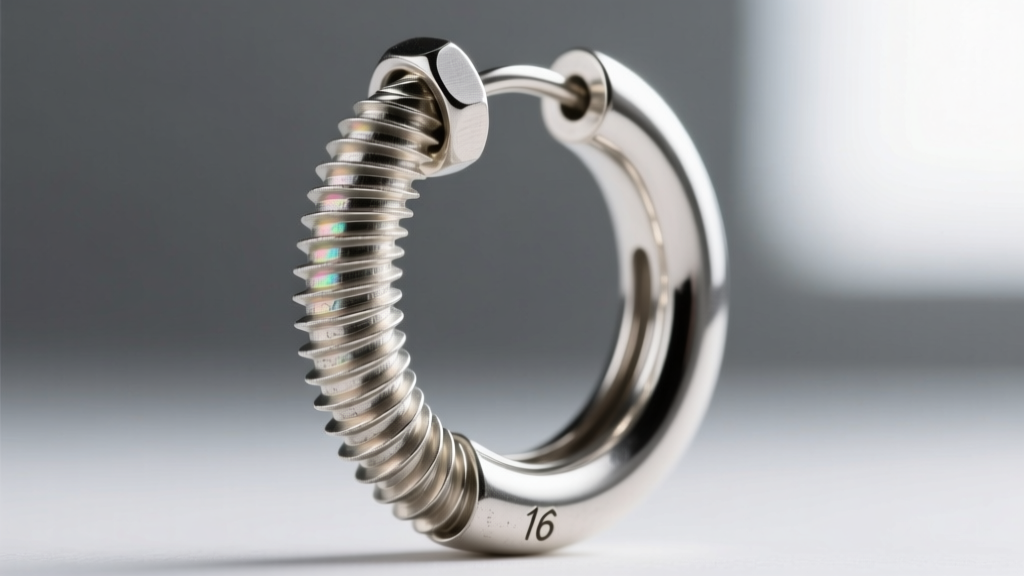
For heavy Indian hoops, the threaded screw mechanism is the gold standard. The post is threaded and screws directly into the opposite end of the hoop, creating a continuous, unbroken circle of metal that distributes weight evenly across the entire ear lobe, rather than concentrating it at a single hinge point.
Gauge Sizing and Ear Lobe Biomechanics
Standard Western ear piercings are typically executed at 20-gauge (0.81mm) or 18-gauge (1.02mm). However, authentic Indian silver hoop earrings designed for heavy wear often feature 16-gauge (1.29mm) or even 14-gauge (1.63mm) posts. This is not merely an aesthetic choice; it is a biomechanical necessity.
When a heavy hoop swings, it generates kinetic energy that translates into a cutting force against the piercing fistula. A thin 20-gauge wire will act like a cheese wire, gradually migrating through the ear lobe tissue and causing irreversible tearing. By utilizing a 16-gauge post, the surface area distributing the shear force is doubled, significantly reducing the pressure (Force/Area) on the tissue. For collectors wearing vintage, heavy-gauge Indian hoops, it is highly recommended to use silicone o-ring backings or specialized ear lobe support patches to further disperse the static load of the metal.
Care, Tarnish Prevention, and Chemical Exposure
Maintaining the metallurgical integrity of Indian silver hoop earrings requires an understanding of sulfur interactions. Silver sulfide (tarnish) forms when silver reacts with hydrogen sulfide in the atmosphere. Because many traditional Indian designs feature intentional oxidation (blackened crevices to highlight filigree or repoussé work), standard silver dip cleaners are strictly prohibited. These thiourea-based solutions will strip the intentional patina in seconds, ruining the contrast that defines the piece's artistry.
Instead, cleaning should be restricted to mechanical methods: a soft-bristled horsehair brush and a mild, phosphate-free dish soap. For the high-polish outer rims of the hoops, a microfiber polishing cloth impregnated with jeweler's rouge (iron oxide) can be used to restore the luster without affecting the recessed, oxidized areas. Furthermore, wearers should be aware that the high sulfur content in certain natural environments, such as hot springs or heavily polluted urban centers, will rapidly accelerate the tarnishing of 925 sterling silver, necessitating immediate storage in anti-tarnish flannel pouches infused with activated carbon or silver chloride neutralizers.
Conclusion
Indian silver hoop earrings represent a complex intersection of ancient metallurgy, precise structural engineering, and profound cultural artistry. By understanding the distinctions between 925 and tribal alloys, verifying the BIS HUID hallmark, and respecting the biomechanical requirements of gauge sizing and clasp hardware, collectors and enthusiasts can confidently acquire and preserve these masterpieces for generations. As the global market continues to evolve in 2026, the demand for technically sound, authentically crafted Indian silver remains a testament to the enduring legacy of the subcontinent's master silversmiths. For further historical context on regional jewelry styles, the Victoria and Albert Museum offers an exceptional archival resource on the evolution of Indian adornment.


