The Complete Huggy Earring Buying Guide: Fit & Metals
Master the huggy earring buying guide. Learn exact inner diameters, gauge thicknesses, hinge mechanics, and metal grades for a flawless, lasting fit.

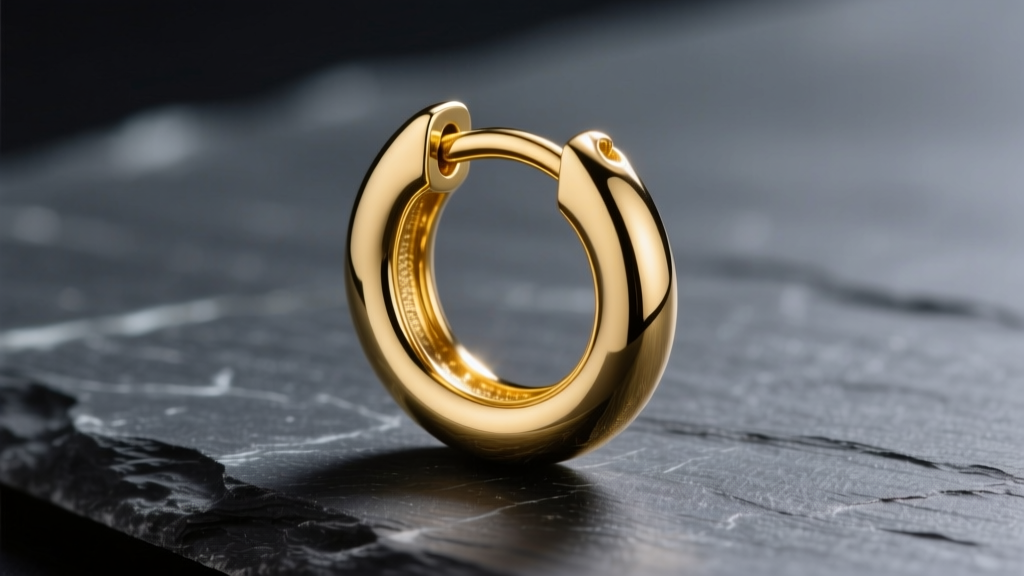
The huggy earring has evolved from a simple minimalist staple into a complex piece of micro-engineering. Unlike standard continuous hoops or friction-back studs, a huggie relies on hinges, clasps, and precise inner diameters to 'hug' the earlobe or cartilage without pinching. Yet, most buyers focus entirely on the exterior aesthetic—ignoring the mechanical realities that dictate whether the earring will last a month or a lifetime. As we navigate the 2026 jewelry market, understanding the structural integrity of your jewelry is no longer optional. This comprehensive huggy earring buying guide breaks down the exact specifications, metallurgical truths, and sizing matrices you need to make an informed purchase.
The Anatomy of a Huggie Earring
Before evaluating styles, you must understand the three critical components that dictate a huggie's performance:
- The Post (Wire): The segment that passes through the piercing. For huggies, this is typically curved or straight with a slight bend.
- The Hinge Pin: A microscopic steel or gold pin (usually 0.4mm to 0.6mm thick) that connects the post to the barrel housing. This is the most common point of mechanical failure.
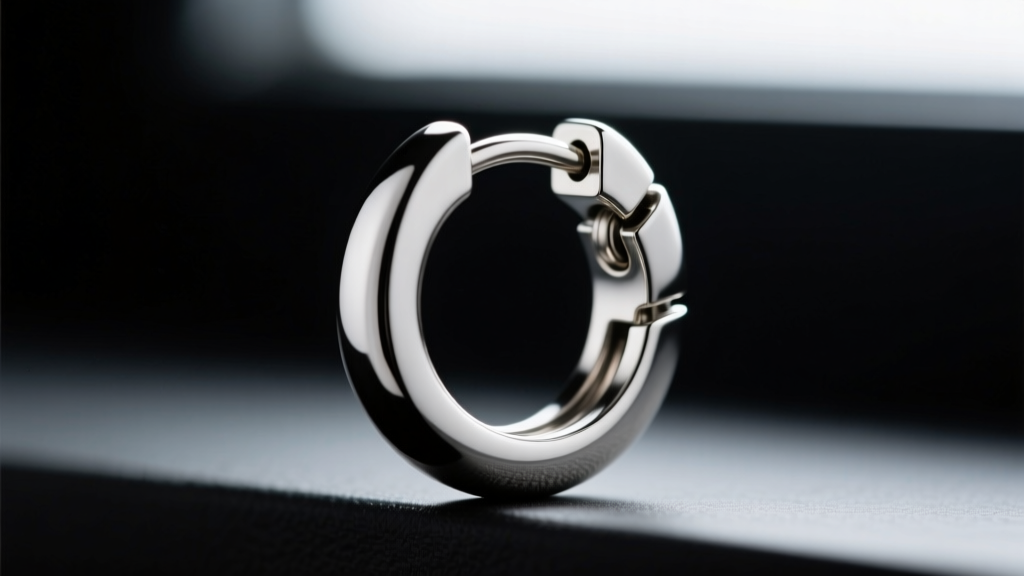
- The Barrel (Clasp): The receiving end that locks the post into place. It houses either a friction sleeve or a spring-loaded clicker mechanism.
When shopping, inspect the hinge housing. If the metal surrounding the hinge pin looks paper-thin, the pin will eventually 'walk' out of its socket due to the natural torque applied when putting the earring on, resulting in a lost huggie.
Sizing Matrix: Inner Diameter vs. Ear Placement
The most frequent complaint with huggies is 'the pinch'—a painful pressure on the earlobe caused by an incorrect Inner Diameter (ID). The ID is the measurement of the empty space inside the hoop, not the total Outer Diameter (OD). A thick 14k gold huggie with a 10mm OD might only have an 8mm ID, which is too small for an average earlobe.
| Ear Placement | Recommended Inner Diameter (ID) | Optimal Wire Gauge | Design Notes |
|---|---|---|---|
| Standard Earlobe | 10mm - 12mm | 18g (1.0mm) or 16g (1.2mm) | 10mm for snug fit; 12mm for thick lobes or multiple lobe piercings. |
| Upper Lobe / High Lobe | 8mm - 10mm | 18g (1.0mm) | High lobes have less tissue depth; a smaller ID prevents drooping. |
| Helix (Cartilage) | 8mm - 10mm | 16g (1.2mm) | Cartilage is rigid; 16g prevents the wire from bending and warping the hinge. |
| Daith / Rook | 10mm - 12mm | 16g (1.2mm) | Requires a specialized curved clicker, not a standard straight-post huggie. |
According to the Association of Professional Piercers (APP), wearing jewelry that is too tight restricts lymphatic drainage in the earlobe, leading to localized swelling and irritation bumps. Always measure your existing, comfortable hoops with digital calipers before ordering a new huggy earring.
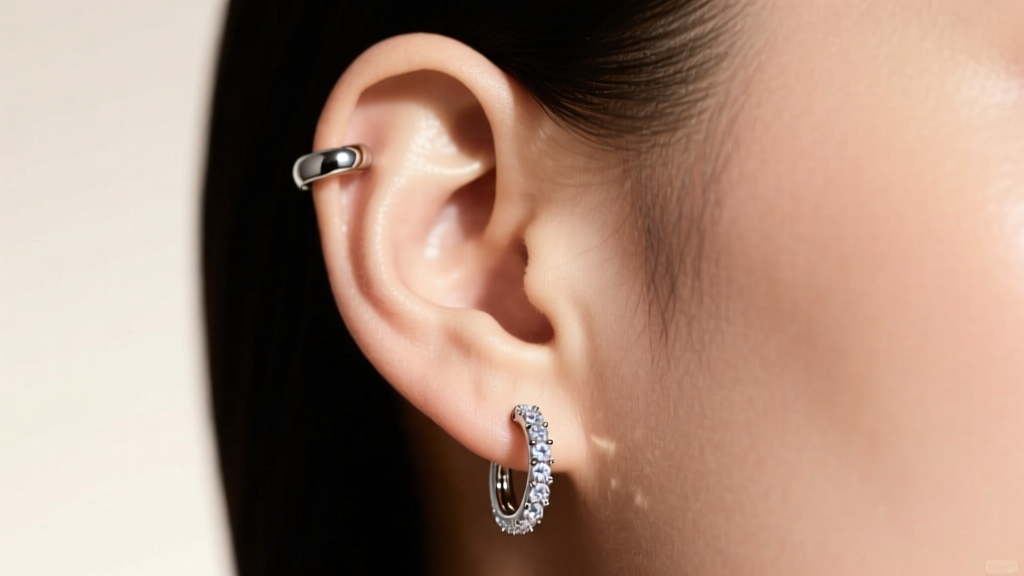
Hinge Mechanics: Snap-Barrel vs. Clicker
The closure mechanism dictates the security and lifespan of your huggie earring. There are two primary types on the market:
1. The Snap-Barrel (Friction Fit)
This is the traditional huggie closure. The post features a tiny notch or groove that snaps into a corresponding ridge inside the barrel. The Failure Mode: Over time, the metal groove inside the barrel wears down from repetitive snapping. Furthermore, if the earring is made of soft 18k gold or sterling silver, the barrel can physically warp, causing the earring to pop open unexpectedly when brushed by hair or clothing.
2. The Hinged Clicker (Tension Groove)
Clickers feature a more aggressive, angled post that locks deeply into the barrel with an audible 'click.' The Advantage: Clickers require a specific angle and deliberate pressure to open, making them vastly superior for cartilage placements or active lifestyles. When buying a clicker, ensure the hinge pin is flush with the exterior of the earring; protruding pins will catch on hair and tear the hinge housing.
Metal Grades & The Friction Wear Problem
Material choice in huggies is not just about skin allergies; it is about mechanical durability. The hinge and clasp endure constant friction. Because of this, the Gemological Institute of America (GIA) notes that the alloy composition of gold directly impacts its hardness and suitability for moving parts.
Why You Must Avoid Plated Huggies
Gold-plated brass or sterling silver vermeil huggies are a structural trap. The friction at the hinge and inside the barrel will strip the microscopic layer of gold plating within weeks. Once the base metal is exposed, the hinge will oxidize, seize up, and potentially leach nickel or copper into your piercing channel. Never buy a plated hinged earring.
14k Gold vs. 18k Gold for Hinges
While 18k gold (75% pure gold) is highly prized for its rich color and hypoallergenic properties, it is a relatively soft metal. For the barrel and post of a huggie, 14k gold (58.5% pure gold) is mechanically superior. The higher alloy content (usually copper, silver, or zinc) makes 14k gold significantly harder, allowing the snap-barrel to maintain its tension and resist warping over years of daily wear.
Implant-Grade Titanium (ASTM F136)
For fresh piercings or highly reactive ears, ASTM F136 implant-grade titanium is the gold standard. It is entirely nickel-free, lightweight, and possesses a tensile strength that ensures the hinge pin will never bend or shear under normal pressure.
Weight Distribution & Front-Heavy Designs
A hidden flaw in many modern designer huggies is poor weight distribution. If a huggie features a massive cluster of pavé diamonds or a heavy gemstone charm on the front face, but utilizes a thin, lightweight wire for the back half, the earring becomes 'front-heavy.'
Gravity will cause the heavy front to rotate forward and downward. This forces the thin back wire to press sharply into the rear of your piercing channel, while the heavy clasp pulls away from the lobe. When evaluating a huggie earring, look for designs where the metal volume is relatively balanced, or where the manufacturer has intentionally thickened the posterior wire to act as a counterweight.
Pricing Tiers & Market Benchmarks (2026)
Understanding what you are actually paying for helps separate marketing hype from metallurgical reality.
- $40 - $120 (Sterling Silver / Vermeil): Acceptable only for occasional wear on fully healed, standard lobes. Expect the hinge to loosen and plating to wear within 6 to 12 months of daily use.
- $250 - $550 (Solid 14k Gold, No Stones): The sweet spot for everyday, lifetime wear. You are paying for the raw gold weight and the precision CNC-machining of the hinge.
- $600 - $1,500+ (Solid 18k Gold / Platinum with Diamonds): Luxury tier. Ensure the brand uses cast-in-place settings or highly secure prongs, as the snapping motion of the hinge can shake poorly set micro-pavé diamonds loose over time.
Troubleshooting Common Fit Issues
Issue: The earring clicks shut, but the hinge gap remains visible.
Diagnosis: Your earlobe is thicker than the earring's inner diameter allows. The tissue is compressing the post and barrel, preventing them from aligning perfectly. Solution: Size up to a 12mm ID or switch to an open-back 'ear cuff' style huggie that doesn't rely on a closed barrel.
Issue: The earring irritates the side of my piercing.
Diagnosis: The gauge is too thin, causing the wire to act like a cheese-cutter through the tissue, or the hinge pin is protruding and scratching the channel. Solution: Upgrade to a 16g (1.2mm) wire and inspect the hinge under a magnifying glass for manufacturing defects.
Ultimately, the perfect huggy earring is a marriage of precise anatomical sizing and uncompromising material science. By prioritizing inner diameter, hinge mechanics, and solid metal grades over fleeting trends, you secure a piece of jewelry that hugs your ear flawlessly for decades.


