Beginner Guide to Hydrangea Earrings: Styles, Materials & Fit
Discover how to choose, style, and care for hydrangea earrings. Our beginner guide covers materials, weight distribution, and face-shape matching.

The Anatomy of Hydrangea Jewelry Design
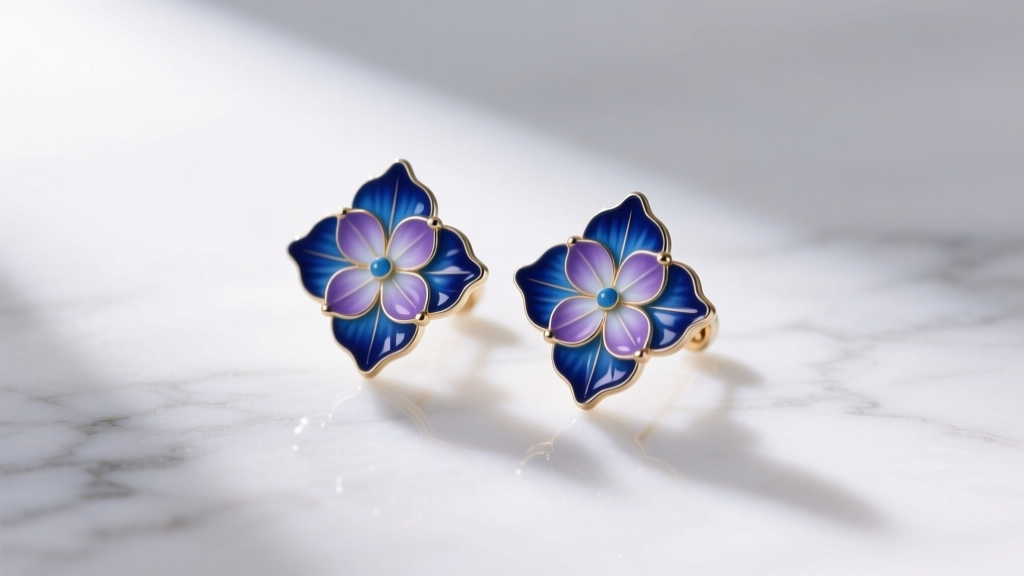
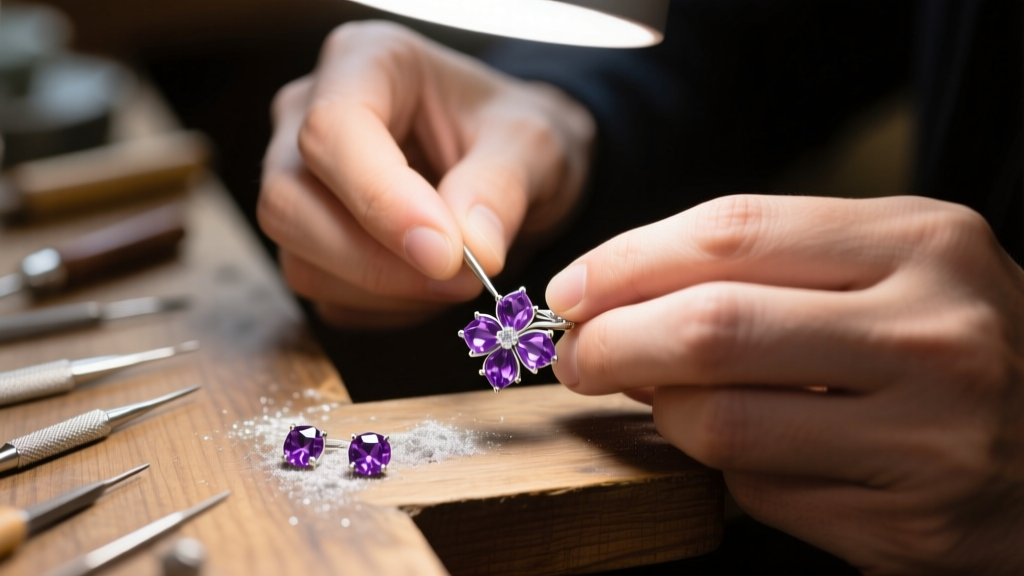
Botanical jewelry has seen a massive resurgence, but translating the complex, multi-petaled structure of a hydrangea into wearable art requires serious metallurgical and design expertise. Unlike simple daisy or rose motifs, a hydrangea is composed of dozens of tiny, four-petaled florets clustered into a dense, spherical corymb. For jewelers, this means choosing between hand-fabrication, lost-wax casting, or meticulous stone-setting to capture the flower's signature volume. As a beginner exploring floral earrings, understanding how these structural choices impact weight, durability, and comfort is crucial before making your first investment.
Material Breakdown: Enamel vs. Gemstone vs. Resin
The material dictates not only the price point but the daily wearability of your hydrangea earrings. Because the flower's natural color palette ranges from deep indigos to soft pinks and creamy whites, jewelers rely on specific mediums to achieve these hues without compromising the metal's integrity.
| Material Type | Technique Used | Durability & Failure Modes | Average Price Range |
|---|---|---|---|
| Vitreous Enamel | Champlevé or Cloisonné | Highly scratch-resistant but prone to chipping if dropped on hard surfaces. Cannot be resized or soldered later. | $80 - $350 |
| Gemstone Cluster | Micro-pavé or Prong Setting | Extremely durable metals, but tiny prongs can snag on knitwear. Stones may loosen over time if impacted. | $400 - $2,500+ |
| Epoxy Resin | Cast in Silicone Molds | Very lightweight and shatterproof, but highly susceptible to UV yellowing and chemical degradation from perfumes. | $25 - $90 |
For everyday wear, vitreous enamel over a sterling silver or 14k gold base offers the best balance of vibrant color and longevity. Resin is excellent for statement pieces worn occasionally, while gemstone clusters are best reserved for formal events where snagging hazards are minimal.
Weight, Gauge, and Lobe Support: Avoiding the Cheese-Cutter Effect
The most common mistake beginners make with botanical jewelry is ignoring the physics of weight distribution. A fully realized hydrangea cluster, especially one cast in solid brass or sterling silver, can easily weigh between 8 to 15 grams per earring. When this weight is suspended from a standard, thin wire, it creates a phenomenon piercers call the "cheese-cutter effect."
Standard earlobe piercings are typically done at 20-gauge (0.81mm) or 18-gauge (1.02mm). If you hang a heavy 15-gram hydrangea dangle from a flimsy 22-gauge ear wire, the downward force will slowly stretch and migrate the piercing hole, eventually causing the lobe to tear. To prevent this, always check the post or wire thickness of your earrings:
- For studs and small huggies: 20G or 18G posts are perfectly safe, as the weight rests flush against the lobe.
- For medium drops (under 5 grams): Ensure the ear wire is at least 18G and features a slight forward curve to distribute weight evenly.
- For heavy statement dangles (8+ grams): Demand 16G (1.29mm) or 14G (1.63mm) ear wires. If the design only comes with thin wires, you must pair them with silicone earring support patches (like LobeWonder) which adhere to the back of the ear and distribute the mechanical load across a wider surface area of the skin.
Matching Hydrangea Silhouettes to Face Shapes
Because hydrangea motifs are inherently voluminous and rounded, they can easily overwhelm certain facial structures if not styled intentionally. Here is a practical framework for matching the silhouette to your face shape:
- Round Faces: Avoid wide, spherical hydrangea studs, which will exaggerate facial width. Instead, opt for elongated drop earrings where a slim metallic chain terminates in a single, downward-facing hydrangea floret. This draws the eye vertically and creates an illusion of length.
- Square Faces: The strong jawline of a square face is beautifully softened by the organic, rounded edges of a clustered hydrangea stud or a medium-sized enamel hoop featuring floral motifs. Keep the volume near the cheekbone to balance the jaw.
- Heart-Shaped Faces: Wider foreheads and narrower chins benefit from bottom-heavy designs. Look for chandelier-style hydrangea earrings that widen at the bottom, adding visual weight to the lower half of the face.
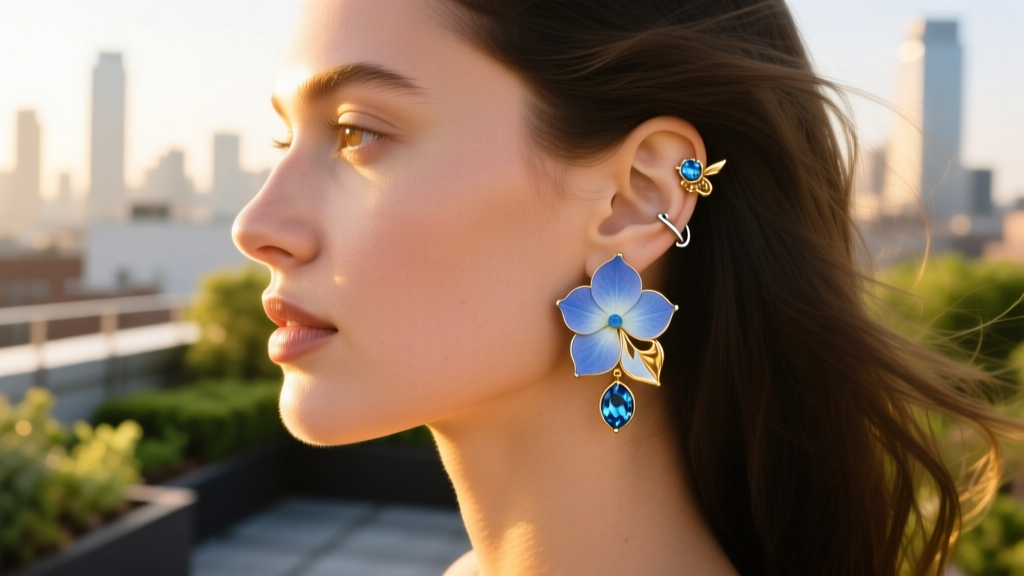
- Oval Faces: You have the versatility to pull off almost any style. Experiment with asymmetrical ear cuffs where a vine of hydrangeas crawls up the cartilage, breaking away from traditional lobe-centric styling.
Verifying Metal Hallmarks and Quality Standards
When shopping for botanical jewelry online, product descriptions can be notoriously vague. To ensure you are getting what you pay for, you must understand the legal definitions of metal finishes. According to the Federal Trade Commission (FTC) Jewelry Guides, there is a strict difference between "gold plated" and "gold vermeil."
Standard gold plating can be applied to any base metal (like brass or nickel) and has no minimum thickness requirement, meaning it can rub off in a matter of weeks, exposing the base metal and potentially causing contact dermatitis. Gold vermeil, however, must be applied over a sterling silver base and have a minimum thickness of 2.5 microns of at least 10k gold. If a seller advertises "14k gold hydrangea earrings" at a $40 price point, they are selling flash-plated brass. Always look for the "925" stamp for sterling silver and ask the retailer for the micron thickness of the gold layer before purchasing vermeil pieces meant for daily wear.
Care and Maintenance for Botanical Earrings
The intricate crevices of a hydrangea design are magnets for lotion buildup, dead skin cells, and environmental dust. However, the cleaning method you choose must align with the material of the flower.
For gemstone and solid metal clusters, a soft-bristled baby toothbrush dipped in warm water and a drop of mild dish soap is your best tool. Gently agitate the bristles between the metal petals. The Gemological Institute of America (GIA) strongly advises against using ultrasonic cleaners for any jewelry featuring fracture-filled stones, emeralds, or porous gems like opals and pearls, which are sometimes used as the "center" of floral designs. The high-frequency vibrations can shatter these delicate inclusions.
For enamel hydrangeas, avoid harsh chemical dips or silver polishing cloths. The abrasives in polishing cloths can scratch the glass-like surface of the enamel, leaving it looking cloudy and dull over time. Simply wipe them down with a damp microfiber cloth after wear to remove acidic skin oils, and store them in a soft pouch to prevent the metal petals from scratching the enamel faces of neighboring jewelry.


