Prevent Pus in Earring Hole: Hypoallergenic Earring Guide
Discover why pus forms in earring holes and learn which hypoallergenic materials, gauge sizes, and backings to buy to stop infections.

The Hidden Culprits Behind Piercing Infections
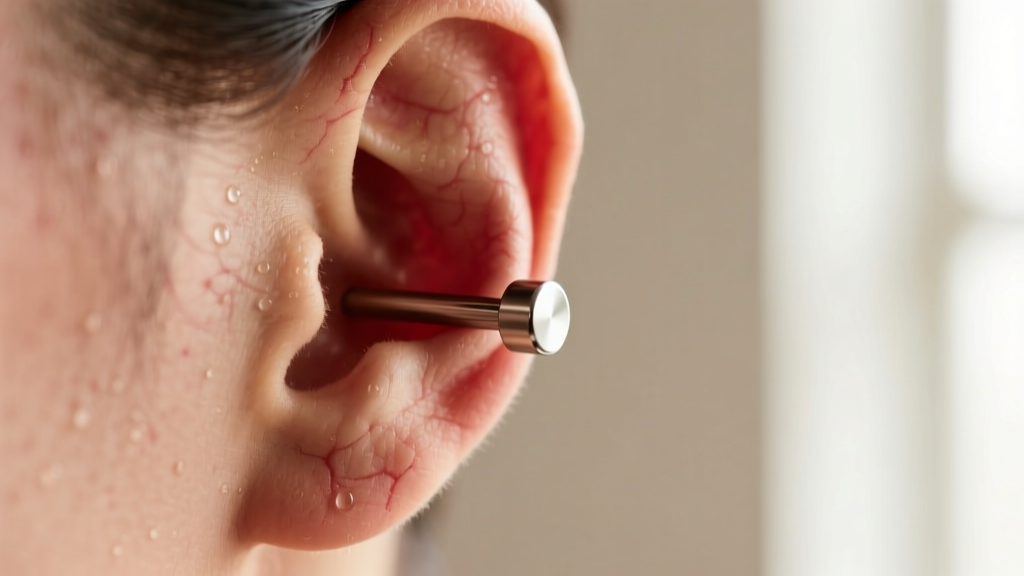
Waking up to find pus in earring hole sites is an alarming and deeply frustrating experience for jewelry lovers. Whether you are dealing with a fresh piercing or a decades-old lobe hole that suddenly flared up, the presence of discharge, swelling, and pain usually points to one of two things: a bacterial infection or severe contact dermatitis. While many consumers immediately blame the piercing studio or their aftercare routine, the true culprit is often the metallurgical composition and structural design of the jewelry itself.
As a buyer, navigating the jewelry market requires a discerning eye. Terms like "hypoallergenic" and "surgical steel" are largely unregulated marketing buzzwords that can actually trigger the exact immune responses you are trying to avoid. This comprehensive buying guide will decode the science behind piercing irritation, outline the exact material grades you need to look for, and provide a structural framework for choosing earrings that promote healing rather than harm.
Decoding the Discharge: Is It Really Pus?
Before purchasing new jewelry, it is critical to understand what is actually coming out of your piercing. Not all discharge is created equal, and misidentifying the fluid can lead to the wrong purchasing decisions.
- True Bacterial Pus: Thick, opaque, and typically yellow, green, or brown. It is often accompanied by localized heat, throbbing pain, and spreading redness. This indicates a staphylococcal or streptococcal infection trapped in the fistula (the piercing tunnel).
- Allergic Exudate (Contact Dermatitis): Clear, sticky, or slightly white fluid that crusts over. According to the American Academy of Dermatology, nickel allergies affect roughly 18% of North Americans. When nickel ions leach into the skin, they bind to proteins, triggering an immune attack that results in weeping, itching, and swelling.
- Sebum and Dead Skin ("Ear Cheese"): A greyish, waxy buildup with a distinct odor. This is not pus; it is a natural accumulation of dead skin cells and sebum trapped by poorly designed earring backings.
The Material Matrix: What to Buy and What to Avoid
When shopping for earrings to heal an irritated lobe or prevent future flare-ups, you must look beyond the surface polish and demand specific metallurgical certifications. The Association of Professional Piercers (APP) maintains strict guidelines on body-safe metals. Below is a breakdown of what you should be adding to your cart, and what you should leave on the shelf.
| Material | Nickel Content | Surface Porosity | Best Use Case | Verdict |
|---|---|---|---|---|
| Implant-Grade Titanium (ASTM F136) | 0% | Non-porous, mirror polished | Active infections, fresh piercings, severe allergies | BUY (The Gold Standard) |
| Niobium | 0% | Non-porous, highly polishable | Healing lobes, cartilage, sensitive skin | BUY (Excellent Alternative) |
| 14k / 18k Solid Gold (Nickel-Free Alloy) | 0% (if alloyed with palladium/silver) | Non-porous | Fully healed, non-irritated lobes | BUY (Verify Alloy Mix) |
| "Surgical" Stainless Steel (316L) | 8% - 10% | Micro-porous | N/A | AVOID (High Allergy Risk) |
| Sterling Silver (925) | 0% (but contains 7.5% Copper) | Porous, oxidizes rapidly | Fully healed, dry environments only | AVOID (Causes argyria/tarnish) |
| Gold-Plated / Gold-Filled Brass | Variable (High risk) | Highly porous, chips easily | N/A | AVOID (Toxic to open wounds) |
The "Surgical Steel" Trap
The term "surgical steel" is not a regulated metallurgical standard; it is a marketing fabrication. Most jewelry labeled as such is made from 316L stainless steel, which contains up to 10% nickel. When the protective chromium oxide layer on the steel scratches or degrades, nickel salts leach directly into the moist environment of the earring hole, causing the weeping and crusting that many mistake for pus.
The Mechanics of Irritation: Backings and Threading
Even if you purchase pure, implant-grade titanium, the physical design of the earring can still cause an infection. The structural mechanics of how the jewelry sits against your skin dictate airflow, moisture retention, and bacterial trapping.
Ditch the Butterfly Back
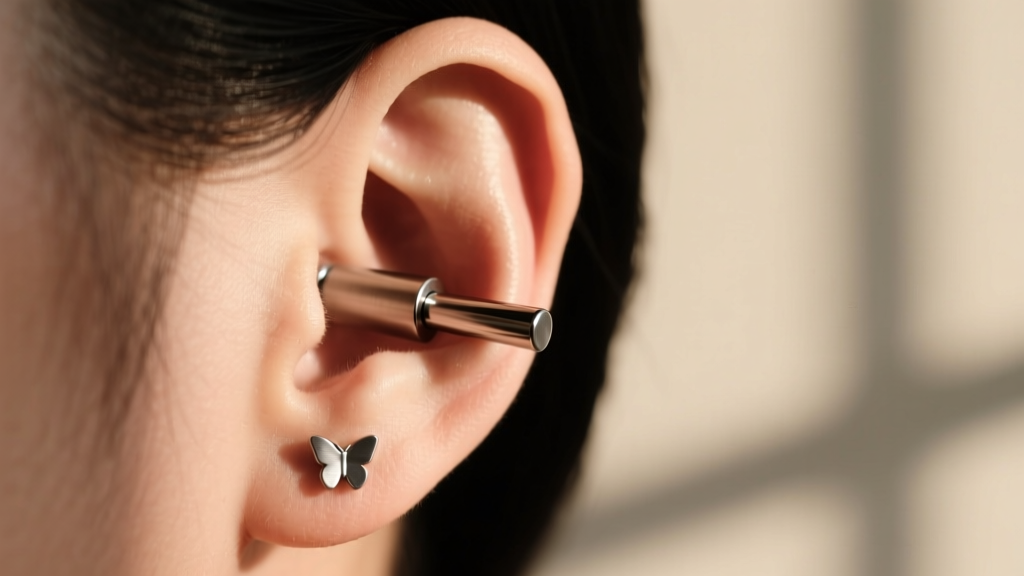
Standard push-pin butterfly backs are the primary architectural cause of sebum buildup and localized bacterial infections. They clamp tightly against the back of the earlobe, eliminating airflow and creating a dark, moist incubator for bacteria. Furthermore, the tiny crevices in the butterfly clutch are impossible to sterilize at home. What to buy instead: Internally threaded or threadless flat-back labrets. The flat disc sits flush against the skin, allowing the piercing channel to breathe while preventing the post from digging into your neck while you sleep.
Internal vs. External Threading
If you are buying threaded earrings, always inspect the threading placement. Externally threaded jewelry (where the screw-like ridges are on the post itself) acts like a microscopic file. Every time you insert it, those sharp ridges scrape the delicate fistula tissue, creating micro-tears that immediately invite bacteria and result in pus. Internally threaded jewelry features a smooth post with the threading hidden inside the decorative end, ensuring a completely frictionless insertion.
Gauge Sizes and the "Cheese Cutter" Effect
Gauge refers to the thickness of the earring post, and buying the wrong size is a frequent cause of chronic lobe irritation. Standard fashion earrings are often 20-gauge (0.8mm) or 22-gauge (0.6mm). While these thin wires are cheap to produce, they are mechanically disastrous for healing tissue.
When a 20-gauge wire is snagged on a hairbrush or sweater, the extreme pressure concentrated on such a thin surface area creates a "cheese cutter" effect. The wire slices through the microscopic layers of the fistula, causing internal bleeding and tearing. The body responds to this repeated trauma by sending white blood cells to the area, resulting in a chronic, low-grade pus discharge. For structural stability and to prevent micro-tearing, always purchase 18-gauge (1.0mm) or 16-gauge (1.2mm) earrings for standard lobe wear. The thicker surface area distributes tension evenly, protecting the tissue from tearing.
Action Plan: What to Buy If You Currently Have an Infection
If you are actively dealing with pus in your earring hole, your immediate purchasing priority should shift from aesthetics to medical-grade intervention. Follow this exact protocol to rescue the piercing:
- Do Not Remove the Jewelry: Taking the earring out allows the surface holes of the fistula to close, trapping the bacterial infection inside and potentially forming a painful abscess that requires surgical drainage.
- Purchase an ASTM F136 Titanium Flat-Back: Buy a sterile, internally threaded or threadless titanium labret post. Ensure the post length is slightly longer than your lobe thickness (usually 6mm to 8mm) to accommodate for swelling.
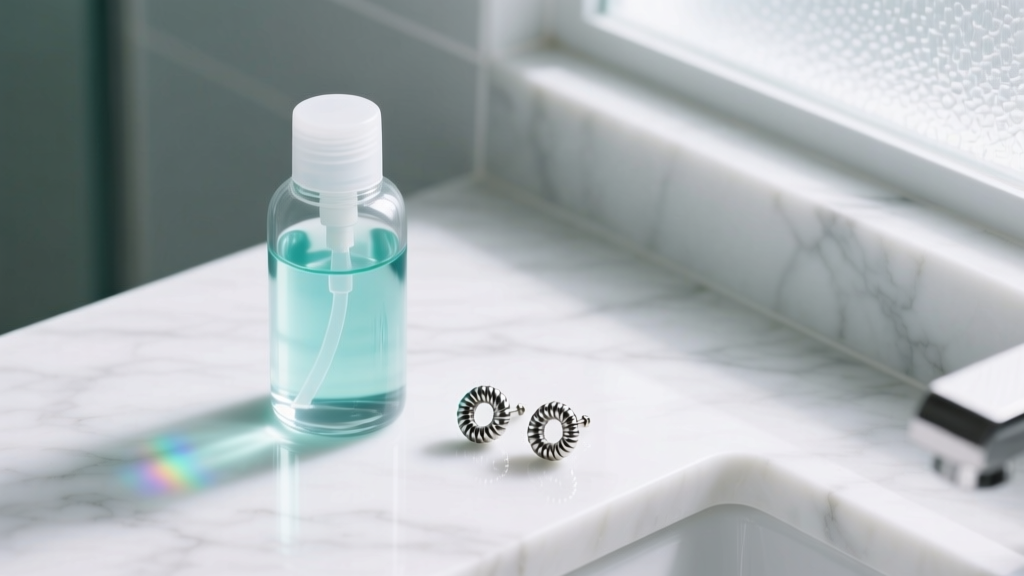
- Buy Sterile Saline Wound Wash: Purchase a pressurized can of sterile saline containing only two ingredients: 0.9% sodium chloride and purified water. Avoid any solutions containing benzalkonium chloride, alcohol, or tea tree oil, as these are cytotoxic and will destroy the new cells trying to heal your piercing.
- Use Non-Woven Gauze: Stop using cotton swabs or cotton balls. Cotton fibers shed microscopic threads that wrap around the earring post and become embedded in the healing tissue, causing perpetual irritation.
"The cornerstone of managing piercing irritation is removing the source of the trauma. In 90% of cases involving chronic discharge, simply swapping a porous, nickel-bearing earring for a mirror-polished, implant-grade titanium flat-back resolves the issue within 7 to 14 days without the need for topical antibiotics."
— Guidelines adapted from the Association of Professional Piercers (APP)
Final Thoughts on Building a Safe Jewelry Wardrobe
Curating a jewelry collection should be an exercise in both style and biological safety. By understanding the metallurgical realities of nickel allergies, the physics of gauge thickness, and the hygienic superiority of flat-back labrets, you can permanently eliminate the frustration of waking up to pus in your earring hole. Invest in high-quality, body-safe materials from reputable piercers and specialized jewelers, and your lobes will remain healthy, comfortable, and ready to showcase your favorite pieces for a lifetime.


