2026 Trend Guide: Hypoallergenic Infant Earrings & Safety Styles
Discover 2026 trends in hypoallergenic infant earrings, from medical-grade titanium to secure screw-backs, ensuring safe, stylish piercings for babies.

The 2026 Shift: Safety Meets Minimalist Aesthetics
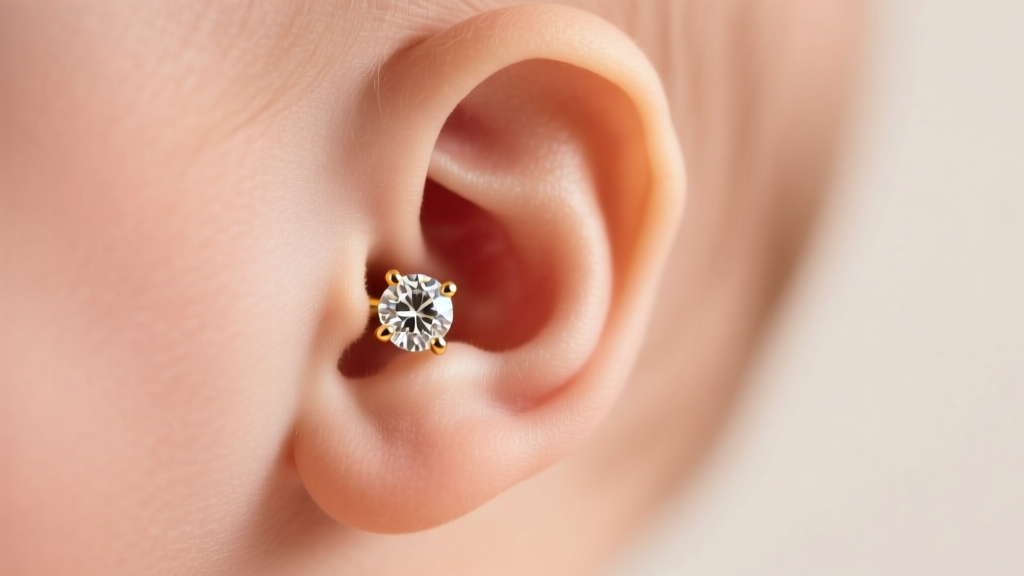
The landscape of infant ear piercing has undergone a radical transformation by 2026. Gone are the days of chunky, traditional gold hoops or oversized gemstone studs that pose snagging hazards. Today, parents and pediatric dermatologists alike are championing a safety-first aesthetic. The modern demand for hypoallergenic infant earrings sits at the intersection of advanced biocompatible metallurgy and ultra-minimalist design. The prevailing trend focuses on micro-studs, bezel-set gems, and subtle birthstone accents that sit flush against the earlobe, minimizing the risk of catching on clothing or blankets while maximizing comfort for the child.
This shift is not merely cosmetic; it is deeply rooted in a growing awareness of contact dermatitis and pediatric choking hazards. As parents become more educated on material science, the jewelry industry has responded with precision-engineered pieces that prioritize tissue health and mechanical security. Understanding these trends is crucial for any parent navigating their child's first piercing or upgrading an existing one to meet modern safety standards.
Material Deep-Dive: Beyond the "Hypoallergenic" Label
The term "hypoallergenic" is largely unregulated in the jewelry industry, often used as a marketing buzzword rather than a scientific guarantee. In 2026, expert jewelers and dermatologists urge parents to look past this label and demand specific material certifications. The goal is absolute biocompatibility, ensuring the metal will not react with the highly sensitive, developing skin of an infant.
The Gold Standard: ASTM F136 Implant-Grade Titanium
For fresh piercings and highly reactive skin, ASTM F136 ELI (Extra Low Interstitial) titanium remains the undisputed champion. Unlike commercial-grade titanium, F136 is the exact alloy used in surgical implants, meaning it is entirely free of nickel and lead. It is lightweight, highly resistant to corrosion from bodily fluids, and possesses a mirror-polished surface that prevents bacteria from harboring in microscopic scratches. For infants with known metal sensitivities or eczema, F136 titanium is the safest possible choice.
Solid 14k and 18k Gold: The Alloy Trap
While solid gold is a classic choice for infant earrings, the karatage and alloy composition are critical. Pure 24k gold is too soft for jewelry posts, meaning it must be alloyed with other metals for durability. 14k and 18k yellow or rose gold are generally safe, provided they are alloyed with copper, silver, or zinc. However, white gold is a major red flag. Traditional white gold is alloyed with nickel to achieve its silvery hue and then plated with rhodium. Once the rhodium plating wears off—a process that can happen in weeks with an infant's frequent ear cleaning—the underlying nickel is exposed, leading to severe allergic contact dermatitis. If you prefer white gold, you must explicitly source pieces alloyed with palladium instead of nickel.
The "Surgical Steel" Myth
Many commercial piercing studios still use 316L "surgical stainless steel" for infant piercings. This is a critical error. 316L steel contains between 8% and 10% nickel. While the nickel is bound within the alloy, the saline environment of a healing wound can cause nickel ions to leach into the tissue, triggering sensitization. According to the American Academy of Dermatology, nickel allergy is the most common contact allergy, and early exposure through piercings is a primary catalyst. Always avoid surgical steel for infant ears.
Security Mechanisms: Engineering Out the Choking Hazard
The mechanical design of the earring backing is just as important as the metal itself. Infants explore the world with their hands, and a loose earring backing poses a severe choking hazard. In 2026, the industry has largely moved away from standard butterfly push-backs for infant jewelry, favoring advanced locking mechanisms.
| Backing Type | Security Level | Choking Risk | Comfort for Sleeping |
|---|---|---|---|
| Standard Butterfly Push-Back | Low | High (easily pulled off) | Poor (prongs dig into neck) |
| Silicone O-Ring / Clutch | Medium | Medium (can degrade/tear) | Fair (soft but bulky) |
| External Thread Screw-Back | High | Low (requires twisting) | Good (smooth dome options) |
| Sleeve-Protected Locking Back | Very High | Extremely Low | Excellent (flush, smooth finish) |
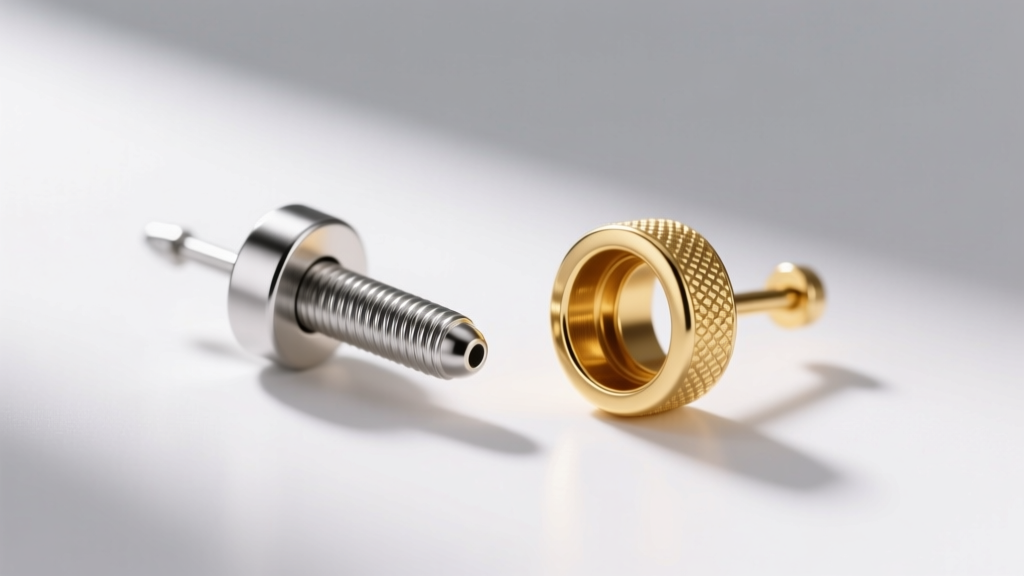
The pinnacle of infant earring security is the sleeve-protected locking back. In traditional screw-backs, the post is externally threaded. When inserted, these threads act like a microscopic cheese grater against the delicate healing fistula (the piercing channel). Sleeve-protected designs feature a smooth, unthreaded post that slides through the ear, with a threaded tip that remains entirely encased in a protective metal cylinder once the backing is tightened. This prevents tissue irritation while ensuring the backing cannot be pulled off by tiny fingers.
Sizing and Gauge: The Micro-Stud Standard
Proportion and scale are vital for infant comfort and safety. The 2026 aesthetic heavily favors the "micro-stud" look, which also serves a functional purpose by reducing the weight on the developing earlobe.
- Face Size (Diameter): The ideal diameter for an infant earring is between 3mm and 4mm. Anything larger than 5mm risks overlapping the edges of a small earlobe, which can cause pressure necrosis or catch on hair and clothing.
- Gauge (Thickness): Most high-quality infant earrings are crafted in 20-gauge (0.81mm) or 18-gauge (1.02mm). While 18g is the standard for adult lobe piercings, 20g is often preferred for infants to minimize the initial puncture trauma, provided the jewelry is of high structural integrity.
- Post Length: A standard infant post length is 6mm (approx. 1/4 inch). This provides just enough room to accommodate the initial swelling of a fresh piercing without leaving excess metal protruding behind the ear, which could scratch the infant's neck while sleeping.
Trending Styles: Bezel Settings and Birthstones
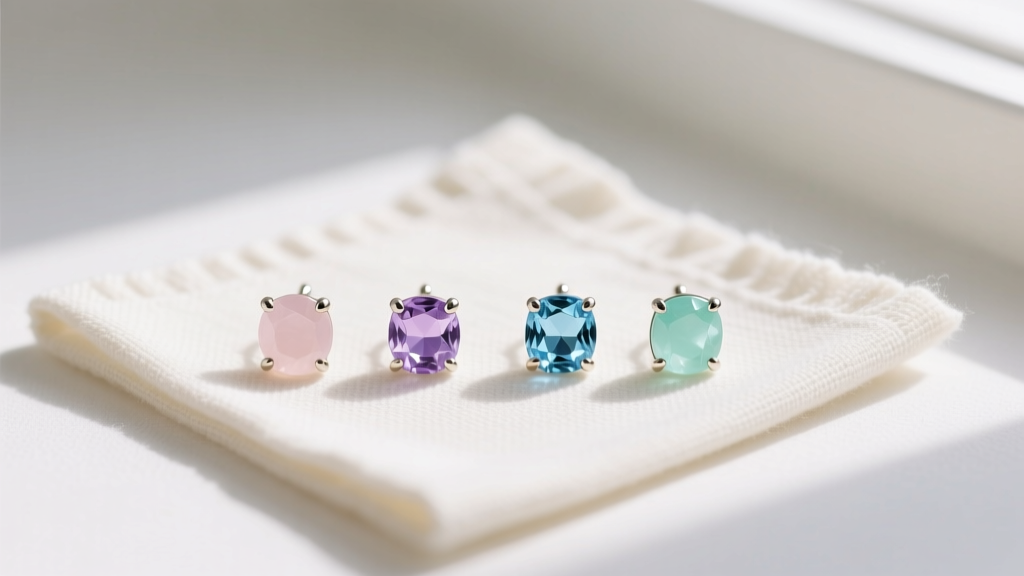
From a style perspective, prong-set stones are being phased out of infant jewelry. Prongs, even when well-crafted, feature tiny metal claws that can scratch a baby's delicate skin or snag on knit fabrics. The dominant trend is the bezel setting, where a continuous rim of metal completely encircles the gemstone. This creates a smooth, domed profile that is entirely snag-free.
Additionally, personalized birthstone micro-studs have surged in popularity. Parents are opting for lab-created sapphires, rubies, and emeralds set in solid 14k gold bezels. Lab-created stones are not only more ethical and affordable, but they also offer the exact same chemical and physical properties as mined stones, ensuring brilliant color and durability without the microscopic inclusions that can harbor bacteria in natural stones.
Expert Aftercare and Red Flags
Even the highest quality hypoallergenic infant earrings require meticulous aftercare to ensure proper healing. The American Academy of Pediatrics emphasizes keeping the area clean and dry, avoiding harsh chemicals like rubbing alcohol or hydrogen peroxide, which can damage newly forming tissue.
"The gold standard for piercing aftercare is a sterile, preservative-free 0.9% sodium chloride saline solution. Spray the front and back of the earlobe twice daily, and gently wipe away any softened crusties with a sterile gauze pad. Never rotate or twist the earring, as this tears the fragile healing tissue and introduces surface bacteria into the wound channel."
— Pediatric Dermatology Best Practices, 2025 Guidelines
Parents must learn to distinguish between normal healing and adverse reactions. Mild redness, slight swelling, and clear or pale yellow lymph fluid (crusties) are normal for the first two weeks. However, if the earlobe becomes hot to the touch, excessively swollen, or emits a foul-smelling green discharge, these are signs of a bacterial infection requiring immediate medical evaluation, not just a change in jewelry.
Final Verdict for Parents
Navigating the market for infant earrings requires a shift in mindset from viewing jewelry as a mere accessory to treating it as a medical-grade implant. By prioritizing ASTM F136 titanium or nickel-free solid gold, insisting on bezel-set micro-studs, and utilizing sleeve-protected locking backs, parents can ensure their child's first piercing is a safe, comfortable, and beautiful experience. The 2026 trends prove that we no longer have to compromise between rigorous safety standards and elegant, modern aesthetics.


