A Collector's Guide to Unsigned Miriam Haskell Earrings
Discover how to identify, value, and style unsigned Miriam Haskell earrings. Learn the secrets of Russian gold finish and intricate wirework.

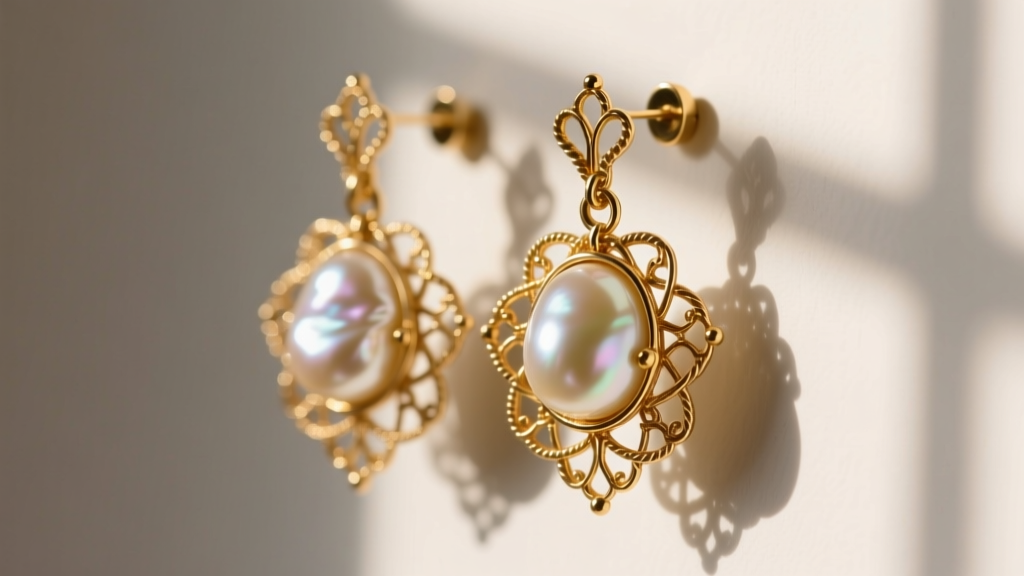
In the pantheon of 20th-century costume jewelry, few names command the reverence of Miriam Haskell. Renowned for their breathtakingly intricate wirework, luxurious faux pearls, and signature "Russian gold" finish, Haskell pieces are highly coveted by archivists and stylists alike. However, a significant portion of the most desirable early and experimental pieces—particularly earrings—bear no maker's mark. For the untrained eye, an unsigned piece might be dismissed as generic vintage costume jewelry. But for the discerning collector, identifying unsigned Miriam Haskell earrings requires a deep understanding of material grades, artisanal construction techniques, and historical findings.
As we navigate the 2026 vintage market, the appetite for "quiet luxury" and archival, unbranded artisanal pieces has driven the value of authenticated unsigned Haskell earrings to unprecedented heights. This guide will decode the anatomy of these unmarked masterpieces, providing you with the E-E-A-T framework needed to authenticate, value, and style them.
The Allure of the Unmarked: Why Unsigned Haskell Matters
It is a common misconception that all authentic Miriam Haskell jewelry is stamped. In reality, the company did not consistently use its signature horseshoe-shaped plaque or stamped tags until the late 1940s and 1950s. Furthermore, even when necklaces and bracelets featured the branded clasp plaque, earrings were frequently left unsigned. The small surface area of early earring findings—such as simple shepherd hooks or early screw-backs—simply did not accommodate the soldered brass plaques used on larger garments.
According to archival insights from Collectors Weekly, early pieces designed by Haskell's legendary head designer, Frank Hess, were entirely reliant on the quality of their craftsmanship rather than brand stamping. Today, unsigned pieces from the 1920s through the 1940s are often considered the purest representation of Hess's unadulterated vision, making them highly sought after by serious collectors who prioritize artisanal technique over brand recognition.
Decoding the "Russian Gold" Finish and Wirework
The most definitive hallmark of a Haskell piece is its metalwork. Frank Hess pioneered a technique that transformed inexpensive base metals into heirloom-quality treasures. 
The Wire Gauge and Wrapping Technique
Haskell artisans utilized dead-soft brass wire, typically ranging from 24 to 28 gauge. This specific thickness allowed the wire to be woven, looped, and twisted tightly around beads without snapping or kinking. Unlike mass-produced costume jewelry that relied on glue or simple prong settings, Haskell beads are meticulously wire-wrapped. If you examine the back of an unsigned earring under a jeweler's loupe, you should see a complex, almost chaotic, yet structurally sound web of ultra-fine wire securing every single seed pearl and glass bead. There should be no visible adhesive.
The Russian Gold Patina
The term "Russian gold" does not refer to the origin of the metal, but rather a proprietary finishing process. The brass wire and findings were plated with a thin layer of 24-karat gold and then sealed with a tinted, baked-on lacquer. This lacquer was designed to give the jewelry an antique, slightly rosy or greenish-gold hue. Over decades, this lacquer wears away in high-friction areas, revealing the bright gold underneath, while accumulating a rich, dark patina in the crevices of the wirework. This specific wear pattern is nearly impossible to replicate artificially.
Anatomy of an Unsigned Haskell Earring: 4 Telltale Signs
When evaluating a potential unsigned Haskell earring, run it through this four-point authentication checklist:
- The Beads: Haskell sourced the finest materials available. Look for French baroque glass pearls (often with a slightly irregular, organic shape and a deep, lustrous guanine coating), Swarovski crystal rhinestones, and high-quality griot or blown-glass beads in sapphire, ruby, and jade hues. Plastic or overly uniform, chalky faux pearls are an immediate red flag.
- The Findings: Early 1930s earrings often feature simple, thick-gauge brass shepherd hooks or early screw-back mechanisms with paddle-shaped pressure plates. By the 1940s, hinged clip-backs with a specific tension spring were introduced. The metal of the finding should match the Russian gold finish of the wirework.
- The Weight and Balance: Despite their elaborate, oversized appearances, Haskell earrings are remarkably lightweight. The use of hollow glass beads and fine brass wire ensures they sit comfortably on the earlobe without requiring heavy counterweights.
- The Backing Plate: Many unsigned Haskell earrings feature a distinct, slightly domed or flat brass backing plate (often stamped with a floral or geometric filigree pattern) to which the wirework is anchored. This plate hides the messy ends of the wire wraps, providing a clean finish against the skin.
"The true hallmark of early Haskell is not a stamped plaque, but the tension of the wire wrap and the distinct, rosy hue of the Russian gold patina."
Market Valuation: What Are Unsigned Haskell Earrings Worth Today?
The 2026 vintage jewelry market has seen a surge in demand for archival costume pieces. While signed, later-era Haskell earrings generally fetch between $150 and $350, unsigned, early-era pieces with complex wirework command a significant premium due to their rarity and artisanal purity. Antique Trader notes that provenance and condition are the primary drivers of value in the unbranded sector.
| Era & Style | Defining Characteristics | Estimated 2026 Market Value |
|---|---|---|
| 1920s-1930s Art Deco Drops | Seed pearls, long brass wire fringe, screw-back or shepherd hook findings, heavy patina. | $450 - $1,200+ |
| 1940s Floral Clip-Ons | Baroque glass pearls, petals wired individually, hinged clip findings, domed backing plates. | $300 - $800 |
| 1950s Experimental/Sample | Unusual colorways, mixed media (e.g., lucite and glass), complex 3D wire cages, no stamp. | $600 - $1,500+ |
| 1960s-1970s Unsigned Production | Simpler wirework, larger plastic or lower-grade glass beads, standard clip backs. | $120 - $250 |
Note: Prices assume excellent condition with intact Russian gold finish and no missing beads. Pieces with provenance (e.g., from the estate of a known Haskell artisan or early retailer) can exceed these ranges.
Provenance and Authentication: Avoiding the Fakes
The high value of unsigned Haskell earrings has inevitably attracted forgers. The most common deception involves taking generic, mass-produced wire-wrapped jewelry from the mid-century and artificially aging it to mimic the Russian gold patina.
The Cast vs. Wrapped Test
Inspect the metalwork closely. Forgers often use cast metal that is molded to look like wire. True Haskell wirework features individual, continuous strands of wire that overlap, cross, and terminate in tight, microscopic loops. If the "wire" merges seamlessly into a solid mass without visible overlapping strands or tension wraps, it is cast metal, not hand-wrapped brass.
The Pearl Essence Check
Authentic Haskell pearls were coated in pearl essence (derived from fish scales), which gives them a deep, multi-dimensional luster that glows from within. Modern fakes often use a flat, pearlescent paint that looks chalky under UV light or magnification. Furthermore, authentic French glass pearls often have slightly rough, uncoated rims around the drill holes, whereas modern plastic or coated glass beads have perfectly smooth, painted edges.
Styling Vintage Haskell for the Modern Wardrobe

Styling unsigned Miriam Haskell earrings in 2026 is an exercise in contrast. Because the wirework and bead clusters are inherently ornate and visually heavy, they pair best with stark, minimalist silhouettes.
- The Archival Uniform: Pair elaborate 1930s seed-pearl drop earrings with a structured, high-neck black turtleneck and a tailored wool blazer. The dark fabric absorbs light, allowing the Russian gold and pearl luster to become the focal point of the face.
- Evening Contrast: For formal wear, avoid competing necklaces. Let a pair of unsigned 1940s floral clip-ons stand alone against a sleek, slip-style silk gown. The organic, slightly asymmetrical nature of early Haskell pieces adds a necessary human touch to modern, clean-line evening wear.
- Daytime Edge: Ground the vintage elegance by wearing smaller, unsigned Haskell studs or huggie-style wire hoops with a crisp, oversized white poplin button-down and raw-hem denim. This bridges the gap between historical archive and contemporary street style.
Ultimately, collecting unsigned Miriam Haskell earrings is about appreciating the invisible signature of the artisan. By looking past the lack of a brand stamp and focusing on the mastery of the wire wrap, the quality of the glass, and the unique alchemy of the Russian gold finish, you unlock a tier of vintage jewelry that is as intellectually rewarding as it is aesthetically stunning.


