Indian Earrings Gold: Metallurgy, Karats, and Weight Guide
Explore the technical specs of Indian earrings gold. Learn about 22k vs 18k alloys, BIS hallmarking, weight distribution, and structural craft.

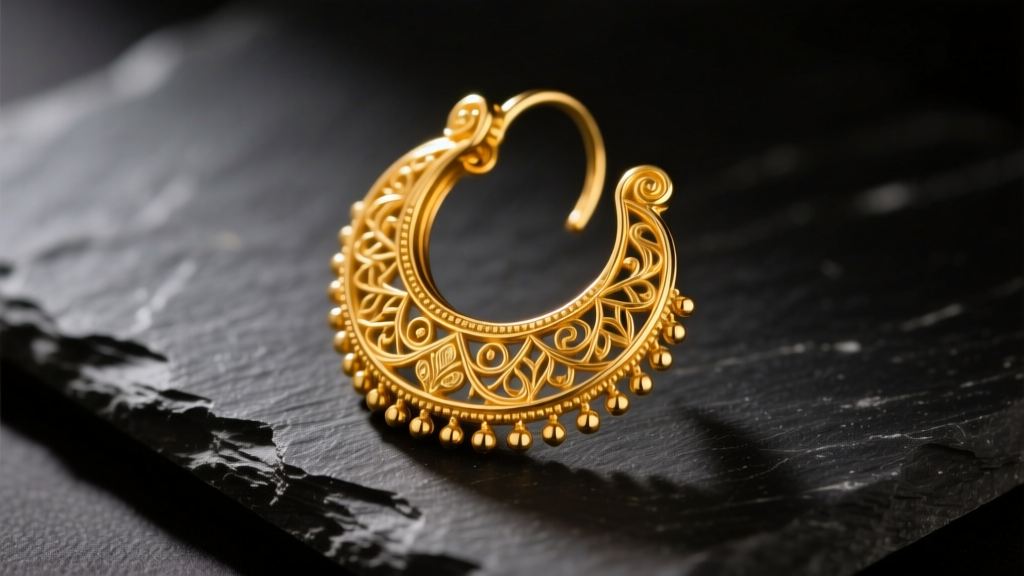
The Metallurgy of Indian Gold Jewelry: 22K vs. 18K Alloys
When evaluating Indian earrings gold, collectors and jewelers must look beyond the aesthetic surface and examine the underlying metallurgy. Pure 24-karat gold (99.9% Au) possesses a Vickers Hardness (HV) of roughly 25, making it far too malleable for structural jewelry applications. It will bend under the slightest tensile stress, rendering it useless for ear wires or gemstone prongs. Therefore, the Indian jewelry industry relies on precise alloying to achieve the necessary structural integrity while maintaining the culturally mandated rich yellow hue.
For solid cast and handcrafted pieces like Jhumkas or temple jewelry, 22-karat gold (91.6% purity) is the industry standard. The remaining 8.4% consists of a carefully calibrated mix of copper and silver. Copper increases the alloy's hardness to approximately 75-90 HV and adds a warm, reddish undertone, while silver counteracts the redness to preserve the classic yellow color. However, 22K gold remains too soft for secure gemstone setting. When Indian earrings gold incorporates diamond or Polki settings, manufacturers must drop to 18-karat gold (75% purity). By introducing zinc and higher copper ratios, 18K gold achieves a hardness of 120-135 HV, providing the necessary grip strength for prongs and bezels to secure stones against daily kinetic impacts.
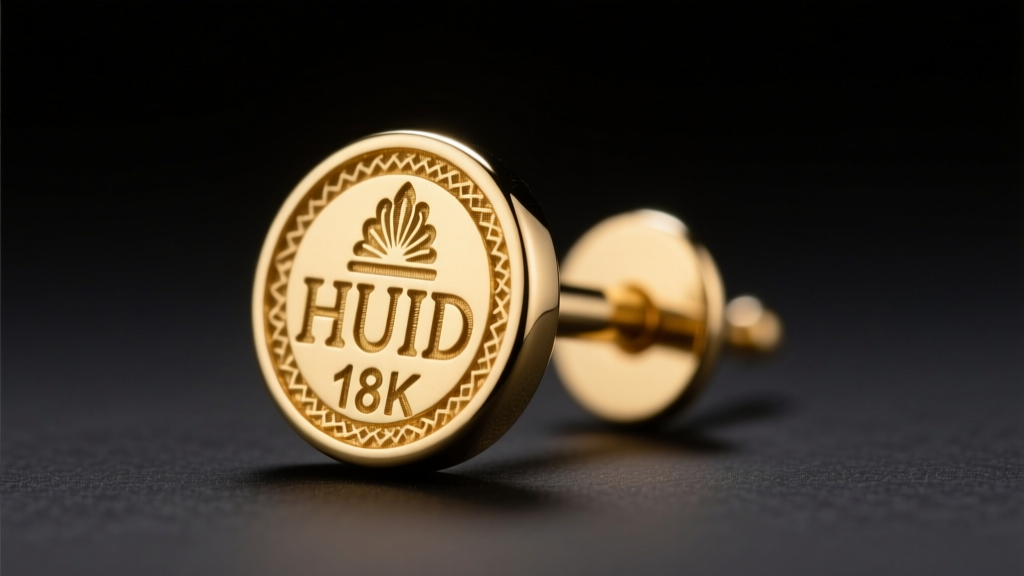
Decoding BIS Hallmarking: The 2026 Standard for Purity
The Bureau of Indian Standards (BIS) has completely overhauled the assaying process to eliminate purity fraud. As of 2026, the traditional 4-mark BIS hallmark has been entirely replaced by the 6-digit Hallmark Unique Identification (HUID) system. Every piece of authentic Indian earrings gold must bear this laser-engraved alphanumeric code, which is generated at the point of assaying and directly uploaded to the national database.
Consumers can verify the exact karatage, gross weight, and assaying center by entering the HUID code into the official BIS Care App. This technological leap ensures that the soldering alloys used in the earrings—which historically contained cadmium to lower melting points—are now strictly cadmium-free, utilizing safer zinc-silver-tin compositions that comply with international dermatological safety standards. For a deeper understanding of global gold standards and alloy compositions, the World Gold Council provides comprehensive metallurgical data.
| Karat | Purity % | Primary Alloy Mix | Hardness (HV) | Best Application in Earrings |
|---|---|---|---|---|
| 24K | 99.9% | None (Pure Gold) | ~25 | Kundan foil wrapping (Pakai) |
| 22K | 91.6% | Copper / Silver | 75 - 90 | Solid cast Jhumkas, hoops, ear wires |
| 18K | 75.0% | Copper / Zinc / Silver | 120 - 135 | Polki prongs, diamond pavé settings |
Structural Engineering of Heavy Silhouettes: Jhumkas and Chandbalis
The most iconic silhouettes in Indian earrings gold—such as the bell-shaped Jhumka and the crescent-moon Chandbali—are notoriously heavy. A standard pair of bridal Jhumkas can weigh between 15 and 35 grams per earring. From a biomechanical perspective, the human earlobule (composed of adipose tissue and collagen without cartilage) begins to experience micro-tearing and permanent elongation when subjected to sustained loads exceeding 8 to 10 grams.
Weight Distribution and Lobe Stress
To mitigate lobule trauma, traditional Indian jewelry engineering incorporates the Sahara (support chain) or Kaan Chain. This structural component connects the lower half of the earring to a secondary anchor point, typically a hairpin, a comb, or a secondary helix piercing. By utilizing a 22K gold chain with reinforced interlocking links (capable of withstanding 40 Newtons of tensile force), the Sahara redirects up to 80% of the earring's dead weight away from the earlobe, transferring the kinetic load to the skull or cartilage. When purchasing heavy Indian earrings gold, always verify the inclusion of a soldered, non-detachable Sahara loop at the upper apex of the design.
Polki and Kundan Settings: Foil-Backed Diamonds and Gold Scaffolding
Kundan and Polki are not merely decorative styles; they are complex, multi-stage metallurgical processes that rely on the extreme malleability of pure gold. Unlike Western jewelry, which uses cast prongs to hold faceted stones, Kundan utilizes uncut, foil-backed diamonds (Polki) or glass set into a gold scaffold.
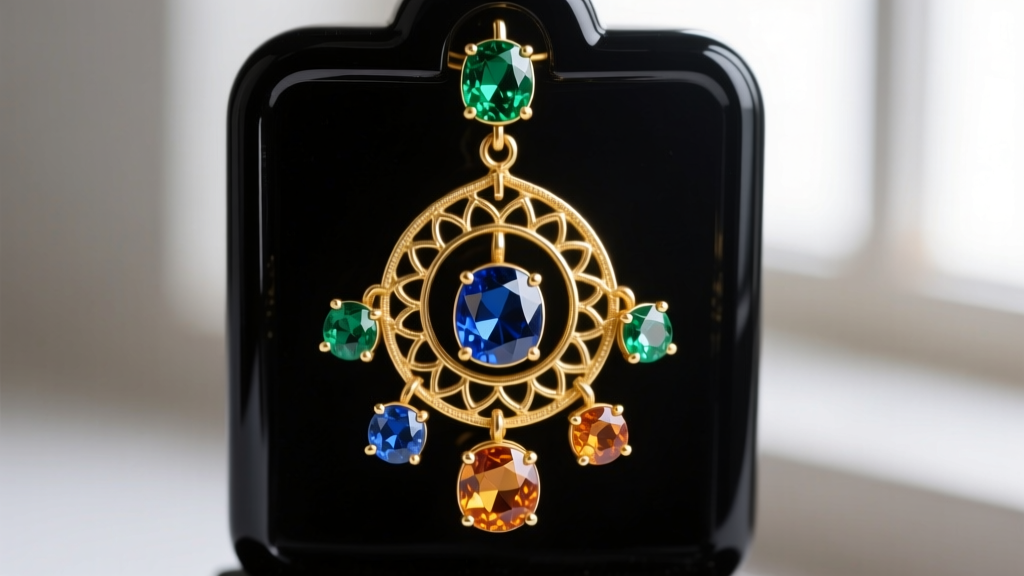
The process begins with the Ghaat, where the 22K or 18K gold base structure is cast or hammered. Next is the Paadh, where a hardened lac or natural resin mixture is poured into the cavities to create a stable, dark backing that enhances the optical brilliance of the uncut stones. Finally, the Pakai stage involves using 24K gold foil. Because 24K gold can be beaten to a thickness of just 0.1 microns, artisans use a specialized stylus (salai) to cold-weld the pure gold foil around the edges of the stone, creating a friction-fit bezel without the application of heat or solder. The Gemological Institute of America (GIA) notes that this ancient foil-setting technique remains one of the most secure methods for housing fragile, uncut crystalline structures in jewelry.
Purchasing Framework: Calculating Melt Value vs. Making Charges
Navigating the pricing of Indian earrings gold requires a strict mathematical framework to avoid inflated retail markups. The final retail price is calculated using the following formula:
Total Price = (Net Gold Weight × Daily 22K/18K Rate) + Making Charges (Kharcha) + Stone Weight/Cost + 3% GST
- Net Gold Weight: Always demand the gross weight minus the weight of stones, resin, and enamel. You should only pay the gold rate for the actual metal.
- Making Charges (Wastage): For simple cast studs, making charges should range from 8% to 12%. For intricate, handcrafted filigree or Jali work, charges legitimately rise to 18%–25% due to the high labor hours and metal loss during filing and polishing.
- Buyback Policies: Reputable jewelers will buy back Indian earrings gold at the current melt value, deducting only a nominal 2% to 5% melting fee. If a retailer refuses to buy back based on melt weight, the initial making charges were likely inflated.
Maintenance and Tarnish Prevention for High-Copper Alloys
Because 22K and 18K Indian earrings gold contain significant copper and silver alloys, they are susceptible to oxidation when exposed to sulfur compounds in the atmosphere, sweat, and cosmetic products. Copper oxidation manifests as a dark, reddish-black patina, particularly in the deep crevices of Jali (lattice) work.
Never use ultrasonic cleaners on Kundan or Polki earrings, as the high-frequency vibrations will shatter the uncut diamonds and loosen the resin Paadh base. Instead, maintain your Indian earrings gold by gently brushing the metal with a soft-bristled infant toothbrush dipped in a mild, phosphate-free dish soap solution. For heavily tarnished 22K pieces without gemstones, a brief soak in a warm solution of distilled water and a few drops of ammonia will strip the copper oxide layer, restoring the original high-luster finish. Always store these pieces in airtight, anti-tarnish ziplock bags with silica gel desiccants to control ambient humidity and halt the oxidation process entirely.