Bar Earring Piercing Technical Guide: Gauges and Healing
Master the bar earring piercing with our technical guide. Explore industrial and horizontal bar anatomy, exact gauge sizes, and healing.

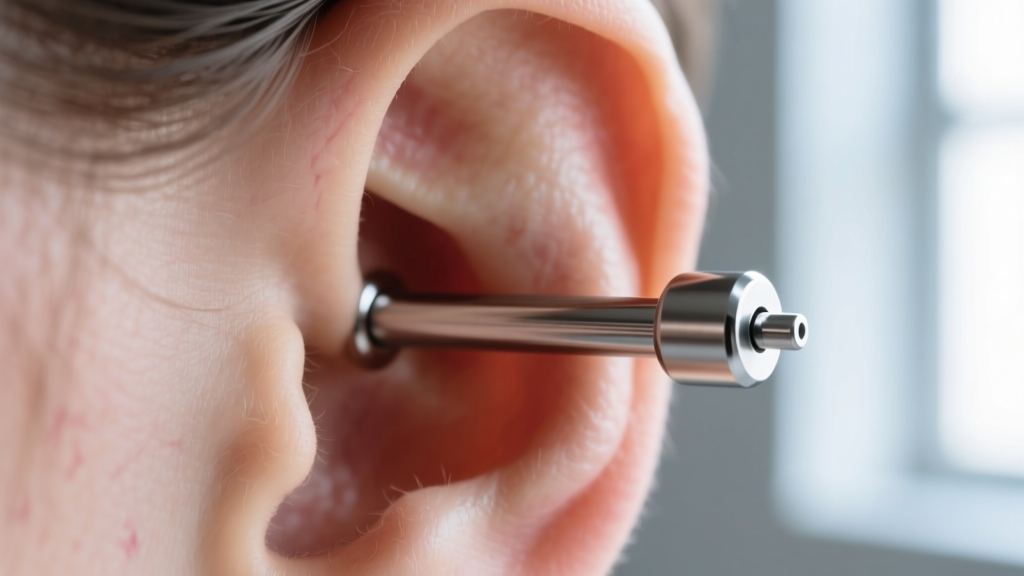
Defining the Bar Earring Piercing: Beyond the Standard Lobe
When body modification enthusiasts and professional piercers discuss a bar earring piercing, they are rarely referring to a standard post-and-butterfly stud. Instead, the term encompasses complex, multi-point fistulas that require a straight barbell to bridge two distinct anatomical landmarks. The two most prominent configurations are the industrial scaffold (bridging the outer helix and anti-helix) and the horizontal lobe bar (traversing the earlobe horizontally). Both setups demand a profound understanding of tissue biomechanics, precise jewelry metallurgy, and rigorous aftercare protocols to prevent long-term complications like migration or rejection.
Unlike single-point piercings that can easily adapt to minor angular deviations, a bar earring piercing locks two separate puncture sites into a single, rigid geometric plane. If the jewelry angle does not perfectly match the natural topography of the ear, the resulting biomechanical stress will inevitably lead to irritation bumps, delayed healing, or cartilage deformation. This technical guide deconstructs the anatomical prerequisites, material specifications, and healing matrices required for a successful barbell piercing.
Biomechanics and Anatomical Requirements
The Industrial Scaffold (Cartilage)
The classic industrial bar earring piercing connects the forward helix to the outer helix rim. For this to heal without chronic inflammation, the client must possess a prominent, continuous helix ridge. The piercer must map a straight trajectory that exits both points without pressing the barbell into the anti-helix or the scapha. If the ear folds inward or lacks a defined upper ridge, the barbell will act as a lever, applying constant outward pressure on the fistula. This tension restricts blood flow to the healing tissue and triggers the body's immune response, resulting in persistent hypertrophic scarring.
The Horizontal Lobe Bar
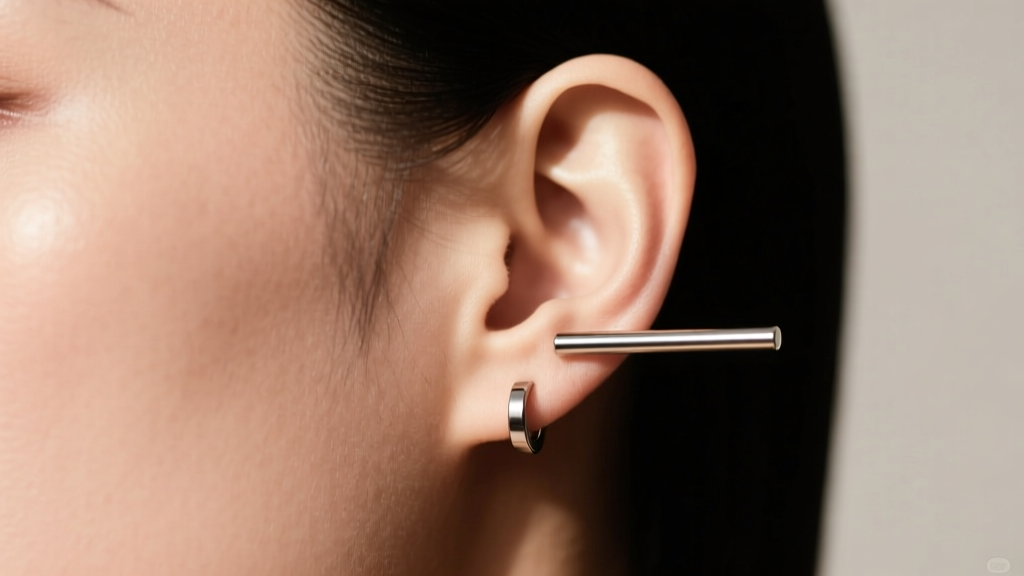
While less common than the scaffold, the horizontal lobe bar earring piercing is a striking alternative to vertical lobe stacks. This piercing requires a thick, fleshy lobe with adequate depth to accommodate a straight barbell without the ends protruding awkwardly or resting against the jawline. The primary biomechanical risk here is the "cheese-cutter effect." If the gauge is too thin, the weight of the jewelry combined with the lateral movement of the jaw and neck muscles can cause the barbell to slowly slice through the lower tissue, leading to eventual migration and splitting of the lobe.
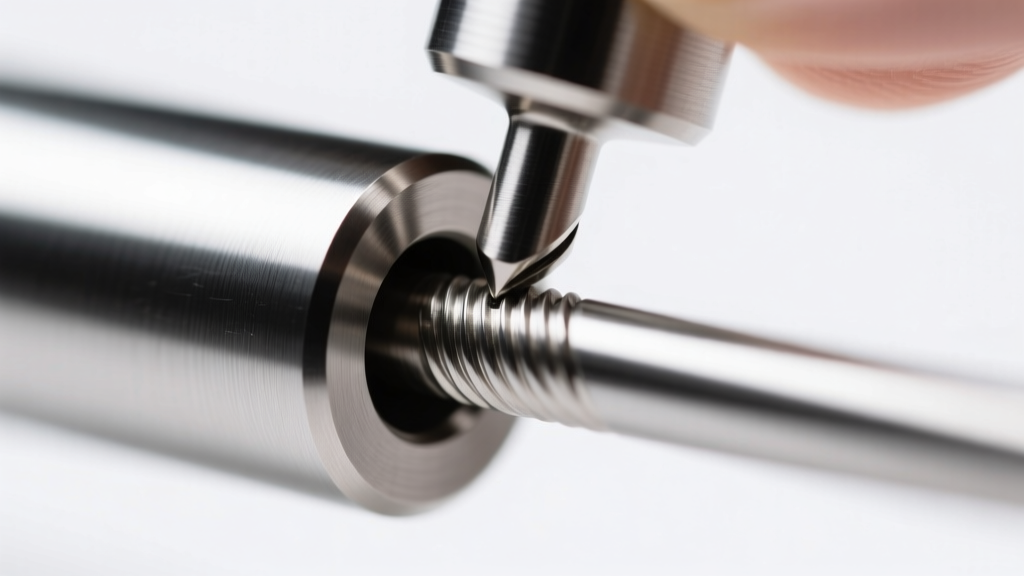
Technical Jewelry Specifications: Gauges, Lengths, and Materials
Selecting the correct jewelry parameters is non-negotiable for a bar earring piercing. The initial jewelry must accommodate the inflammatory phase of healing, which brings significant edema (swelling), particularly in vascular areas like the lobe or dense cartilage networks.
| Piercing Type | Standard Gauge | Initial Length | Downsized Length | Material Standard |
|---|---|---|---|---|
| Industrial (Scaffold) | 14g (1.6mm) | 1.5" (38mm) | 1.125" - 1.25" | ASTM F-136 Titanium |
| Horizontal Lobe | 14g or 12g | 1" (25mm) | 0.875" (22mm) | ASTM F-136 Titanium |
| Orbital / Conch Bar | 16g (1.2mm) | 1.25" (32mm) | 1" (25mm) | Niobium / Titanium |
Metallurgy: Why ASTM F-136 is Mandatory
According to the Association of Professional Piercers (APP), only implant-grade materials should be used for fresh piercings. For a bar earring piercing, ASTM F-136 implant-grade titanium is the gold standard. Unlike "surgical steel" (ASTM F-138), which contains up to 15% nickel and relies on a passive chromium oxide layer that can degrade in the high-salinity environment of a weeping fistula, F-136 titanium is entirely nickel-free and biologically inert. This drastically reduces the risk of contact dermatitis and localized allergic reactions that can mimic infection.
Threading Mechanics: Internal vs. Threadless
Externally threaded barbells—where the screw pattern is on the jewelry post—act like a file, tearing through the delicate epithelial lining of the fistula during insertion. For any barbell setup, internally threaded (where the screw is on the decorative end) or threadless (push-pin) tension-fit jewelry is mandatory. Threadless systems are particularly advantageous for industrial scaffolds, as they allow the piercer to customize the exact tension and angle of the decorative ends without relying on fixed screw depths.
The Healing Matrix: Timelines and Failure Modes
Healing a bar earring piercing is an exercise in patience and environmental control. Cartilage is avascular, meaning it lacks a direct blood supply and relies on the surrounding perichondrium for nutrient delivery. Consequently, an industrial scaffold takes a minimum of 9 to 12 months to fully mature, while a horizontal lobe bar may heal in 4 to 6 months due to the lobe's high vascularity.
Hypertrophic Scarring and Angle Migration
The most frequent failure mode in barbell piercings is the development of hypertrophic scars (irritation bumps) at the exit points. As noted in Mayo Clinic's guide on piercing complications, these are not infections but rather localized overgrowths of collagen triggered by mechanical friction, moisture buildup, or improper jewelry angles. If the barbell is too short during the swelling phase, it will embed into the tissue. If it remains too long after the swelling subsides, it will snag on hair and clothing, constantly reopening the wound bed and forcing the body to produce excess scar tissue.
The Danger of Premature Downsizing
Downsizing—the act of swapping the initial long barbell for a shorter, custom-fitted one—is a critical milestone. However, performing this swap before the initial edema has completely resolved (usually around weeks 4 to 6 for cartilage) can trap residual swelling, leading to necrosis or severe embedding. A professional piercer must evaluate the tissue's pliability before executing the downsizing protocol.
Expert Aftercare Protocol for Barbell Piercings
Forget the antiquated advice of twisting the jewelry or applying harsh chemicals like tea tree oil, hydrogen peroxide, or rubbing alcohol. These substances destroy the fragile fibroblasts responsible for building the new fistula wall. A modern, evidence-based aftercare routine for a bar earring piercing relies on mechanical cleaning and osmotic balance.
- Sterile Saline Application: Spray 0.9% sterile wound wash saline (containing only purified water and sodium chloride, with no preservatives) onto the entry and exit points twice daily. This softens dried lymph and crusties without disrupting the cellular matrix.
- Emulsification and Rinsing: After letting the saline sit for 30 seconds, gently wipe away softened debris using non-woven gauze. Avoid cotton swabs or balls, as their micro-fibers can wrap around the barbell ends and introduce foreign bodies into the puncture site.
- Drying the Fistula: Moisture is the enemy of cartilage healing. After showering or cleaning, use a hair dryer on the "cool" and "low" settings to completely dry the area around the barbell. Trapped moisture breeds bacteria and leads to maceration of the skin.
- Sleep Hygiene: Use a travel neck pillow, positioning the ear in the center hole to eliminate direct pressure on the barbell while sleeping. Pressure-induced ischemia (lack of blood flow) is a leading cause of cartilage necrosis and delayed healing.
"A bar earring piercing is a marriage between human anatomy and metallurgical precision. Respect the tissue's natural geometry, invest in implant-grade titanium, and allow the body's biological clock to dictate the healing timeline."
Ultimately, the success of any barbell configuration relies on the initial placement accuracy and the wearer's commitment to a non-intrusive healing environment. By prioritizing anatomical mapping over aesthetic trends and adhering to strict material standards, you ensure that your bar earring piercing remains a permanent, striking feature of your personal style.


