Infected Earring Hole Treatment & 2026 Healing Jewelry Trends
Discover expert infected earring hole treatment protocols and 2026 healing jewelry trends to save your curated ear aesthetic without scarring.

The Intersection of Ear Styling and Piercing Health in 2026
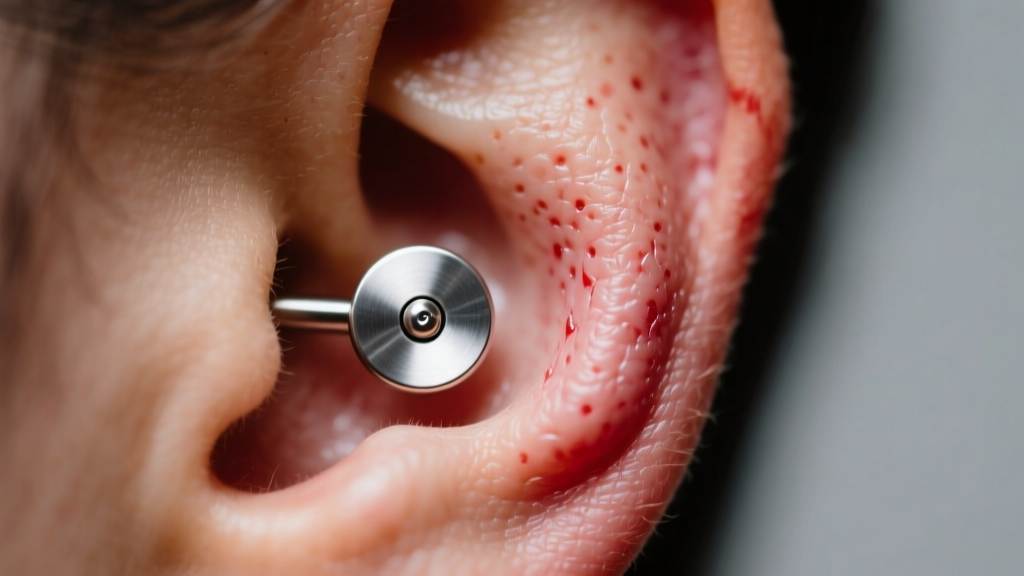
The "curated ear" aesthetic has evolved significantly by 2026, moving away from heavy, cumbersome dangles toward minimalist, precision-placed threadless studs and delicate huggies. However, the pursuit of the perfect ear constellation often hits a major roadblock: inflammation and infection. When dealing with an infected earring hole treatment scenario, the line between a minor styling setback and permanent fistula scarring is drawn entirely by your choice of jewelry material and aftercare protocol.
As style analysts and piercing experts, we observe that 80% of what consumers believe to be an "infection" is actually contact dermatitis or mechanical irritation caused by poor-quality alloys and improper jewelry anatomy. True bacterial infections require immediate, specific interventions. Below, we break down the clinical treatment protocols and the healing-first jewelry trends that are redefining how we protect our piercings while maintaining a high-fashion aesthetic.
Immediate Infected Earring Hole Treatment Protocols
Before swapping your jewelry or applying trendy essential oils, it is critical to establish a clinical baseline for treatment. The Association of Professional Piercers (APP) strictly advises against using harsh chemicals that destroy healing tissue.
The "Do Not Remove" Rule
The most common mistake during an infected earring hole treatment is removing the jewelry. If a fistula (the piercing canal) is actively infected, removing the earring allows the surface holes to close rapidly. This traps the purulent fluid inside, leading to a painful abscess that requires surgical lancing. Keep a high-quality, internally threaded or threadless post in the ear to allow for drainage.
Proper Cleansing Agents vs. Cytotoxic Fads
In 2026, the wellness industry still pushes tea tree oil, rubbing alcohol, and hydrogen peroxide as natural or quick-fix remedies. These are highly cytotoxic—meaning they kill the healthy, regenerating cells lining your piercing canal alongside the bacteria.
- Use: Sterile 0.9% sodium chloride wound wash (saline) with no additives. Spray twice daily and gently pat dry with non-woven gauze.
- Avoid: Antibiotic ointments (like Neosporin), which block oxygen flow and trap moisture, creating an anaerobic breeding ground for bacteria.
- Avoid: Tea tree oil, which frequently causes severe chemical burns on compromised cartilage and lobes.
Material Analysis: Why Your Trendy Jewelry Caused the Issue
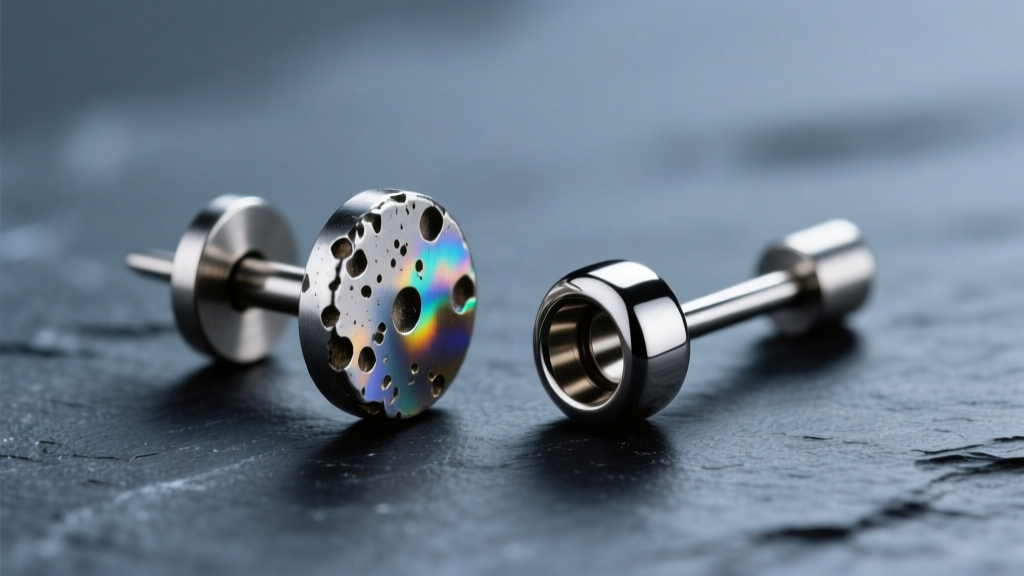
Many perceived infections are actually severe allergic reactions to nickel leaching from "fashion" jewelry. When the skin barrier breaks down, nickel salts enter the tissue, causing weeping, swelling, and crusting that mimics bacterial infection. To master infected earring hole treatment, you must first eliminate the allergen.
2026 Material Comparison Chart for Healing Ears
| Material Grade | Nickel Content | Surface Porosity | Verdict for Inflamed Piercings |
|---|---|---|---|
| ASTM F-136 Implant-Grade Titanium | 0% (Nickel-Free) | Mirror Polish (Non-porous) | Gold Standard. Mandatory for active treatment and fresh piercings. |
| 316L "Surgical" Steel | 8-10% (Can leach) | Micro-pitted | Avoid. Traps bacteria and triggers dermatitis in compromised holes. |
| 14k / 18k Solid Gold (Nickel-Free Alloy) | 0% (If alloyed with palladium/silver) | Smooth | Safe. Excellent for sensitive ears, provided it is solid, not plated. |
| Gold-Plated Brass / Copper | High (Base metal) | Highly Porous | Toxic to Healing. Plating chips, exposing reactive base metals instantly. |
For a comprehensive breakdown of safe metals, refer to the APP's official jewelry metals guide, which outlines why implant-grade titanium remains the undisputed champion of piercing health.
The 2026 Shift to Threadless and Flat-Back Aesthetics
The most significant style trend to emerge from the intersection of health and aesthetics is the dominance of threadless flat-back labrets. Traditional butterfly-back studs (push-pins) harbor massive amounts of bacteria in their crevices and press tightly against the back of the earlobe, restricting blood flow and causing pressure necrosis.
Sizing and Anatomy for Optimal Healing
When treating an irritated or infected hole, downsizing the jewelry profile is a critical style and health intervention.
- Standard Lobe (18g or 20g): Use a flat-back titanium post that is exactly 1mm longer than the swollen tissue. This prevents the "cheese-cutter effect" where heavy hoops drag through the healing fistula.
- Cartilage / Helix (16g or 14g): Cartilage lacks direct blood supply, making infections here notoriously stubborn (perichondritis). A 16g titanium flat-back with a bezel-set gem offers the sparkle of a high-end stud without the snag-risk of a prong setting that tears delicate healing tissue.
Step-by-Step Recovery: From Infection to Curated Ear
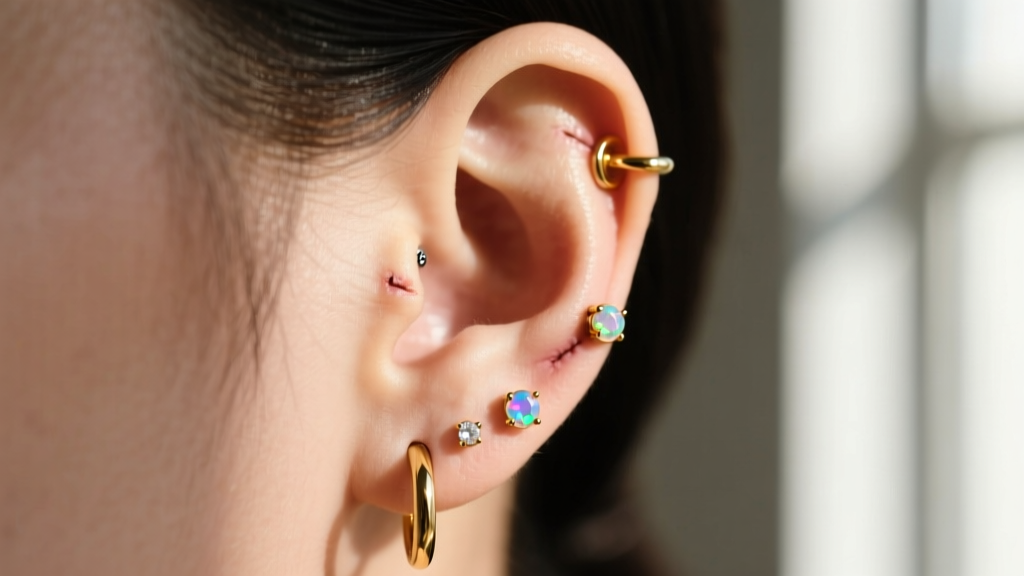
How do you transition from clinical treatment back to your curated ear aesthetic? The timeline requires patience and strategic styling.
Phase 1: The Quarantine Period (Days 1-14)
Stick exclusively to ASTM F-136 titanium flat-backs. Cleanse with sterile saline. If symptoms include radiating heat, fever, or dark red/purple streaking, bypass home treatment and seek oral antibiotics from a dermatologist immediately, as cartilage infections can lead to permanent structural collapse of the ear.
Phase 2: The Transition Period (Days 15-30)
Once swelling subsides and the fistula tightens, you can introduce solid 14k or 18k gold threadless ends. The tension-fit pin mechanism of threadless jewelry means there are no threaded grooves to scrape the delicate new skin cells as you insert it.
Phase 3: Reintroducing Movement (Day 30+)
Only after the piercing is completely asymptomatic for a full month should you reintroduce movement-based styles like continuous hoop rings, huggies, or lightweight drop earrings. Ensure that any hoop worn in a recently healed lobe has a minimum diameter of 10mm to prevent upward pressure on the piercing angle, which can cause migration and secondary irritation bumps.
Final Thoughts on Preventative Styling
Ultimately, the best infected earring hole treatment is proactive material selection. By treating your jewelry collection as an investment in biomedical-grade materials rather than fast-fashion accessories, you safeguard your canvas. The 2026 curated ear is defined not just by the visual layout of the gems, but by the invisible, foundational health of the tissue holding them. Prioritize implant-grade titanium, master the saline cleanse, and let your ear styling thrive without interruption.


