Jacob Elordi Earrings: 2026 Material & Style Guide
Decode the materials behind Jacob Elordi earrings. Compare platinum, white gold, and pearls for minimalist studs with our 2026 expert guide.

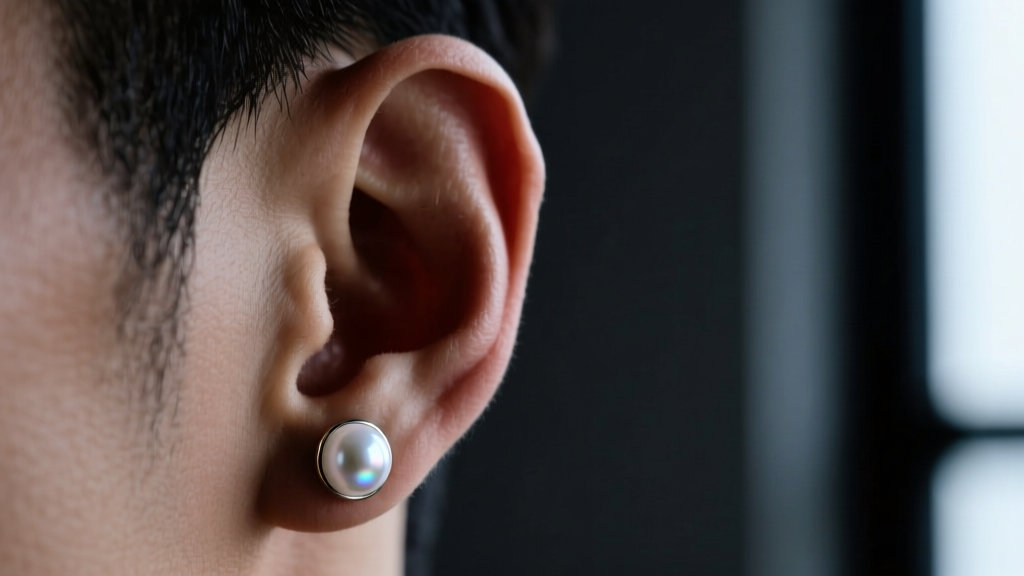
When analyzing the evolution of men's and gender-neutral jewelry over the last decade, few celebrity style arcs are as instructive as the Jacob Elordi earrings phenomenon. From subtle diamond studs to the now-iconic single pearl drop, Elordi’s ear curation relies heavily on minimalist silhouettes. However, when a design is stripped of heavy embellishment, the underlying material properties dictate the piece's longevity, comfort, and visual impact. In 2026, discerning collectors and everyday wearers alike are looking past the brand name and focusing on metallurgical integrity and gemological grading.
This guide deconstructs the specific materials that define the Jacob Elordi earring aesthetic. We will compare the galvanic reactions of white metals, the nacre density of pearls, and the structural mechanics of low-profile diamond settings, providing you with a technical framework to source or replicate these looks without compromising on quality.
The White Metal Matrix: Platinum vs. White Gold vs. Sterling Silver
The foundation of the minimalist stud or small hoop is the "white metal" look. While visually similar to the untrained eye, platinum, 14k white gold, and sterling silver behave entirely differently when subjected to the acidic environment of human skin and the friction of daily wear.
14k White Gold and the Rhodium Problem: White gold is inherently yellowish-gray. To achieve the bright, reflective finish seen in high-end celebrity jewelry, it is plated with rhodium. This plating is typically only 0.75 to 1.0 microns thick. For a daily-wear earring, friction from hair, pillows, and cleaning will wear this plating away in 6 to 14 months, exposing the duller alloy beneath. Furthermore, many 14k white gold alloys use nickel as a whitening agent. According to the Mayo Clinic, nickel is a primary trigger for allergic contact dermatitis, leading to the itchy, flaky earlobes commonly reported by new earring wearers.
Platinum (950 Grade): Platinum is naturally white and hypoallergenic. With a Vickers hardness of around 125, it is actually softer than 14k white gold, meaning it scratches more easily. However, platinum exhibits "malleability" rather than "brittleness." When scratched, the metal is merely displaced, developing a soft patina over time rather than losing mass. For a secure diamond bezel or a heavy pearl post, platinum's density ensures the structural integrity of the setting for decades.
Sterling Silver (925): Composed of 92.5% silver and 7.5% copper, sterling silver is highly prone to tarnishing. The copper reacts with sulfur compounds in the air and the wearer's sweat, forming black silver sulfide. While acceptable for occasional wear, it is a poor choice for the "never take it out" ethos of the modern minimalist earring stack.
| Material | Hypoallergenic? | Maintenance Cycle | Price Range (Studs) | Best Use Case |
|---|---|---|---|---|
| 950 Platinum | Yes | Polish every 2-3 years | $400 - $1,200+ | Permanent daily wear, heirloom diamonds |
| 14k White Gold | Rarely (Nickel risk) | Rhodium dip every 12 mos | $150 - $600 | Budget-conscious bright white aesthetic |
| 18k Yellow Gold | Mostly (Palladium alloys) | Minimal | $200 - $800 | Vintage warmth, high skin tolerance |
| Sterling Silver | Varies | Weekly polishing | $30 - $100 | Occasional fashion wear |
Pearl Earrings: Nacre Density and Sweat Degradation
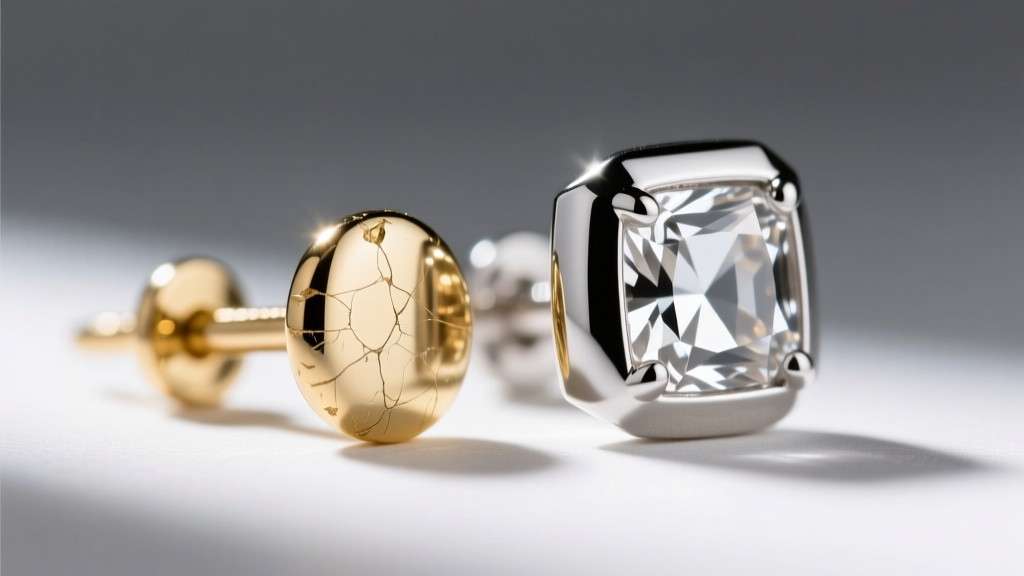
Perhaps the most defining element of the Jacob Elordi earrings trend is the normalization of pearls in masculine and androgynous styling. But not all pearls survive the rigors of daily earlobe contact. The primary failure mode for pearl earrings is nacre degradation caused by human sweat, which has a naturally acidic pH ranging from 4.5 to 6.0.
Pearls are composed of calcium carbonate (aragonite) and an organic protein called conchiolin. When exposed to prolonged acidity, the calcium carbonate dissolves, leading to a permanent loss of luster and surface pitting. To mitigate this, understanding the origin and grading of the pearl is critical.
Akoya vs. Freshwater: The Luster Debate
Elordi’s most photographed pearl looks typically feature the sharp, mirror-like luster characteristic of Japanese Akoya pearls. Akoya pearls are bead-nucleated and grown in cooler waters, which forces the oyster to secrete nacre very slowly. This results in tightly packed aragonite crystals that refract light brilliantly. A high-quality 7mm to 8mm Akoya pearl will have a nacre thickness of at least 0.4mm to 0.6mm. According to the Gemological Institute of America (GIA), luster is the most critical value factor for pearls, and Akoya consistently tops the chart for sharpness of reflection.
Freshwater pearls, conversely, are typically solid nacre (tissue-nucleated). While this makes them incredibly durable against chipping, their crystalline structure is often less organized, resulting in a softer, more "satiny" glow rather than a sharp mirror finish. For the high-contrast, red-carpet-ready pearl stud, Akoya is the metallurgical and optical superior, provided the wearer wipes them with a damp microfiber cloth after every use to neutralize sweat acids.
Diamond & Moissanite Studs: Clarity, Cut, and Gauge Mechanics
The micro-diamond stud is a staple of the curated ear. When replicating the subtle, understated diamond looks favored by celebrities, buyers often overspend on color and clarity while ignoring the structural mechanics of the setting and the post gauge.
The Illusion of Clarity in Micro-Studs
For earrings in the 3mm to 5mm range (approximately 0.10 to 0.50 carats total weight), the human eye cannot resolve internal inclusions from a conversational distance. Paying a premium for VVS (Very Very Slightly Included) or IF (Internally Flawless) grades is a misallocation of funds. The optimal value matrix lies in the VS2 to SI1 clarity range with an Excellent or Very Good cut grade. As noted by the GIA's diamond quality factors, cut quality dictates light return (brilliance and fire), which is the only metric visible from three feet away. A well-cut SI1 diamond will outshine a poorly cut VVS1 stone every time.
Bezel vs. Prong: Protecting the Girdle
Traditional 4-prong martini settings elevate the diamond, allowing maximum light entry from the sides. However, they leave the diamond's girdle (the outermost edge) exposed. For active individuals or those who sleep in their earrings, a bezel setting is vastly superior. A bezel wraps a continuous rim of metal around the girdle, eliminating snagging on hair and clothing, and protecting the stone from lateral impacts that can cause chipping.
The Critical Importance of Post Gauge
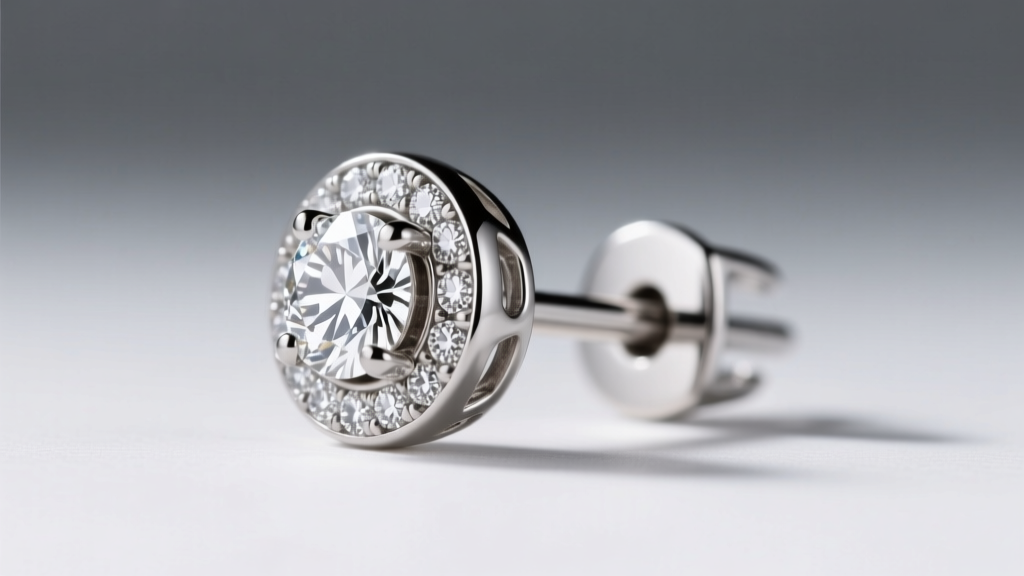
A frequently overlooked aspect of buying high-end studs is the post thickness, measured in gauge (g). Standard female lobe piercings are typically done at 20g (0.81mm) or 18g (1.02mm). However, many male lobe piercings, or piercings done with modern hollow needles, are initially pierced at 16g (1.29mm) or even 14g (1.63mm).
If you purchase a luxury diamond stud with a standard 20g post but possess a 16g piercing channel, forcing the thin post through can cause micro-tears in the fistula (the piercing tunnel), leading to scar tissue buildup and irritation bumps. Conversely, inserting a thick 16g post into a delicate 20g hole will cause acute pain and potential stretching. Always measure your existing comfortable jewelry with digital calipers or consult your piercer to confirm your exact gauge before investing in fine jewelry.
Sourcing Framework: Building a Resilient Ear Curation
To achieve a celebrity-caliber ear curation that survives the realities of daily life in 2026, adopt the following material decision framework:
- For the "Never Remove" Stud: Opt for a 950 Platinum or 14k Yellow Gold bezel-set diamond (VS2/SI1) with an 18g post. Avoid white gold to eliminate rhodium maintenance and nickel dermatitis risks.
- For the Statement Pearl: Source a 7.5mm to 8mm Hanadama-certified Akoya pearl. Ensure the pearl is drilled and set on a gold or platinum peg using a high-strength jeweler's epoxy, as silver pegs will oxidize and stain the pearl's drill hole black over time.
- For the Cartilage/Huggie Hoop: Look for ASTM F136 implant-grade titanium if you have any history of metal sensitivities. Titanium is entirely inert, lightweight, and will not react with the lymph fluid present in healing or irritated cartilage piercings.
Ultimately, the appeal of the Jacob Elordi earrings aesthetic lies in its effortlessness. But true effortlessness in jewelry is an illusion created by meticulous material selection. By prioritizing metal purity, gemological cut over clarity, and precise gauge sizing, you ensure that your minimalist ear curation remains as resilient as it is stylish.


