The Ultimate Jade Earrings Buying Guide: Nephrite vs Jadeite
Discover how to buy authentic jade earrings in 2026. Learn the differences between nephrite and jadeite, treatment grades, and hardware tips.

Understanding Jade: Nephrite vs. Jadeite
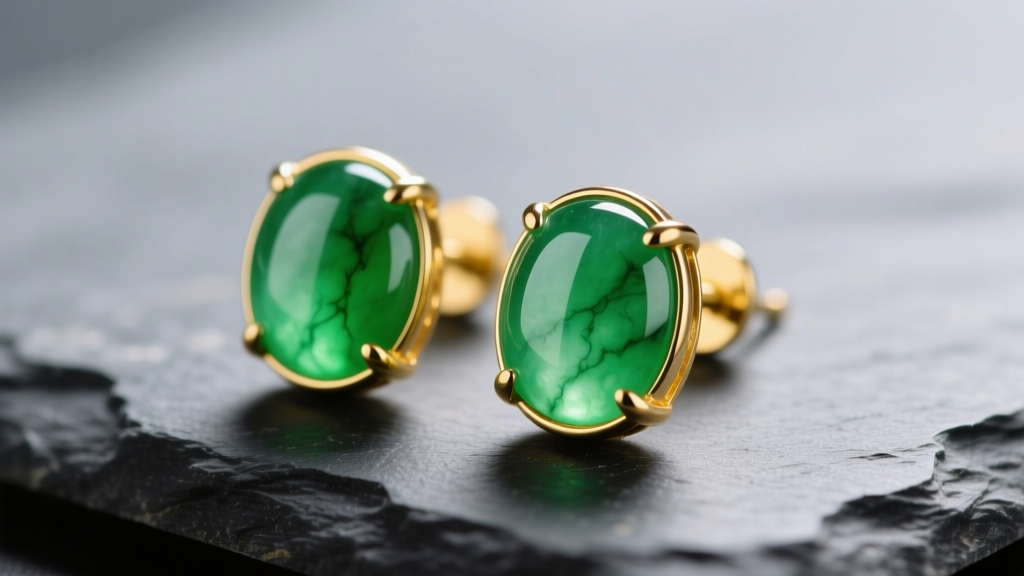
When shopping for jade earrings, the very first concept you must master is the mineralogical distinction between the two stones commonly referred to as 'jade.' In the gemological world, jade is not a single mineral but an umbrella term for two distinct silicate minerals: Nephrite and Jadeite. Understanding this difference is the foundation of making an informed purchase, as it dictates the stone's rarity, value, and structural integrity.
Jadeite (NaAlSi2O6) is a pyroxene mineral. It is rarer, harder (6.5 to 7 on the Mohs scale), and boasts a higher refractive index (1.66), which gives it a brilliant, glassy luster. The most prized jadeite, known as 'Imperial Green,' commands prices that rival fine emeralds and diamonds. Nephrite (Ca2(Mg,Fe)5Si8O22(OH)2), an amphibole mineral, is slightly softer (6 to 6.5 on the Mohs scale) but possesses a denser, interlocking fibrous structure that makes it exceptionally tough—arguably tougher than steel. Nephrite is more abundant and is typically found in deeper greens, blacks, and the highly coveted creamy white 'mutton fat' variety.
The ABCs of Jade Treatment: What You Are Actually Buying
The modern jade market, particularly as we navigate the influx of global e-commerce in 2026, is saturated with treated stones. Unless you are buying from a highly vetted estate or a certified dealer, you must understand the universal 'ABC' grading system for jade treatments. This system does not grade quality; it grades the level of chemical manipulation the stone has undergone.
| Grade | Treatment Process | Durability & Value | Market Price Range (Studs) |
|---|---|---|---|
| Type A | 100% natural. Only traditional plum wax polishing is used. | Excellent. Heirloom quality. Value appreciates over time. | $500 - $50,000+ |
| Type B | Acid-bleached to remove impurities, then impregnated with polymer resin. | Poor. Resin yellows and degrades with UV/heat exposure. | $50 - $300 |
| Type C | Chemically dyed to enhance or alter color. No resin. | Fair. Color fades over time when exposed to sunlight. | $30 - $150 |
| Type B+C | Acid-bleached, polymer-impregnated, and chemically dyed. | Very Poor. Structural integrity is compromised. Zero resale value. | $15 - $80 |
According to the Gemological Institute of America (GIA), Type B and C jades are considered 'treated' and must be disclosed by reputable sellers. When buying jade earrings, always insist on a certificate stating the stone is 'Type A' or 'Untreated.' For a deeper dive into jade treatments, Mason-Kay, a premier jade importer, offers extensive visual guides on identifying polymer resin degradation under magnification.
Evaluating Jade Earrings: Color, Clarity, and Cut
Unlike diamonds, where clarity and cut are paramount, the value of jade earrings is driven primarily by color and translucency.
Color Saturation and Tone
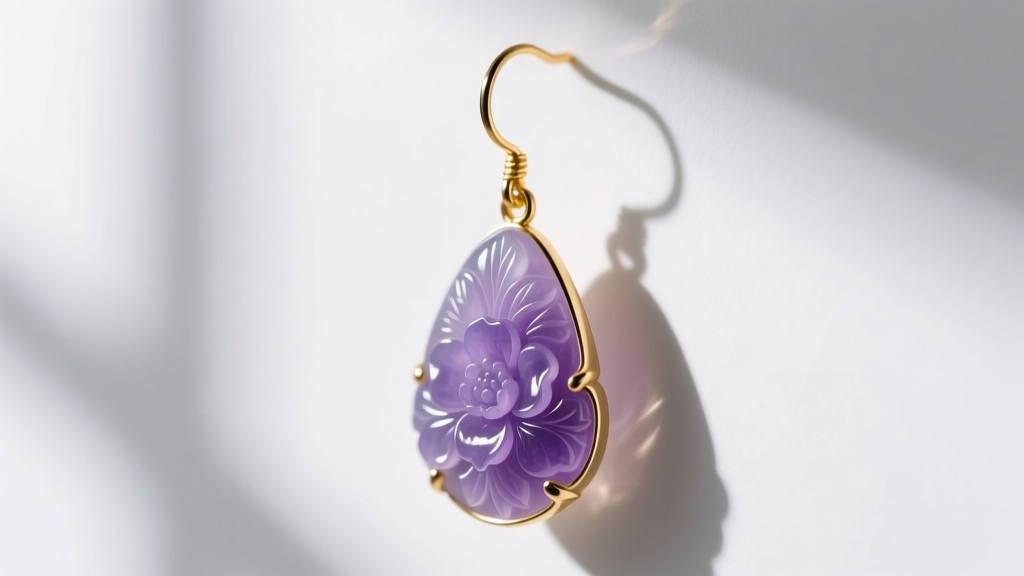
The most valuable jadeite exhibits a vivid, highly saturated 'Imperial Green'—a pure, vibrant green without secondary gray or brown modifiers. However, lavender jadeite and 'ice' jade (colorless but highly translucent) are also highly sought after in contemporary jewelry design. For nephrite, look for the rich, spinach-green of Canadian nephrite or the warm, creamy translucency of Hetian 'mutton fat' nephrite.
Translucency vs. Transparency
Top-tier jade should never be completely opaque, nor should it be perfectly transparent like glass. The ideal jade possesses a glowing translucency, often described as 'water' in the trade. When light hits a high-quality jade cabochon stud, it should penetrate the surface and scatter, creating a soft, internal luminescence.
The Cabochon and Carved Cuts
Jade is rarely faceted. It is almost exclusively cut into cabochons (smooth, domed shapes) or carved into intricate motifs like lotus flowers, dragons, or bi discs. When evaluating cabochon studs, look for a symmetrical, smooth dome with no flat spots. For carved drop earrings, examine the crispness of the detailing; high-quality carvings will have sharp, polished crevices, whereas mass-produced pieces will look muddy and dull in the recessed areas.
Hardware & Settings: Ensuring Longevity for Jade
Jade's toughness makes it resistant to shattering, but its hardness makes it susceptible to surface scratching and chipping if struck against a hard edge. The hardware used in jade earrings must protect the stone while providing secure wearability.
- Bezel Settings: The bezel setting is the gold standard for jade cabochons. A full or semi-bezel in 14k or 18k gold wraps securely around the stone's girdle, protecting the vulnerable edges from impact. Avoid prong settings for jade, as they leave the edges exposed and can induce stress fractures if tightened improperly.
- Post Gauge Sizes: For lobe studs, a standard 20-gauge (0.8mm) or 18-gauge (1.0mm) post is ideal. Because jade is dense and heavy, a thicker 18-gauge post provides better structural support and prevents the earring from drooping on the earlobe.
- Drop Earring Wires: For heavier carved jade drops, ensure the fishhook wire is at least 20-gauge and features a secure French wire or leverback closure to prevent loss.
Authenticity & Certification: Protecting Your Investment
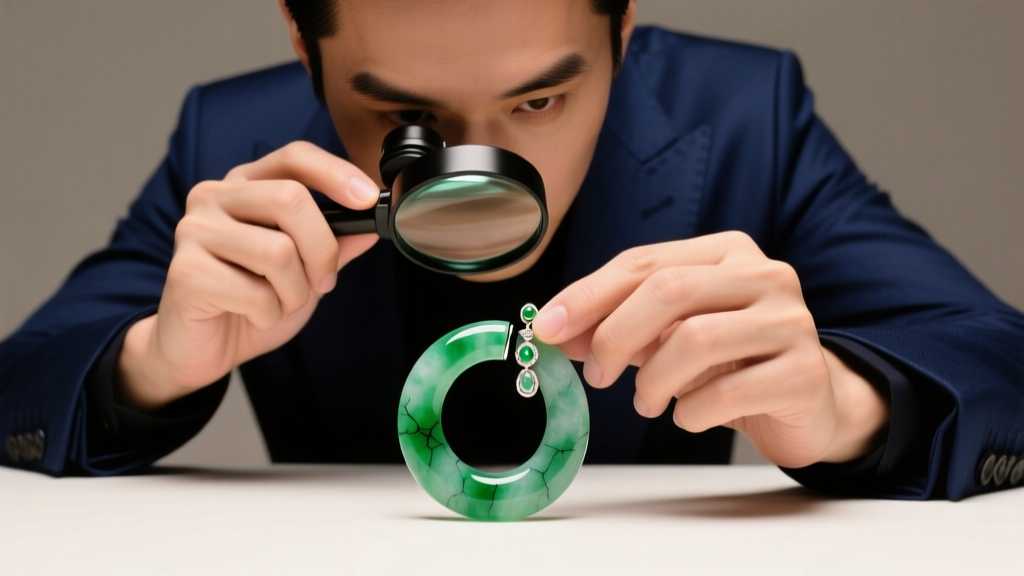
In 2026, the proliferation of advanced simulants—such as dyed serpentine, hydrogrossular garnet, and even lab-grown glass composites—makes visual inspection alone insufficient for high-ticket purchases. If you are spending over $1,000 on jade earrings, third-party laboratory certification is non-negotiable.
Look for reports from the GIA (Gemological Institute of America) or the NGTC (National Gemstone Testing Center of China), which is the global authority on jade authentication. These labs use Fourier Transform Infrared Spectroscopy (FTIR) to detect the microscopic presence of polymer resins (Type B) and UV-Vis-NIR spectroscopy to identify artificial dyes (Type C). A simple visual check or a 'jade test' app is entirely inadequate for verifying Type A status.
Styling & Face Shape Pairings for Jade
Jade carries a profound cultural weight and a distinct visual density. Styling jade earrings requires balancing their visual weight with your facial structure.
For Round and Square Faces
Avoid large, circular jade hoops or wide bi-disc studs, which can exaggerate facial width. Instead, opt for elongated jade drop earrings or teardrop cabochons. The vertical lines of a carved jadeite leaf or a simple gold-capped jade briolette will draw the eye downward, creating a lengthening effect.
For Oval and Heart-Shaped Faces
These face shapes can carry the visual weight of larger, more dramatic jade pieces. Bold, oversized jade cabochon studs set in halos of black onyx or diamonds provide a striking contrast. Alternatively, medium-sized jade hoops wrapped in textured yellow gold wire offer a modern, bohemian aesthetic that complements the softer angles of oval and heart-shaped faces.
Quick Care & Maintenance Protocol
Never clean jade earrings in an ultrasonic cleaner or with harsh chemical solvents. The high-frequency vibrations can shatter internal stress fractures, and chemicals will strip the natural wax polish or degrade polymer resins in treated stones. Simply wipe your jade earrings with a soft, lint-free microfiber cloth dampened with warm water and mild, pH-neutral soap after wear. Store them in a soft pouch away from diamonds and sapphires, which possess a higher Mohs hardness and will easily scratch the jade's surface.


