Jade Green Earrings: A Gemologist's Material & Durability Guide
Discover the gemological differences behind jade green earrings. Compare jadeite, nephrite, amazonite, and chrysoprase for optimal durability and style.

Beyond the Color: Defining True Jade in Jewelry
When shopping for jade green earrings, consumers often conflate a visual color palette with a specific mineral. In the gemological world, "jade" is not a single stone but an umbrella term for two distinct silicate minerals: jadeite and nephrite. Furthermore, the jewelry market is saturated with "jade green" alternatives that mimic the aesthetic but possess vastly different physical properties, failure modes, and price points. Understanding these material distinctions is critical for selecting earrings that will survive daily wear, especially in high-impact styles like dangles and hoops.
According to the Gemological Institute of America (GIA), the toughness of a gemstone—its resistance to chipping and breaking—is often more important than its hardness (resistance to scratching) when evaluating earring durability. This guide deconstructs the material science behind jade green earrings, providing a definitive framework for buyers and collectors.
The True Jades: Jadeite vs. Nephrite
Jadeite (Sodium Aluminum Silicate)
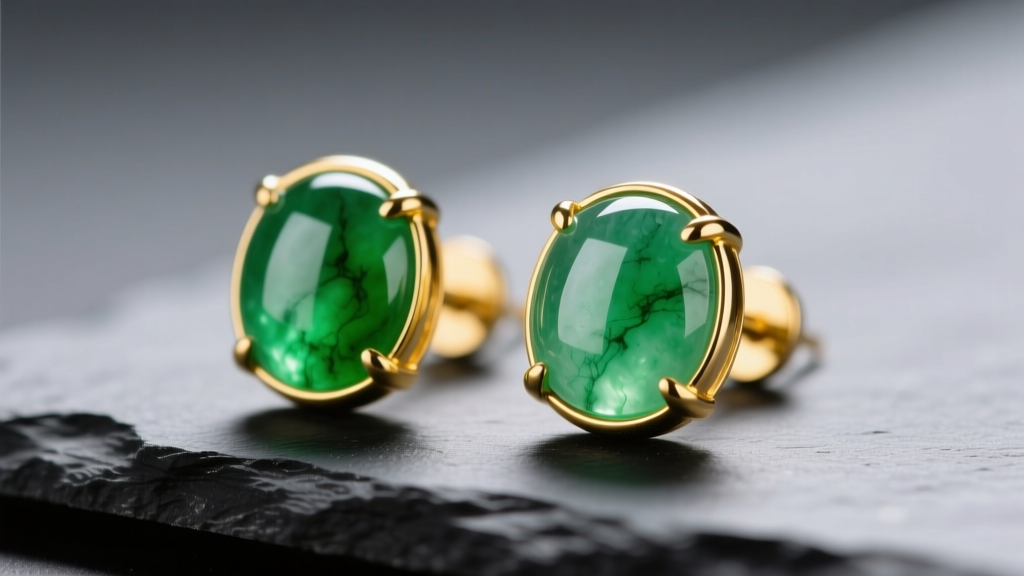
Jadeite is the rarer and generally more valuable of the two true jades. It registers between 6.5 and 7 on the Mohs hardness scale. However, its true superpower is its interlocking crystalline structure, which grants it exceptional toughness. For earrings, this means jadeite cabochons can withstand the accidental drops and impacts common with dangle styles. The finest jadeite, known as "Imperial Jade," features a vibrant, translucent emerald-like green. Type A (untreated) jadeite stud earrings typically start around $150 for commercial grades but can easily exceed $5,000 for fine, translucent Imperial green cabochons set in 18k gold.
Nephrite (Calcium Magnesium Iron Silicate)
Nephrite is slightly softer (6 to 6.5 on the Mohs scale) but actually possesses a higher tensile strength and toughness than jadeite due to its fibrous, felt-like internal structure. Nephrite's green tones tend to be deeper, more muted, and often lean towards spinach or forest green rather than the electric apple green of fine jadeite. Nephrite is highly affordable, with high-quality earring cabochons ranging from $30 to $300. It is an exceptional material for heavy, oversized hoop earrings where structural integrity is paramount.
The "Jade Green" Imposters: A Material Breakdown
If a retailer advertises "jade green earrings" without specifying the mineral, you are likely looking at one of the following alternatives. Each has unique gemological vulnerabilities.
- Amazonite (Microcline Feldspar): Known for its striking blue-green to jade-green hue. Amazonite registers 6 to 6.5 on the Mohs scale but possesses perfect cleavage in two directions. This means a single sharp impact can cause the stone to split cleanly along internal planes. It is highly unsuitable for unshielded dangle earrings.
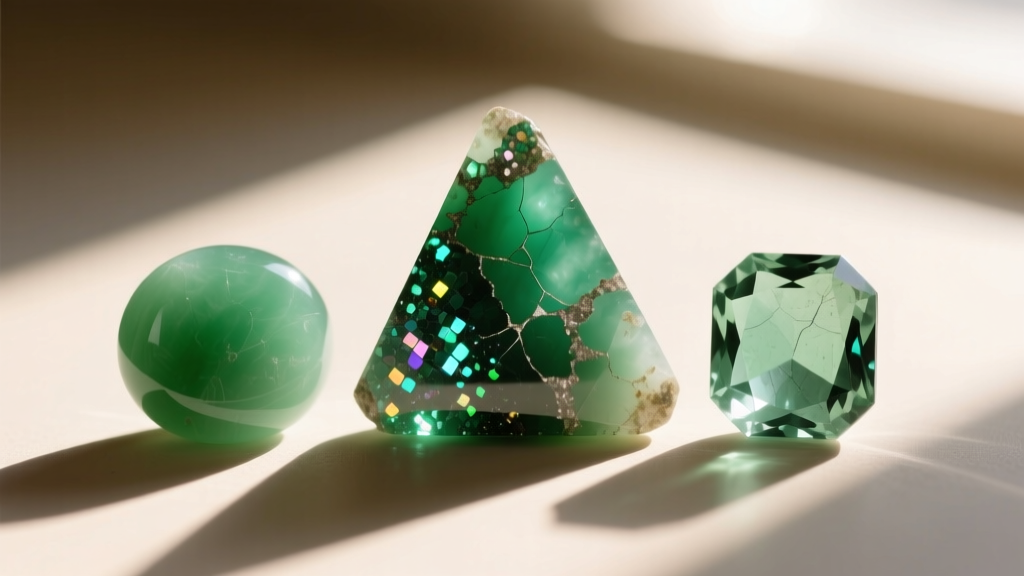
- Chrysoprase (Nickel-bearing Chalcedony): A variety of quartz colored by nickel inclusions, offering a bright, opaque apple green that closely mimics fine jadeite. With a Mohs hardness of 6.5 to 7 and no cleavage, chrysoprase is incredibly durable and an excellent, more affordable substitute for high-end jadeite in active-wear earrings.
- Green Aventurine (Quartz with Fuchsite): A highly affordable jade green stone (often under $50 for a pair of studs). It shares quartz's 6.5 to 7 hardness but contains internal mica inclusions that can create weak points if the stone is heavily included. It performs well in stud earrings but requires protective settings in drops.
- Prehnite: A softer (6 to 6.5) silicate with a distinct milky, pale jade-green appearance. Prehnite is brittle and prone to abrasion, making it strictly suited for lightly worn stud earrings or pieces stored meticulously.
Durability Matrix: Hardness, Cleavage, and Earring Styles
Selecting the correct earring style requires matching the gemstone's physical properties to the mechanical stress of the jewelry design. The table below outlines the optimal pairings for jade green materials.
| Material | Mohs Hardness | Cleavage / Fracture | Price Range (Studs) | Optimal Earring Style |
|---|---|---|---|---|
| Jadeite (Type A) | 6.5 - 7.0 | No cleavage; splintery fracture | $150 - $5,000+ | Any (Dangles, Hoops, Studs) |
| Nephrite | 6.0 - 6.5 | No cleavage; extremely tough | $30 - $300 | Heavy Hoops, Ear Cuffs, Dangles |
| Chrysoprase | 6.5 - 7.0 | No cleavage; conchoidal fracture | $60 - $400 | Dangles, Huggies, Studs |
| Amazonite | 6.0 - 6.5 | Perfect cleavage (2 planes) | $25 - $150 | Protected Studs Only |
| Green Aventurine | 6.5 - 7.0 | No cleavage; uneven fracture | $15 - $80 | Studs, Small Huggies |
Setting Engineering: Protecting Jade Green Gemstones
The structural failure of jade green earrings rarely originates from the stone scratching; it almost always stems from improper setting engineering. Gemstones with perfect cleavage, like amazonite, or those with internal inclusion weaknesses, like heavily included aventurine, demand specific metalwork.
Gemologist's Rule of Thumb: Never set a cleavage-prone jade green stone in a high-prong setting for a dangle earring. The kinetic energy from the earring swinging against the neck or shoulder will eventually find the stone's cleavage plane, resulting in a catastrophic split.
Bezel Settings: A full or half-bezel setting, where a rim of gold or silver completely encircles the girdle of the cabochon, is mandatory for amazonite and prehnite. This absorbs lateral impacts and prevents the stone from popping out if the earring is snagged on clothing.
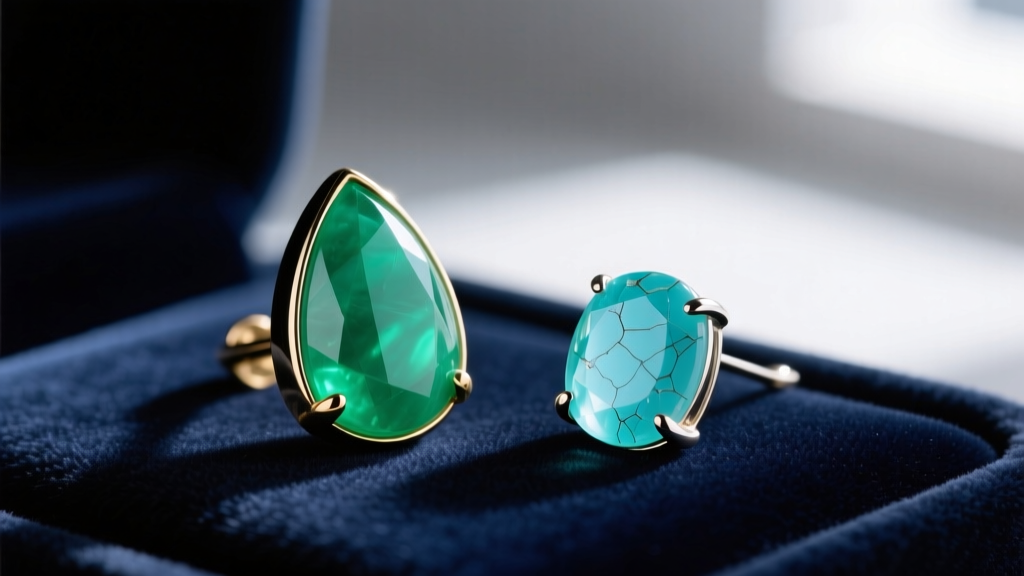
Prong Settings: Prongs are acceptable for jadeite, nephrite, and chrysoprase, provided the prongs are thick enough (minimum 18-gauge wire) to secure the often-domed surface of a cabochon. V-prongs should be utilized if the jade green stone is cut into a pear or marquise shape to protect the fragile points.
Identifying Treatments and Imitations
The market for jade green earrings is notorious for undisclosed treatments. The International Gem Society (IGS) categorizes jade treatments into three distinct tiers, which drastically affect both the value and the longevity of the earrings.
- Type A (Untreated): Only cut, shaped, and polished. May have a traditional plum juice wax coating. This is the only investment-grade jade.
- Type B (Bleached and Polymer-Impregnated): Acid-washed to remove brown impurities, then filled with epoxy resin. While they look vibrant initially, the polymer degrades under UV light and heat, causing the earrings to turn yellow and become brittle within 3 to 5 years.
- Type C (Dyed): Chemically dyed to achieve a jade green color. The dye fades rapidly when exposed to sunlight and the heat of the skin.
To identify glass or resin imitations, look for mold marks along the girdle, spherical gas bubbles under a 10x loupe, or a temperature differential. True jade and nephrite feel distinctly cold to the touch and take several seconds to warm up against the skin, whereas glass and plastic warm almost instantly.
Care Protocols by Material
Maintaining the luster of jade green earrings requires material-specific care routines. The interlocking structure of true jade makes it resilient, but the chemical treatments of imposters demand gentle handling.
What to Avoid
Ultrasonic Cleaners: Never use ultrasonic or steam cleaners on any jade green earrings. The high-frequency vibrations will shatter amazonite along its cleavage planes and will strip the polymer fillings from Type B jadeite, leaving the stone porous and dull.
Harsh Chemicals: Chlorine, bleach, and even high-alcohol hand sanitizers can degrade the surface luster of nephrite and dissolve the dyes in Type C jade.
The Correct Cleaning Method
For all jade green materials, the safest cleaning protocol involves lukewarm water, a single drop of pH-neutral dish soap, and a soft-bristled baby toothbrush. Gently agitate the soap around the setting to remove sebum and cosmetic buildup, rinse thoroughly under a gentle stream of water, and dry immediately with a lint-free microfiber cloth. Store jadeite and nephrite earrings separately from diamonds and sapphires, as those harder stones will easily scratch the polished surface of the jade green cabochons over time.


