Jaguar Earrings Buying Guide: What to Look For in 2026
Discover what to look for when buying jaguar earrings. Our 2026 guide covers gold karats, gemstone eyes, post gauges, and clasp types for feline motifs.

The Enduring Allure of the Jaguar Motif in Fine Jewelry
The jaguar—and its closely related feline counterparts, the panther and leopard—has reigned supreme in high jewelry design since the mid-20th century. Symbolizing power, independence, and untamed elegance, jaguar earrings are far more than a passing trend; they are a staple of statement jewelry. However, as we navigate the 2026 fine jewelry market, the gap between mass-produced fashion replicas and master-crafted artisan pieces has widened significantly. Whether you are investing in a vintage-inspired articulated drop or a modern, minimalist jaguar ear cuff, understanding the metallurgy, gemology, and structural engineering behind these pieces is critical. This comprehensive buying guide will equip you with the technical knowledge required to evaluate jaguar earrings like a seasoned gemologist and master jeweler.
Decoding the Styles: Studs, Cuffs, and Articulated Drops
Jaguar earrings generally fall into three distinct structural categories, each requiring different design considerations and ear lobe tolerances.
1. The Jaguar Head Stud
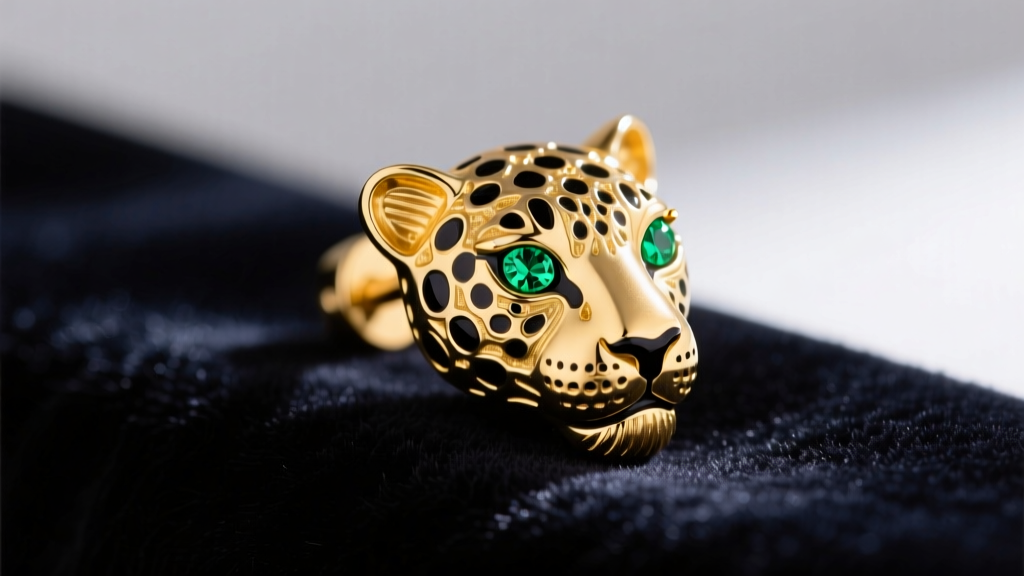
The most accessible entry point into feline motifs, the jaguar head stud typically measures between 10mm and 15mm in diameter. High-quality versions feature a three-dimensional sculpted face rather than a flat, stamped silhouette. Look for micro-pave diamond halos framing the face and hand-set gemstone eyes. Because these are relatively lightweight (usually 2 to 4 grams per ear), standard friction backs and 18-gauge posts are sufficient.
2. The Articulated Drop and Dangle
For maximum impact, articulated jaguar drops feature invisible or micro-hinged joints that allow the feline body to move fluidly with the wearer. The engineering here is paramount. A poorly crafted hinge will stiffen over time due to skin oils and debris. In 2026, top-tier jewelers are utilizing laser-welded micro-hinges that resist seizing. These pieces are heavy, often exceeding 12 grams per ear, necessitating specialized clasps and thicker posts to prevent lobe tearing.
3. The Cartilage Ear Cuff
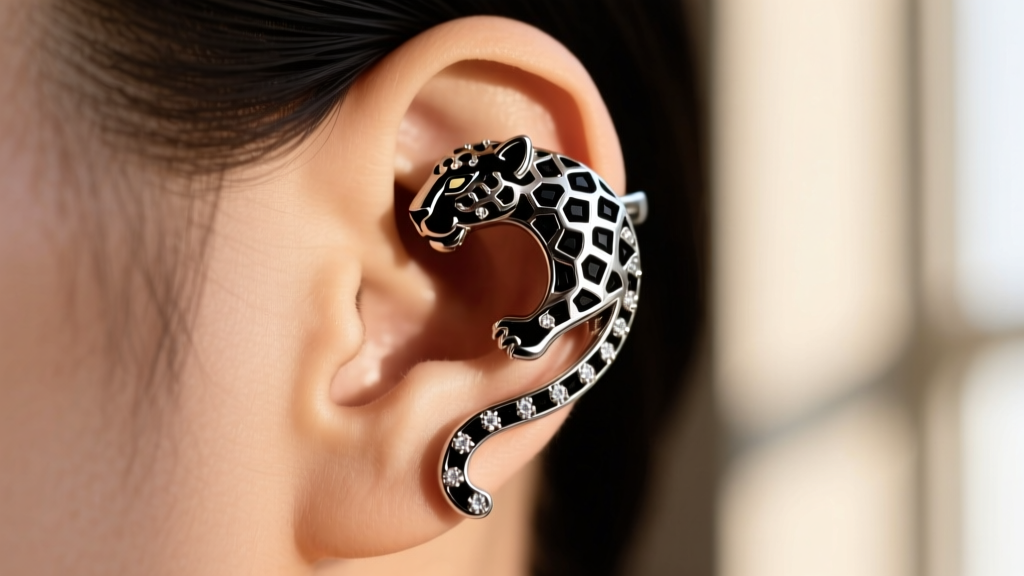
A modern favorite, the jaguar ear cuff wraps around the helix or conch. The best designs feature a tapered, flexible spine that can be gently squeezed to fit the exact curvature of the ear cartilage. Avoid rigid, cast-metal cuffs, as they will either pinch the cartilage or slide off during movement.
Gemology of the Feline Gaze: Tsavorite vs. Emerald
The eyes of a jaguar earring dictate its entire expression. Historically, emeralds were the default choice for feline eyes in high jewelry. However, modern gemological standards and practical wearability have shifted preferences.
According to the Gemological Institute of America (GIA), tsavorite garnet has become the superior choice for daily-wear animal motif jewelry. Tsavorite boasts a higher refractive index (1.74) compared to emerald (1.57), resulting in superior brilliance without the need for the heavy oiling treatments that emeralds require. Furthermore, tsavorite ranks slightly higher in practical durability for exposed prong settings, lacking the inherent surface-reaching inclusions that make emeralds prone to chipping upon accidental impact. When inspecting jaguar earrings, demand vivid, saturated green tsavorites with eye-clean clarity. If the piece features emeralds, ensure they are bezel-set rather than prong-set to protect the fragile girdle.
Metallurgy and Spot Techniques: A Buyer's Matrix
The contrast between the jaguar's coat and its spots is achieved through various metallurgical and enameling techniques. The method used drastically affects the piece's longevity, maintenance requirements, and price point.
| Spot Technique | Material / Process | Durability & Maintenance | Price Tier |
|---|---|---|---|
| Carved Onyx | Hand-carved black onyx inlays set into gold bezels. | Extremely high. Onyx (Mohs 7) resists scratching. Requires minimal maintenance. | High / Luxury |
| Black Rhodium | Electroplated black rhodium over 18k white or yellow gold. | Moderate. Plating wears off after 2-4 years of daily wear, requiring professional re-plating. | Mid / High |
| Guilloché Enamel | Vitreous enamel fired over engine-turned gold patterns. | Low to Moderate. Beautiful depth, but enamel can chip or crack if dropped on hard surfaces. | Artisan / Bespoke |
| Black Spinel Pave | Micro-set black spinels creating a textured, glittering spot. | Very High. Spinel (Mohs 8) is highly durable and requires only routine ultrasonic cleaning. | Premium Luxury |
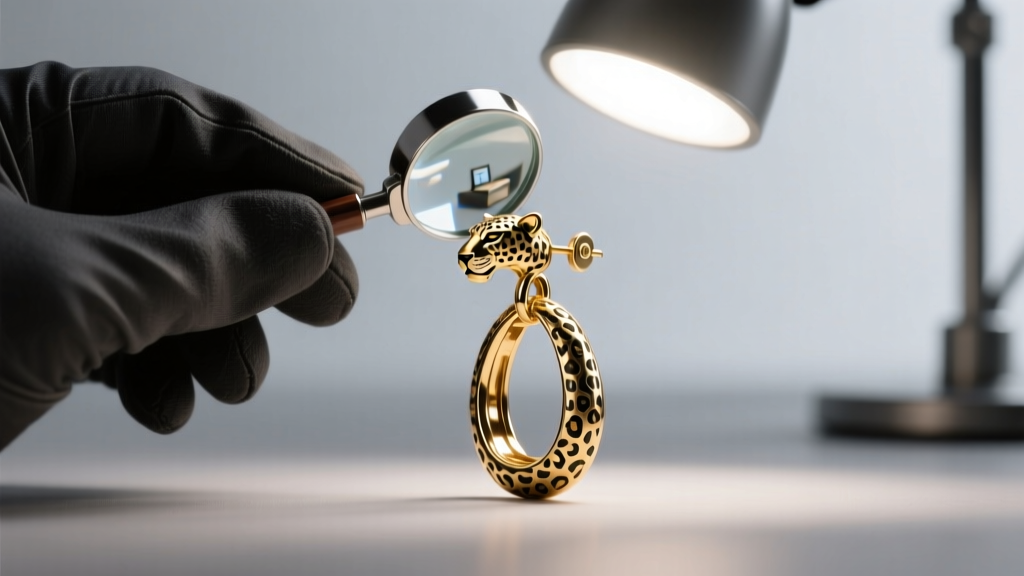
When purchasing vintage or estate jaguar earrings, always inspect the black spots under a 10x jeweler's loupe. If the spots appear grayish or show wear on the high points, the piece likely features black rhodium that needs restoration. Carved onyx and black spinel, conversely, will retain their deep black coloration indefinitely.
Structural Engineering: Gauges, Weight, and Clasps
The most common failure point in heavy motif earrings is the post and clasp assembly. A standard butterfly friction back is entirely inadequate for a 10-gram articulated jaguar drop. The weight will cause the earring to droop forward, placing uneven stress on the earlobe piercing, which can lead to stretching or tearing over time.
For any jaguar earring exceeding 6 grams, you must look for the following structural reinforcements:
- Post Gauge: Standard earrings use 20-gauge (0.81mm) or 18-gauge (1.02mm) wire. Heavy jaguar drops require a minimum of 16-gauge (1.29mm) or even 14-gauge (1.63mm) posts to prevent the metal from bending under the feline's weight.
- Omega or French Clip Backs: These clasps provide a secondary point of tension against the back of the earlobe, distributing the weight across a wider surface area rather than concentrating it solely on the piercing hole.
- Counterweights: Master jewelers often incorporate a discreet gold counterweight into the backplate of the earring post. This balances the center of gravity, ensuring the jaguar's face sits perfectly upright rather than tilting downward.
As noted by industry standards from Jewelers of America, ensuring the structural integrity of heavy statement pieces is vital not just for comfort, but for the preservation of the earlobe tissue itself. Always ask the jeweler for the exact gram weight and post gauge before finalizing a high-ticket purchase.
2026 Market Realities: Lab-Grown Pave and Ethical Sourcing
The 2026 jewelry landscape has been fundamentally reshaped by the widespread acceptance of lab-grown diamonds, particularly in the melee (small stone) category used for pave settings. A fully pave-set jaguar body can require upwards of 150 to 300 micro-diamonds. Utilizing high-quality, CVD (Chemical Vapor Deposition) lab-grown melee diamonds allows artisans to allocate more of the budget toward superior gold weight, complex articulation, and premium center stones like tsavorite, without compromising the overall brilliance of the piece.
When buying, request a breakdown of the stone origins. Ethical sourcing is no longer a niche demand but a baseline expectation. Reputable houses will provide transparency regarding their gold supply chains (such as Fairmined or recycled 18k gold) and the origin of their colored gemstones, ensuring your statement piece carries no hidden human or environmental costs.
Proportions and Face Shape Pairing
Jaguar earrings are inherently bold, and scaling them correctly to your facial geometry is essential for a harmonious look.
- Round and Oval Faces: Opt for elongated, articulated jaguar drops. The vertical movement and linear silhouette help to visually lengthen the face and draw the eye downward, creating a balancing effect.
- Square and Angular Faces: Choose jaguar ear cuffs or rounded, chunky jaguar head studs. The curved lines of a wrapping ear cuff or the compact geometry of a stud will soften strong jawlines without adding excessive vertical length.
- Heart-Shaped Faces: Medium-sized jaguar hoops or huggies, where the feline motif forms the clasp or bottom dangle, add necessary visual weight to the lower half of the face, balancing a narrower chin.
Final Checklist for the Discerning Buyer
Before finalizing your investment in jaguar earrings, run through this essential checklist:
- Verify the gold karat (18k is ideal for prong durability and rich color).
- Confirm the eye stones are tsavorite or well-protected emeralds.
- Check the post gauge (16g or thicker for heavy drops).
- Test the articulation hinges for smooth, frictionless movement.
- Inspect the spots for permanent materials (onyx/spinel) versus temporary plating (rhodium).
By prioritizing structural engineering and gemological quality over mere brand names, you ensure your jaguar earrings will remain a fierce, flawless heirloom for decades to come.


