JCM 14k Earrings: Technical Deep Dive into Hoop Mechanics & Alloys
Explore the metallurgy and engineering behind JCM 14k earrings. We analyze alloy hardness, snap-lock mechanics, and wire gauges for fine jewelry.

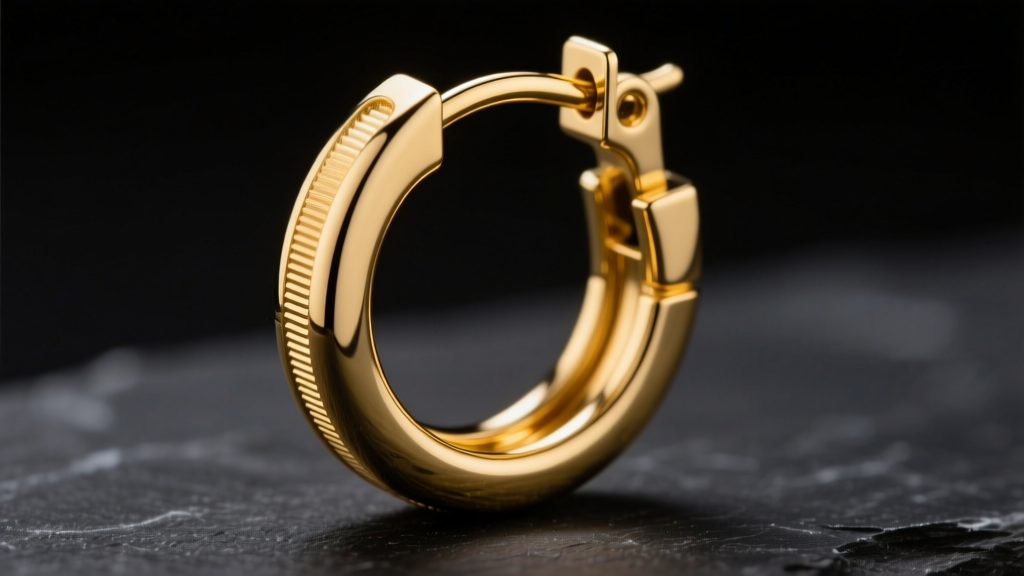
When discussing premium jewelry findings and structural integrity in fine accessories, JCM 14k earrings represent a benchmark in the industry. JCM (often recognized for their precision manufacturing of gold hoops, ear wires, and snap-lock mechanisms) has engineered a line of 14-karat gold earrings that balance luxurious aesthetics with rigorous mechanical durability. While many consumers focus solely on the visual appeal of a hoop or stud, jewelry engineers and master goldsmiths look at the metallurgical composition, the tensile strength of the wire, and the microscopic tolerances of the clasp mechanisms.
In this expert deep dive, we deconstruct the technical specifications of JCM 14k gold earrings, examining why their specific alloy blends and mechanical designs outperform generic alternatives in longevity, wearability, and structural resilience.
Metallurgy of JCM 14k Gold: The Engineering Sweet Spot
To understand the superiority of JCM 14k earrings, one must first understand the limitations of pure gold. 24k gold (99.9% pure) possesses a Vickers Hardness (HV) of roughly 25-30, making it far too malleable for functional earring mechanisms. If a hoop earring's locking post were crafted from 24k or even 18k gold, the repetitive stress of opening and closing the clasp would quickly lead to metal fatigue, bending, and eventual failure.
JCM utilizes a highly controlled 14k alloy, which consists of 58.5% pure gold and 41.5% alloying metals. According to the Gemological Institute of America (GIA), the specific ratio of copper, silver, and zinc in a 14k alloy dramatically alters its mechanical properties. JCM's yellow gold 14k alloy is engineered to achieve a Vickers Hardness of approximately 140-160 HV. This specific hardness threshold is the "sweet spot" for jewelry mechanics: it is hard enough to maintain the "click" and tension of a snap-back closure without deforming, yet malleable enough to be shaped into continuous hoops without micro-fracturing during the manufacturing process.
Alloy Composition and Tarnish Resistance
One of the most common failure modes in lower-quality 14k gold is copper-induced tarnishing (often presenting as a dark reddish-brown film). JCM mitigates this by adjusting the silver-to-copper ratio in their alloy mix and incorporating trace amounts of zinc. This not only stabilizes the color of the yellow gold over decades of wear but also increases the alloy's resistance to sulfur-based environmental tarnishing agents.
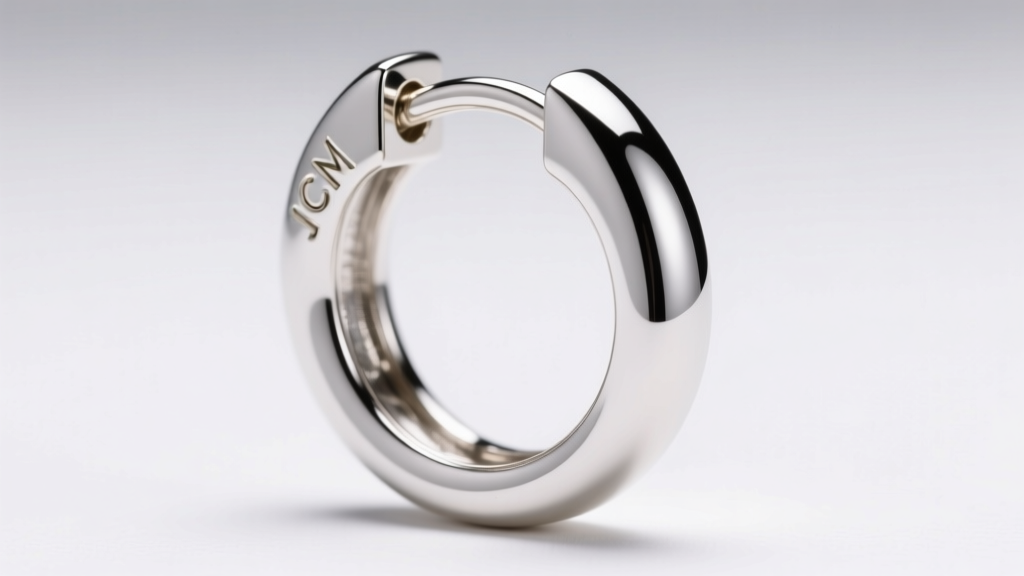
Deconstructing the JCM Snap-Back and Hinged Mechanisms
The true hallmark of JCM 14k earrings lies in their mechanical closures. The brand is particularly renowned for its hinged snap-back hoops and continuous click-lock designs. Let us break down the engineering tolerances involved in these mechanisms.
- The Male Post (Wire): The post that enters the ear and locks into the catch is precision-drawn to a specific gauge. JCM ensures the post is work-hardened during the drawing process, increasing its yield strength so it will not bend if the earring is accidentally snagged on clothing.
- The Female Catch (Receptacle): Inside the hollow or semi-hollow tubing of the hoop's opposite end lies a tension spring or a precisely milled groove. The tolerance between the male post and the female catch is measured in hundredths of a millimeter. Too tight, and the earring requires excessive force to close, risking post deformation; too loose, and the earring will pop open under the kinetic movement of the wearer's jaw and neck.
- The Hinge Pin: In hinged JCM hoops, the microscopic pin connecting the two halves of the earring is subjected to immense shear stress. JCM utilizes high-tensile alloy pins that are laser-welded or mechanically peened to prevent the hinge from loosening or "walking" out of its housing over years of daily use.
"The longevity of a hoop earring is rarely determined by the gold content, but rather by the work-hardening of the clasp mechanism and the precision of the hinge tolerances." — Master Bench Jeweler Technical Review
Wire Gauge and Structural Load Analysis
JCM manufactures their 14k hoop earrings in various wire thicknesses to accommodate different piercing locations (e.g., standard lobe vs. cartilage/helix) and weight loads. According to industry standards documented by suppliers like Rio Grande, selecting the correct gauge is critical for preventing earlobe tearing and ensuring comfort.
| Wire Gauge | Diameter (mm) | Structural Application in JCM Hoops | Best Piercing Type |
|---|---|---|---|
| 22 Gauge | 0.64 mm | Lightweight, small-diameter huggies and sleeper hoops. | Healed standard lobes, secondary lobes. |
| 20 Gauge | 0.81 mm | Standard medium hoops; balances visibility with structural rigidity. | Standard lobes, some cartilage piercings. |
| 18 Gauge | 1.02 mm | Heavy-duty hoops, charm-bearing hoops requiring high tensile strength. | Standard lobes, thicker cartilage/helix. |
| 16 Gauge | 1.29 mm | Specialty thick continuous hoops; maximum shear resistance. | Daith, rook, conch, and heavy lobe stretches. |
For standard everyday wear, JCM's 20-gauge and 18-gauge 14k hoops offer the optimal ratio of structural load-bearing capacity and tissue comfort. The 18-gauge wire, in particular, provides enough mass to support the weight of soldered charm attachments without the hoop warping into an oval shape under gravitational stress.
White Gold JCM Earrings: Rhodium Plating and Sub-Surface Alloys
When evaluating JCM 14k white gold earrings, the technical conversation shifts to surface treatments. White gold does not exist in nature; it is an alloy of yellow gold bleached by white metals like palladium, nickel, or silver. As of 2026, the industry has largely shifted toward nickel-free palladium-based white gold alloys to comply with global hypoallergenic standards.
JCM's 14k white gold earrings feature a palladium-silver base alloy that naturally exhibits a cooler, grayer hue than older nickel-based mixes. However, to achieve the brilliant, mirror-like finish expected of luxury white gold, JCM applies a micro-layer of rhodium plating. The thickness of this rhodium layer is critical. While cheap manufacturers apply a "flash" plating of less than 0.1 microns (which wears off in weeks), JCM's premium findings utilize a thicker electroplating process, ensuring the brilliant white luster withstands years of friction against the ear and hair before requiring re-plating by a bench jeweler.
Authenticating JCM Hallmarks and Quality Control
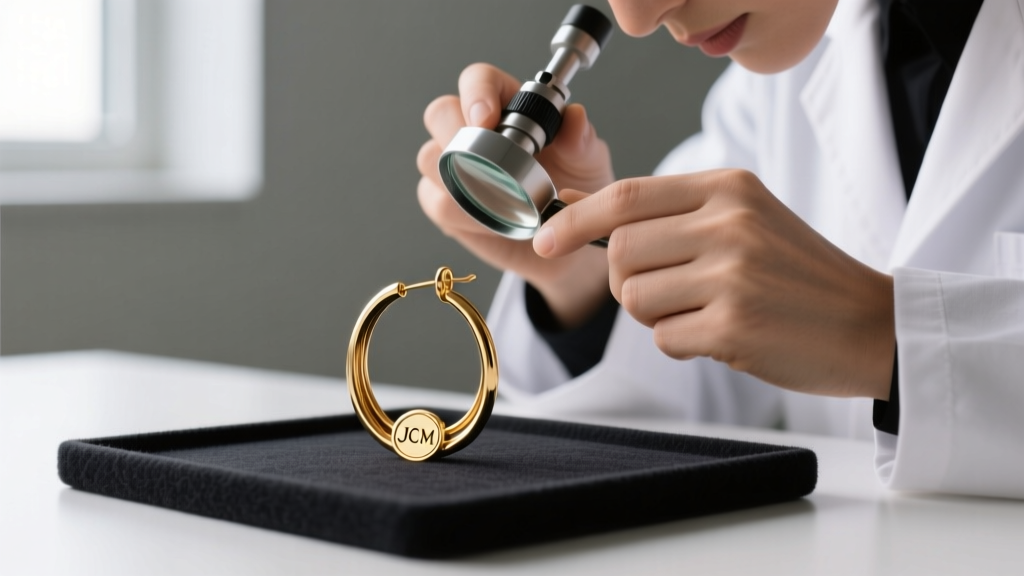
Because JCM is a premier manufacturer, their 14k earrings are highly sought after, which unfortunately invites counterfeiting. Authenticating genuine JCM 14k earrings requires an understanding of FTC hallmarking guidelines and microscopic stamping techniques. As outlined by the Federal Trade Commission (FTC) Jewelry Guides, any item stamped "14k" must be within a strict tolerance of the 58.5% purity mark.
Genuine JCM pieces often feature incredibly precise, laser-engraved or micro-stamped hallmarks on the interior of the hoop or the flat pad of a stud post. Under a 10x jeweler's loupe, a true JCM stamp will exhibit sharp, clean edges with no "orange peel" texture in the surrounding gold—a common defect in cast counterfeit marks. Furthermore, authorized JCM distributors provide specific tagging and lot-number traceability that ensures the metallurgical integrity of the batch.
Troubleshooting Common Wear Issues
Even with superior engineering, mechanical earrings require maintenance. If a JCM snap-lock hoop loses its satisfying "click," it is rarely a failure of the gold itself. Instead, it is usually caused by the accumulation of microscopic debris (skin cells, lotion, dust) inside the female catch receptacle. A professional ultrasonic cleaning, followed by a microscopic re-tensioning of the male post by a jeweler using nylon-jaw pliers, will restore the factory-spec tension without compromising the 14k gold's structural integrity.
Conclusion: The Verdict on JCM Engineering
JCM 14k earrings are not merely decorative accessories; they are feats of micro-engineering. By strictly controlling their 58.5% alloy compositions for optimal Vickers hardness, maintaining sub-millimeter tolerances in their snap-lock mechanisms, and adhering to rigorous rhodium plating standards, JCM has created a product line that bridges the gap between fine jewelry luxury and industrial-grade durability. For jewelers, collectors, and daily wearers who demand structural excellence from their fine accessories, JCM remains an undisputed technical leader in the 14k gold earring market.


