Justin Bieber With Earrings: 2026 Budget Style Guide
Replicate the iconic Justin Bieber with earrings look on a budget. We assess material values, gauge sizes, and affordable alternatives.

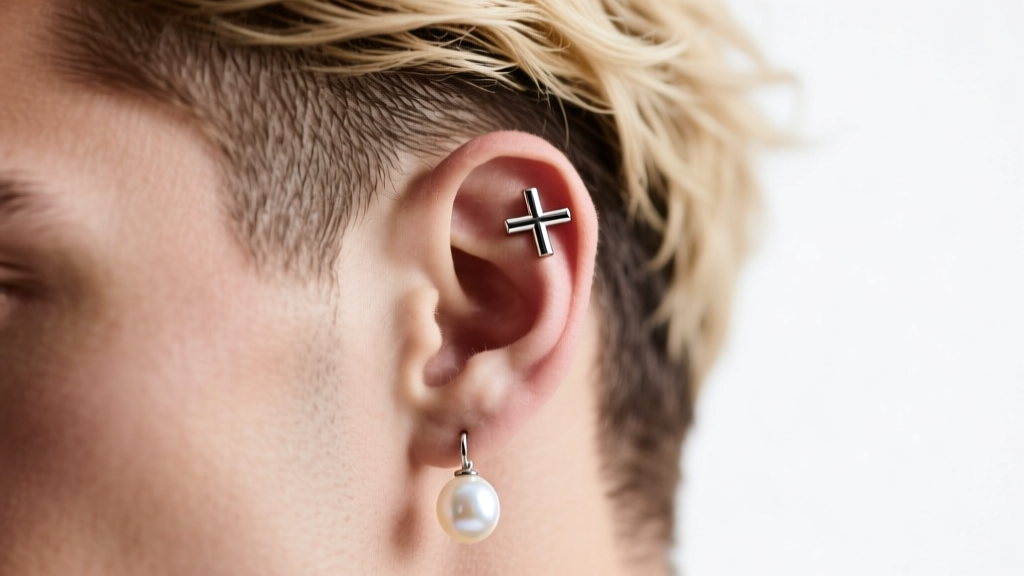
The Evolution of a Pop-Culture Ear Stack
When fans search for Justin Bieber with earrings, they are usually looking to replicate a style that has fundamentally shifted modern men's jewelry. Over the last decade, Bieber’s ear game has evolved from standard pop-star diamond studs to a curated, gender-fluid mix of religious motifs, raw pearls, and layered cartilage pieces. While his personal collection features heavy hitters like Chrome Hearts, custom Tiffany & Co. pieces, and high-carat VVS diamonds, achieving this exact aesthetic does not require a six-figure budget.
From a value assessment perspective, the secret to replicating this look lies in understanding material science, gemological alternatives, and precise piercing anatomy. By swapping out luxury markups for smart metallurgical choices, you can build a Bieber-inspired ear stack that looks identical to the naked eye but costs a fraction of the price.
Decoding the Signature Looks (And What They Actually Cost)
To build a budget-friendly replica, we first need to break down the three core pillars of his earring rotation and analyze the true cost of the materials versus the brand markup.
1. The Classic Diamond Studs
Bieber frequently wears 1.5 to 2.0 carat diamond studs in his primary lobe piercings. In the luxury market, a matched pair of VS1 clarity, F-color natural diamonds set in 18k white gold will easily run between $12,000 and $18,000. However, the visual difference between a high-grade natural diamond and a premium lab-grown alternative is virtually non-existent to the untrained eye.
The Budget Pivot: Opt for Moissanite. According to the Gemological Institute of America (GIA), moissanite possesses a refractive index of 2.65, which is actually higher than a diamond's 2.42, giving it exceptional brilliance. A pair of 1.5-carat DEF color, VVS1 clarity moissanite studs in a martini setting costs roughly $150 to $250. You save 98% of the cost while gaining a stone with superior fire and scintillation.
2. The Cross & Religious Motifs
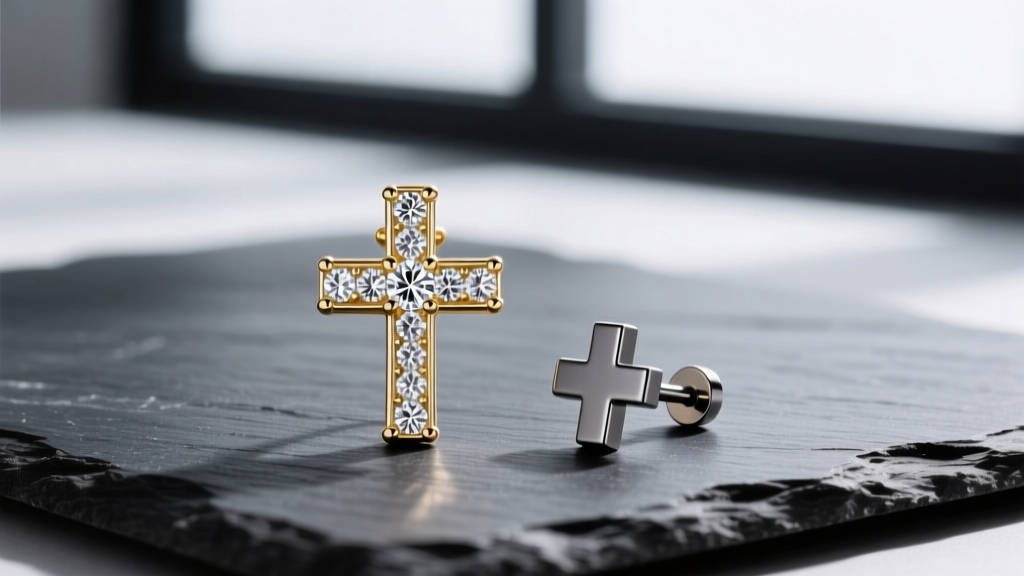
The grunge-streetwear cross earring is a staple of his mid-2010s to current aesthetic. High-end brands charge upwards of $1,500 for small 18k gold or sterling silver dagger crosses adorned with pavé diamonds. The issue with budget sterling silver is its softness and tendency to tarnish rapidly when exposed to the natural oils and sweat around the ear.
The Budget Pivot: Look for 316L stainless steel or ASTM F138 implant-grade titanium bases coated in PVD (Physical Vapor Deposition) 18k gold. PVD coating bonds at a molecular level, making it highly resistant to scratching and tarnishing compared to traditional electroplating. A high-quality PVD titanium cross stud with cubic zirconia accents can be sourced for $35 to $60, offering superior durability to soft luxury gold.
3. The Pearl Drop & Gender-Fluid Cartilage
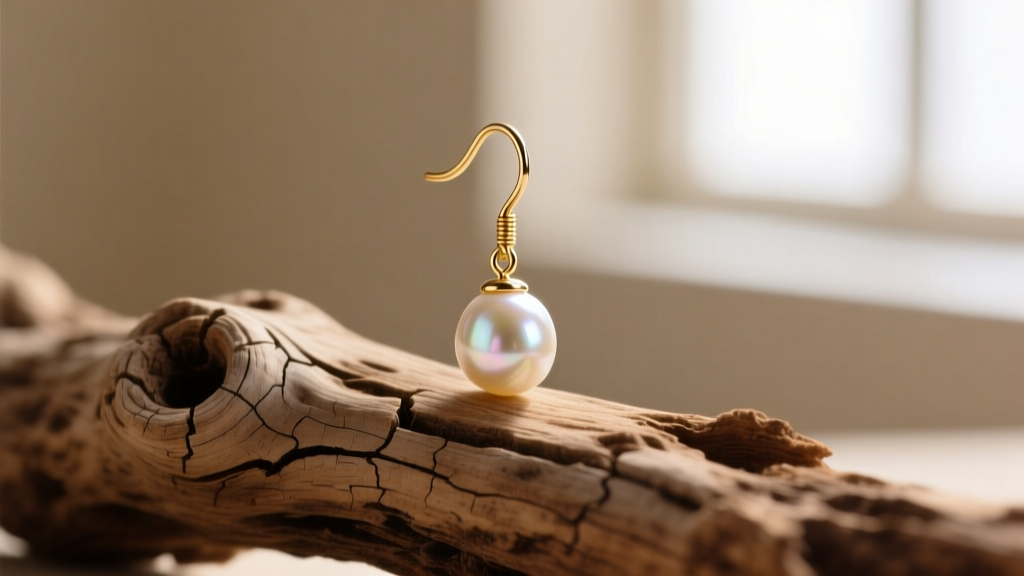
Bieber’s adoption of pearl earrings—often wearing them in his helix or second lobe—helped normalize pearls in men's streetwear. Luxury Akoya or South Sea pearl drops can cost $600 to $1,200 per pair.
The Budget Pivot: AAA-grade freshwater pearls. Modern freshwater pearl farming techniques produce near-perfect round pearls with thick nacre and intense orient (the rainbow-like iridescence). A pair of 8mm AAA freshwater pearl drops on a 20-gauge gold-filled wire costs around $30 to $45, delivering the exact same organic, textured aesthetic.
Budget vs. Luxury: Material Value Assessment
When curating your ear stack, understanding where to allocate your budget is critical. The table below breaks down the material specifications, expected lifespan, and pricing tiers for luxury versus smart-budget alternatives.
| Component | Luxury Standard (Bieber's Specs) | Smart Budget Alternative | Value Assessment & Lifespan |
|---|---|---|---|
| Base Metal | 18k Solid Gold / Platinum | ASTM F138 Titanium with PVD 18k Gold | Titanium is hypoallergenic and stronger. PVD lasts 2-5 years with proper care. (Save 90%) |
| Clear Stones | Natural VVS Diamonds (1.5ct) | Lab Moissanite (DEF, VVS1) | Moissanite is harder than sapphire (9.25 Mohs) and will not cloud over time. (Save 95%) |
| Pearls | Akoya / South Sea Saltwater | AAA Round Freshwater | Freshwater nacre is often thicker and more durable than thin-nacre saltwater beads. (Save 85%) |
| Black Accents | Black Rhodium Plating | Oxidized Stainless Steel / Black PVD | Black PVD is vastly superior to rhodium, which rubs off quickly on high-friction earring posts. (Save 80%) |
How to Build the Stack: Anatomy and Gauge Sizing
A common mistake when replicating celebrity ear stacks is ignoring the physical anatomy of the piercings. The Association of Professional Piercers (APP) strictly outlines standard gauge sizes for safe healing and long-term wear. If you buy the wrong gauge, the jewelry will either not fit or cause tissue irritation.
- First Lobe (The Anchor): Typically pierced at 20g (0.8mm) or 18g (1.0mm). This is where your primary moissanite stud or PVD cross belongs. Use a push-in or threaded labret back to avoid the bulky butterfly backs that trap bacteria.
- Second Lobe (The Support): Usually 18g (1.0mm). This is the ideal placement for a smaller, complementary piece, such as a 3mm bezel-set moissanite or a small gold-filled hoop.
- Upper Helix (The Statement): Cartilage is standardly pierced at 16g (1.2mm) or 14g (1.6mm). This is where the freshwater pearl drop or a textured titanium cuff should sit. Because cartilage has limited blood flow, ensure you only wear implant-grade titanium here to prevent nickel-induced contact dermatitis.
- Tragus (The Detail): Also 16g (1.2mm). A tiny 2mm black moissanite or a simple titanium ball stud adds the necessary micro-detailing that makes the stack look intentionally curated rather than random.
Where to Invest vs. Where to Save
To maximize your budget, apply the 80/20 rule of jewelry curation. Spend 80% of your budget on the pieces that draw the most eye contact, and save on the structural elements.
The Golden Rule of Budget Stacking: Never compromise on the base metal if you have sensitive skin. A $20 PVD-coated titanium stud is infinitely more valuable than a $150 sterling silver stud that will cause your ear to swell and reject the jewelry due to nickel alloys.
Where to Invest: Put your money into the primary lobe stones. A high-quality moissanite stud cut to ideal proportions will catch the light and serve as the focal point of your entire face. Additionally, invest in a reputable piercer to ensure your cartilage angles are perfectly aligned; a poorly angled helix piercing will ruin the visual flow of the stack, regardless of how expensive the jewelry is.
Where to Save: Save money on secondary hoops, ear cuffs, and novelty shapes (like crosses or daggers). These pieces are generally smaller, and the visual difference between a $1,000 gold cross and a $40 PVD titanium cross is imperceptible from more than a foot away.
Care and Maintenance for Budget Pieces
Budget jewelry requires slightly more maintenance than solid platinum or 18k gold to ensure longevity. To keep your PVD coatings intact and your moissanite sparkling, follow this strict maintenance protocol:
- Chemical Avoidance: Never expose PVD-coated jewelry to chlorine, salt water, or harsh sulfates. Remove your earrings before swimming or showering.
- Proper Cleaning: Clean your moissanite and CZ stones weekly using a soft-bristled baby toothbrush and a mixture of warm water with a single drop of mild, lotion-free dish soap. This removes the sebum and dead skin cells that create a cloudy film over the stones.
- Storage: Store pieces individually in soft microfiber pouches. Tossing PVD-coated titanium and moissanite into a shared jewelry box will result in micro-scratches on the gold coating, as moissanite (9.25 on the Mohs scale) is hard enough to scratch metal.
By understanding the metallurgy and gemology behind the trend, you can effortlessly capture the essence of this iconic celebrity style. It is not about the brand name stamped on the receipt; it is about the precision of the cut, the quality of the base metal, and the confidence in how you wear the stack.


