Karl Lagerfeld Vintage Earrings: Authentication & Buying Guide
Discover how to authenticate Karl Lagerfeld vintage earrings. Learn hallmark details, pricing tiers, and material grades for 1980s and 1990s pieces.

The Allure of Karl Lagerfeld Vintage Earrings
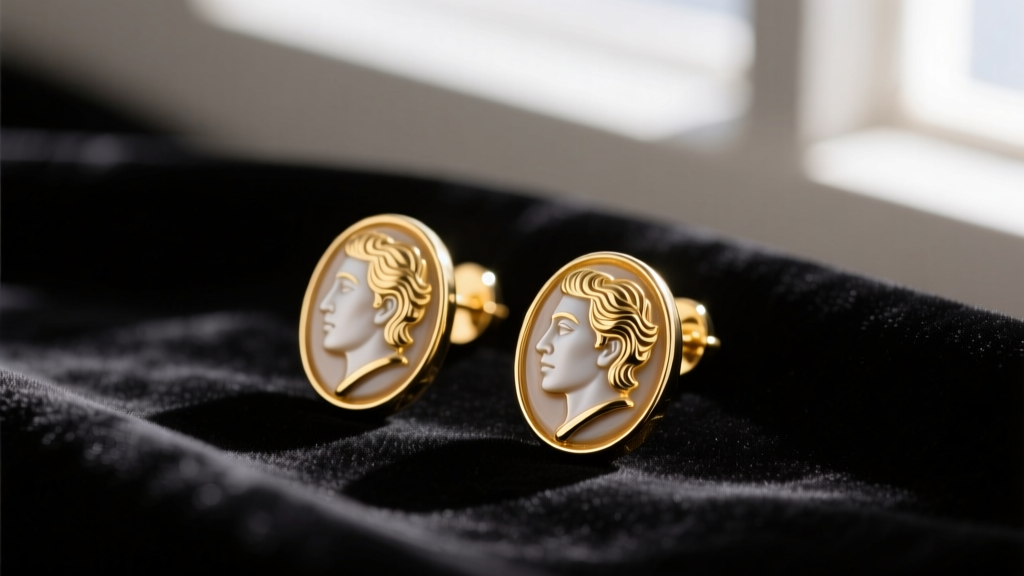
The vintage costume jewelry market has experienced a massive renaissance, and sitting at the pinnacle of bold, unapologetic design are Karl Lagerfeld vintage earrings. While many collectors immediately associate Lagerfeld with his legendary tenure at Chanel, his eponymous label—launched in 1984—produced a distinct, highly collectible line of costume jewelry that commands serious attention in 2026. Unlike the interlocking Cs of Chanel, the Karl Lagerfeld brand embraced a wider array of motifs, from classical Greek profiles and Maltese crosses to sleek, futuristic interlocking 'KL' logos.
For serious collectors and vintage enthusiasts, navigating this market requires a trained eye. The secondary market is currently flooded with high-quality replicas, making it imperative to understand the nuanced differences in hallmarks, base metals, and stone compositions. This comprehensive buying guide will equip you with the exact specifications needed to authenticate, value, and wear vintage Lagerfeld earrings with confidence.
Decoding the Eras: 1980s vs. 1990s Designs
Karl Lagerfeld’s eponymous jewelry line evolved dramatically over the decades. Understanding the stylistic and structural shifts between the 1980s and 1990s is the first step in dating a potential purchase.
The Bold 1980s: Sculptural Silhouettes and Clip-Ons
Earrings from the 1980s are characterized by their substantial weight, dramatic scale, and historical references. During this era, Lagerfeld favored heavy gold-tone plating over brass or pewter bases. The most iconic motif of this decade is the profile cameo, often featuring a detailed silhouette of a classical figure or Lagerfeld himself. Because ear piercing was not as universally standardized for heavy jewelry, the vast majority of 80s pieces utilize omega clip-backs or screw-back mechanisms designed to distribute weight evenly across the earlobe.
The Sleek 1990s: Minimalist Logos and Rhinestone Pavé
As fashion shifted toward minimalism in the 1990s, so did Lagerfeld’s earring designs. The heavy, sculptural brass gave way to lighter, more refined pieces. This era introduced the ubiquitous interlocking 'KL' logo, often rendered in sleek gold-tone metal or entirely encrusted in precision-cut rhinestone pavé. Post-and-clutch backs became the standard, and the overall aesthetic leaned into wearable, everyday luxury rather than avant-garde statement pieces.
Authentication Blueprint: Spotting Genuine Pieces
Authenticating Karl Lagerfeld vintage earrings requires examining three critical areas: the hallmark, the hardware, and the materials. Counterfeiters often get the visual design right but fail to replicate the precise manufacturing techniques used by Lagerfeld’s European ateliers.
Hallmarks and Stamps
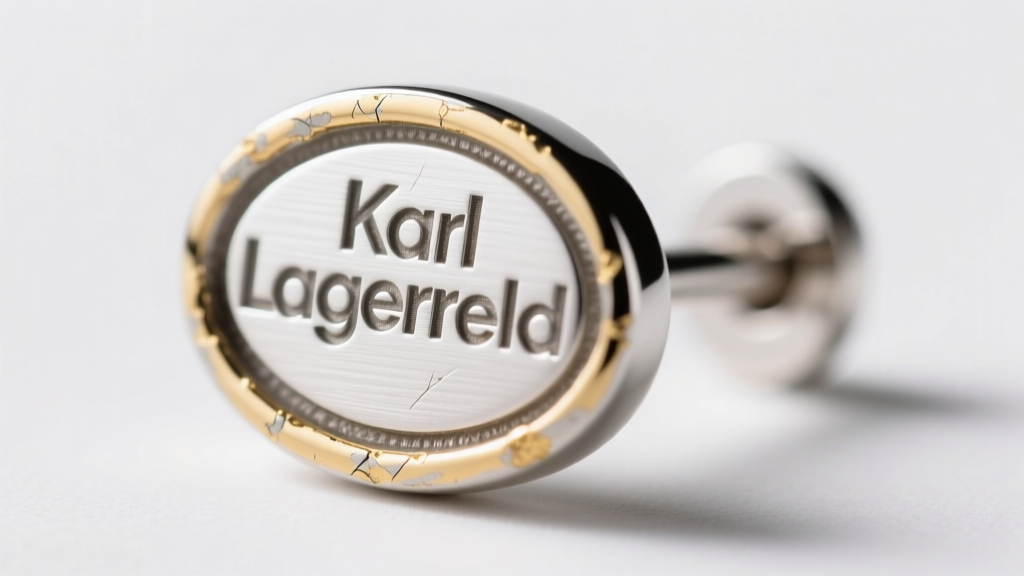
The evolution of the Lagerfeld hallmark is your most reliable authentication tool. Below is a breakdown of what to look for based on the decade of production.
| Decade | Primary Hallmark Style | Secondary Markings | Placement |
|---|---|---|---|
| Early 1980s | Block letter 'Karl Lagerfeld' stamp or attached metal hangtag | 'Made in France', Copyright symbol (©) | Back of the clip mechanism or hanging tag |
| Late 1980s | Debossed script or serif font directly into the metal | Season/Year codes (rare) | Flat surface of the earring back |
| 1990s - 2000s | Laser-engraved oval cartouche | 'Karl Lagerfeld', 'Made in France' | Engraved directly onto the earring post or clutch |
Red Flag: If a piece claiming to be from the 1990s features a shallow, poorly aligned stamp rather than a crisp, laser-engraved oval cartouche, it is highly likely to be a reproduction.
Stone Quality: Gripoix vs. Mass-Produced Resin
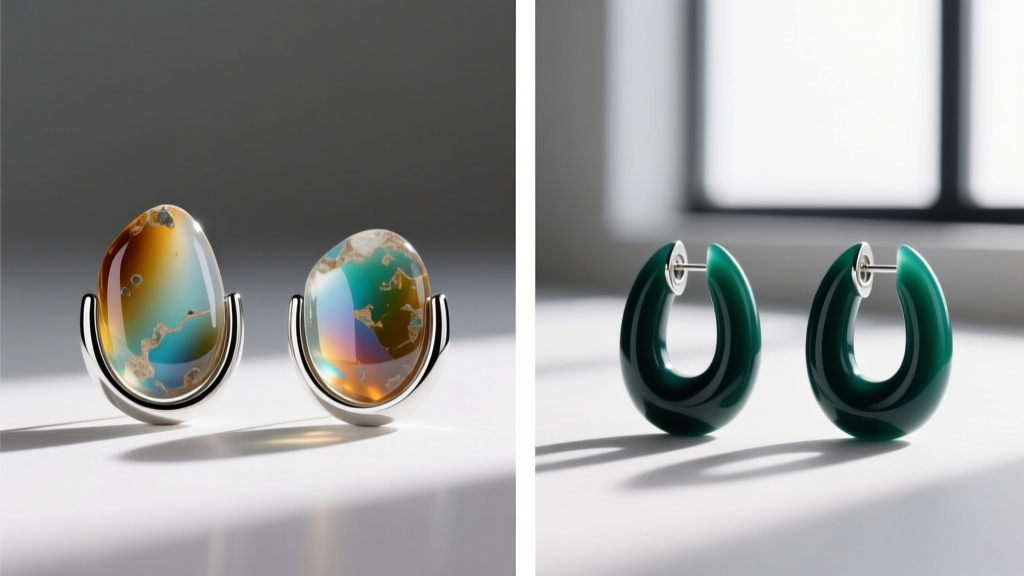
For his higher-end vintage pieces, Lagerfeld frequently utilized Gripoix poured glass (pâte de verre). Authentic Gripoix stones possess a jelly-like translucency, deep color saturation, and often contain microscopic, naturally occurring bubbles from the hand-pouring process. Conversely, modern counterfeits use mass-produced acrylic or resin. Resin stones are perfectly uniform, lack internal depth, and often feature visible mold lines along the edges.
Material Composition & Wearability
When investing in vintage costume jewelry, understanding the material composition is vital for both longevity and skin sensitivity. Karl Lagerfeld vintage earrings are not solid gold; they are gold-tone plated base metals.
- Base Metals: Authentic pieces typically use a brass or pewter alloy. Brass provides a warm, heavy foundation, while pewter allows for intricate, detailed casting (common in the 80s profile motifs).
- Plating: The gold plating on genuine 1980s pieces is remarkably thick, often mimicking 18k or 22k gold hues. However, decades of wear can lead to 'brassing' (where the base metal shows through) on high-friction areas like the omega clip hinges.
- Skin Sensitivities: Because these pieces contain base metals and older soldering alloys, they may contain trace amounts of nickel. If you have sensitive earlobes, apply a thin layer of clear nail polish or a specialized jewelry barrier to the post or clip-back before wearing.
According to the 1stDibs Karl Lagerfeld Archive, collectors should prioritize pieces with intact plating, as professional re-plating can sometimes obscure the delicate, laser-engraved hallmarks found on 90s posts.
2026 Market Pricing & Valuation Guide
The valuation of Karl Lagerfeld vintage earrings depends heavily on the era, the rarity of the motif, and the condition of the hardware. Based on current market data from platforms like Vestiaire Collective and specialized vintage dealers, here is what you should expect to pay in 2026:
- Standard 90s 'KL' Logo Studs (Rhinestone or Plain Metal): $120 – $250 USD. These are the most common and serve as an excellent entry point for new collectors.
- 1980s Profile Cameo & Maltese Cross Clip-Ons: $350 – $650 USD. Highly sought after for their bold, editorial aesthetic. Pieces featuring faux baroque pearls or intact Gripoix glass command the higher end of this spectrum.
- Rare Chandelier & Runway Archive Pieces: $800 – $1,500+ USD. Oversized, multi-tiered chandelier earrings or specific runway-documented pieces from the mid-80s are considered investment-grade costume jewelry.
Pro-Tip for Buyers: Always factor in the condition of the clasp. Vintage omega clips can lose their tension over time. If a clip-on earring feels loose, a professional jeweler can tighten the hinge, but this should be factored into your initial offer price.
Where to Buy Safely and Care Instructions
To avoid the saturated market of unverified e-commerce listings, restrict your purchasing to vetted platforms. 1stDibs and Vestiaire Collective offer robust authentication services where in-house experts verify hallmarks and material weights before the item ships. For localized finds, estate sales and specialized vintage costume jewelry dealers remain excellent sources, provided you bring a jeweler's loupe to inspect the stamp depth and stone settings.
Once you have secured your authentic Karl Lagerfeld vintage earrings, proper storage is non-negotiable. Never store vintage gold-tone jewelry in humid environments like bathrooms, as moisture accelerates the oxidation of the underlying brass or pewter. Keep them in individual anti-tarnish cloth pouches, and consider applying a micro-crystalline wax, such as Renaissance Wax, to seal the metal and preserve the gold plating for decades to come.


