How to Clean & Restore Vintage Dangle Earrings Safely
Learn expert techniques to clean, maintain, and restore vintage dangle earrings without damaging fragile metals, porous gems, or antique patinas.

The Unique Vulnerabilities of Vintage Dangle Earrings
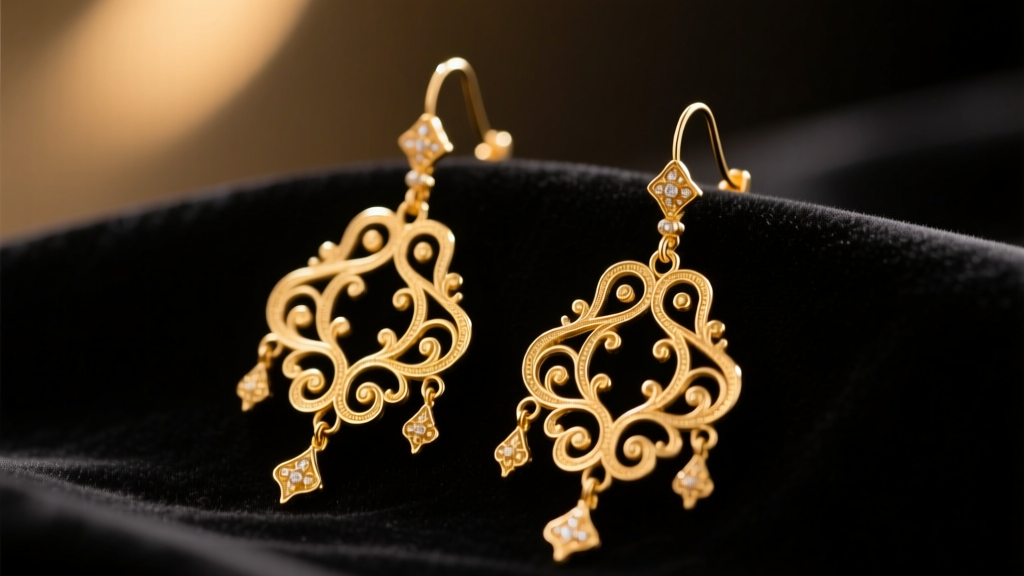
Vintage dangle earrings are masterclasses in historical craftsmanship, but their kinetic design makes them uniquely susceptible to wear. Unlike studs or huggies that sit flush against the ear, dangles and drop earrings swing, catch on textiles, and endure continuous gravitational pull. This movement creates micro-abrasions at the connection points—specifically the jump rings and ear wires—leading to metal fatigue over decades of use. When caring for pieces from the Victorian, Art Nouveau, or Art Deco eras, you are not just cleaning jewelry; you are conserving wearable artifacts. A single misstep with modern chemical cleaners can strip a century-old patina, dissolve antique shellac adhesives, or permanently cloud fragile foiled gemstones.
Understanding the exact materials and construction methods of your vintage dangle earrings is the prerequisite for safe maintenance. What works for a 1950s Dior rhinestone drop will catastrophically damage an 1830s Georgian garnet pendeloque. This guide outlines professional conservation standards for cleaning, inspecting, and storing these delicate kinetic treasures.
Material-Specific Cleaning Protocols
The golden rule of antique jewelry conservation is that the cleaning method must be dictated by the most fragile component in the piece, not the primary metal. According to the Victoria and Albert Museum, improper cleaning is the leading cause of irreversible damage to historical jewelry.
Porous Gemstones and Organic Materials
If your vintage dangles feature pearls, coral, turquoise, lapis lazuli, or opals, they must never be submerged in water or exposed to commercial jewelry dips. These porous materials act like sponges, absorbing chemicals that can alter their color or structural integrity. The Gemological Institute of America (GIA) strictly advises against using ultrasonic cleaners or ammonia-based solutions on organic gems. Instead, use a barely damp, lint-free microfiber cloth to gently wipe the stones. For intricate filigree surrounding a turquoise cabochon, use a dry, soft-bristled baby toothbrush to dislodge dust from the crevices without introducing moisture.
The Danger of Foiled Backs and Closed Settings
Georgian and early Victorian dangle earrings frequently utilize closed-back settings with metallic foil (often silver or copper) placed behind the gemstone to enhance brilliance. If moisture breaches the bezel, the foil will oxidize, turn black, and ruin the stone's optical properties. Never wash foiled earrings. Clean only the front facet using a dry, soft brush, and polish the exterior metal with a dry silver cloth, ensuring no liquid seeps into the bezel edges.
Hard Stones and Precious Alloys
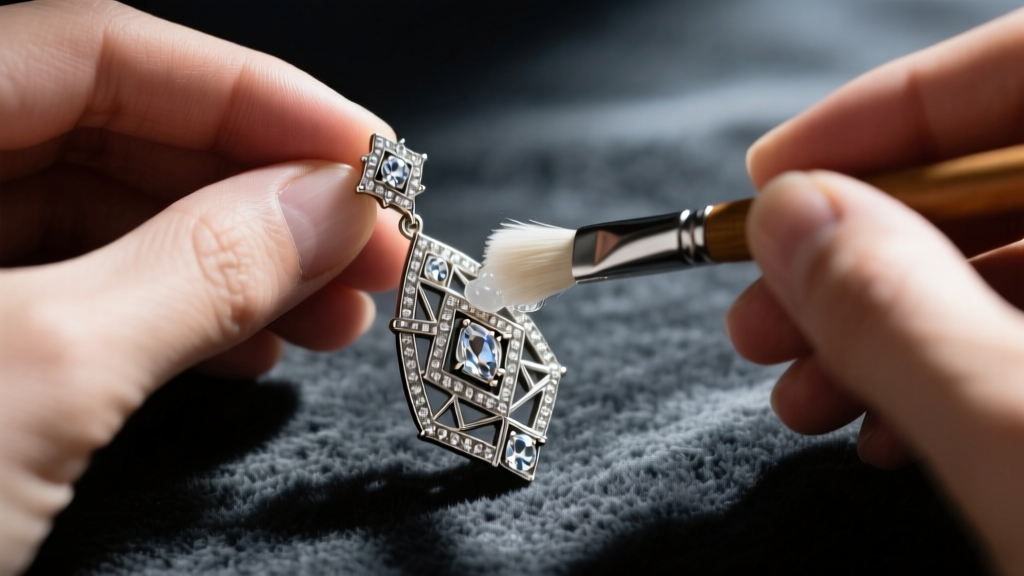
For vintage dangles featuring diamonds, rubies, or sapphires set in platinum, 18k gold, or sterling silver, a gentle wet cleaning is usually safe. Avoid harsh commercial dips, which often contain thiourea—a toxic chemical that can cause micro-pitting in silver alloys over time. Instead, create a mild cleaning solution using distilled water and a few drops of pH-neutral surfactant, such as Orvus WA Paste or basic Dawn dish soap. Distilled water is critical; tap water contains chlorine and dissolved minerals that can leave spots or react with antique copper alloys. Soak the earrings for no more than three minutes, gently agitate with a soft brush, and rinse with fresh distilled water.
The Danger of Modern Cleaning Tech: Ultrasonics and Steam
In 2026, consumer-grade ultrasonic jewelry cleaners are more accessible than ever, but they remain one of the greatest threats to vintage dangle earrings. Ultrasonic cleaners work through cavitation—creating microscopic vacuum bubbles that implode with immense force. While excellent for removing grime from modern, solid-cast diamond rings, this violent process will shatter emeralds (which are naturally included and often fracture-filled), shake loose antique paste stones, and vibrate apart the delicate prongs of a century-old setting.
Similarly, steam cleaners pose a severe thermal shock risk. Rapid temperature changes can cause internal fractures in garnets, peridots, and glass paste stones commonly found in Art Deco dangles. Furthermore, the heat from steam will melt the shellac, mastic, or early epoxy resins historically used to secure stones in non-prong settings, leading to immediate gemstone loss.
Step-by-Step Restoration and Maintenance Framework
When approaching a new pair of vintage dangles, follow this systematic conservation framework to ensure their longevity:
- Macro-Inspection: Use a 10x jeweler's loupe to examine all prongs, bezels, and jump rings. Look for lifted prongs, hairline fractures in the metal, or cloudy stones indicating foil degradation.
- Dry De-dusting: Use a soft, natural-bristle brush to remove loose particulate matter. This prevents scratching the metal or stones during the wet cleaning phase.
- Targeted Wet Cleaning: If the materials are confirmed safe (no foils, no porous stones, no glued components), apply the distilled water and pH-neutral soap solution using a localized brush technique rather than full submersion.
- Controlled Drying: Never air-dry vintage pieces, as water spots will form. Use a can of compressed air (held at least six inches away) to blow water out of intricate settings, followed by patting dry with a lint-free cloth.
- Ear Wire Sanitization: To safely sanitize the ear wires without damaging the earring body, apply 70% isopropyl alcohol to a cotton swab and carefully wipe only the wire that passes through the ear. Keep the alcohol far away from any patinated metal or porous stones.
Structural Integrity: Checking Jump Rings and Ear Wires
Because dangle earrings are kinetic, their structural failure points are highly predictable. The Smithsonian Museum Conservation Institute notes that mechanical stress is a primary driver of degradation in historical metals. Below is a diagnostic table for common failure modes in vintage dangles:
| Component | Common Failure Mode | Professional Conservation Fix |
|---|---|---|
| Ear Wire | Metal fatigue and snapping at the primary bend | Annealing the existing wire or fabricating a replacement using period-correct alloy and gauge |
| Jump Ring | Micro-abrasion thinning from friction against the ear wire | Laser welding the thin point or upsizing to a slightly thicker, hard-soldered jump ring |
| Prongs | Snagging on clothing, leading to lifting and stone loss | Retipping the prongs using matching karat solder and re-burnishing the metal over the stone girdle |
| Hinge (if applicable) | Seizing due to oxidation or polishing compound buildup | Ultrasonic cleaning of the hinge pin only (if stones are safe), or mechanical clearing with a micro-pick |
Proper Storage to Prevent Tangles and Oxidation
How you store vintage dangle earrings is just as critical as how you clean them. Tossing them into a communal jewelry box guarantees that the ear wires will hook into the delicate filigree of other pieces, bending prongs and scratching soft metals. Furthermore, exposing antique silver or copper alloys to ambient humidity accelerates tarnishing.
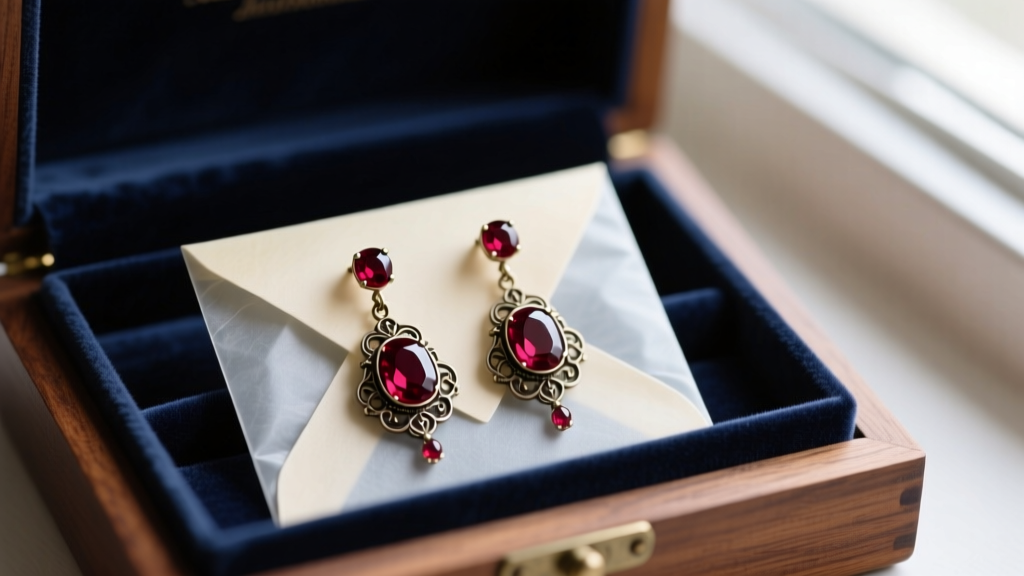
Store each pair of vintage dangles individually in acid-free glassine envelopes or unbleached cotton pouches. Glassine is ideal because it is pH-neutral, non-abrasive, and allows you to see the contents without opening the packet. Place these envelopes in a dedicated, lined wooden box. Avoid modern plastic ziplock bags; many plastics emit volatile organic compounds (VOCs) and contain sulfur or PVC, which will rapidly tarnish silver and degrade antique plastics like Bakelite or celluloid. Finally, include a few 3M anti-tarnish strips in the storage box, replacing them every six months to actively absorb atmospheric sulfur and neutralize oxidation before it begins.
Conclusion
Caring for vintage dangle earrings requires a shift in mindset from modern jewelry maintenance to historical conservation. By respecting the material limitations of porous gems, avoiding the destructive forces of ultrasonic cavitation, and proactively monitoring kinetic stress points, you ensure that these exquisite artifacts survive to be worn and admired by future generations. When in doubt about a specific material or structural weakness, always consult a certified antique jewelry conservator rather than risking irreversible damage with DIY home remedies.


