A Beginner's Guide to Kate Spade Huggie Earrings
Discover how to choose, style, and care for Kate Spade huggie earrings. Our beginner guide covers sizing, materials, and everyday styling formulas.

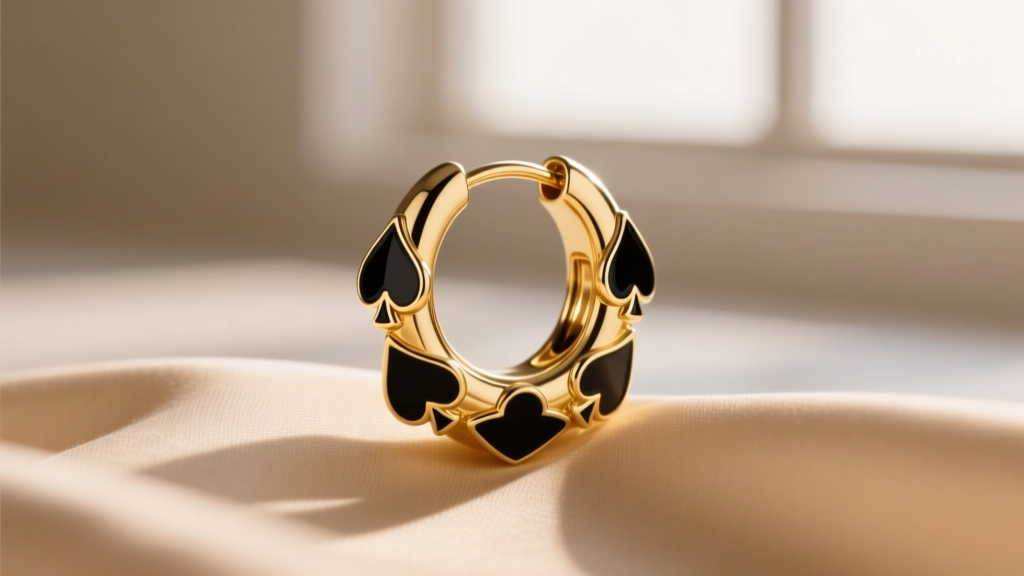
Understanding the Appeal of the Huggie
If you are transitioning from standard stud earrings to something with a bit more presence, huggies are the perfect middle ground. Unlike traditional hoops that dangle and catch on clothing, huggies are designed to "hug" the earlobe snugly. Among the myriad of fashion jewelry brands, kate spade huggie earrings stand out for their distinct blend of playful motifs, accessible luxury, and reliable everyday wearability. For beginners, navigating the specifics of fashion jewelry—from base metals to plating thickness—can feel overwhelming. This guide breaks down the exact technical specifications, material compositions, and styling frameworks you need to confidently wear and care for your huggies.
The Anatomy and Technical Specs of Kate Spade Huggies
Before purchasing, it is crucial to understand the physical dimensions and mechanics of these earrings. Fashion jewelry often lacks the standardized sizing of fine jewelry, but Kate Spade maintains relatively consistent specifications across their huggie collections.
Gauge and Thickness
The "gauge" refers to the thickness of the metal wire that passes through your piercing. Most kate spade huggie earrings feature an 18-gauge (1.02mm) or 20-gauge (0.81mm) post. This is the industry standard for healed lobe piercings. If you have recently stretched piercings or wear heavier fine jewelry (like 14g or 16g), you may find 20g huggies feel slightly loose or prone to rotating forward. For standard, unmodified lobe piercings, the 18g/20g thickness provides a secure, comfortable fit without causing irritation.
Inner Diameter and the "Hug" Factor
The defining feature of a huggie is its inner diameter. Kate Spade typically designs their standard lobe huggies with an inner diameter ranging from 11mm to 14mm. This specific measurement ensures the earring wraps closely around the bottom of the earlobe without pinching the skin. If you have thicker earlobes, opt for the 13mm or 14mm variations to prevent the metal from pressing uncomfortably into the back of your ear.
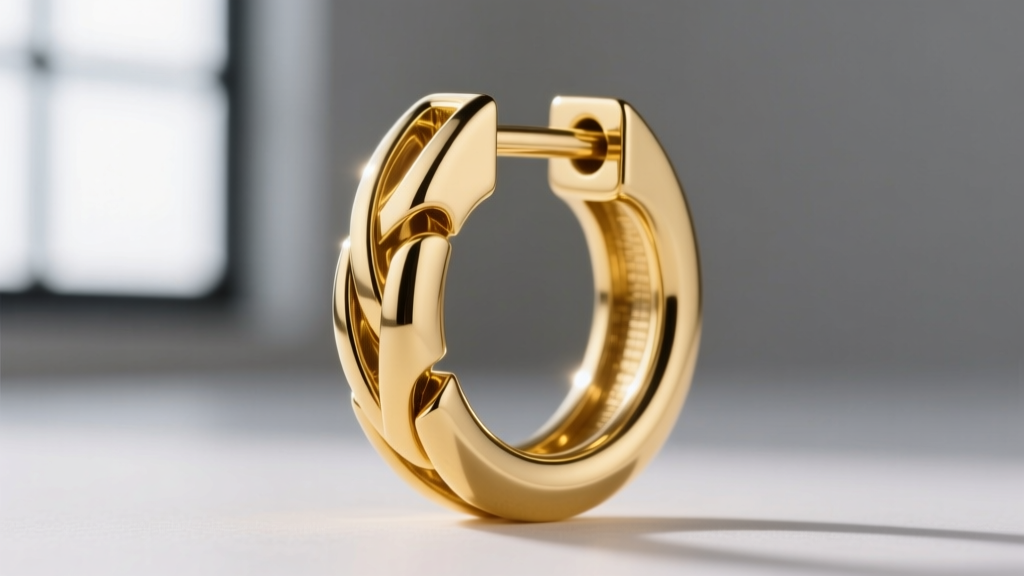
The Hinged Snap-Back Closure
Unlike standard hoops that use a thin wire and a friction clutch, authentic huggies utilize a hinged snap-back (or clicker) closure. The front half of the earring features a tiny metal tab, while the back half has a corresponding groove. When pressed together, they "click" into place. Beginner Tip: Never force the hinge open wider than 45 degrees. Bending the hinge backward will warp the tension tab, resulting in a closure that no longer clicks securely.
Material Breakdown: What Are You Actually Wearing?
Kate Spade is a fashion jewelry brand, meaning their pieces are not cast in solid gold or platinum. Understanding the material layering is essential for managing expectations regarding longevity and skin sensitivities.
| Material Layer | Specific Composition | Durability & Care Notes |
|---|---|---|
| Base Metal | Cast Brass (Copper/Zinc alloy) | Provides structural weight and rigidity. Can cause green skin if the plating wears off and reacts to acidic sweat. |
| Barrier Layer | Palladium or Fine Silver | A crucial nickel-free undercoating that prevents brass oxidation from bleeding through the top layer. |
| Top Plating | 12k or 14k Gold / Rhodium | Applied via electroplating. Usually 0.5 to 1.0 microns thick. Will eventually wear down with daily friction. |
| Accents | Cold Enamel (Epoxy Resin) | Provides vibrant color blocks. Highly susceptible to chipping if dropped on hard surfaces like tile or stone. |
Because the gold layer is a plating rather than a solid alloy, friction is the enemy. The areas where the huggie rubs against the earlobe or where the clasp meets the post will naturally experience the fastest plating degradation. According to guidelines from Jewelers of America, removing plated fashion jewelry before showering or exercising significantly extends the life of the micron plating by preventing premature chemical stripping.
3 Beginner-Friendly Styling Formulas
Kate Spade huggies are incredibly versatile, often featuring signature elements like the heritage spade, initial charms, or bow motifs. Here are three reliable ways to style them, depending on your daily environment.
Formula 1: The Minimalist Everyday (Office Safe)
Choose a simple, unembellished gold or rhodium-plated huggie without dangling charms. The 12mm diameter provides a polished, continuous metal line that catches the light subtly. This pairs perfectly with professional attire and ensures your earrings will not catch on headset cords or phone receivers during the workday.
Formula 2: The Asymmetrical Stack (Weekend Casual)
If you have multiple lobe piercings, create an asymmetrical look. Wear a statement Kate Spade huggie (such as one featuring a pavé crystal spade flower) in your primary lobe piercing, and pair it with a tiny, 3mm bezel-set cubic zirconia stud in your second or third hole. This creates a curated "ear stack" without requiring cartilage piercings.
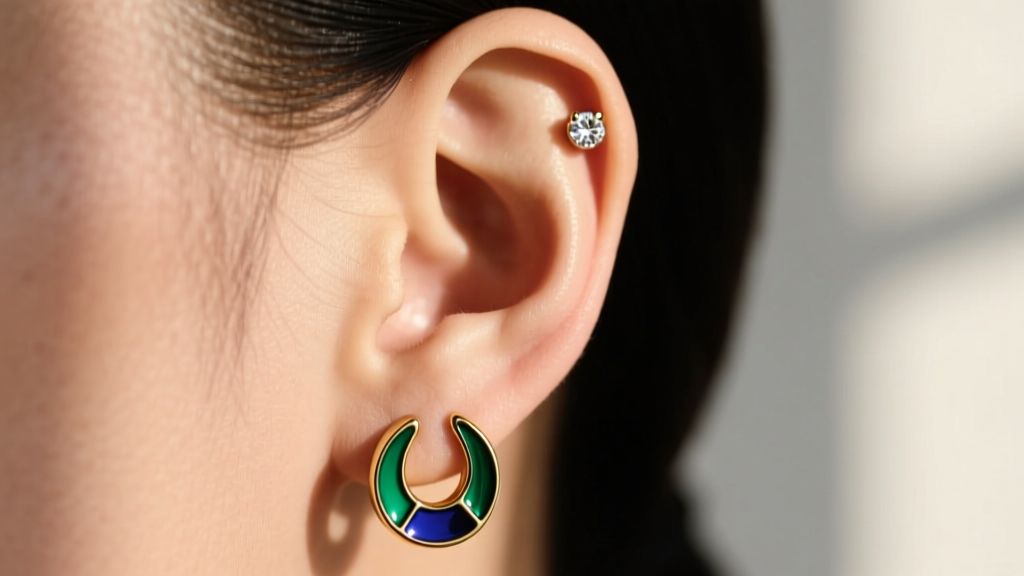
Formula 3: The Faux Cartilage Cuff
Many beginners do not realize that smaller huggies (specifically those with a 10mm inner diameter) can be worn in upper ear piercings. If you have a healed helix or forward helix piercing, a petite, enamel-detailed Kate Spade huggie can mimic the look of a seamless cartilage cuff. Ensure the gauge is 18g or 20g to fit comfortably through the typically tighter cartilage fistula.
Troubleshooting Common Huggie Issues
Even high-quality fashion jewelry requires occasional maintenance. Here is how to handle the most common failure modes associated with huggie earrings:
- The Clasp Won't Click Shut: Over time, the metal tab on the hinge can compress. Using a pair of clean, flat-nosed jewelry pliers, very gently squeeze the front and back halves together to reset the tension. Do this in micro-adjustments to avoid snapping the tab.
- Enamel Chipping: Cold epoxy enamel cannot be easily repaired at home. To prevent this, always store your kate spade huggie earrings in their original velvet pouches or a lined jewelry box. Never toss them loosely into a handbag where they can collide with keys or cosmetics.
- Post Irritation or "Green Ear": If you experience itching or notice a green tint on your skin, the protective plating has likely worn thin, exposing the brass base. You can temporarily seal the post by painting a micro-layer of clear nail polish over the wire, creating a physical barrier between the brass and your skin.
Pricing, Authentication, and Final Thoughts
When shopping for kate spade huggie earrings, expect retail prices to range between $48 and $88 USD, depending on the complexity of the design and the inclusion of pavé crystals. While Kate Spade outlet stores offer similar styles at a discount, be aware that outlet-specific lines sometimes utilize thinner plating or acrylic substitutes instead of high-grade epoxy enamel.
Always purchase directly from Kate Spade or authorized department store partners to guarantee the nickel-free barrier layers are intact. For beginners, huggies represent a low-risk, high-reward entry into curated ear styling. By understanding the gauge limitations, respecting the hinge mechanics, and protecting the plated finishes, your huggies will remain a staple in your jewelry rotation for years to come.


