A Beginner's Guide to Sourcing Vintage Creole Earrings
Discover how to identify, buy, and style vintage creole earrings. Learn about materials, sizing, and care in this beginner-friendly guide.

Understanding the Allure of Vintage Creole Earrings
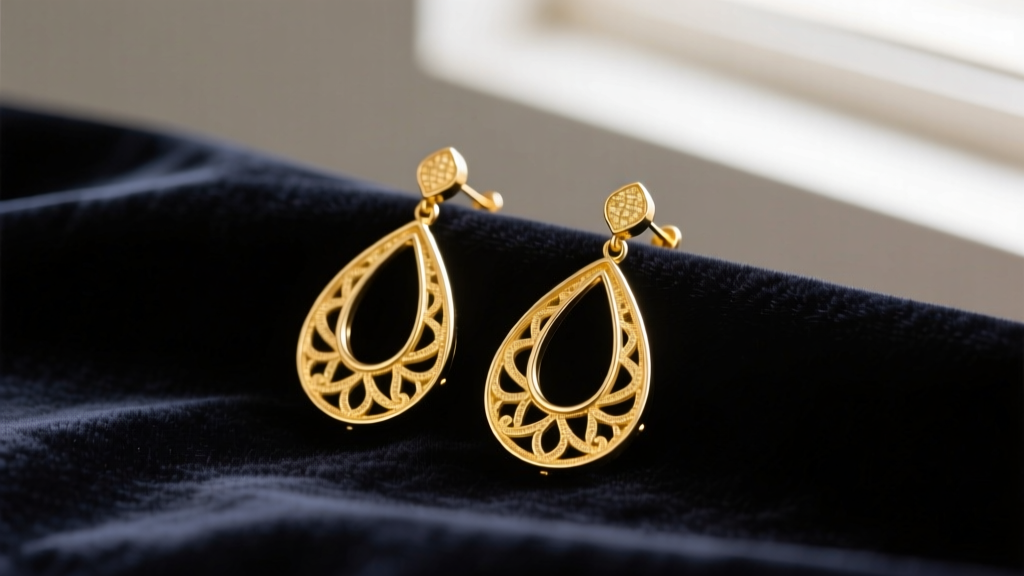
If you are exploring the world of antique and retro jewelry, vintage creole earrings represent a masterclass in timeless elegance. Unlike standard circular hoops, creoles possess a distinct, rich history rooted in Caribbean and Louisiana Creole culture. They are characterized by their unique silhouette: typically oval or teardrop-shaped, with a profile that is thicker and heavier at the bottom and tapering toward the earwire. For beginners, navigating the vintage market can feel overwhelming. This guide will break down the anatomy, eras, materials, and practical wearing considerations of vintage creole earrings, ensuring you make informed, authentic purchases.
The Anatomy of a True Creole Earring
Before you start bidding on estate sales or browsing antique shops, you must know how to differentiate a true creole from a standard vintage hoop. The defining characteristic is the gradient profile. A genuine creole earring is cast or forged so that the bottom curve is substantially wider and heavier than the top wire. This bottom-heavy design catches the light dynamically as the wearer moves, creating a pendulum-like swing that draws attention to the jawline and neck.
Furthermore, vintage creoles often feature intricate texturing on the lower bulb—such as rope twisting, Florentine matte finishes, or hand-engraved filigree—while the top wire remains smooth for comfortable insertion into the earlobe.
Decoding the Eras: A Timeline of Styles
Vintage creole earrings evolved significantly throughout the 20th century. Understanding these eras will help you date pieces and determine fair market value.
The Art Deco Period (1920s–1930s)
Creoles from this era are rare and highly sought after. They often feature geometric filigree, milgrain detailing, and are crafted in platinum or 18k white gold. Expect to see accents like calibre-cut sapphires or old European cut diamonds. Prices for authentic Art Deco creoles typically start around $1,200 and can exceed $5,000 for signed pieces.
Mid-Century Glamour (1950s–1960s)
This is the golden era for vintage creole earrings. Post-war prosperity led to bold, expressive jewelry. Mid-century creoles are usually crafted in 14k yellow gold and feature heavy, tactile textures like bark, braided rope, or hammered finishes. Many also incorporate aurora borealis (AB) rhinestones or cabochon turquoise. According to the Lang Antiques Jewelry University, mid-century gold jewelry often bears distinct maker's marks and country-of-origin stamps that aid in authentication.
The Retro & Power Dressing Era (1980s–1990s)
In the 1980s, creoles became larger, chunkier, and more dramatic, often referred to as 'door-knocker' styles. While solid gold was still used, gold vermeil and gold-filled brass became incredibly popular, making these pieces more accessible today (usually ranging from $45 to $150). Mixed metals, such as yellow gold intertwined with silver-tone wire, are a hallmark of late-century creoles.
Material Breakdown and Authenticity Checks
When sourcing vintage creole earrings, the material dictates not only the price but also the longevity and wearability of the piece. Below is a comparative breakdown of the most common materials you will encounter.
| Material | Durability | Tarnish Resistance | Average Vintage Price Range |
|---|---|---|---|
| Solid 14k / 18k Gold | Excellent | High | $400 – $2,500+ |
| Gold-Filled (Brass Core) | Very Good | Moderate | $60 – $180 |
| Gold Vermeil (Silver Core) | Good | Low (Wears off) | $80 – $250 |
| Solid Brass / Bronze | Excellent | Low (Patina develops) | $30 – $90 |
| Bakelite / Lucite Accents | Fair (Can crack) | N/A | $150 – $600 (with gold) |
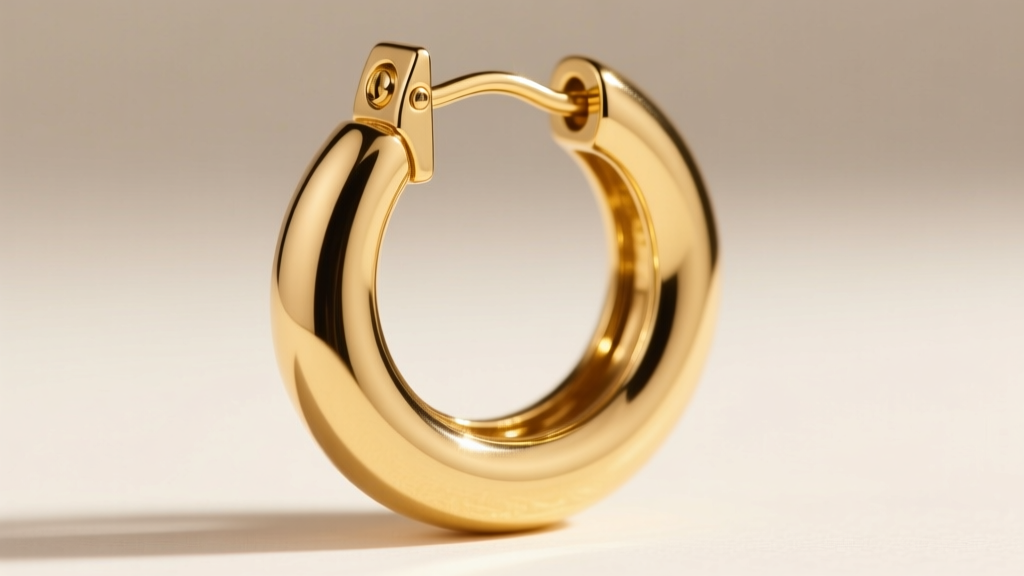
Pro-Tip for Beginners: Always use a jeweler's loupe to inspect the earwire and the back of the lower bulb for hallmarks. Look for stamps like '14K', '585' (European 14k), '1/20 14K GF' (gold-filled), or '925' (sterling silver base). The Gemological Institute of America (GIA) emphasizes that hallmarks on vintage pieces can sometimes be worn away due to decades of friction, so a lack of stamp does not automatically mean the piece is fake; however, a crisp, modern-looking stamp on a supposedly 1950s piece is a red flag for a modern reproduction.
Sizing, Gauges, and Ear Health Considerations
One of the most overlooked aspects of buying vintage earrings is the gauge (thickness) of the earwire and the overall weight of the piece. Modern standard lobe piercings are typically done at 20-gauge (0.81mm) or 18-gauge (1.02mm). However, vintage French wire hooks and leverbacks from the mid-century are often forged at a thicker 17-gauge or 16-gauge to support the heavy bottom bulb of the creole.
If you are used to wearing lightweight modern studs, inserting a 16-gauge vintage wire can cause discomfort or micro-tearing in the fistula (the piercing channel). Actionable advice: Gently stretch your lobes using a tapered insertion tool or wear the vintage creoles for only 2-3 hours at a time until your piercings accommodate the thicker wire.
Managing Heavy Vintage Drops
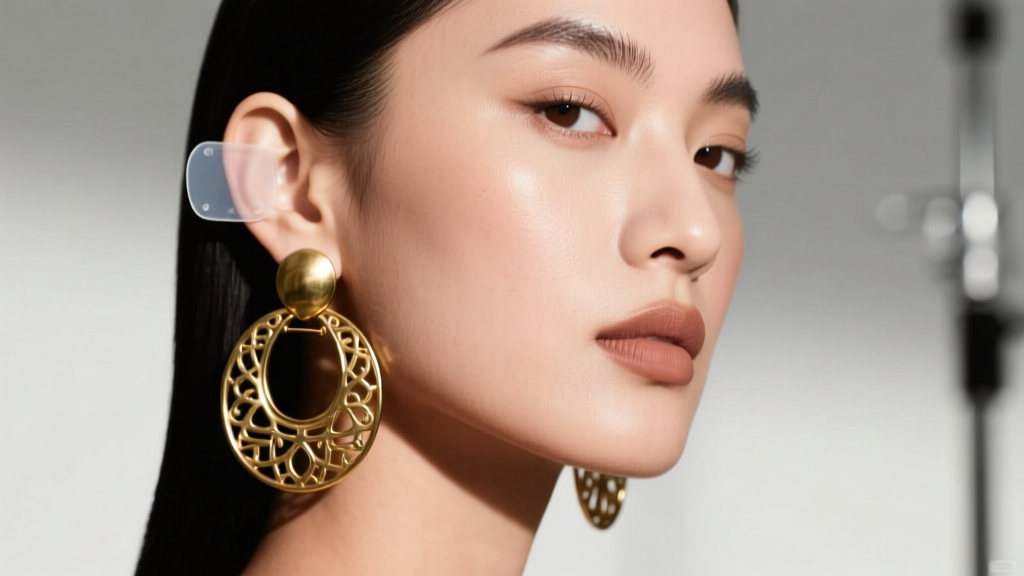
Because of their bottom-heavy design, authentic 1960s solid gold creoles can weigh between 8 to 15 grams per earring. Anything exceeding 12 grams per ear can cause 'earlobe fatigue' and gradual stretching over time. To protect your tissue, invest in clear silicone earring support patches (like the brand LobeWonder). These adhesive discs distribute the weight of the heavy vintage wire across a wider surface area of the earlobe, preventing the dreaded 'cheese-cutter' effect.
Styling Framework: Matching Creoles to Face Shapes
Vintage creole earrings are remarkably versatile, but selecting the right silhouette for your face shape elevates the styling from good to masterful.
- Round Faces: Opt for elongated, narrow teardrop creoles from the 1970s. The vertical drop creates an illusion of length, balancing the width of the face. Avoid wide, circular vintage hoops.
- Square Faces: Look for 1950s creoles with soft, rounded oval profiles and hammered gold textures. The curved lines soften a strong jawline and angular cheekbones.
- Heart-Shaped Faces: Classic bottom-heavy creoles are your best friend. The visual weight at the bottom of the earring perfectly balances a narrower chin and wider forehead.
- Oval Faces: You have the freedom to experiment with any era, including the chunky, geometric mixed-metal creoles of the 1980s.
Care and Maintenance of Vintage Pieces
Preserving the integrity of vintage creole earrings requires specific cleaning protocols. Never use ultrasonic cleaners or harsh chemical dips on vintage jewelry, especially if the piece features rhinestones, enamel, or Bakelite.
The Golden Rule of Vintage Cleaning: Ultrasonic vibrations can shatter foiled rhinestones and loosen the delicate prongs of mid-century pavé settings. Always clean vintage creoles by hand.
For solid gold and gold-filled creoles, use a few drops of mild, phosphate-free dish soap in lukewarm water. Gently scrub the textured crevices with an extra-soft baby toothbrush. Rinse thoroughly and pat dry with a microfiber cloth. If your vintage brass creoles have developed a dark patina that you wish to remove, use a specialized brass polish applied with a Q-tip, being incredibly careful to avoid any glued-in gemstone accents, as the ammonia in polishes will dissolve vintage jewelry adhesives.
Final Thoughts for the Novice Collector
Collecting vintage creole earrings is a rewarding pursuit that connects you to decades of artisanal craftsmanship and cultural history. By understanding the gradient anatomy, respecting the gauge and weight limitations of your piercings, and properly identifying era-specific hallmarks, you can build a curated, authentic collection that will last a lifetime. Start with mid-century gold-filled pieces to understand the silhouette, and gradually work your way up to investment-grade solid gold Art Deco and 1960s masterpieces.


