Serpent Earrings Explained: Styles, Metals, and Sizing Guide
Discover everything about serpent earrings. This beginner guide covers snake motif styles, metal grades, gauge sizing, and how to style them safely.

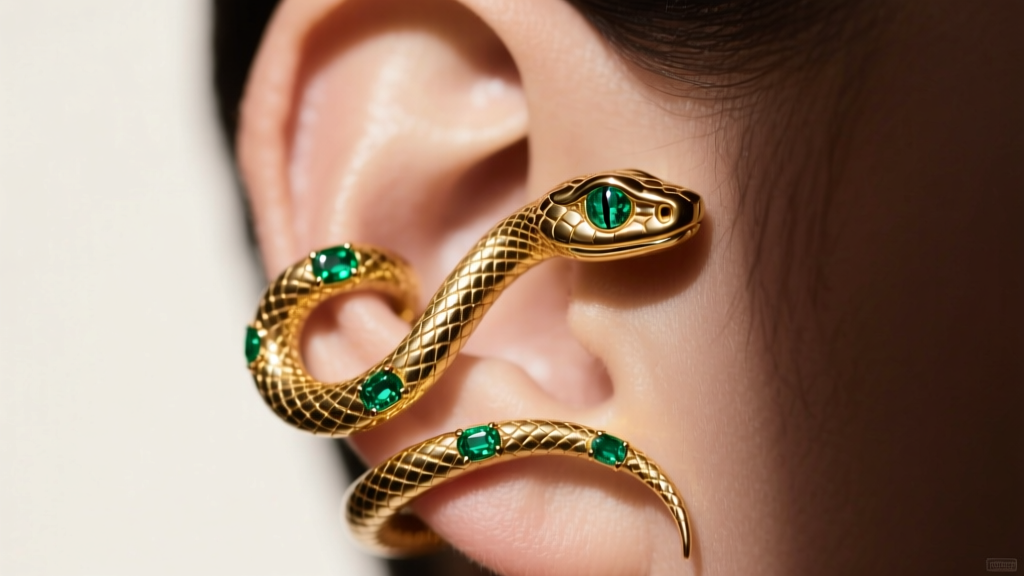
The Allure of the Serpent Motif in Ear Styling
Serpent earrings have transitioned from avant-garde editorial pieces to everyday wardrobe staples. The snake motif carries deep historical significance, symbolizing eternity, rebirth, and wisdom. For beginners stepping into statement jewelry, serpent designs offer a unique advantage: their winding, organic shapes naturally contour to the anatomy of the ear, creating a custom-fit illusion that rigid geometric shapes cannot replicate. However, navigating the market requires a foundational understanding of metallurgy, gauge sizing, and structural integrity to avoid cheap alloys and poorly constructed wirework.
The serpent is one of the oldest mythological symbols in jewelry, representing eternity and rebirth. When translated into ear styling, it offers a dynamic, winding silhouette that adapts beautifully to both lobe and cartilage placements.
Core Styles of Serpent Earrings
Understanding the structural differences between serpent earring styles is the first step in building a curated ear stack. Each style interacts differently with your piercings and ear anatomy.
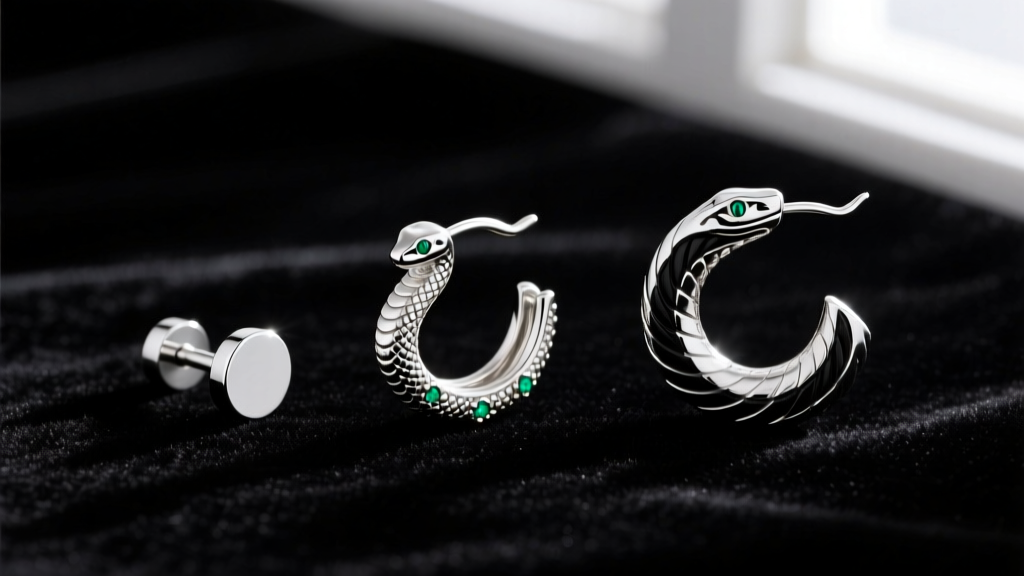
Lobe Studs and Crawlers
Serpent studs typically feature a coiled snake or a detailed snake head resting on the lobe. "Crawlers" or "jackets" extend upward from the lobe piercing, mimicking a snake slithering up the edge of the ear. These require a standard 20-gauge (0.81mm) or 18-gauge (1.02mm) post. When buying studs, ensure the backing is a secure friction post or a threaded screw-back, as the top-heavy nature of detailed snake heads can cause standard butterfly backs to slip.
Huggie Hoops
Snake huggies wrap tightly around the earlobe, with the serpent's body forming the hoop and the head resting prominently on the front. Look for huggies with a hinged clicker closure. A continuous wire hoop can easily bend out of shape when taking it on and off, whereas a sturdy clicker mechanism preserves the circular tension required to keep the earring secure.
Cartilage Wraps and Ear Cuffs
This is where the serpent motif truly shines. Cartilage wraps utilize the snake's winding body to spiral up the helix. Some require a piercing at the top and bottom of the helix to anchor the piece, while "ear cuffs" rely on wire tension to grip the cartilage without any piercing. Wraps offer a dramatic, high-fashion look but demand precise wire tension to stay in place without causing pressure necrosis on the cartilage.
Decoding Metal Grades and Pricing
The most common beginner mistake is purchasing "gold-plated" serpent earrings without verifying the base metal or plating thickness. Because snake designs feature intricate scales and crevices, cheap metals tarnish rapidly and trap corrosive compounds against the skin.
| Metal Grade | Base Material | Plating / Purity | Price Range | Best Use Case |
|---|---|---|---|---|
| 925 Sterling Silver | Silver/Copper Alloy | 92.5% Pure Silver | $30 - $80 | Everyday wear; requires polishing |
| Gold Vermeil | 925 Sterling Silver | Min 2.5 microns of 14k/18k Gold | $60 - $150 | High-end look with hypoallergenic base |
| Gold Plated (Standard) | Brass or Copper | Flash plating (<0.5 microns) | $15 - $40 | Occasional wear; high tarnish risk |
| Solid 14k Gold | Gold Alloy | 58.5% Pure Gold | $200 - $600+ | Lifetime pieces; shower/sleep safe |
According to guidelines outlined by the Federal Trade Commission (FTC), true gold vermeil must have a sterling silver base and a gold layer of at least 2.5 microns. If a product simply says "gold plated over brass," the friction of a coiled serpent wrap will wear through the microscopic gold layer in weeks, exposing the brass and turning your skin green.
Gauge Sizing and Wire Tension Mechanics
When dealing with serpent ear cuffs and cartilage wraps, wire gauge (thickness) dictates both comfort and durability. The Association of Professional Piercers (APP) emphasizes that jewelry must be appropriately sized to prevent tissue damage and migration.
- 22-Gauge (0.64mm): Very thin wire. Ideal for adjustable ear cuffs that you need to bend to fit your specific cartilage ridge. However, it lacks structural memory and can easily be crushed if slept on.
- 20-Gauge (0.81mm): The industry standard for most ear cuffs and lightweight wraps. It offers a balance of malleability for adjustment and enough rigidity to hold its shape throughout the day.
- 18-Gauge (1.02mm) to 16-Gauge (1.29mm): Used for rigid, pierced cartilage wraps or heavy huggie hoops. You cannot easily bend these by hand; they rely on precise manufacturing to fit standard helix or lobe curvatures.
Pro-Tip on Metal Fatigue: If you buy a 20-gauge adjustable serpent cuff, bend it to fit your ear once or twice. Repeatedly opening and closing the wire to take it on and off causes "work hardening," a metallurgical process where the metal becomes brittle and will eventually snap at the stress point.
Styling Frameworks for Beginners
Serpent earrings carry significant visual weight due to their intricate texturing (scales) and gemstone accents (often emerald or ruby eyes). To style them without overwhelming your face, use the Asymmetrical Anchor Method.
If you are wearing a heavy, winding serpent wrap on your right helix, balance the left ear with minimalist, low-profile pieces like a simple 14k gold bead stud or a micro-huggie. This creates an editorial, high-fashion imbalance that draws the eye across the face. Avoid wearing identical, heavy serpent drops on both ears unless you are aiming for a highly symmetrical, gothic, or Victorian-revival aesthetic.
Maintenance: Cleaning Crevices and Oxidation
The very detail that makes serpent earrings beautiful—the overlapping scales and textured skin—is a magnet for sebum, dead skin cells, and lotion buildup. Furthermore, many high-quality silver serpent pieces utilize intentional oxidation (blackening) in the scale crevices to create contrast and depth.
What to Avoid
Never use liquid silver dip cleaners on oxidized serpent earrings. These harsh chemical baths will strip the intentional black oxidation from the scales, leaving the piece looking flat, overly bright, and cheap. Additionally, if your serpent features emerald eyes, avoid ultrasonic cleaners; emeralds are typically oil-treated and the high-frequency vibrations can cause internal fracturing.
The Safe Cleaning Protocol
- Mix a few drops of mild, phosphate-free dish soap into a bowl of lukewarm water.
- Submerge the earrings for 3 to 5 minutes to loosen oils trapped between the scales.
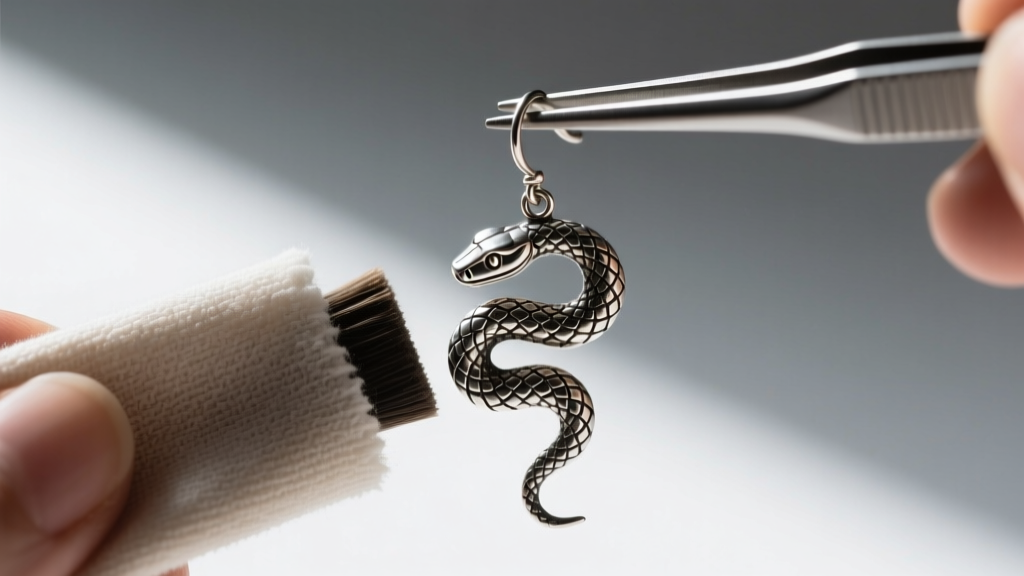
- Use a soft-bristled baby toothbrush to gently sweep along the direction of the scales.
- Rinse under distilled water (to prevent hard water spots) and pat dry with a microfiber cloth.
By understanding the metallurgy, respecting the wire tension, and maintaining the intricate scale work, your serpent earrings will remain a striking, enduring element of your jewelry rotation for years to come.


