Continuous Line Drawing Earrings: 2026 Trend Analysis
Explore the 2026 trend of continuous line drawing earrings. Discover wire gauges, face-shape styling, and artisan vs. cast manufacturing insights.

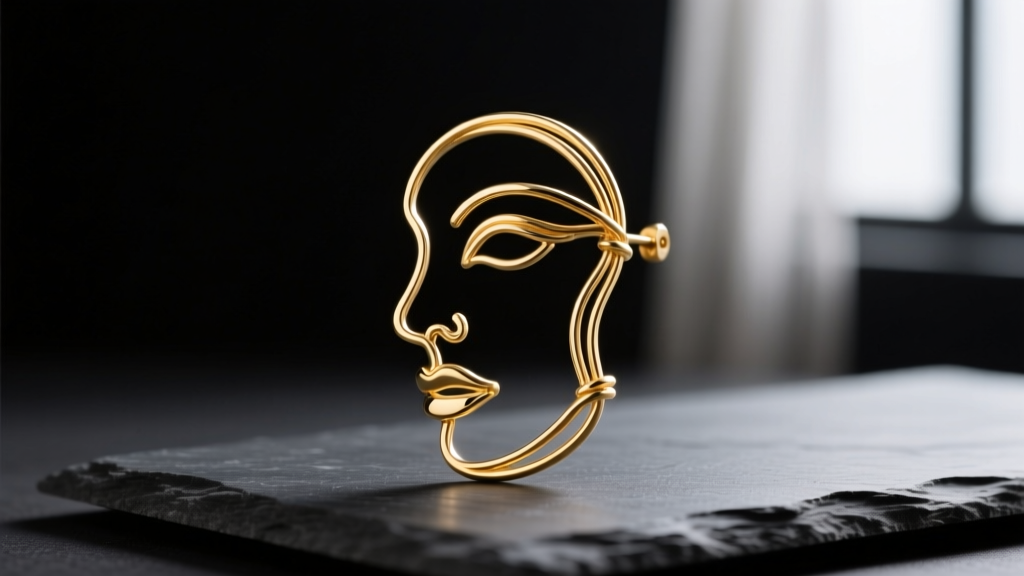
The Intersection of Fine Art and Wearable Sculpture
As we navigate the 2026 jewelry landscape, the minimalist movement has evolved from simple geometric studs into something far more expressive: continuous line drawing earrings. This trend bridges the gap between fine art sketching and wearable sculpture. By utilizing a single, unbroken strand of metal wire, artisans are crafting abstract faces, botanical motifs, and fluid architectural shapes that frame the face with striking negative space. Unlike traditional cast jewelry, these pieces rely entirely on the structural integrity and fluidity of the wire itself, making the craftsmanship paramount.
The appeal of drawing earrings lies in their deceptive simplicity. They appear as delicate, effortless sketches resting against the skin, yet engineering a piece of metal to hold a complex, three-dimensional shape without warping requires deep metallurgical knowledge. In this comprehensive style and trend analysis, we break down the anatomy of sketch-style earrings, exploring the exact wire gauges, material grades, and structural frameworks that separate heirloom-quality artisan pieces from mass-market imitations.
Gauge Sizes and Structural Integrity
The foundation of any line drawing earring is the wire gauge. The thickness of the wire dictates not only the visual weight of the "sketch" but also its ability to withstand daily wear. According to the Rio Grande Metals Guide, selecting the correct gauge is a balancing act between delicate aesthetics and structural rigidity.
- 22-Gauge (0.64mm): Used exclusively for ultra-fine, intricate details within a larger piece, such as the pupil of an eye or the vein of a sketched leaf. It is too fragile for the main structural outline of a dangle earring and will easily bend out of shape if snagged.
- 20-Gauge (0.81mm): The industry standard for the primary outlines of lobe-based drawing earrings. It offers the perfect visual equivalent of a medium-weight pen stroke while providing enough tensile strength to maintain its shape during normal movement.
- 18-Gauge (1.02mm): Mandatory for ear cuffs, cartilage climbers, or large structural hoops. The thicker wire provides the necessary tension to grip the helix or conch without relying on a piercing, and prevents the "sketch" from collapsing under its own weight.
Face Shape Pairing Matrix
Because drawing earrings rely heavily on negative space and linear geometry, they interact with the jawline and cheekbones differently than traditional solid drop earrings. The continuous line creates a visual path that the eye naturally follows. To maximize this effect in 2026, stylists are pairing specific sketch silhouettes with complementary face shapes.
| Face Shape | Ideal Silhouette | Wire Gauge | Styling Note |
|---|---|---|---|
| Round | Elongated vertical drops with sharp angles | 20G (0.81mm) | Avoid wide circular hoops; use sharp, downward angles to elongate the neck. |
| Square | Fluid, organic curves and botanical loops | 20G (0.81mm) | Soft, continuous curves soften a strong jawline without adding visual bulk. |
| Heart | Asymmetric abstract faces or teardrop sketches | 18G (1.02mm) | Wider at the bottom to balance a narrower chin; ear cuffs work exceptionally well. |
| Oval | Geometric architectural lines or tight spirals | 22G to 20G | Highly versatile; bold, oversized single-line geometric shapes provide striking contrast. |
Material Science: Beyond Standard Gold
While 14k and 18k solid gold remain the premium choices for heirloom sketch earrings, 2026 has seen a massive surge in alternative, hypoallergenic metals that cater to sensitive ears and vibrant aesthetic preferences. The Gemological Institute of America (GIA) notes that consumers are increasingly educated about metal alloys and their reactions with skin chemistry.
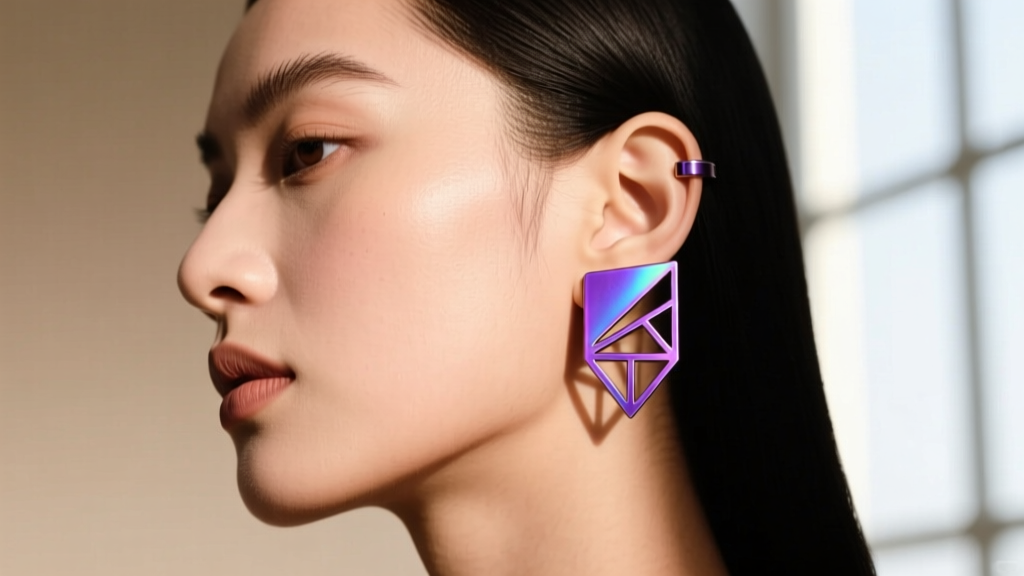
Niobium has emerged as a hero material for line drawing earrings. Because it is highly reactive to anodization, artisans can pass an electrical current through the niobium wire to create a spectrum of vibrant, permanent colors—such as deep purples, iridescent blues, and rich golds—without using any surface plating that could wear off at the high-stress bend points. Furthermore, niobium is biocompatible, making it ideal for fresh piercings or sensitive lobes.
ASTM F136 Implant-Grade Titanium is another top-tier choice, particularly for cartilage-based drawing earrings. Titanium possesses a high strength-to-weight ratio, meaning an 18-gauge titanium wire can support a large, complex ear cuff sketch without feeling heavy or dragging on the cartilage. However, titanium is notoriously difficult to work-harden, requiring specialized torch techniques by the jeweler to ensure the bends remain permanent.
Artisan Hand-Forged vs. Cast Manufacturing
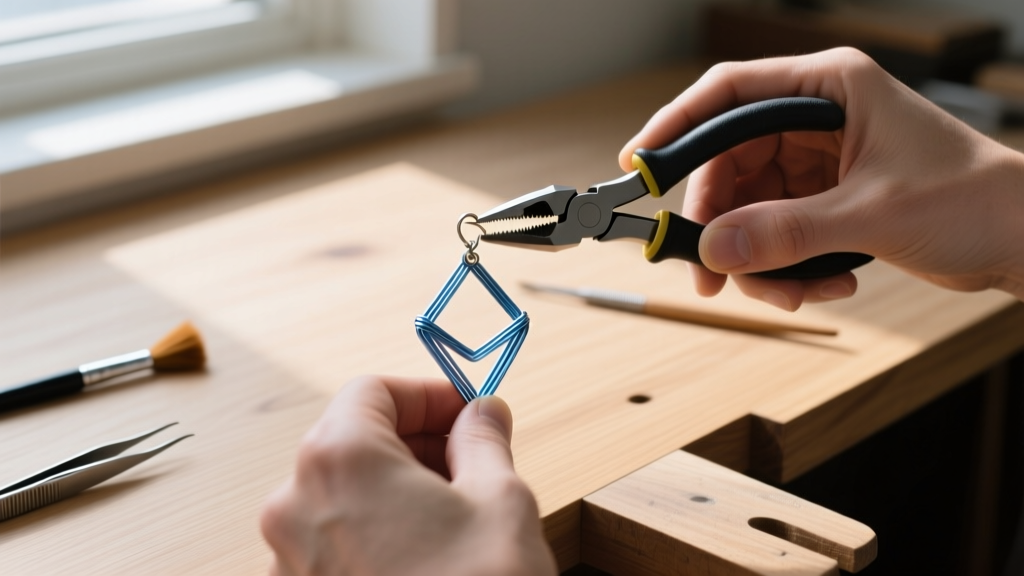
A critical distinction in the 2026 market is the manufacturing method. True continuous line drawing earrings are hand-forged—meaning the jeweler physically bends, hammers, and shapes a single piece of wire using nylon-jaw pliers and mandrels. This process induces work-hardening, a metallurgical phenomenon where the metal's crystal structure compresses and stiffens as it is bent, locking the sketch into its final form.
Conversely, mass-market brands often produce "sketch-style" earrings via lost-wax casting. While casting allows for rapid, identical reproduction, it fundamentally alters the nature of the piece. Cast metal lacks the directional grain and springiness of drawn wire, making it more brittle. Furthermore, cast pieces often suffer from porosity at tight, acute angles—the very corners that define a line drawing. When purchasing drawing earrings, always look for evidence of hand-forging, such as subtle, organic variations in the wire's thickness or microscopic tool marks at the stress points, which are hallmarks of genuine artisanal craftsmanship.
2026 Pricing Tiers & Market Landscape
The pricing for drawing earrings is heavily bifurcated based on material and manufacturing origin. Understanding these tiers helps consumers identify true value versus inflated branding.
- Entry-Level / Mass Market ($25 - $60): Typically cast from brass or stainless steel with thin gold or rhodium plating. The "lines" are often joined at the back rather than being a true continuous wire. Plating will eventually wear at the friction points against the earlobe.
- Mid-Tier / Semi-Artisan ($85 - $180): Hand-bent from 14k gold-filled wire or anodized niobium. Gold-filled wire features a thick outer layer of 14k gold mechanically bonded to a brass core. While durable, the core can be exposed if the wire is bent too sharply during manufacturing or wear.
- Heirloom / Master Artisan ($350 - $800+): Hand-forged from solid 14k or 18k gold, or platinum. These pieces are fully work-hardened, polished by hand, and feature seamless, continuous lines with no solder joints. They are designed to be passed down and can be easily re-polished or reshaped by a jeweler if damaged.
Maintenance, Snagging, and Failure Modes
The primary failure mode of drawing earrings is snagging. Because the designs feature loops, negative space, and protruding angles, they easily catch on knit sweaters, towels, and hair. When a 20-gauge gold wire is pulled, it can stretch or warp, distorting the "sketch." To mitigate this, artisans often employ a technique called planishing, where the wire is gently hammered flat at high-risk snag points, reducing the profile of the metal while increasing its rigidity.
Cleaning sketch earrings requires a departure from traditional ultrasonic cleaners. The high-frequency vibrations of an ultrasonic bath can cause work-hardened wire to develop micro-fractures at tight bends, eventually leading to metal fatigue and snapping. Instead, soak the earrings in a mild, phosphate-free dish soap and warm water solution, using a remarkably soft baby toothbrush to gently dislodge sebum and skin cells from the intricate crevices of the design. Dry immediately with a microfiber cloth to prevent water spots from dulling the high-polish finish of the continuous line.


