Kays Diamond Stud Earrings: Ultimate Buying Guide
Discover what to look for when shopping Kays diamond stud earrings. Our expert guide covers grading, settings, metals, and pricing for 2026.

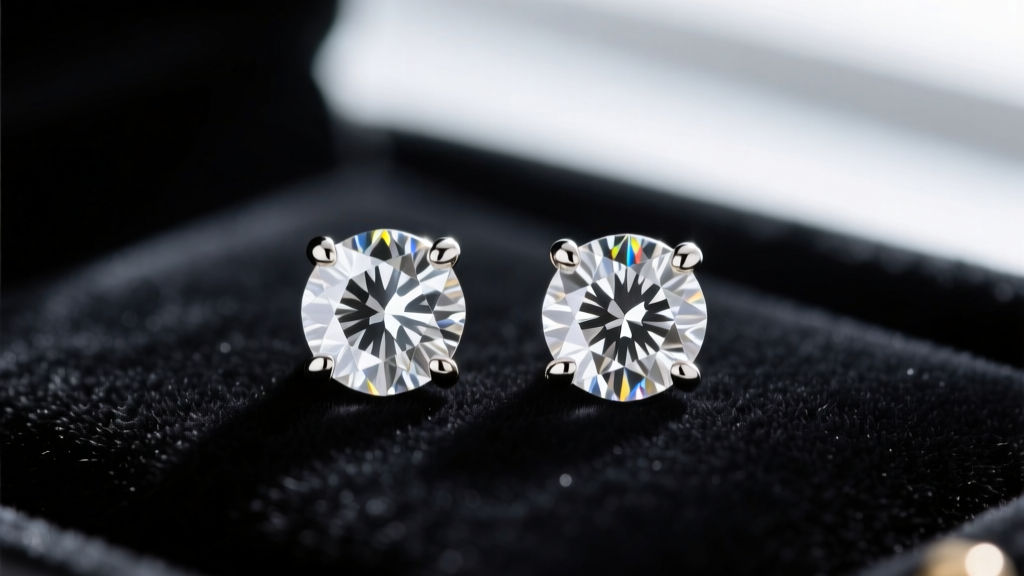
Shopping for diamond studs at a major national retailer offers convenience and immediate gratification, but it requires a sharp eye to ensure you are getting true value. When evaluating Kays diamond stud earrings, buyers are often overwhelmed by the sheer volume of options, ranging from budget-friendly 10-karat gold pairs with I2 clarity stones to premium platinum settings featuring near-colorless gems. This comprehensive buying guide strips away the marketing jargon and provides a gemological breakdown of what to look for, what to avoid, and how to maximize your budget when purchasing diamond studs from Kay Jewelers.
Decoding the Quality of Kays Diamond Stud Earrings
The most critical factor in your purchase is understanding how Kay grades their diamonds. Unlike high-end boutique jewelers who exclusively sell GIA-certified stones, Kay utilizes a mix of in-house grading, IGI certificates for larger stones, and GCAL reports for their premium lines. For standard Kays diamond stud earrings, the clarity and color grades are where the retailer makes its most significant profit margins.
The Clarity Trap: I1 vs. SI2
Kay heavily promotes I1 (Included 1) and I2 clarity diamonds in their entry-level and mid-tier stud collections. While the Gemological Institute of America (GIA) defines I1 inclusions as "obvious under 10x magnification and may affect transparency and brilliance," in a retail mall environment, these black carbon spots are often visible to the naked eye in stones larger than 0.50 carats total weight (ctw).
Expert Tip: If you are purchasing studs over 0.50 ctw, insist on SI2 (Slightly Included 2) or better. In an SI2 stone, inclusions are typically white or translucent and located near the girdle, making them invisible to the naked eye when set in a prong mounting.
Color Thresholds and Fluorescence
Kay categorizes their diamonds into broad color buckets. Their "Near Colorless" range usually encompasses G, H, I, and J colors. However, lower-priced promotional studs often feature K or L color diamonds, which exhibit a noticeable warm or yellowish tint, especially when set in white gold or platinum. Furthermore, pay attention to fluorescence. While faint fluorescence is harmless, strong blue fluorescence in a higher-color diamond (D-F) can make the stone look milky or oily in natural sunlight.
Metal Alloys and Setting Architectures
The metal holding your diamond is just as important as the stone itself. According to the Federal Trade Commission (FTC) Jewelry Guides, retailers must accurately stamp the karatage of their gold. Kay offers 10k, 14k, 18k, and platinum options, each with distinct wear characteristics.
- 10k Gold (41.7% pure): Highly durable and scratch-resistant, but prone to tarnishing and can cause contact dermatitis for those with nickel allergies. Best for ultra-budget purchases.
- 14k Gold (58.3% pure): The industry standard. It offers the perfect balance of durability, rich color, and hypoallergenic properties (especially in 14k yellow or rose gold).
- Platinum: Naturally white, hypoallergenic, and incredibly dense. It will not wear away over time like rhodium-plated white gold, making it the only logical choice for heirloom-quality studs over 1.00 ctw.
Martini vs. Basket Settings
For round brilliant diamonds, Kay primarily uses the 3-prong "Martini" setting or the 4-prong "Basket" setting. The Martini setting allows more light to enter the pavilion of the diamond from the sides, maximizing sparkle. However, the basket setting sits flatter against the earlobe and provides superior structural support for heavier stones (over 1.50 ctw), preventing the earring from drooping forward.
Price vs. Carat Weight: 2026 Market Expectations
Pricing at national chain jewelers includes a significant premium for overhead, marketing, and the convenience of physical store locations. Below is a realistic breakdown of what you should expect to pay for Kays diamond stud earrings based on current market metrics, assuming standard 14k white gold basket settings.
| Total Carat Weight (ctw) | Expected Clarity/Color | Estimated Price Range | Value Verdict |
|---|---|---|---|
| 0.25 ctw | I1 / J-K | $250 - $350 | Fair (Good for first piercings) |
| 0.50 ctw | SI2-SI1 / I-J | $600 - $900 | Good (Sweet spot for budget) |
| 1.00 ctw | SI1 / G-H | $1,800 - $2,800 | Average (Compare with online) |
| 1.50 ctw | VS2 / F-G | $3,500 - $5,000 | Poor (High retail markup) |
| 2.00+ ctw | VS1+ / D-F | $6,000 - $12,000+ | Poor (Requires independent appraisal) |
When evaluating the American Gem Society (AGS) light performance metrics, remember that a smaller, exceptionally cut 0.50 ctw pair will often out-sparkle a poorly cut, heavily included 1.00 ctw pair. Never sacrifice cut quality for sheer carat weight.
Security and Backing Mechanisms
A diamond is only as secure as its backing. Many buyers overlook the post and clutch mechanism, leading to devastating losses. Standard Kays diamond stud earrings typically ship with basic friction backs, which rely on a simple metal groove to hold the earring in place. Over time, the friction backing loosens, and the earring can easily slip out during sleep or while changing clothes.
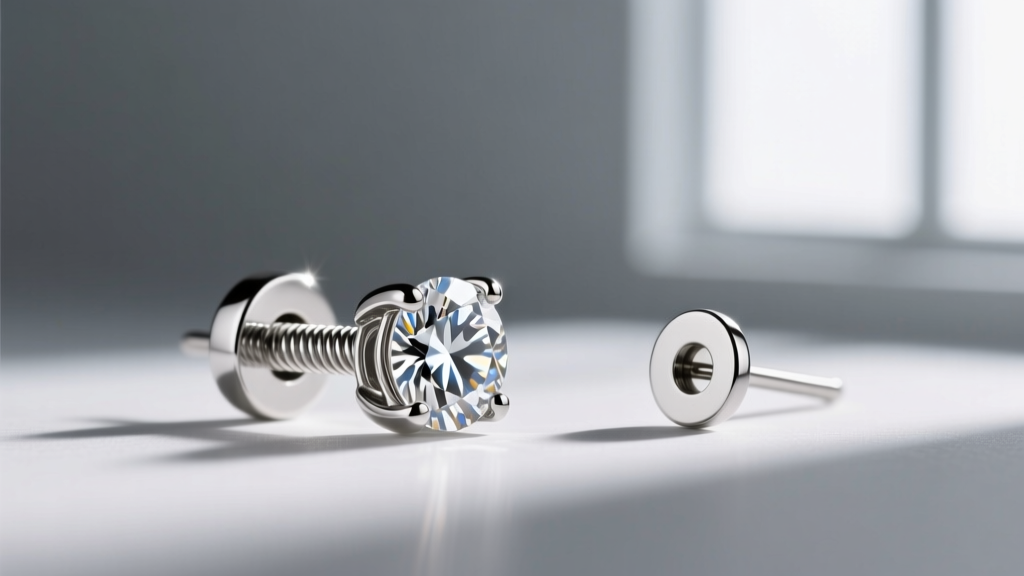
Upgrade Your Backings
If you are investing in studs over 0.50 ctw, you must upgrade the backing mechanism. Request the following options from your Kay jeweler:
- Screw Backs: The post is threaded, and the backing screws onto it. This provides maximum security but requires patience to put on and take off.
- La Pousette Backs: A premium, spring-loaded clutch mechanism that operates like a mousetrap. It grips the post tightly and requires a deliberate squeeze to release, offering security comparable to screw backs with the ease of friction backs.
- Jumbo Silicone Discs: An inexpensive aftermarket solution that provides a wide surface area against the earlobe, preventing heavy stones from drooping and adding a secondary layer of friction security.
Additionally, check the post gauge. Most standard studs are 20-gauge (0.81mm). For heavier stones, request an 18-gauge (1.02mm) post to prevent the metal from bending under the weight of the diamond.
In-Store vs. Online Inspection Tactics
Shopping for Kays diamond stud earrings in a physical store presents unique lighting challenges. Retail jewelry stores utilize intense, focused halogen and LED spotlights designed to make even the most heavily included diamonds scintillate brilliantly. This "mall lighting" effectively masks poor cut quality and hides dark carbon inclusions.
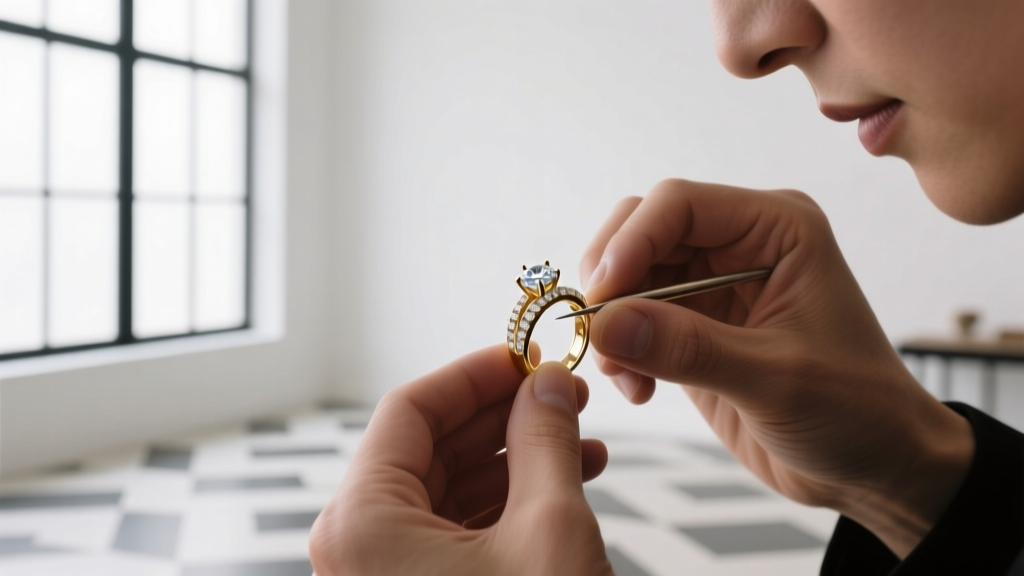
The Natural Light Test
To properly evaluate a pair of studs in-store, you must take control of the lighting environment. Ask the sales associate to allow you to view the earrings away from the direct display spotlights. Walk near the front of the store where natural sunlight enters, or step outside for a moment. Natural, diffused daylight is the ultimate truth-teller for diamond color and clarity. If the stones look dull, milky, or heavily spotted in natural light, leave them in the case.
If you are purchasing online through Kay's website, you are protected by their return policy, but you must act quickly upon delivery. Inspect the earrings with a 10x jeweler's loupe immediately. Check the prongs to ensure they are flush against the girdle of the diamond with no gaps, and verify that the post is soldered straight and perfectly centered on the setting base.
Final Verdict: Maximizing Your Investment
Kay Jewelers remains a highly accessible option for diamond studs, particularly for buyers who value the ability to see the stones in person and utilize in-house financing options. However, to ensure you receive genuine value, you must shop defensively. Target the 0.50 to 1.00 ctw range, demand SI2 clarity or better, insist on 14k gold or platinum, and never leave the store without a secure backing mechanism. By applying these gemological standards, you can confidently select a pair of Kays diamond stud earrings that offer both lasting beauty and structural integrity.


