Mickey Hoop Earrings: 2026 Style & Trend Analysis
Discover how Mickey hoop earrings are evolving in 2026. Explore material grades, styling frameworks, and pricing tiers for this nostalgic jewelry trend.

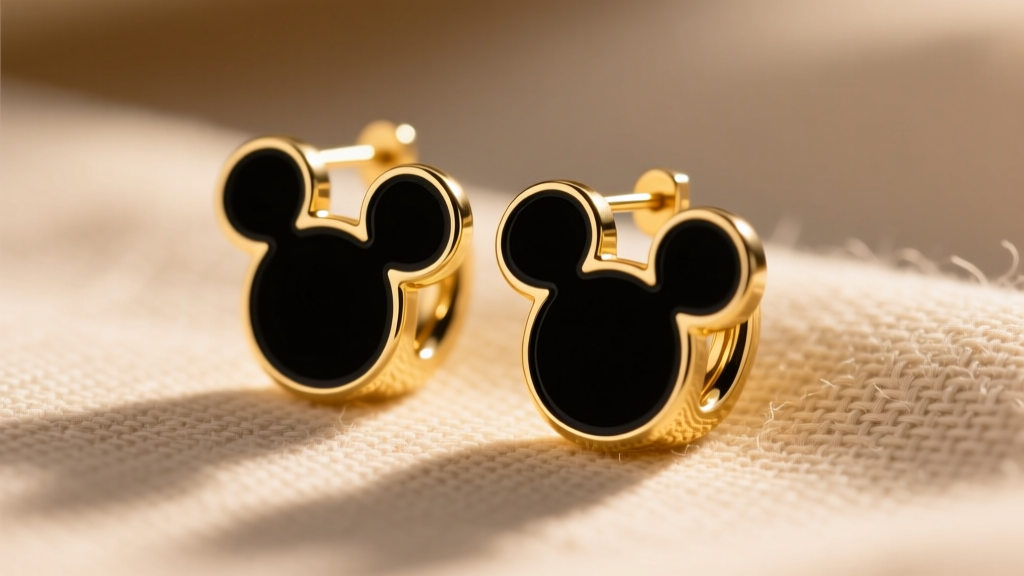
The Evolution of Nostalgia: Mickey Hoops in 2026
The trajectory of character jewelry has shifted dramatically over the last half-decade. While the early 2020s were defined by the loud, unapologetic 'kidcore' aesthetic, 2026 marks the era of 'mature nostalgia.' Mickey hoop earrings are no longer relegated to theme park souvenir stands or novelty plastic bins. Today, they represent a sophisticated intersection of pop-culture heritage and fine jewelry craftsmanship. Designers are reimagining the iconic silhouette through subtle pavé diamond accents, modular charm systems, and high-fire vitreous enamel, transforming a childhood staple into a versatile staple for the modern jewelry wardrobe.
This evolution is driven by a consumer base that values emotional resonance in their accessories without sacrificing material integrity. As luxury markets continue to embrace 'quiet luxury' with a playful twist, Mickey hoops have emerged as a subtle signaling piece—recognizable to those in the know, yet elegant enough for professional environments.
Material Science: Beyond the Souvenir Stand
When investing in character jewelry, material composition dictates both the longevity of the piece and the health of your piercings. The market is currently saturated with misleading terminology, making it crucial to understand the exact metallurgical standards of the hoops you are purchasing.
Gold Vermeil vs. Gold Plated
Many mid-tier Mickey hoops are marketed as 'gold plated,' but for sensitive ears and long-term wear, you must seek out true gold vermeil. According to industry standards, gold vermeil requires a base of sterling silver (925) plated with a minimum of 2.5 microns of 14k or 18k gold. Standard gold-plated earrings often use brass or copper bases with a microscopic flash of gold (less than 0.5 microns). Once that flash wears off at the friction point of the ear post, the underlying copper reacts with skin acidity, causing irritation and the dreaded green discoloration.
Surgical Steel and Titanium for Fresh Piercings
If you are stretching a lobe or healing a new cartilage piercing, 316L implant-grade surgical steel or ASTM F-136 titanium are the only acceptable materials. Titanium is entirely nickel-free and biocompatible, ensuring that the weight of a 3D Mickey charm does not cause contact dermatitis during the healing phase.
Enamel Techniques and Failure Modes
The classic Mickey silhouette is often rendered in black and red, making enamel work a critical component of the design. However, not all enamel is created equal, and understanding the difference will save you from premature heartbreak.
- Cold Enamel (Epoxy Resin): Common in pieces under the $80 mark. This is essentially a painted, hardened resin. Failure Mode: It is highly susceptible to chipping if dropped on hard surfaces like bathroom tile, and it will yellow or degrade when exposed to prolonged UV light and perfumes.
- Vitreous Enamel: Found in luxury and artisan pieces. As detailed in the vitreous enamel process, this involves fusing powdered glass to a metal substrate at temperatures exceeding 1400°F. Failure Mode: While it will never yellow or scratch easily, it is essentially glass and can shatter if subjected to extreme blunt force or crushed in a heavy travel case.
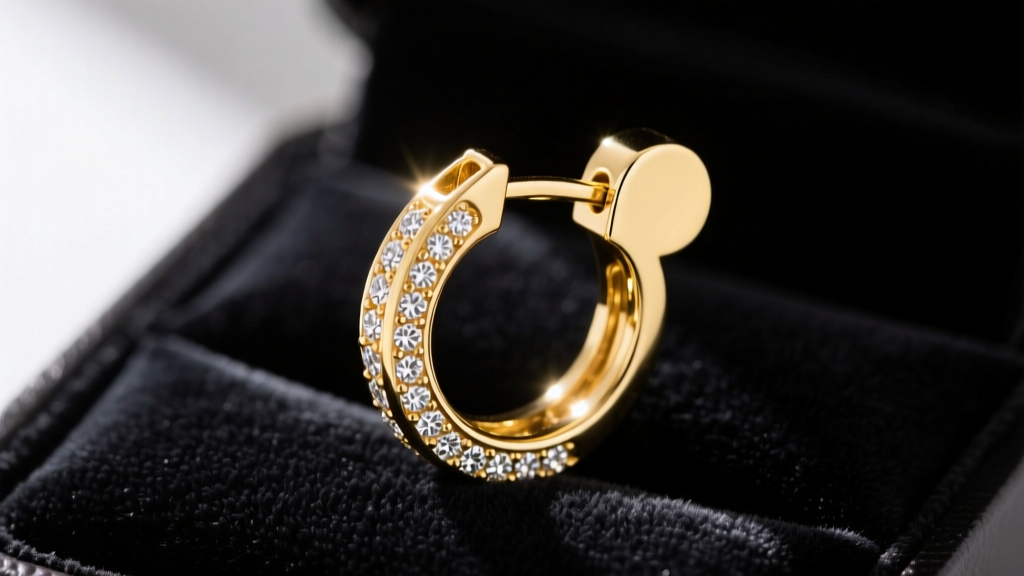
Gauge Sizes, Clasps, and Placement Dynamics
The structural integrity of Mickey hoop earrings relies heavily on the relationship between the wire gauge (thickness) and the clasp mechanism. A beautifully designed Mickey charm will ruin a piercing if the hardware is improperly matched to the anatomy of the ear.
The Lobe Standard: 20G and 18G
Standard lobe piercings typically accommodate 20-gauge (0.81mm) or 18-gauge (1.02mm) wires. For traditional Mickey hoops ranging from 15mm to 30mm in diameter, a latch-back clasp is the most secure. The hinged post clicks into a grooved catch, preventing the earring from slipping out during sleep or when pulling sweaters over your head. Avoid 'endless' or continuous hoops for heavy Mickey designs; the constant tension of the charm will eventually warp the thin wire, leading to a stress fracture.
The Cartilage Huggie: 16G and Clickers
For helix or tragus placements, the jewelry must be thicker to prevent the 'cheese-cutter effect,' where a thin wire slowly migrates through the tissue under the weight of a charm. A 16-gauge (1.29mm) hinged clicker is the gold standard for Mickey huggies (small hoops that 'hug' the earlobe or cartilage, usually 10mm-12mm). The segment snaps shut with an audible click, creating a seamless, secure closure that can withstand the friction of headphones and phone calls.
2026 Styling Frameworks: Face Shapes & Aesthetics
Styling Mickey hoops in 2026 requires moving past the 'matchy-matchy' Disneybound looks of the past decade. The goal is intentional juxtaposition. Here is a decision framework based on facial geometry and aesthetic preference:
- Round Faces: Avoid perfectly circular, small-diameter Mickey huggies, which will emphasize facial width. Instead, opt for elongated oval hoops (approx. 25mm x 40mm) featuring a subtle Mickey silhouette dangling from the bottom apex. This draws the eye downward, creating a lengthening illusion.
- Square/Angular Faces: Soften a strong jawline with circular, 14k gold Mickey hoops featuring curved, pavé-set ears. The continuous circular motion of the hoop contrasts beautifully with sharp bone structure.
- Heart-Shaped Faces: Teardrop-shaped hoops where the Mickey motif anchors the wider top portion of the earring help balance a narrower chin.
For the 'Quiet Magic' aesthetic, pair solid 18k gold Mickey silhouette hoops with a minimalist silk slip dress and an oversized blazer. The jewelry acts as an insider wink rather than a loud declaration.
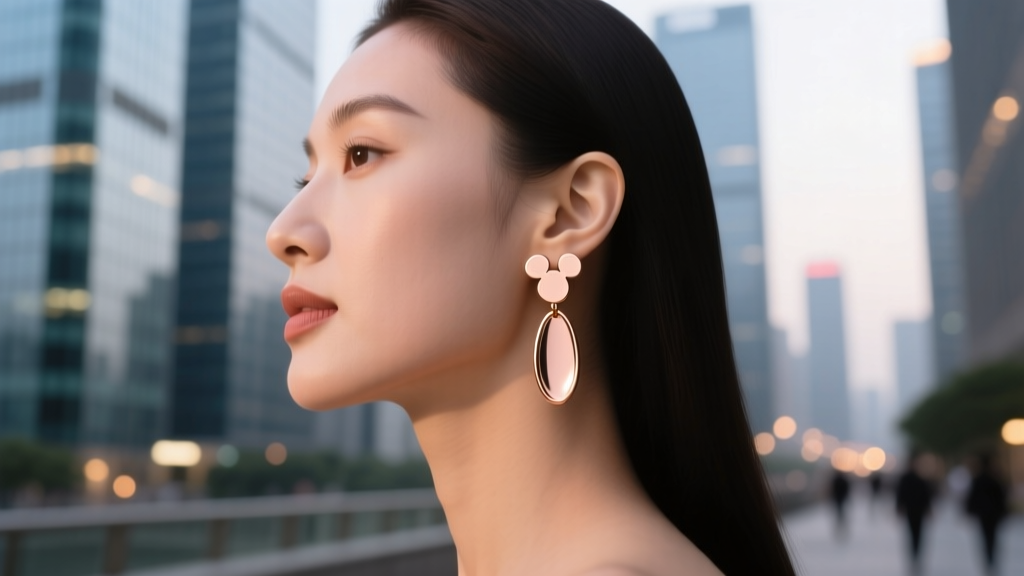
Investment Breakdown & Price Tiers
Understanding the pricing matrix of character jewelry helps you identify when you are paying for genuine craftsmanship versus licensing markup. Below is a comparative analysis of the current market tiers for Mickey hoop earrings.
| Tier | Materials & Specs | Price Range | Longevity & Best Use Case |
|---|---|---|---|
| Fashion / Novelty | Brass base, gold flash, cold epoxy enamel, 20G wire. | $25 - $65 | 1-2 years. Best for occasional wear, festivals, or theme park trips. High risk of skin irritation. |
| Demi-Fine | Sterling silver base, 2.5-micron 14k vermeil, vitreous enamel, 18G wire. | $120 - $280 | 5+ years with proper care. Ideal for daily wear and office environments. Must be kept dry. |
| Fine / Luxury | Solid 14k/18k gold, VS-grade pavé diamonds, 16G/18G clicker mechanisms. | $650 - $1,800+ | Lifetime heirloom piece. Safe for showering, swimming, and 24/7 wear without degradation. |
Final Verdict: The Enduring Appeal of the Silhouette
As we navigate the jewelry landscape of 2026, Mickey hoop earrings have firmly cemented their place as a legitimate category of fine jewelry rather than a fleeting novelty. The key to successful styling and purchasing lies in material literacy. By prioritizing vermeil or solid gold over plated brass, demanding vitreous enamel over epoxy, and respecting the gauge requirements of your specific piercings, you can invest in a piece that honors nostalgia while meeting the rigorous demands of modern luxury. Whether you choose a subtle diamond-pavé huggie for the boardroom or an elongated oval drop for a weekend gala, the iconic silhouette remains a timeless testament to joyful, sophisticated self-expression.
For more insights on precious metal grading and jewelry care, consult the educational resources at the Gemological Institute of America (GIA).


