Expert Care & Cleaning Guide for Kenneth Jay Lane Earrings
Preserve your vintage and modern Kenneth Jay Lane earrings with our expert cleaning, storage, and maintenance guide for costume jewelry.

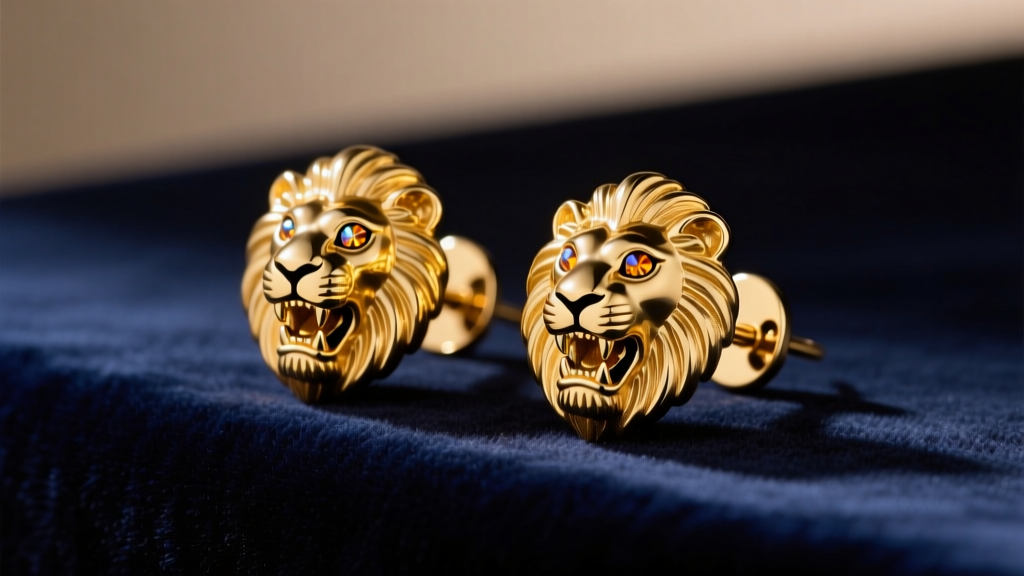
Kenneth Jay Lane (KJL) fundamentally redefined the landscape of costume jewelry, bringing a sense of aristocratic luxury to accessible accessories. From his early days designing for Christian Dior and Miriam Haskell in the 1960s to his iconic lion head motifs and elaborate faux pearl tassel earrings, KJL pieces are highly collectible. However, because these earrings are crafted from base metals, gold electroplating, glass rhinestones, and synthetic enamels rather than solid precious metals, they require a highly specific, conservative approach to maintenance. As the vintage costume jewelry market continues to surge in 2026, understanding how to properly clean and store these delicate pieces is essential for preserving their structural integrity and financial value.
The Anatomy of Kenneth Jay Lane Earrings
Before applying any cleaning method, you must understand the materials at play. According to the Gemological Institute of America (GIA), costume jewelry is inherently more vulnerable to environmental factors than fine jewelry. KJL earrings typically feature:
- Base Metal Alloys: Often brass, pewter, or white metal, which are prone to oxidation and verdigris when exposed to moisture and skin acids.
- Electroplating: A microscopic layer of gold or silver (often just 1 to 3 microns thick in vintage pieces). Abrasive cleaning will strip this layer entirely, exposing the dull base metal beneath.
- Foil-Backed Rhinestones: KJL frequently used glass or crystal stones with a delicate metallic foil backing to enhance brilliance. If moisture seeps under the prongs, the foil oxidizes, turning the stone black or "dead."
- Faux Pearls: High-quality glass beads coated with a nacre-like substance (historically containing guanine from fish scales, or modern synthetic pearlescent pigments). This coating is highly sensitive to alcohol, acids, and friction.
The Step-by-Step Dry and Damp Cleaning Protocol
Never submerge Kenneth Jay Lane earrings in water, and absolutely never use an ultrasonic cleaner. The high-frequency vibrations will shatter glass rhinestones, detach foil backings, and cause microscopic fracturing in cold enamel. Instead, follow this conservation-grade cleaning protocol.
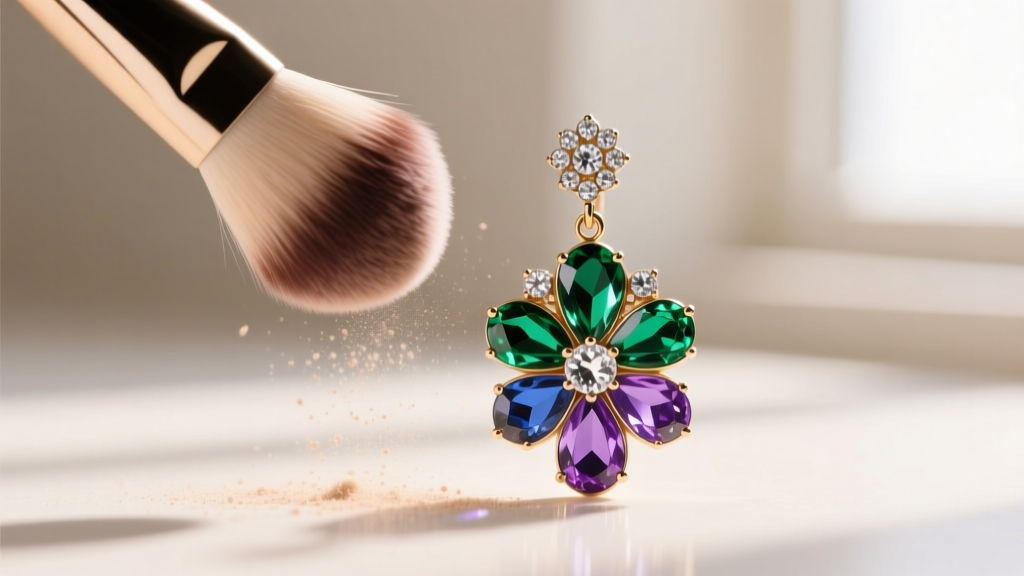
Step 1: Dry Dusting and Debris Removal
Use a clean, soft-bristled goat hair makeup brush or a specialized jewelry dusting brush to gently sweep away surface dust, skin cells, and cosmetic residue from the pavé settings and enamel grooves. For stubborn debris trapped in the crevices of intricate cast-metal designs (like the manes of KJL's animal motifs), use a wooden toothpick or a soft bamboo skewer. Never use metal needles or safety pins, as they will permanently scratch the gold electroplating.
Step 2: Targeted Damp Wiping
If the earrings require deeper cleaning due to skin oils or perfume residue, use a lint-free microfiber cloth lightly dampened with distilled water. Tap water contains minerals that can leave cloudy deposits on rhinestones. For slightly heavier soil, add a single drop of pH-neutral, phosphate-free dish soap to a bowl of distilled water. Dampen a cotton swab in the solution, wring it out until it is barely moist, and gently roll it over the metal surfaces. Avoid swabbing directly over the edges of rhinestones or faux pearls to prevent moisture from seeping into the settings.
Step 3: Immediate and Thorough Drying
Moisture is the enemy of costume jewelry. Immediately after damp wiping, use a dry microfiber cloth to buff the metal gently. Follow this by using a hair dryer on the "cool" and "low" setting to blow air into the prong settings and clip-on mechanisms, ensuring no hidden moisture remains to trigger oxidation.
KJL Material Care Matrix
Different components of your Kenneth Jay Lane earrings react differently to environmental stressors. Use this matrix to guide your maintenance routine.
| Material Component | Primary Vulnerability | Cleaning Method | Strict Prohibitions |
|---|---|---|---|
| Gold Electroplating | Friction, skin acids, chemicals | Dry microfiber buffing | Silver polish, baking soda, abrasive cloths |
| Glass Rhinestones | Moisture (ruins foil backing) | Dry brushing, glass cleaner on cloth only | Submersion, ultrasonic cleaners, steam |
| Faux Pearls | Alcohol, acids, peeling | Wipe with barely damp water cloth | Perfume contact, ammonia, vinegar |
| Cold Enamel | Impact, extreme temperature shifts | Soft damp cloth | Hard brushing, chemical solvents |
| Clip-On Mechanisms | Tension loss, rust in hinges | Compressed air, dry cotton swab | Oiling the hinge (attracts dust and gums up) |
Preventative Storage for 2026 and Beyond
Proper storage is arguably more important than cleaning when it comes to KJL earrings. The Victoria and Albert Museum's jewelry conservation guidelines emphasize that environmental control is paramount for preserving base metals and organic or synthetic coatings. Store your earrings in a cool, dark, and dry environment.
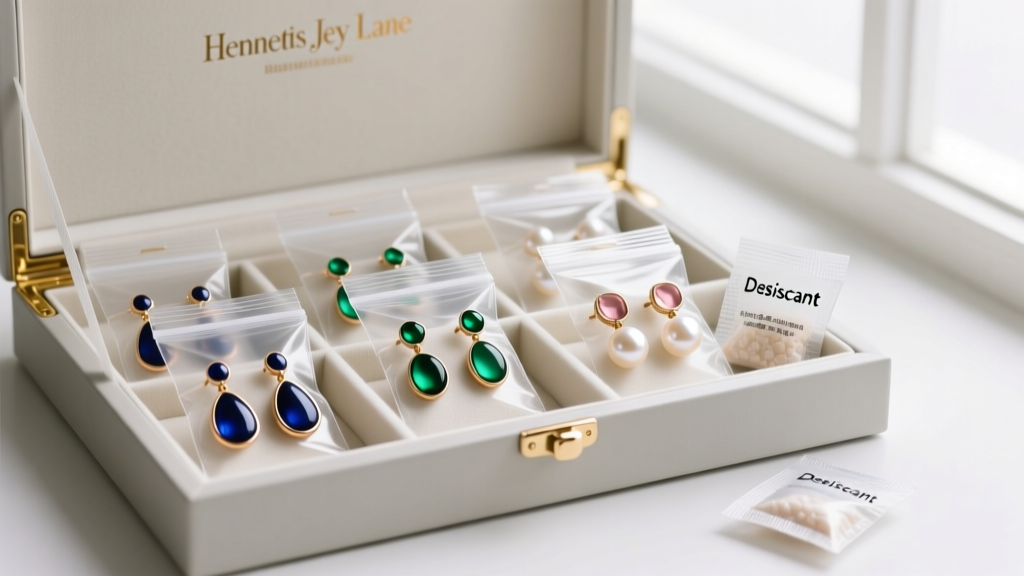
Wrap each pair individually in acid-free tissue paper or place them in polyethylene zip-lock bags. Avoid PVC plastics, as they off-gas chemicals that can cause the gold plating to tarnish and the faux pearls to yellow. Always include a small silica gel desiccant packet in your storage box to maintain a low-humidity environment, which prevents the formation of verdigris on the brass base metals. Store clip-on earrings in a way that the tension pads are not pressed against the metal faces of other earrings to avoid indentation and plating wear.
Troubleshooting Common KJL Issues
Verdigris Build-Up on Clip-On Backs
Verdigris is the green, crusty copper carbonate or copper acetate that forms when the copper in the base metal alloy reacts with moisture, oxygen, and the acetic acid in human sweat. If you spot verdigris on the clip-on backs or post backs of your KJL earrings, do not use vinegar or lemon juice to remove it. While acids dissolve verdigris, they will also strip the surrounding gold plating and ruin any adjacent enamel. Instead, use a dry, stiff-bristled fiberglass scratch brush or a wooden toothpick to carefully flake away the green corrosion. Once removed, apply a microscopic layer of museum-grade microcrystalline wax (like Renaissance Wax) to the bare metal to seal it from future moisture.
Cloudy or "Dead" Rhinestones
If a rhinestone has lost its sparkle and appears grey or black from the side, the foil backing has likely oxidized due to moisture intrusion. Unfortunately, this damage is usually irreversible without professional restoration. A master jeweler specializing in vintage costume jewelry can sometimes carefully lift the prongs, replace the foil, and reset the stone, but this is costly and risky. Prevention through strict moisture avoidance is the only reliable strategy.
Slipping Clip-On Earrings
Vintage KJL clip-ons can lose their grip over time as the metal fatigues or the original rubber/silicone comfort pads degrade. If the earrings slide down your earlobe, do not attempt to bend the metal hinge, as older base metals can become brittle and snap. Instead, clean the inside of the clip with rubbing alcohol (avoiding the rest of the earring) to remove skin oils, and apply a thin layer of clear nail polish or a replacement silicone comfort pad to increase friction and grip against the skin.
By treating your Kenneth Jay Lane earrings not merely as accessories, but as delicate, wearable works of art, you ensure they retain their brilliance and structural integrity for decades to come. Consistent, gentle care will keep these iconic pieces looking as vibrant as the day they were first cast.


